
in this commentary
- Spirit Airlines has reportedly asked the Trump Administration for $360 million in emergency funding as jet fuel prices doubled since the Iran conflict began.
- After 9/11 and COVID-19, airline bailouts came with conditions including killed change fees and maintained service levels. Air travelers benefited for years.
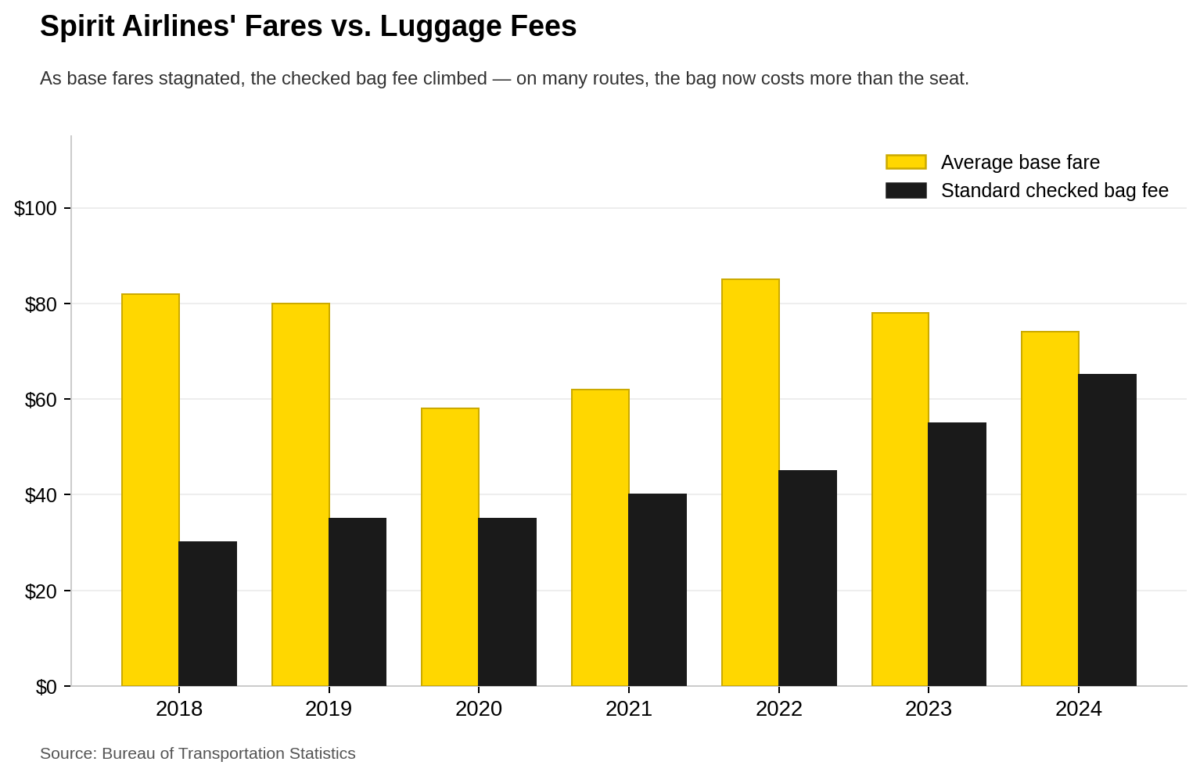
- Spirit typically charges $35 to $65 per checked bag. On a $70 Fort Lauderdale fare, that isn’t a fee anymore. It’s more like a hidden fare.
Spirit Airlines needs your help. Again.
The airline that charges you to print your boarding pass, to bring a carry-on bag on board, the one that has the audacity to sell a “bare” fare so stripped-down it barely includes the seat. Yes, that Spirit Airlines.
The troubled carrier has reportedly asked the Trump Administration for $360 million in emergency funding. Jet fuel prices have roughly doubled since the conflict in Iran began, pushing the already embattled discount airline closer to liquidation.
The government should say yes, but not without getting something in return.
We’ve been here before
This isn’t the airline industry’s first trip to the federal ATM. After Sept. 11, 2001, Congress handed carriers $5 billion in direct grants and $10 billion in loan guarantees. After COVID-19 grounded most air travel, the Payroll Support Program pushed more than $50 billion to U.S. airlines.
In exchange for that pandemic bailout, airlines agreed to maintain service levels, restrict buybacks, cap executive pay, and, crucially, eliminated most change and cancellation fees on most tickets. Air travelers benefited from it for years.
That’s the template: You want taxpayer money? Elliott’s Airline Bailout Principle says you give taxpayers something tangible.
The one concession Washington should require
Government aid to private companies should come with a public good attached, not some vague promise of preserving competition. It has to be real.
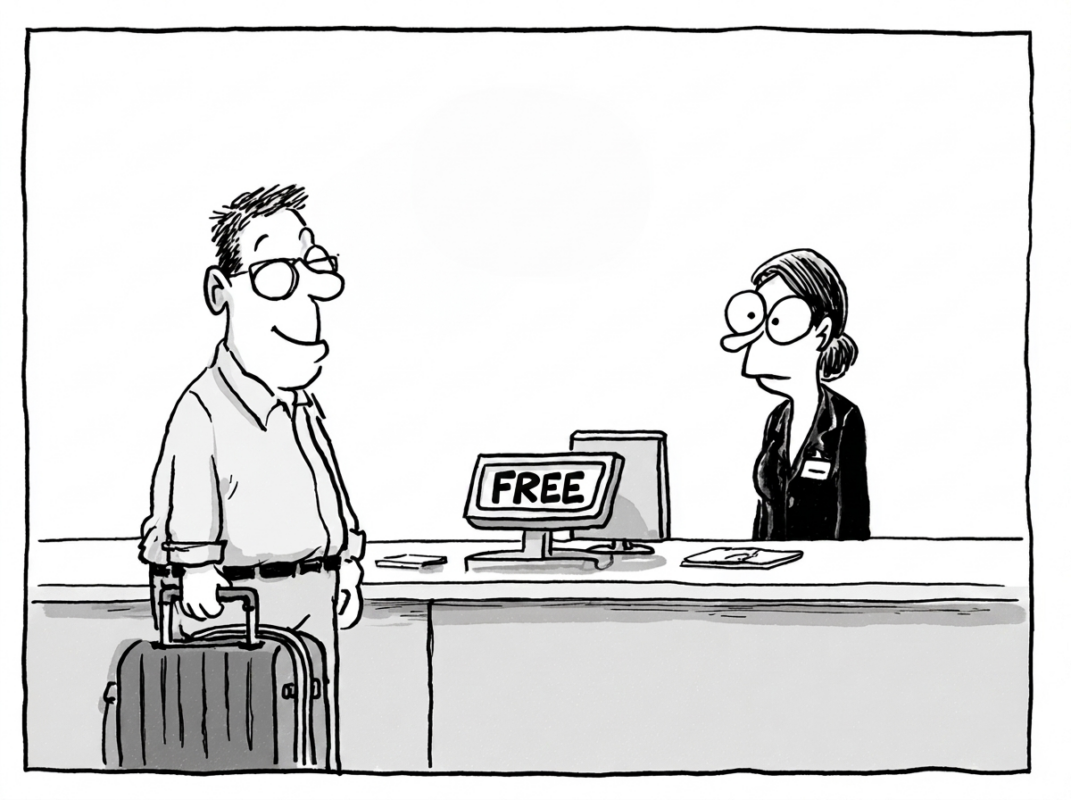
For Spirit, I’d like to propose that something: Bags should fly free.
If Spirit takes federal money, it should include the cost of one checked bag in every fare. No exceptions, no asterisks, and no “qualifying members only.” If you bought a ticket, your bag comes with it. (Related: Spirit Airlines’ death shows why we need better passenger protections.)
This may sound radical. But until last year, this was true of Southwest Airlines.
What Southwest changed
Southwest held out while every other major carrier charged for bags going back to 2008. Then, under pressure from activist investor Elliott Investment Management (no relation), it began charging for checked bags a year ago.
That decision left a gap in the market. No major U.S. carrier now includes a checked bag in its base fare. Spirit’s typical bag fee runs from $35 to $65 per checked item, depending on when you pay it. On a $70 fare to Fort Lauderdale, that doesn’t feel like a fee anymore. It’s more like a hidden fare.
Spirit could be the carrier that fills this gap. And here’s the competitive logic: In a market where every legacy carrier and every budget carrier charges separately for bags, a Spirit that doesn’t would be genuinely distinctive. It would have a reason to exist beyond being the cheapest result on Google Flights.
Should we let Spirit fail?
Yes, I know what the free-market faithful are saying. Let it fail. Let the market’s invisible hand steer it off the runway.
Maybe. But the airline industry is not a free market. It’s a heavily regulated oligopoly running on federally funded airports, federal air traffic control, and, when things go really wrong, federal rescue packages. The free market in aviation is largely a rhetorical device deployed selectively, usually by people who’ve already collected their government subsidies.
It’s no surprise that Spirit, along with Frontier, Allegiant, Sun Country, and Avelo, recently wrote to Congress asking lawmakers to suspend the federal excise taxes on tickets, a move that would hand them a subsidy covering about one-third of the incremental cost of their higher jet fuel.
Letting Spirit disappear will just hand market share to the surviving discount airlines and the legacy carriers, who will raise prices accordingly. The passengers who actually need cheap fares—the ones Spirit was built to serve—will lose.
Spirit has already burned through one bankruptcy and is navigating a second one. Liquidation is a real possibility now. Losing Spirit, with fuel prices at these levels, would be a gift to every airline that’s still charging $45 to put a bag in the overhead bin.
Well thought out and written Chris. Normally I’m against any government bailout, but since I live in an area full of Delta employees south of the Atlanta airport, I’m all for this bailout. The reason is Delta took billions during 9/11 and then they took what, four and a half billion, during COVID with a promise that they wouldn’t lay off any employees. What did Delta do? They bought out employees through early retirement using taxpayer funds. That strikes me as vulgar. Also Delta has made record profits but I don’t see them trying to repay the taxpayers anytime soon.
Read more insightful reader feedback. See all comments.
What a real deal looks like
So here’s my proposal: Spirit gets a low-interest emergency loan. It repays it with interest, the way airlines did after 9/11. The government takes warrants in return, so taxpayers share the upside if Spirit recovers. And Spirit commits to including one checked bag in every fare for a minimum of five years.
Five years is long enough to matter and long enough to reshape customer expectations. And it’s long enough to make other carriers nervous.
Other airlines would protest. Good. Competition is supposed to be uncomfortable.
And the next time a carrier comes to Washington with its hat in hand, maybe lawmakers should ask the big question raised by Elliott’s Airline Bailout Principle: What are passengers going to get out of this?
If we’re carrying Spirit’s debt, Spirit can carry our bags.
Your voice matters
Spirit wants $360 million from taxpayers. After 9/11 and COVID, bailouts came with conditions that benefited passengers. Should this one include free checked bags?
- Should airline bailouts legally require carriers to include one free checked bag in every fare for a minimum of five years?
- Should the government require airlines receiving emergency funding to cap executive pay and restrict stock buybacks as conditions of relief?
- Should taxpayers receive warrants or equity stakes in bailed-out airlines so they share the upside when carriers recover?
What would a Spirit Airlines bailout mean for passengers?
Quick answers to the most common questions about Spirit Airlines’ emergency funding request, previous airline bailouts, and what conditions should protect passengers this time.
Spirit Airlines has reportedly asked the Trump Administration for $360 million in emergency funding. Jet fuel prices have roughly doubled since the conflict in Iran began, pushing the already struggling discount airline closer to liquidation. Spirit has already burned through one bankruptcy and is navigating a second one. See Elliott Advocacy’s ongoing Spirit Airlines coverage for context on the carrier’s financial challenges.
After 9/11, Congress provided airlines with $5 billion in direct grants and $10 billion in loan guarantees. After COVID-19, the Payroll Support Program pushed more than $50 billion to U.S. airlines. In exchange, airlines agreed to maintain service levels, restrict buybacks, cap executive pay, and kill change and cancellation fees on most tickets. These passenger protections lasted for years after the bailouts.
Spirit’s typical bag fee runs from $35 to $65 per checked item, depending on when you pay it. On a $70 fare to Fort Lauderdale, that fee represents a significant portion of the total ticket cost. Elliott Advocacy’s analysis of rising baggage fees shows how checking a bag now costs more than many airline tickets.
Southwest Airlines held out on charging for bags from 2008 until last year. Under pressure from activist investor Elliott Investment Management, which has no relation to Elliott Advocacy, Southwest began charging for checked bags a year ago. That decision left a significant gap in the market. No major U.S. carrier now includes a checked bag in its base fare.
Spirit, Frontier, Allegiant, Sun Country, and Avelo recently wrote to Congress asking lawmakers to suspend federal excise taxes on tickets. This move would hand them a subsidy covering about one-third of the incremental cost of their higher jet fuel expenses. The Association of Value Airlines is coordinating much of this lobbying effort.
Letting Spirit fail would hand market share to surviving discount airlines and legacy carriers, who would raise prices accordingly. The passengers who actually need cheap fares, the ones Spirit was built to serve, would lose the most. Losing Spirit at current fuel prices would benefit every competitor still charging $45 to put a bag in the overhead bin, reducing competition in the low-cost travel market.
A responsible bailout would include a low-interest emergency loan with interest repayment, government warrants so taxpayers share upside if Spirit recovers, and a commitment to include one checked bag in every fare for a minimum of five years. Five years is long enough to reshape customer expectations and pressure other carriers. Elliott Advocacy’s consumer advocacy coverage explores how to hold companies accountable when they receive public support.
Why is Spirit Airlines asking for a government bailout?
What conditions came with previous airline bailouts?
How much does Spirit Airlines charge for checked bags?
Why did Southwest Airlines start charging for bags?
What other airlines are seeking tax relief?
What happens if Spirit Airlines disappears?
What consumer protections should a bailout include?

Have a question about this story? Tell us what happened — we read every comment.
Join the conversation