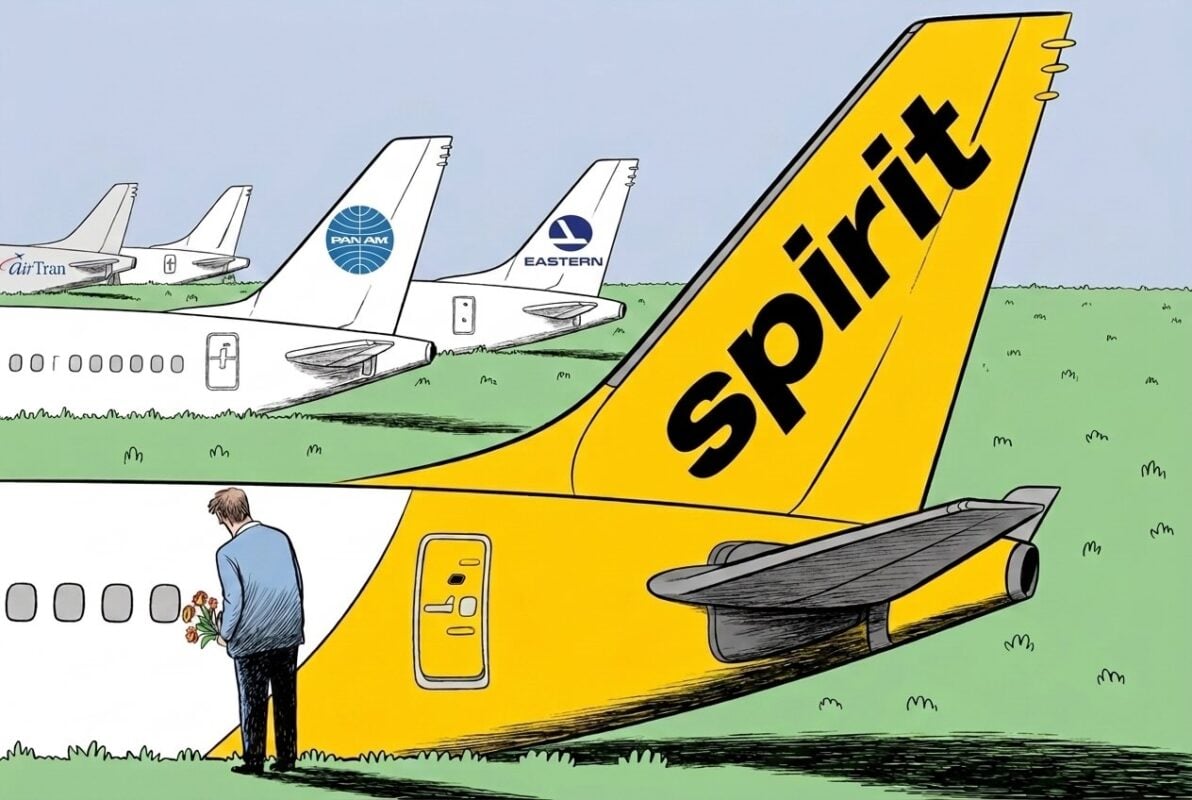

If you have a Spirit Airlines ticket, the bad news has just landed: your flight is canceled, and you might spend the next few weeks fighting your credit card company for a refund.
Spirit Airlines announced that it has begun an orderly wind-down of its operations, effective immediately. Every flight has been canceled and the customer service lines are closed.
The shutdown comes after the Trump administration’s $500 million rescue plan, which would have given the federal government an unprecedented 90 percent stake in the carrier, fell apart over the weekend.
It’s a remarkable end to a remarkable week. After blocking Spirit’s merger with JetBlue on antitrust grounds in 2024, the federal government spent the past several days weighing whether to essentially own the airline instead.
Why Spirit Airlines failed
Spirit Airlines has struggled to find a path to profitability since the Iran war sent jet fuel prices skyrocketing. It filed for Chapter 11 twice in less than a year and lost tens of millions in early 2026 alone.
The proposed federal bailout would have been a first-in-priority loan, putting the government ahead of other creditors. Bondholders remained divided, and the deal collapsed. (Related: Budget airlines want a tax holiday—but where’s yours?)
In a statement on its restructuring website, Spirit said it was “proud of the impact of our ultra-low-cost model on the industry over the last 34 years.” CEO Dave Davis said the airline had been working on restructuring its business, but a sustained rise in fuel prices, combined with broader financial pressures, made a turnaround impossible.
The two bankruptcies filed so close together said it all. Their model wasn’t working. A couple of things in the press stood out. That they hadn’t earned profit in quite awhile and that their margins were so tight, that any disruption, like weather, was more costly for them. Finally, one trade site said the current fuel spikes didn’t cause the problem, but it did speed up their downfall. It cautioned that unless fuel costs drop soon that other failures are likely, both in the US and abroad.
Read more insightful reader feedback. See all comments.
What this means if you have a Spirit ticket
Here’s what to do right now:
Save all your paperwork. Download your flight receipt that shows your payment, screenshot your confirmation, and keep your itinerary somewhere offline. Spirit’s website and app may stop working in the coming days. You’ll need that documentation for any chargeback or have to file a bankruptcy claim.
Book a replacement flight now, before fares spike. On early Saturday morning, several Spirit competitors announced plans to accommodate displaced Spirite passengers without raising fares. But that goodwill won’t last forever, and prices are bound to rise in some markets. (Here is our guide with the best travel advice.)
Forget about your Free Spirit points. The loyalty program is winding down with the airline. Points are not protected by bankruptcy court the way physical assets are. If you were sitting on a meaningful balance, that balance is now gone.
Refunds and credit card disputes
Spirit says it will automatically process refunds for guests who booked directly using a credit or debit card. Compensation for travelers who paid with vouchers, credits, or Free Spirit points is up in the air.
Remember, under the Fair Credit Billing Act, you can dispute a charge for services not rendered. Notify your card issuer no later than 60 days after the first statement showing the airfare charge. Credit card companies are typically more lenient on the 60-day requirement when you book your tickets months in advance.
Debit card holders have far weaker protections. The bank is not required to refund you, but it might.
Travel insurance probably won’t help. Because Spirit’s troubles were a “known event,” most policies treat it like a pre-existing condition and will not cover financial default on bookings made in recent weeks. A handful of policies from companies like Faye and Allianz offer financial-default coverage, but only if purchased before the carrier’s troubles became public. (Related: Spirit Airlines’ death shows why we need better passenger protections.)
For further questions, Spirit has appointed Epiq as its claims agent. You can reach Epiq at SpiritAirlinesInfo@epiqglobal.com or by phone at (855) 952-6606 in the U.S. and Canada, or (971) 715-2831 internationally.
Did the government do enough to help?
Now to our question.
And a follow-up question or two:
If you said yes, what do you think would have been appropriate? Should the government have owned 90 percent of the airline? Or maybe offered something else?
If you said no, under what circumstances would a bailout have met with your approval? Or was Spirit not worth saving under any circumstances?
My take: The U.S. government has spent decades deregulating the skies to let the market decide winners and losers. For a moment, it looked like Washington was going to nationalize an airline. In the end, the market got the last word. If Spirit’s business model could not survive a fuel spike, maybe it was a house of cards.
Your turn
What’s your opinion? Should Washington have saved Spirit with a $500 million check and a 90 percent stake, or did the market just do its job? Join the discussion in the comments.

Have a question about this story? Tell us what happened — we read every comment.
Join the conversation