
in this commentary
- 52 percent of hotels now offer tech walk-throughs at check-in because their rooms are so complicated guests need tutorials to operate basic functions.
- Smart room technology saves hotels money on staffing and energy, increases sales through tablet upselling, and collects detailed guest data on usage patterns and habits.
- Frustrated guests are missing flights, losing sleep, and even resorting to unscrewing lightbulbs when iPad-controlled systems fail to perform basic functions.
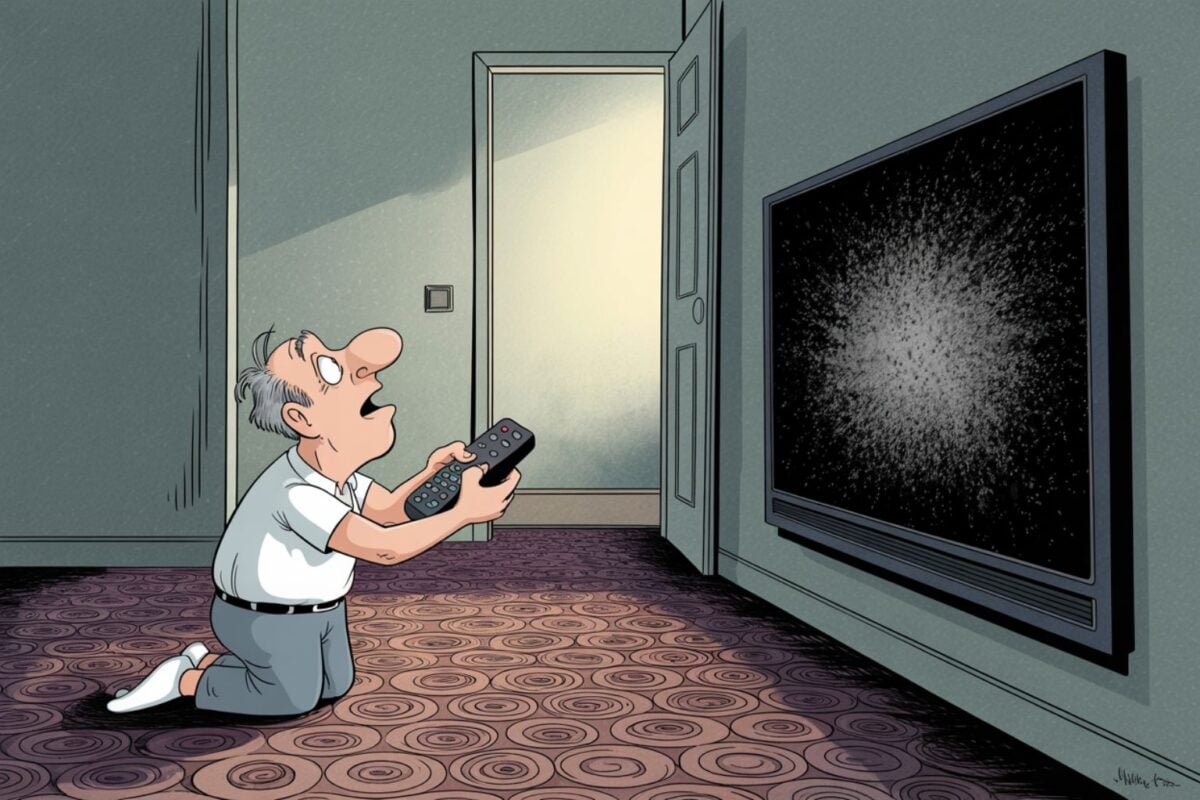
Daniel Oppliger navigated foreign airports, dealt with language barriers, and made it to his hotel in Lushui, China, only to be stumped by the TV remote at the Hilton Garden Inn.
“I couldn’t figure out how to work the television,” he says. “I had to ask the concierge to help me.”
Welcome to the age of smart hotel room syndrome, when technology designed to simplify stays actually makes them more complicated.
This isn’t a glitch: 52 percent of hotels now offer tech walk-throughs at check-in where an employee explains how to use all the gadgets, according to a recent survey by Hotels.com. In other words, more than half of hotels have basically admitted their rooms are so complicated that guests need a tutorial just to operate basic functions.
It’s not just inexperienced guests who need help. Oppliger is a frequent traveler, who runs a travel agency in El Paso.
Or how about Mircea Dima, a frequent hotel guest and the CEO of an educational company that specializes in coding. He’s someone who knows his way around technology. But he recently found himself Googling how to switch off his hotel room lights.
“If you need instructions to turn off a bedside lamp,” he says, “the system has failed.”
Why are hotels installing complicated room technology?
Hotels are not installing complex room control systems because they love you. The motivation runs deeper, and a little darker, than enhanced experiences.
An iPad in your room can be convenient, yes. You might be able to order a meal or a movie through it without having to make a call to the front desk. But that’s also more convenient (and profitable) for the hotel.
The tech lets hotels cut corners in other ways.
“Hotels want to appeal to guests who live with connected homes, while also managing energy use and staffing more efficiently,” says Lauren Ringel, a travel advisor with Fora Travel. “Tablets, motion sensors, and smart thermostats can make service seamless and save resources at the same time.” (Related: AI anxiety: How technology is turning travel into a trap — and what you can do about it.)
That’s not all.
“These new electronics collect data on you,” explains Andy Abramson, a communications consultant who specializes in technology. “What you use, how much you consume, how long you sleep, even how long you spend in the bathroom.”
Put differently, the new technology saves the hotel money, increases sales and allows it to spy on you. But it’s sometimes also impossible for guests to use.
What happens when hotel room technology fails?
Ringel has seen the frustration firsthand. One client, staying at a luxury casino in Singapore, texted her at midnight because they couldn’t figure out how to dim the neon bar lights. Another guest in London was stuck with frozen iPad-controlled window shades.
“It’s not a great experience for guests,” Ringel says.
This isn’t an isolated experience. Kevin Heimlich, the CEO of an advertising firm, spent 15 minutes in a hotel room navigating iPad menus just to turn off lights after a long day.
“It felt like a user experience design fail,” he says. “Technology should be invisible, not a puzzle that detracts from experience.”
The problem affects everyone. Al Schilf, a retired federal worker from Columbia, Md., spent five days at an upscale hotel in Rome “playing whack-a-button trying to turn lights on and off.”
TVs are the worst. You’d think someone like Vicki Burton, a retired detective from St. Petersburg, would be able to figure out how to get her hotel TV to change the channel from SpongeBob SquarePants, where it was set to when she walked into the room. But no.
“The remote resembled the cockpit of a 747,” she laughs. “I kept trying to just turn the darn thing off. Even that seemed too difficult for me.”
It’s even affected me. At a beach hotel in Phuket, Thailand, the master switch on my iPad failed to turn off a closet light. The solution from the front desk? Just close the closet door or unscrew the lightbulb.
Thanks, guys.
What are the hidden costs of smart hotel rooms?
The tech may be saving hotels money, but it could cost you. The complicated technology doesn’t just affect the quality of your vacation, but also the quality of your sleep. If you can’t turn off the TV or the lights in your rooms, you might have to go to bed with the TV or the lights still on. And you know someone’s gonna be cranky tomorrow.
There’s a financial cost, too. Say your hotel alarm doesn’t go off because you couldn’t figure out how to use it, and you miss your flight home. Guess who’s buying a new ticket?
Chrissy Valdez, senior director of operations at Squaremouth, says you might be tempted to file a travel insurance claim. You should resist.
“Unfortunately, travel insurance won’t be able to help you in these situations,” Valdez says.
That leaves guests to fend for themselves when systems crash or freeze, which happens more often than hotels admit.
Allow me to vent about my pet peeve. Nearly all hotel rooms have large flat screen TVs. However, some of them are hacked “Hotel Specials” so that you cannot connect an external device like a laptop and play your own content. You can’t shift input to HDMI1, HDMI2, etc. Or these external ports are just disabled. I can’t stand hotels that do that.
Read more insightful reader feedback. See all comments.
Which hotel brands handle in-room technology best?
The good news: Some properties have found a balance. According to guests, high-end brands like Four Seasons and Rosewood typically offer clear bedside touch panels with simple backup switches. And hotel chains like Holiday Inn usually offer a more no-frills experience when it comes to gadgets. (In other words, there are actual switches to turn the lights on and off.)
But too many hotels treat technology like a status symbol. Boutique properties force every basic function through laggy touch screens. The apps sometimes crash during software updates, rendering the entire room’s systems inoperable. (Related: Don’t ban surveillance pricing. Here’s how to fix it.)
“When technology eliminates bad friction, like waiting in line to check in, everyone wins,” says Richard Valtr, founder of hotel tech company Mews. “When it eliminates ‘good friction’, meaningful human interactions, hotels become soulless.”
How can hotels fix smart room frustration?
The best hotel technology follows what industry experts call the invisibility principle: Guests shouldn’t notice they’re using it.
“The best technology in hotel rooms is often when the guest doesn’t realize they’re using it,” says David Orr, CEO of British boutique hotel chain Resident Hotels. His newest property, The Resident Edinburgh, uses energy-saving systems that automatically adjust as guests enter or leave, paired with familiar touches like simple Nespresso machines. TVs and light switches are intuitive. (Here’s everything you need to know about planning your next trip.)
Nichlas Linderborg, chief customer officer at the hospitality software company Sirvoy, agrees: “The best technology in hotels is the kind guests barely notice, because it just works.”
The smartest hotels offer both high-tech convenience and analog backups. Touch panels with physical switches. Voice controls with manual overrides. Innovation with escape hatches.
How should hotels rethink in-room technology?
Hotel technology isn’t inherently bad. When it works, smart room controls can feel magical. Motion sensors that softly light pathways to the bathroom at night. Thermostats that learn preferences. Apps that unlock room doors.
But too often, hotels put profit over function. They disable the manual light switches and offer TV remotes via touchpads that freeze. They try to focus the guest’s attention on a tablet that’s always trying to upsell them to order room service but never quite manages to do the basics, like turn off the lights or lower the volume on their TV.
That’s too bad. The hospitality industry should use technology to actually improve the guest experience, not frustrate customers. It’s not too late to fix it.
Your voice matters
Hotels are replacing light switches with iPads while collecting data on how long you sleep and shower. When tech fails, you might miss your flight or sleep with the lights on.
- Should hotels be legally required to provide working manual switches and physical backups for all room functions controlled by smart technology?
- Should hotels be required to disclose what guest behavior data their smart room systems collect and how that information is used or sold?
- Should hotels face mandatory compensation when smart room technology failures cause guests to miss flights or significantly disrupt their stay?
What you need to know about smart hotel room technology
Quick answers to the most common questions about smart hotel room technology, why hotels are installing it, and what to do when complex tech ruins your stay.
What is smart hotel room syndrome?
Smart hotel room syndrome describes the frustration guests experience when hotel technology designed to simplify stays actually makes them more complicated. According to a Hotels.com survey, 52 percent of hotels now offer tech walk-throughs at check-in because their rooms are too complex for guests to operate without tutorials. Even frequent travelers and tech-savvy professionals report needing instructions just to turn off bedside lamps.
Why do hotels install complex smart room technology?
Hotels install smart room technology for three main reasons: managing energy use and staffing more efficiently, increasing sales through tablet-based upselling for room service and movies, and collecting data on guest behavior including usage patterns, sleep duration, and bathroom time. The technology saves hotels money while creating new revenue streams and operational insights. See Elliott Advocacy’s ongoing hotel coverage for related industry trends.
What data do smart hotel rooms collect about guests?
Smart hotel room electronics collect data on what guests use, how much they consume, how long they sleep, and even how long they spend in the bathroom. This information helps hotels understand guest behavior patterns and refine their services, but it also raises significant privacy concerns. Most hotels do not clearly disclose what data they collect or how they use it, leaving guests unaware of the surveillance.
Does travel insurance cover hotel technology failures?
No. Travel insurance will not cover damages from smart room technology failures. According to Squaremouth’s senior director of operations Chrissy Valdez, guests are left to fend for themselves when systems crash or freeze. If a hotel alarm doesn’t work because you couldn’t figure out the technology and you miss your flight, you’ll need to buy a new ticket yourself. See Elliott Advocacy’s guide to buying travel insurance for what is actually covered.
Which hotel brands have the best room technology balance?
According to guests, high-end brands like Four Seasons and Rosewood typically offer clear bedside touch panels with simple backup switches. Hotel chains like Holiday Inn usually provide a more no-frills experience with actual physical switches to turn lights on and off. Boutique hotels and luxury casino properties often have the worst technology, forcing every basic function through laggy touch screens that crash during software updates.
What is the invisibility principle in hotel technology?
The invisibility principle states that guests should not notice they’re using technology. The best hotel technology works seamlessly in the background, like motion sensors that softly light pathways at night or thermostats that learn preferences. According to David Orr, CEO of Resident Hotels, the best hotel technology is when guests don’t realize they’re using it. Smart hotels offer both high-tech convenience and analog backups like physical switches and manual overrides.
What should you do if smart hotel room technology fails?
First, contact the front desk immediately and request technical support or a tech walk-through. Document the failures with photos and notes for your records. Ask to be moved to a different room if the technology is fundamentally broken. If the failures cause significant disruption like missed flights or lost sleep, request compensation directly from the hotel and escalate to corporate customer service if needed. Elliott Advocacy’s guide to how consumer complaints work walks through the full escalation path.

Have a question about this story? Tell us what happened — we read every comment.
Join the conversation