
in this commentary
- Southwestern Germany’s Palatinate region combines 130 medieval castles with Germany’s only cross-border UNESCO biosphere reserve pursuing radical sustainability.
- The sustainability concept Nachhaltigkeit was developed by foresters 150 years ago with one simple rule: never take more wood from a forest than it can produce annually.
- Climate change is creating unexpected challenges including wild boar overpopulation, while local businesses like Wasgau Ölmühle are advancing cold-pressed oil production and circular economy practices.
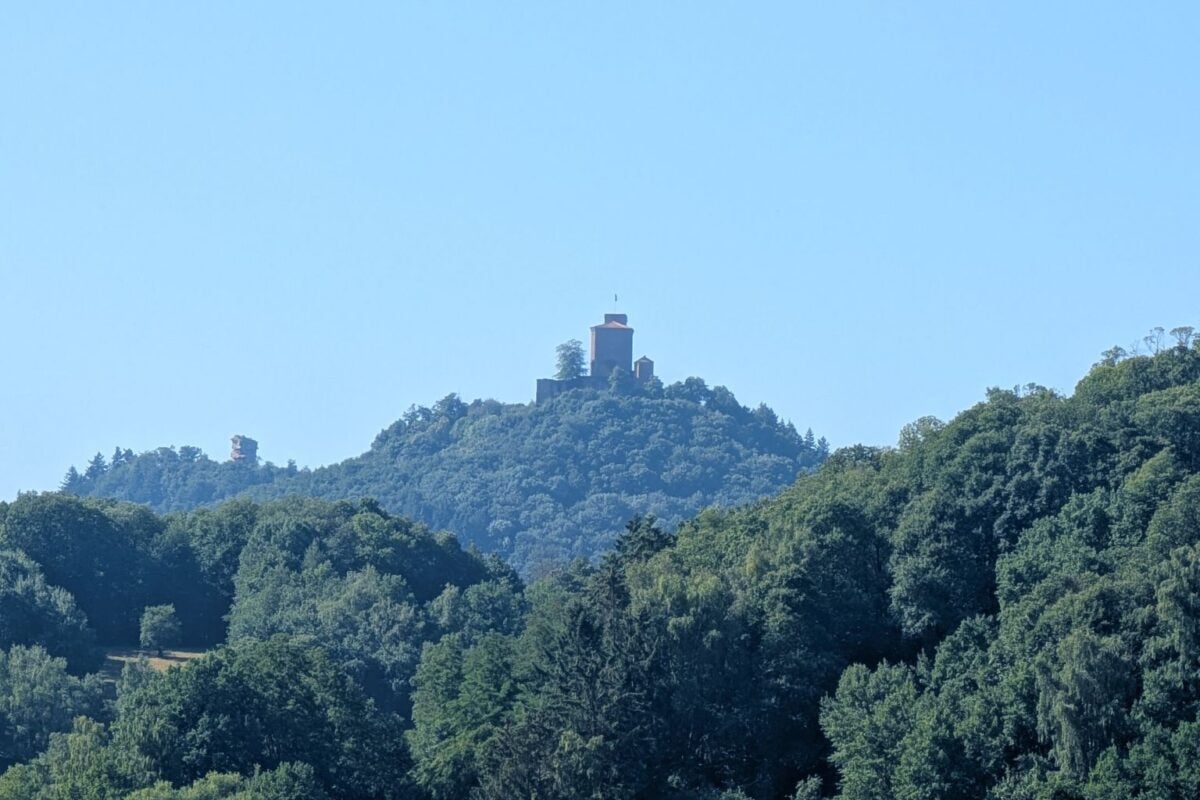
Southwestern Germany’s Palatinate region is dotted with over 130 castles, many now ruins. Perched on sandstone cliffs, they’ve borne witness to centuries of history.
One, Hambach Castle, played a pivotal role in Germany’s democratic movement in 1832, while another, Trifels, housed medieval emperors and even imprisoned Richard the Lionheart.
But don’t let the fairytale landscape fool you. Palatinate also has one foot in the future, and if you visit this part of Germany, you get to be a part of it. It’s a vision of tomorrow that combines a rich and complex history with a meticulous pursuit of sustainability.
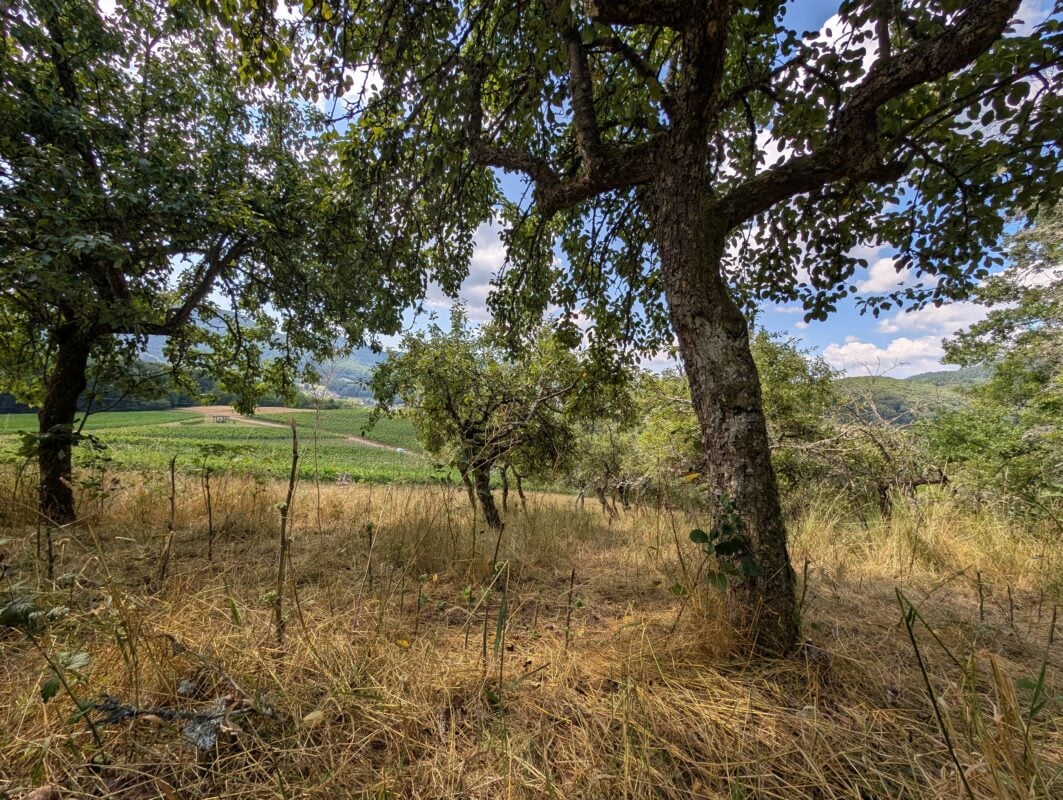
An orchard along the “New Shepherds’ Trails,” a project that reintroduces traditional grazing with sheep and goats to prevent old orchards and valleys from being swallowed by forest. (Photo by Aren Elliott.)
History and sustainability meet here
Palatinate is home to Germany’s largest contiguous forest, covering about 80 percent of its surface. This expansive woodland, part of the Palatinate Forest–Northern Vosges Biosphere Reserve, is more than a natural wonder. It’s also Germany’s only cross-border UNESCO biosphere reserve, and a model project for sustainability.
Here, the goal is clear: balance the needs of mankind with the health of the environment, teaching people to “act and react more sustainably,” according to local guide Ute Seitz.
“Sustainability,” she explained, using the German word Nachhaltigkeit, “comes from their thinking and from their planning for the future.”
Foresters developed this concept over 150 years ago, establishing the principle that you aren’t allowed to take more wood out of a forest per year than the forest can produce. It’s a simple, profound idea, and perhaps one the world needs today more than ever. Don’t consume more than you produce.
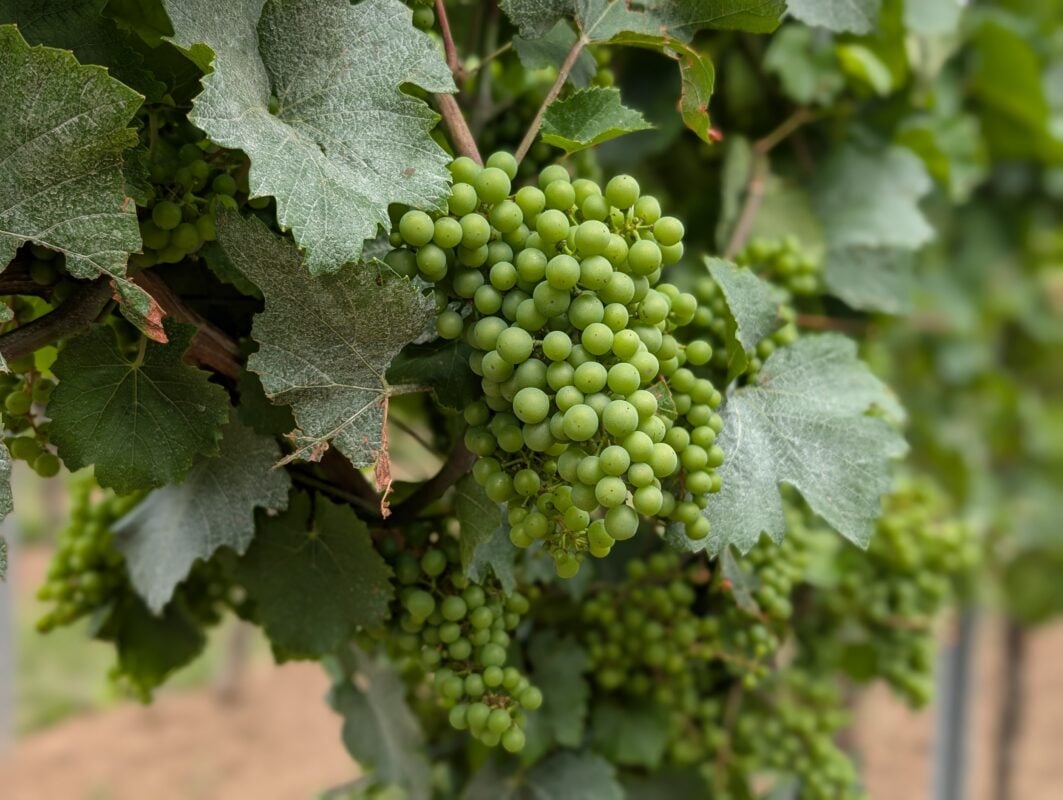
Ripening grapes on a vineyard in Germany’s Palatinate region. (Photo by Aren Elliott.)
A Mediterranean microclimate responds to global warming
Palatinate’s unique microclimate, often compared to the Mediterranean, means you’ll spot fig trees, kiwi, and even bananas growing and thriving outdoors, a sight that surprises many visitors. But this pleasant warmth also brings challenges.
Seitz says temperatures here are rising quickly, leading to a series of problems. One of them is overpopulation of wild boars. Warmer winters reduce the natural mortality rate for the boars. These animals, which are clever and can’t be hunted in the protected core zones, emerge at night to devour roots and almost anything else they can find to eat. The boars disrupt a delicate balance that the reserve strives to maintain.
The biosphere reserve is structured into core, maintenance, and development zones, each with specific rules to safeguard biodiversity and promote sustainable practices. (Related: How the Sydney Opera House became a symbol of sustainability.)
One fascinating initiative is the “New Shepherds’ Trails,” a project that reintroduces traditional grazing with sheep and goats to prevent old orchards and valleys from being swallowed by forest.
“The cattle don’t eat everything,” Seitz says, “especially not the blackberries. So, that’s why the goats are here.”
It’s not just for aesthetics. It’s about maintaining cold air corridors that flow from the mountains to the valley, crucial for cooling down areas like Landau and the Rhine Valley that overheat during the summer.
Even the region’s renowned viticulture, a source of famous Riesling and Pinot Noir grape varieties, is evolving. Vintners are now being encouraged to plant fungus-resistant grapevine varieties, which can reduce the use of pesticides, especially fungicides, by up to 80 percent. It’s a significant step, even if consumer preference for traditional varieties means adoption isn’t as fast as some would hope.
Cold-pressed oil production sounds like a great local initiative, but I’d like to know if there is a plan to make these sustainable products affordable for the average consumer. Sustainability often comes with a premium price tag that limits its reach.
Read more insightful reader feedback. See all comments.
But the pursuit of sustainability here isn’t just about grand ecological projects. It seeps into the local economy, inspiring entrepreneurs to reconnect with the land and its resources in profound ways.
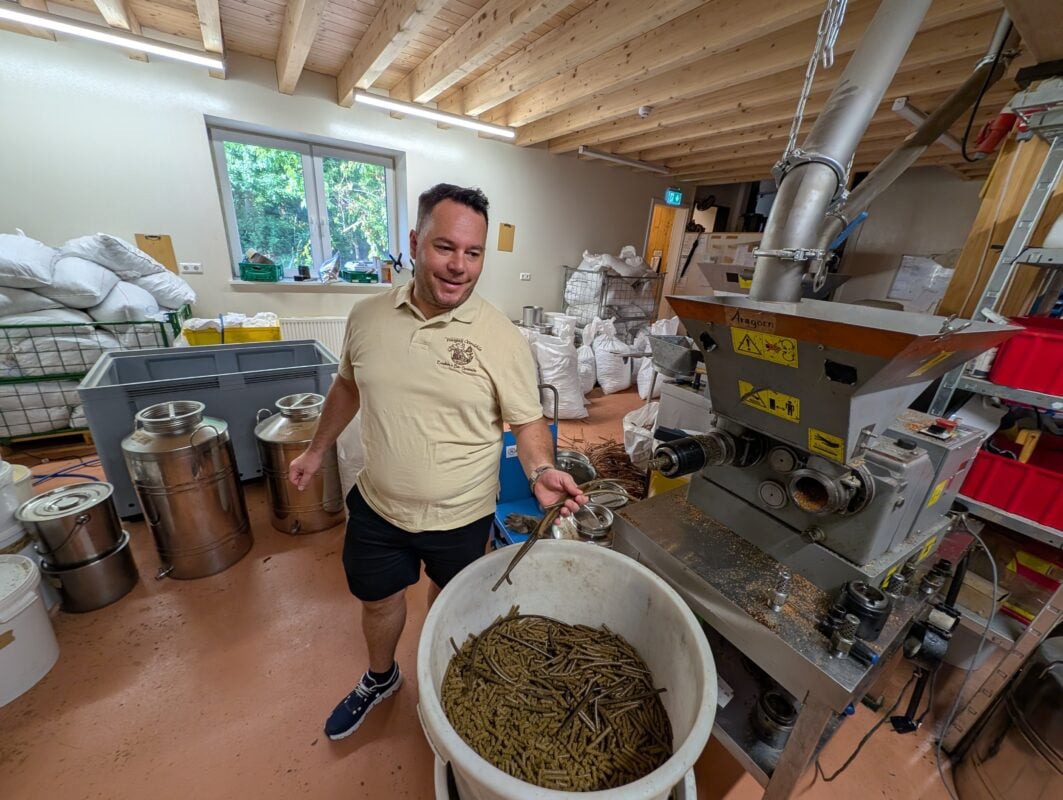
Timo Keller, owner of the Wasgau Ölmühle in Hauenstein, Germany. (Photo by Aren Elliott.)
Wasgau Ölmühle: crafting purity, one cold press at a time
In the nearby village of Hauenstein, small businesses are also writing the next chapter in Palatinate’s sustainability story. At the Wasgau Ölmühle (oil mill) in Hauenstein, owner Timo Keller is refining the art of cold-pressed oils.
Keller, an engineer by training, says refined oils are chemically extracted and then cleaned, a process that strips them of some healing qualities. His method, by contrast, involves applying high pressure on the seed to squeeze the oil in a more natural process.
“You have to use the best raw material if you want to get the best oil,” he explained.
Keller says 80 percent of the oil used in Germany is refined. He sees it as his mission to educate people about the profound difference between “oil and oil.” Or, to put it differently, not all oils are created the same.
That, they definitely aren’t. The öhlmühle produces a range of oils, from common rapeseed and sunflower to specialty linseed and walnut oils. But the undisputed star (a true “miracle oil,” according to Keller) is its black cumin seed oil (Nigella sativa). Among its claimed health benefits: combating diabetes, inflammation, and allergies, and even supporting liver and kidney health, he says.
Keller shared a story of a customer who was hospitalized four times with high inflammation and fever, receiving antibiotics without a clear diagnosis. After hearing about black cumin seed oil, he began taking it daily.
“One day later, the fever was gone,” Keller recounted. “And he never had problems again.”
One of Keller’s innovations was adjusting the strong, bitter taste of black cumin seed oil. His daughter discovered that cherry juice improved the taste, and he later found that by pressing orange rind together with the black seeds, he could create an oil with a harmonious, slightly citrusy flavor.
Whether or not you believe the health claims, one thing you can be certain of is that the oils are being processed in a sustainable way. Keller tries to source the seeds as locally as possible. While some seeds, like black cumin, are currently imported from Egypt, he’s diligently working to motivate farmers to cultivate the imported seeds in Germany. He anticipates that German-grown seeds will soon account for 10 to 20 percent of their production.
And nothing goes to waste at the mill. The leftover press cake that remains after the oil has been extracted isn’t discarded. Press cake from nuts, walnuts, cashews, almonds, and linseed gets repurposed into food because it’s high in proteins and low in carbs. This by-product becomes a valuable ingredient for those on low-carb or keto diets. It’s a remarkable example of the circular economy in action, turning what might be waste into a healthy resource.
As more travelers look for wellness on their vacations, places like the mill are becoming increasingly attractive destinations.
Sustainability as a way of life
The Palatinate, with its ancient ruins looming over a landscape shaped by nature and human ingenuity, is a destination where sustainability is more than a buzzword. From the biosphere reserve’s efforts to preserve overgrown orchards with grazing animals and introduce fungus-resistant grapevines, to the Wasgau Ölmühle’s dedication to producing cold-pressed oils and educating consumers, this part of Germany is relentlessly pursuing all things green.
But the destination is the journey here. And it’s an adventure fraught with challenges like climate change and the complexities of land management. The commitment is unmistakable. It’s in the quiet work of Seitz, explaining the nuances of ecological balance, and in Keller’s passionate advocacy for oils. The Palatinate may not be synonymous with sustainability yet, but it’s definitely on its way.
Your voice matters
Germany’s Palatinate region shows how medieval history and radical sustainability can coexist. Their 150-year-old forestry principle is simple: never consume more than you produce.
- Should tourism destinations be required to demonstrate measurable sustainability practices before marketing themselves as eco-friendly or green?
- Should governments mandate that agricultural operations adopt circular economy principles where waste products must be repurposed rather than discarded?
- Should regions facing climate-driven wildlife overpopulation like the Palatinate boar problem be allowed to adjust protected zone hunting restrictions?
How does Germany’s Palatinate region combine medieval history with sustainable tourism?
Quick answers to the most common questions travelers have about visiting Germany’s Palatinate region and experiencing its UNESCO biosphere reserve sustainability practices.
Nachhaltigkeit is the German word for sustainability, developed by foresters over 150 years ago. The principle is simple: never take more wood from a forest annually than it can naturally produce. This concept of consuming only what you produce now guides everything from viticulture to oil production in the Palatinate region. See Elliott Advocacy’s guide on how to stop your vacation from destroying the planet.
The Palatinate Forest-Northern Vosges Biosphere Reserve is Germany’s only cross-border UNESCO biosphere reserve, covering about 80 percent of the region’s surface. It’s structured into core, maintenance, and development zones, each with specific rules to safeguard biodiversity and promote sustainable practices. The reserve balances human needs with environmental health through projects like the New Shepherds’ Trails, which use traditional grazing to prevent forests from swallowing old orchards and valleys.
The Palatinate’s Mediterranean-like microclimate means temperatures are rising quickly, creating challenges like wild boar overpopulation. Warmer winters reduce natural mortality rates for boars, which then disrupt the delicate ecological balance by devouring roots and vegetation at night. The region cannot hunt boars in protected core zones, forcing officials to adapt their wildlife management strategies. Germany’s approach to climate adaptation is explored in Elliott Advocacy’s coverage of Germany’s green resorts.
Cold-pressed oils are produced by applying high pressure to seeds to squeeze out oil naturally, without chemical extraction or cleaning processes. The Wasgau Ölmühle in Hauenstein sources seeds as locally as possible and repurposes leftover press cake into high-protein food ingredients for low-carb diets. This circular economy approach turns what might be waste into valuable resources, and 80 percent of Germany’s oil is refined chemically, making cold-pressed oil production a more sustainable alternative.
Vintners in the Palatinate region are being encouraged to plant fungus-resistant grapevine varieties, which can reduce pesticide use, especially fungicides, by up to 80 percent. The region produces famous Riesling and Pinot Noir varieties, but consumer preference for traditional varieties means adoption of fungus-resistant grapes is slower than sustainability experts hope. The shift represents a significant step toward reducing chemical inputs in wine production.
The New Shepherds’ Trails project reintroduces traditional grazing with sheep and goats to prevent old orchards and valleys from being swallowed by forest overgrowth. Goats are especially valuable because they eat blackberries and other vegetation that cattle won’t touch. This traditional land management practice maintains cold air corridors that flow from mountains to valleys, crucial for cooling areas like Landau and the Rhine Valley that overheat during summer months.
Look for third-party certifications like UNESCO biosphere reserve designations, which require destinations to meet strict sustainability standards. Check if destinations publish measurable sustainability reports and goals. Be wary of greenwashing, where destinations make vague environmental claims without specific actions or data. Elliott Advocacy’s article on Germany’s green vacations and regenerative tourism in Germany’s Spree Forest provide frameworks for evaluating authentic sustainability practices.
What is Nachhaltigkeit and how does it relate to sustainable tourism?
What makes the Palatinate Forest a UNESCO biosphere reserve?
How is climate change affecting the Palatinate region?
What is cold-pressed oil and why is it more sustainable?
How are Palatinate vineyards becoming more sustainable?
What are the New Shepherds’ Trails in the Palatinate?
How can travelers verify sustainable tourism claims before booking?

Have a question about this story? Tell us what happened — we read every comment.
Join the conversation