
in this case
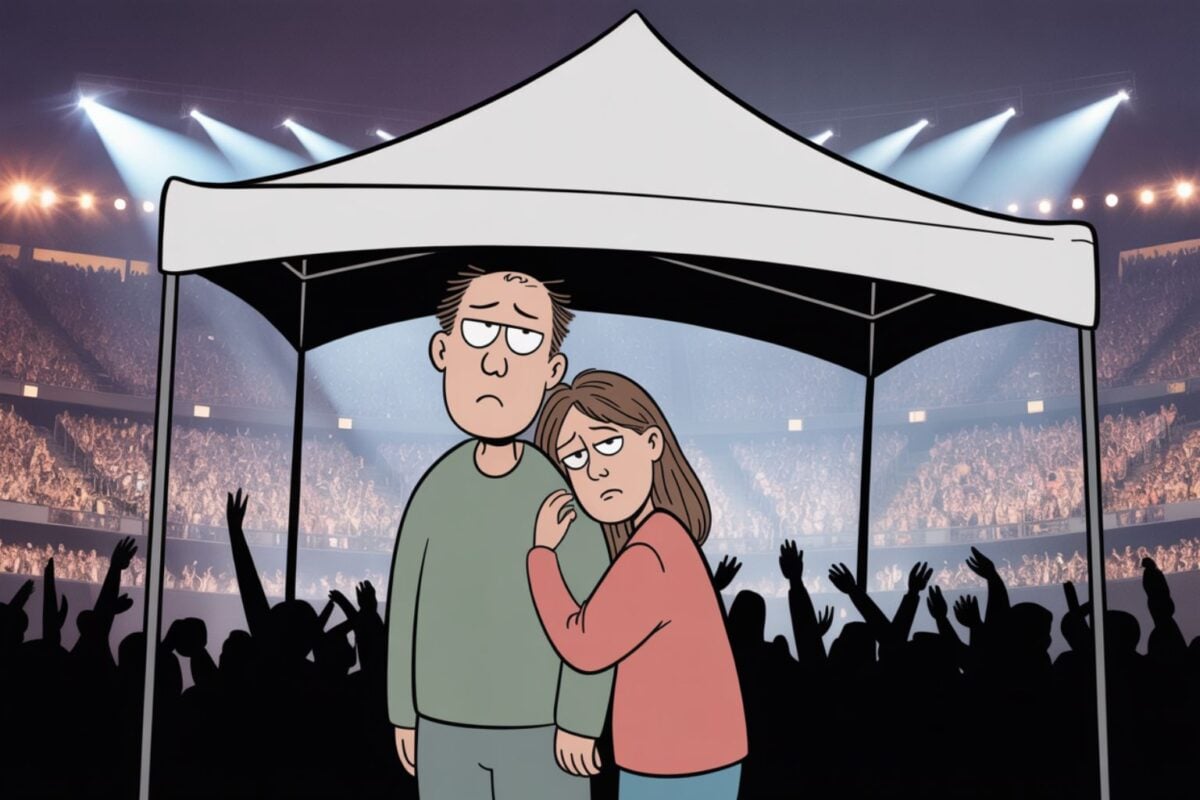
- Vincent Manierre paid $475 each for second-row Oasis concert tickets at the Rose Bowl. A VIP tent blocked one-third of the stage view.
- The tickets weren’t labeled obstructed view despite Ticketmaster’s stated policy that obstructed seats should be flagged during purchase.
- Ticketmaster refused a refund, saying the event organizer controls refunds and won’t allow one. They also wouldn’t reveal who the organizer is.
When you pay nearly $1,000 for concert tickets, you expect a perfect view, not a VIP tent blocking one-third of the stage. But that’s exactly what happens to Vincent Manierre when he buys tickets to an Oasis show at the Rose Bowl. Ticketmaster sold him “premium” seats without marking them as obstructed. Can he get a refund?
Question
I bought two second-row tickets for the Oasis concert at the Rose Bowl. They were $475 each, and I paid that much because I wanted a great view. When I got there, a VIP tent blocked one-third of the stage. The tickets weren’t labeled “obstructed view.”
I contacted Ticketmaster for a refund, but they said the event organizer controls refunds and won’t allow one. They won’t even tell me who the organizer is. Ticketmaster’s own policy says obstructed seats should be labeled, but they won’t admit any wrongdoing.
All I wanted was an acknowledgment and a small refund. Now I think I deserve all my money back. Can you help? —Vincent Manierre, Los Angeles
Answer
If you pay nearly $1,000 for concert seats, you should expect a clear view of the stage. Ticketmaster’s stated policy is that obstructed seats are flagged during the purchase process. That didn’t happen here.
Your email correspondence with Ticketmaster shows that you pressed them repeatedly on this point, but each time the response was the same: The organizer calls the shots. Ticketmaster told you it simply passed along the information they’re given, and if a stage setup changed after tickets were sold, it’s not responsible for updating the listings. That leaves you paying for premium seats that aren’t premium at all. And that’s unacceptable.
If Ticketmaster sold the seat, then Ticketmaster should be the party issuing the refund, not the event organizer. As far as a customer is concerned, Ticketmaster represents the organizer and should function as a one-stop shop if the customer needs to exchange or refund their tickets, because Ticketmaster is the party that collected their money in the first place.
Read more insightful reader feedback. See all comments.
Under U.S. federal law, consumer protection statutes, especially rules enforced by the Federal Trade Commission (FTC), ban companies from engaging in “unfair or deceptive acts or practices” in commerce. If a company sells tickets without disclosing obstructed views, and its own policy promises labeling of obstructed-view seats, nondisclosure can be a deceptive practice. (Related: StubHub FanProtect guarantee failed. Here’s how one buyer fought back.)
California’s consumer protection and false advertising laws also forbid misrepresenting goods or services. Some states have gone further with so-called “Taylor Swift bills,” requiring ticket sellers to clearly disclose all fees and restrictions. Ticketmaster’s failure to disclose the obstruction may well cross into deceptive trade practices.
Your case is an important reminder to always look carefully for any “limited” or “obstructed view” warnings before buying tickets. Also, take screenshots of the seat listing for your records. If the view is obstructed at the show, document it with photos immediately and report it to a supervisor at the venue. That creates a paper trail you can use in your refund claim later.
Ticketmaster should do better at disclosing obstructions and taking responsibility when seats don’t match the listing. At the very least, it could have provided a contact for the organizer so you could argue your case with the people responsible for placing the VIP tent between you and the stage. (I’m tempted to call the tent a wonderwall, but I’ve promised to avoid quoting song titles in these ticket stories.)
In your case, persistence paid off. I reached out to Ticketmaster on your behalf and it agreed to refund you $191, the amount of its service fees. It wasn’t the full refund you wanted, but it was a partial acknowledgment that something went wrong.
Your voice matters
You pay nearly $1,000 for premium seats. A VIP tent blocks the stage. Ticketmaster says the organizer controls refunds but won’t tell you who that is.
- Should ticket sellers be legally required to clearly label all obstructed view seats before purchase or face automatic full refunds when obstructions are discovered?
- Should companies be prohibited from blaming third parties for refund denials while simultaneously refusing to provide contact information for those third parties?
- Should ticket sellers face mandatory penalties when they sell premium-priced seats without disclosing obstructions that their own policies require them to label?
How do Ticketmaster refunds work when your seat has an obstructed view?
Quick answers to the most common questions concertgoers have about obstructed-view seats, hidden stage obstructions, and refund options, based on this Oasis Rose Bowl case and Elliott Advocacy’s consumer guidance.
Yes, in many cases. Ticketmaster’s own seating policy states that obstructed-view seats should be flagged during the purchase process. If your ticket was not labeled as obstructed and the view was blocked by a stage element, VIP tent, or production equipment, you have grounds to request a refund, especially when you can document the obstruction with timestamped photos taken from your seat.
Ticketmaster typically defers refund decisions to the event organizer or promoter, which for major concerts is often Live Nation or the venue operator. However, Ticketmaster remains responsible for accurate seat listings. If Ticketmaster failed to disclose an obstruction, push back and escalate beyond the first customer service representative using the Elliott Method.
There is no federal statute that specifically mandates obstructed-view labeling, but the Federal Trade Commission Act, Section 5, prohibits “unfair or deceptive acts or practices” in commerce. Selling a premium seat without disclosing a known obstruction can qualify as a deceptive practice under the FTC Act and parallel state consumer protection laws.
Taylor Swift bills are state-level laws, passed in several states after the 2022 Ticketmaster Eras Tour presale meltdown, that require ticket sellers to clearly disclose fees, restrictions, and seat conditions before purchase. California has pursued similar protections. These laws strengthen the consumer argument that obstructed-view seats must be labeled at checkout and give buyers leverage when disclosures fail.
Take photos and short videos from your exact seat as soon as you arrive, capturing both the obstruction and a view of your seat number or ticket. Report the issue to a venue supervisor that night and request written acknowledgment. Keep your original purchase screenshots and emails. This evidence is critical when you file a refund claim or escalate your consumer complaint.
Elliott Advocacy publishes a directory of Ticketmaster executive names, phone numbers, and email addresses on the Ticketmaster customer service contacts page. Use these contacts only after the front-line customer service line and standard corporate channels have failed. Keep your outreach brief, polite, factual, and attach your documentation in every email.
You can file a credit card chargeback under the Fair Credit Billing Act, but it should be a last resort after you have exhausted direct negotiation. Chargebacks for “services not rendered” are stronger when the seat materially differed from what was advertised. Elliott Advocacy’s complete guide to chargebacks covers the process in detail.
Can I get a refund from Ticketmaster for an obstructed-view seat?
Who decides refunds on Ticketmaster, the platform or the event organizer?
Does federal law require ticket sellers to disclose obstructed views?
What is a Taylor Swift bill and does it apply to obstructed-view disputes?
How should I document an obstructed view at a concert?
Where can I find Ticketmaster executive contacts to escalate a complaint?
Can you dispute a Ticketmaster charge with your credit card company?

Have a question about this story? Tell us what happened — we read every comment.
Join the conversation