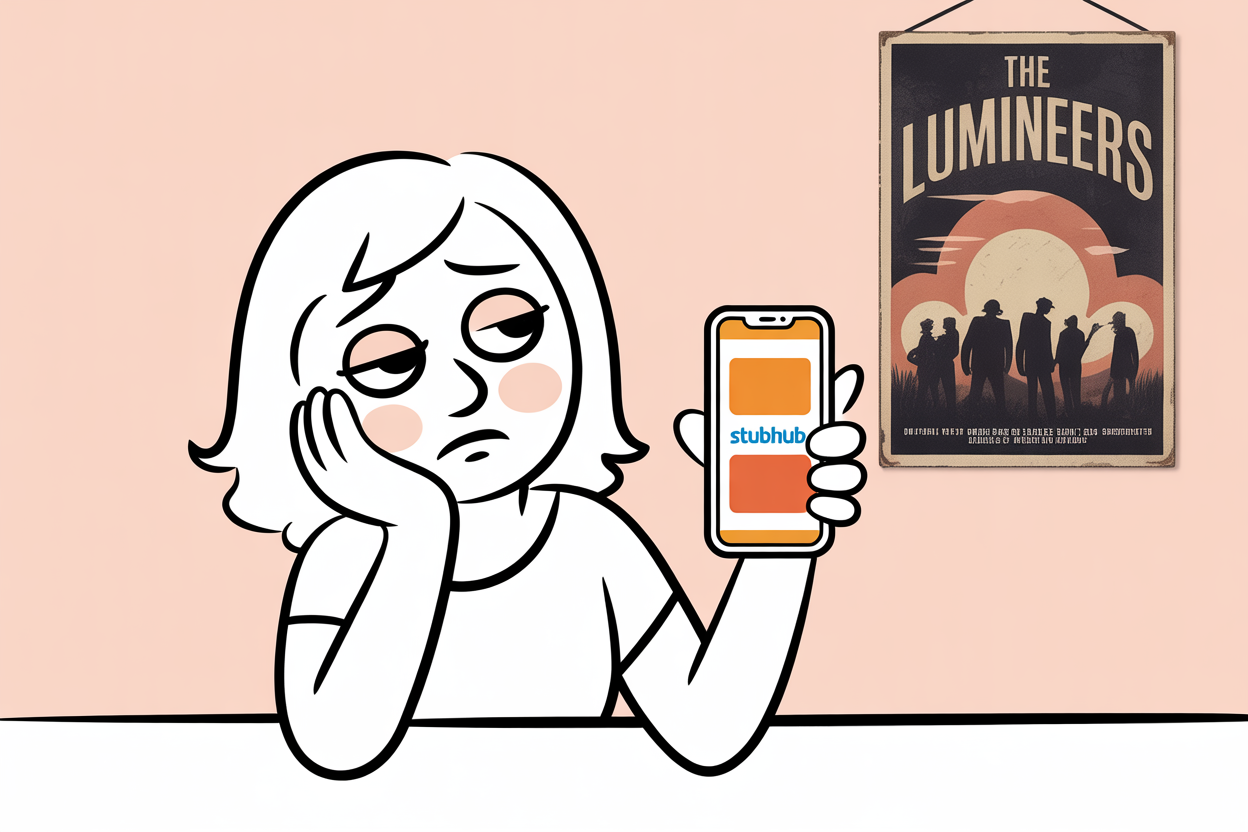
Editorial cartoon of a disappointed woman with shoulder-length hair resting her chin on her hand while holding up a smartphone showing the orange StubHub app, seated at a table against a pink wall with a vintage-style concert poster for The Lumineers hanging on the wall behind her, illustrating a frustrated concertgoer who received the wrong tickets and struggled to get a refund through StubHub's confusing return policy

Help! StubHub’s confusing ticket return policy cost me $1,176

Sharon McMonagle paid $1,176 for four club section tickets to a Lumineers concert through StubHub. The confirmation email included no seat numbers, and the day before the show StubHub sent tickets for a completely different section with no club access. StubHub asked her to accept the wrong tickets and transfer them back, which she feared would lock her into ownership. An agent told her to send a screenshot proving she had not accepted the tickets. After 45 days, StubHub said she would receive nothing because she had not returned the tickets through Ticketmaster, tickets she never accepted in the first place. StubHub advertises a FanProtect Guarantee promising that buyers who do not receive the tickets they ordered will get comparable replacements or a full refund.

Soft pastel digital illustration of a young teenage girl with a messy brown bun and large worried eyes standing alone with her arms crossed and a small brown shoulder bag, beside her dark blue rolling suitcase, in the middle of a busy blurred airport terminal with other travelers and luggage in the background, illustrating a 13-year-old unaccompanied minor stranded at LAX after United Airlines denied boarding for a connecting flight the airline itself had authorized

United authorized my teen’s connecting flight, then left her stranded at LAX

Shiri Willcot’s travel agent tried to book her 13-year-old daughter Ryan on a connecting flight from Los Angeles to Costa Rica via Houston, but United Airlines policy prohibits unaccompanied minors ages 5 to 14 on connecting flights. A United supervisor overrode the system, approved the reservation, and charged Willcot’s credit card the $300 unaccompanied minor fee. The travel agent reconfirmed the booking twice before departure, and a United representative on a recorded call two days before the flight confirmed Ryan could board without issue. At LAX, United agents refused to let Ryan board. For a month afterward, United claimed no record of the original flight existed despite confirmation emails, the credit card charge, and the recorded call. The airline gave three contradicting explanations before settling on its final narrative blaming the travel agency.

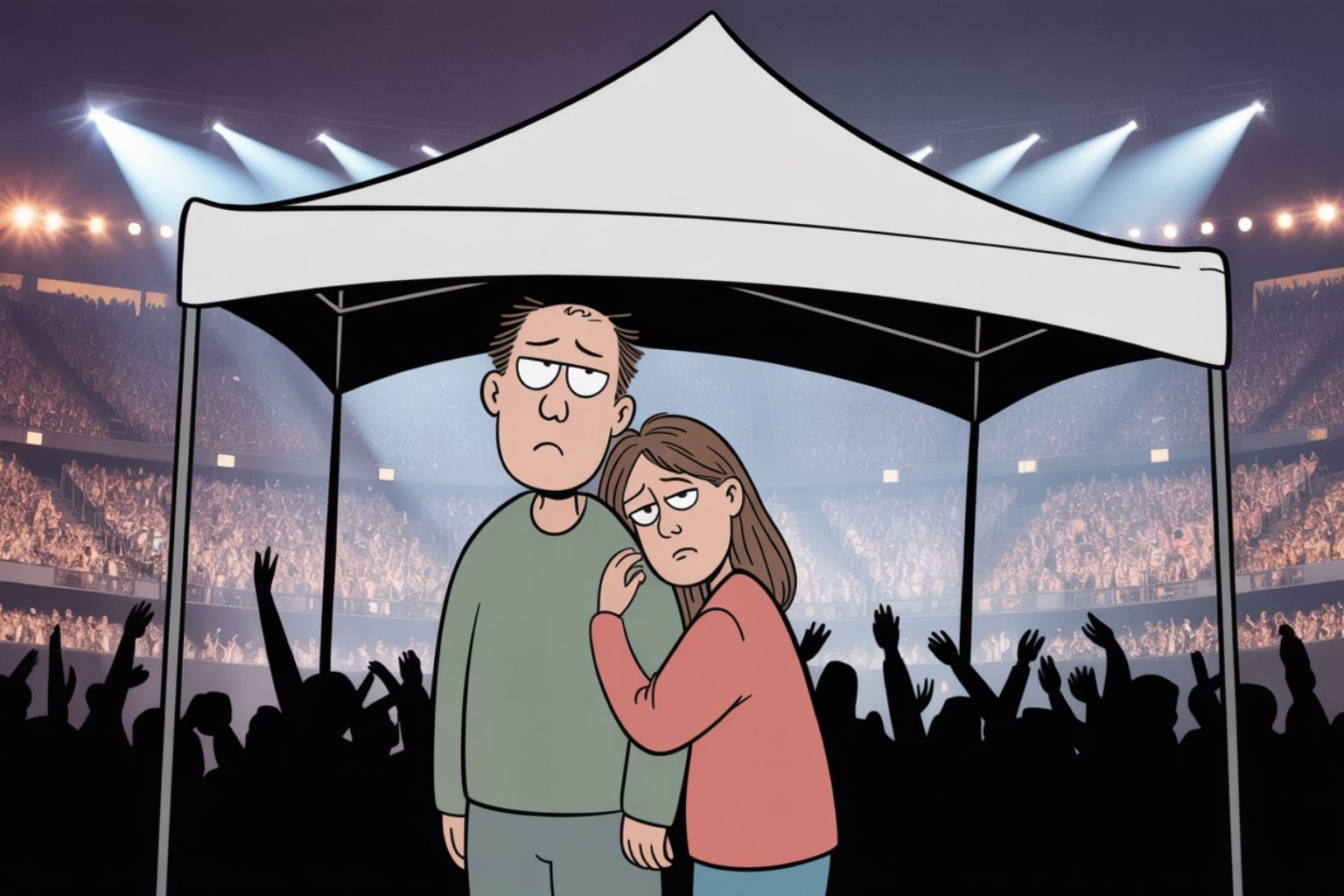
Illustration showing a frustrated couple standing under a large white VIP tent at a concert venue, with the tent blocking their view of the illuminated stage and crowd in the background, depicting how Ticketmaster sold premium second-row seats without disclosing the view obstruction

Ticketmaster sold me “great seats” that turned out to be obstructed. Where’s my refund?

Vincent Manierre paid $475 each for second-row Oasis concert tickets at the Rose Bowl, expecting a clear stage view. A VIP tent blocked one-third of the stage. The tickets were not labeled obstructed view despite Ticketmaster’s stated policy requiring such disclosure. Ticketmaster refused a refund, claiming the event organizer controls refunds but would not reveal who that organizer is. Under Federal Trade Commission rules, selling tickets without disclosing obstructions when company policy promises such labeling can constitute deceptive trade practices.

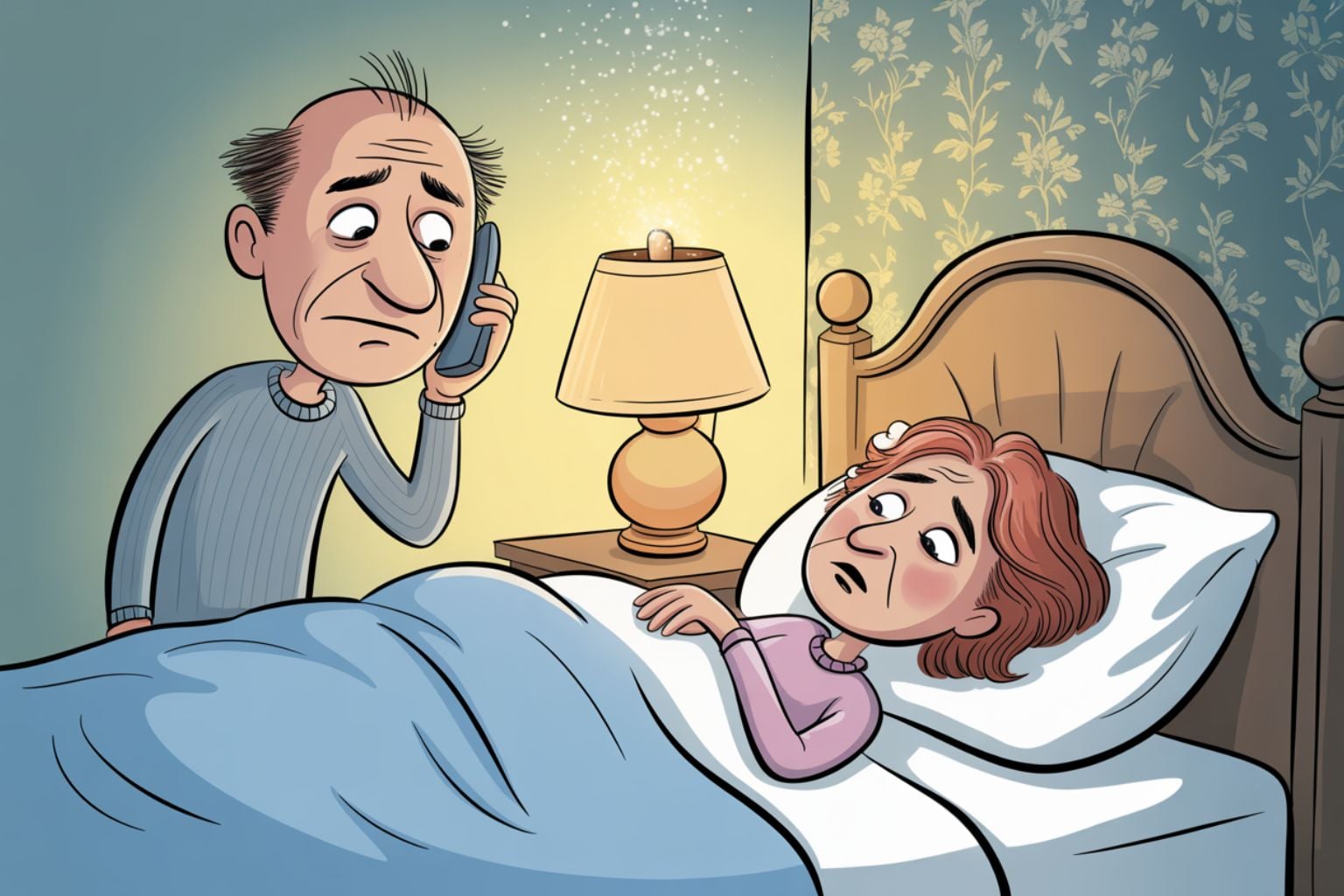
When Bill Chellis's wife was hospitalized with pneumonia on their hotel check-in day, he immediately called Hampton Inn in Great Falls to cancel. The hotel charged him the full $173 anyway, citing late cancellation policy. He called Hilton customer service, wrote to corporate offices, and sent certified letters, but received no response for months. Hotels can legally enforce cancellation policies even for medical emergencies, but state consumer protection laws may require companies to act in good faith when customers provide documentation.

Hampton Inn charged me for a canceled room after my wife was hospitalized. Can I get my money back?

When Bill Chellis’s wife was hospitalized with pneumonia on their hotel check-in day, he immediately called Hampton Inn in Great Falls to cancel. The hotel charged him the full $173 anyway, citing late cancellation policy. He called Hilton customer service, wrote to corporate offices, and sent certified letters, but received no response for months. Hotels can legally enforce cancellation policies even for medical emergencies, but state consumer protection laws may require companies to act in good faith when customers provide documentation.

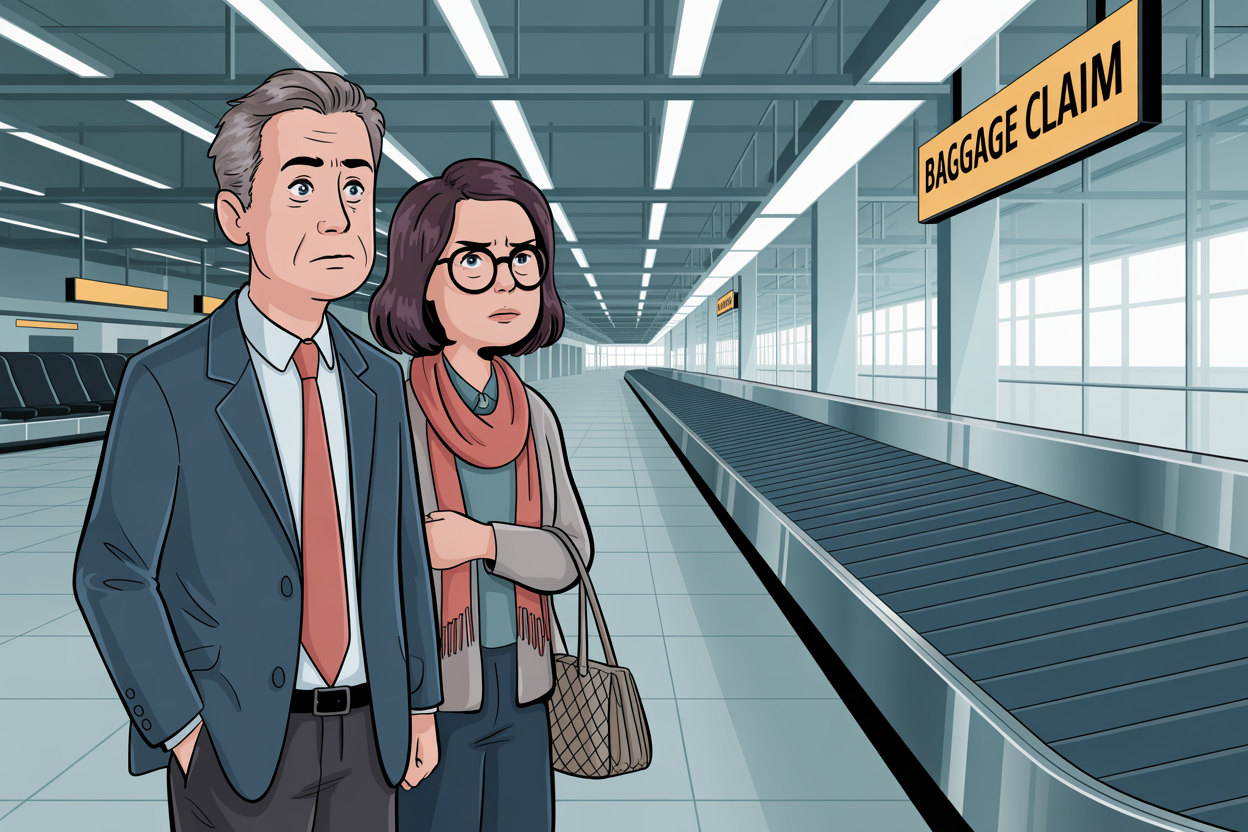
Illustration showing frustrated business class passengers standing next to their luggage while an Aer Lingus airplane flies away in the background, depicting the airline's failure to load priority-tagged baggage onto multiple consecutive flights despite tracking confirmation

Business class baggage disaster! Why is Aer Lingus ghosting us?

Aer Lingus failed to load business class passengers’ priority-tagged luggage onto four consecutive flights despite AirTag tracking showing exact airport locations. The airline then promised $265 baggage delay reimbursement in writing but ghosted the couple for six months before declaring their case closed without payment. Under the Montreal Convention, airlines are liable for baggage delays on international flights and must compensate passengers for reasonable replacement expenses.