Christopher Elliott

Christopher Elliott is the founder of Elliott Advocacy, a 501(c)(3) nonprofit organization that empowers consumers to solve their problems and helps those who can't. He's the author of numerous books on consumer advocacy and writes three nationally syndicated columns. He also publishes the Elliott Report, a news site for consumers, and Elliott Confidential, a critically acclaimed newsletter about customer service. If you have a consumer problem you can't solve, contact him directly through his advocacy website. You can also follow him on X, Facebook, and LinkedIn, or sign up for his daily newsletter.
Editorial cartoon showing an IRS official in a dark suit holding a briefcase labeled "IRS" watching a commercial airplane taking off, depicting the tension between tax authorities and budget airlines seeking a tax holiday during the jet fuel crisis

Budget airlines want a tax holiday—but where’s yours?

The Association of Value Airlines, representing Spirit, Frontier, and Allegiant, is asking Congress to suspend the 7.5 percent federal excise tax on domestic tickets and the $5.30 per-segment fee, citing the jet fuel crisis following the Iran war. On a typical $369 roundtrip fare, passengers already pay roughly $47 in mandatory taxes and fees, inflating ticket prices by about 13 percent. Without a requirement to pass savings to consumers, any tax holiday would function as a corporate subsidy rather than traveler relief.

The Burgruine Trifels in Southwestern Germany's Palatinate region, which is undergoing a green transformation.

Germany has a 150-year-old rule about forests. It may be the sanest idea in travel right now.

Southwestern Germany’s Palatinate region demonstrates how sustainable tourism can work in practice. The area combines 130 medieval castles with Germany’s only cross-border UNESCO biosphere reserve. Local foresters developed the sustainability concept Nachhaltigkeit over 150 years ago, establishing one core principle: never extract more wood from a forest annually than it can naturally produce. This simple rule of consuming only what you produce now guides everything from fungus-resistant grapevine cultivation to circular economy oil mills that repurpose press cake waste into high-protein food ingredients.

Illustration showing a frustrated couple standing under a large white VIP tent at a concert venue, with the tent blocking their view of the illuminated stage and crowd in the background, depicting how Ticketmaster sold premium second-row seats without disclosing the view obstruction

Ticketmaster sold me “great seats” that turned out to be obstructed. Where’s my refund?

Vincent Manierre paid $475 each for second-row Oasis concert tickets at the Rose Bowl, expecting a clear stage view. A VIP tent blocked one-third of the stage. The tickets were not labeled obstructed view despite Ticketmaster’s stated policy requiring such disclosure. Ticketmaster refused a refund, claiming the event organizer controls refunds but would not reveal who that organizer is. Under Federal Trade Commission rules, selling tickets without disclosing obstructions when company policy promises such labeling can constitute deceptive trade practices.

When Bill Chellis's wife was hospitalized with pneumonia on their hotel check-in day, he immediately called Hampton Inn in Great Falls to cancel. The hotel charged him the full $173 anyway, citing late cancellation policy. He called Hilton customer service, wrote to corporate offices, and sent certified letters, but received no response for months. Hotels can legally enforce cancellation policies even for medical emergencies, but state consumer protection laws may require companies to act in good faith when customers provide documentation.

Hampton Inn charged me for a canceled room after my wife was hospitalized. Can I get my money back?

When Bill Chellis’s wife was hospitalized with pneumonia on their hotel check-in day, he immediately called Hampton Inn in Great Falls to cancel. The hotel charged him the full $173 anyway, citing late cancellation policy. He called Hilton customer service, wrote to corporate offices, and sent certified letters, but received no response for months. Hotels can legally enforce cancellation policies even for medical emergencies, but state consumer protection laws may require companies to act in good faith when customers provide documentation.

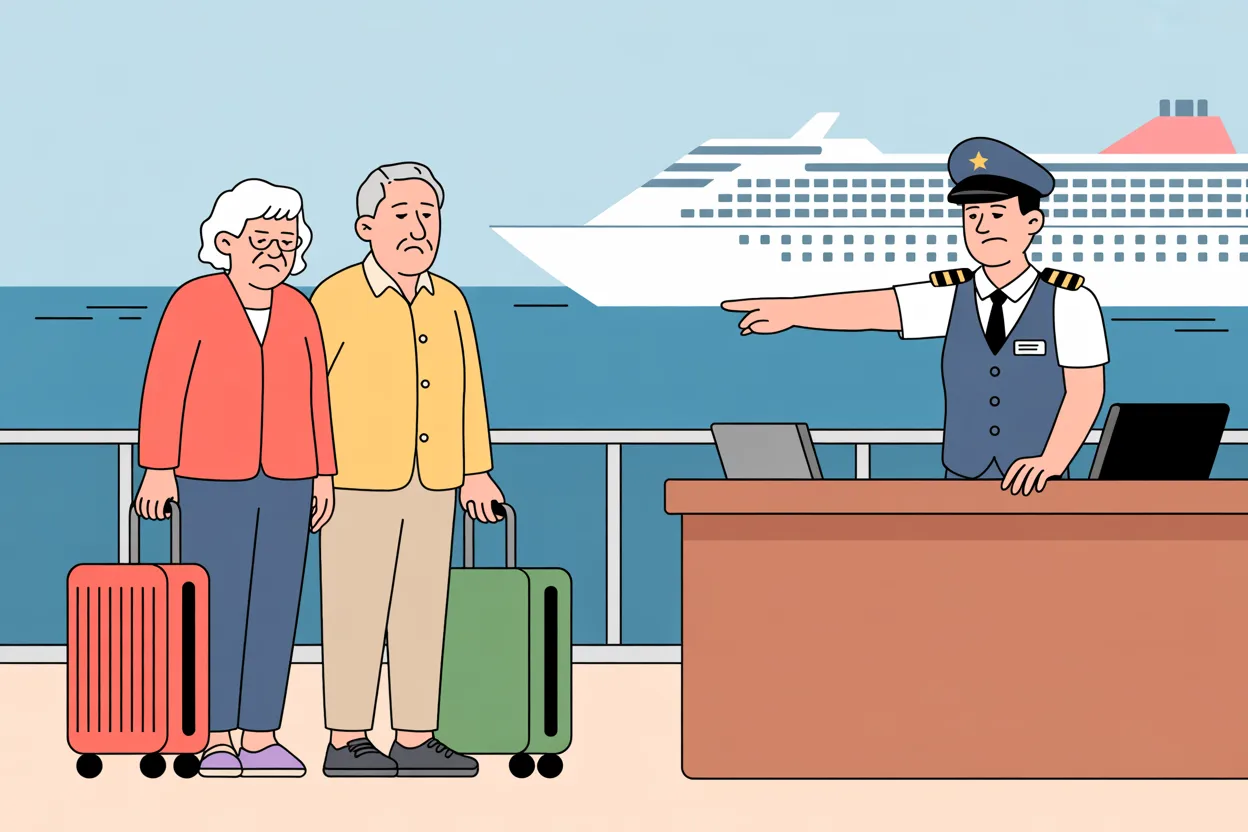
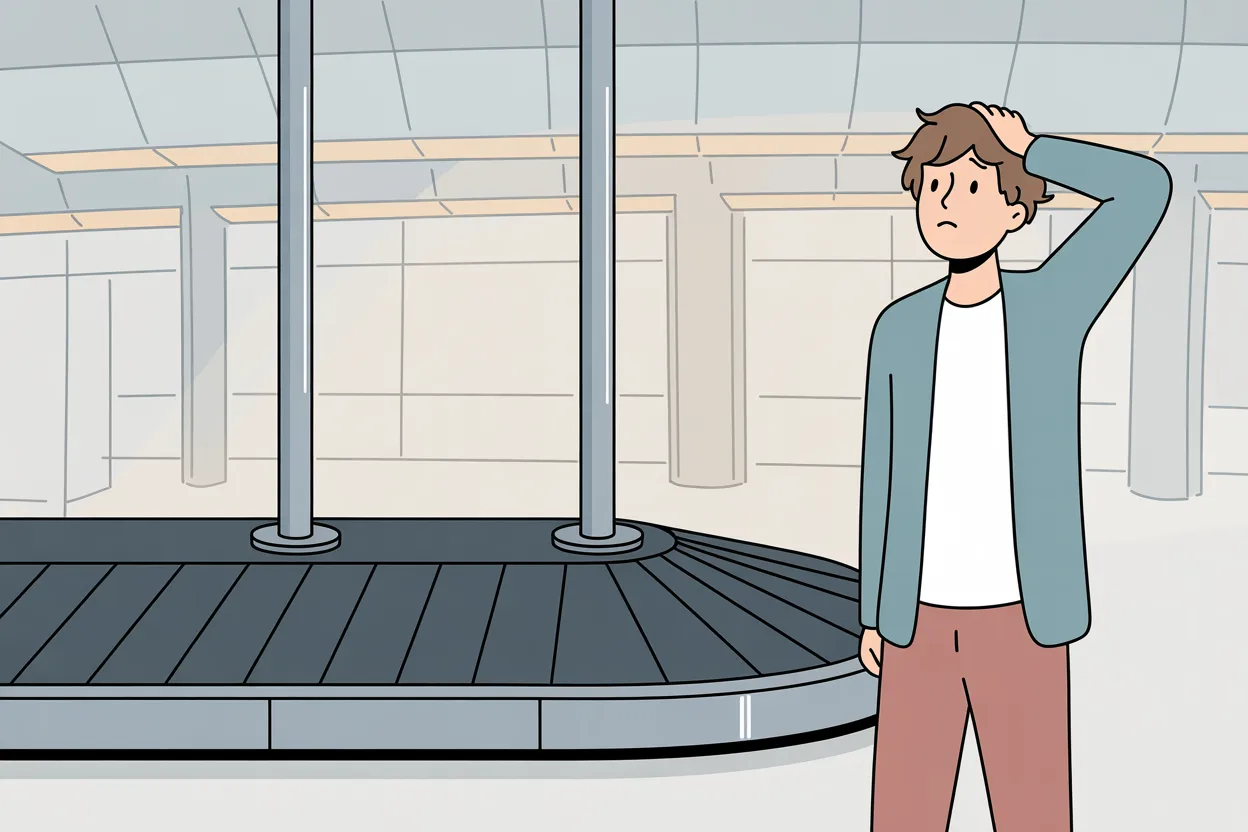
Illustration showing frustrated business class passengers standing next to their luggage while an Aer Lingus airplane flies away in the background, depicting the airline's failure to load priority-tagged baggage onto multiple consecutive flights despite tracking confirmation

Business class baggage disaster! Why is Aer Lingus ghosting us?

Aer Lingus failed to load business class passengers’ priority-tagged luggage onto four consecutive flights despite AirTag tracking showing exact airport locations. The airline then promised $265 baggage delay reimbursement in writing but ghosted the couple for six months before declaring their case closed without payment. Under the Montreal Convention, airlines are liable for baggage delays on international flights and must compensate passengers for reasonable replacement expenses.

Cartoon of a shepherd watching sheep branded with airline logos (Delta, American, JetBlue, Southwest) jump off a cliff, illustrating airlines following each other on fuel surcharges

Your airline is lying to you about fuel surcharges

Airlines sure have a funny way of saying thank you. 

After you spend years obsessively funneling every purchase through their co-branded credit cards and sitting in its cramped economy class seats, you finally go to redeem your “free” flight—only to find a $1,400 bill waiting for you at checkout.

Editorial cartoon illustration of shocked and panicked travelers running away from an enormous airplane featuring both American Airlines red-white-blue livery and United Airlines globe logo, symbolizing consumer anxiety about the proposed United-American Airlines merger that would control 40% of the U.S. market

Should we allow United and American to merge?

The United Airlines–American Airlines merger everyone feared may actually be happening.

United Airlines CEO Scott Kirby reportedly met with administration officials at the White House in February to float an audacious proposal: a combination with American Airlines.