Cartoon of a disappointed concertgoer holding a ticket stub while standing in a packed crowd far from a brightly lit stage where performers appear as tiny distant figures.

SeatGeek promised first-row seats. I got section G instead!

Sean Thomas paid SeatGeek $2,744 to see The Weeknd, and the listing made the value clear: premium floor seating in the first five rows, plus a special VIP merchandise bundle. Then the tickets arrived. They were for Section G, a long way back from the stage, and the VIP package did not match the terms SeatGeek’s own rules require. When he complained, the answers kept shifting. First a representative told him “first five rows” actually meant a general zone, not literal rows. When he disproved that, the company redefined the stage itself, suggesting runways now count as part of it, and then uploaded a brand-new seat map after he filed his complaint. His Buyer Guarantee was supposed to protect him against exactly this. What happened when he invoked it, and what SeatGeek finally said about his $2,744, is where the case turns.

Line-art cartoon of an annoyed woman standing on her front steps with a hand to her head, watching a delivery van drive away down her suburban street.

Shein sent my package to my old address after I requested a return. Can I get a refund?

Alyssa Klenotich placed a $153 Shein order, then realized the site had autofilled her old address. She tried to fix it on the Shein website, but it was too late for the company to change anything. So she went to the carrier, SpeedX, and asked it to return the package to the sender so she could get a refund, and SpeedX accepted the request in writing. Then it delivered the package to the old address anyway, and her items were gone. SpeedX kept sending her form responses telling her to talk to the merchant, and she could not see why a loss the carrier caused was suddenly her problem to chase. Here is the principle worth knowing when a shipment goes sideways: you almost always go back to the merchant first, because that is the company you have a contract with and the one that hired the shipper, and the seller, not the carrier, is the party with the authority to issue your refund.

Illustration of an unhappy woman holding up two pale blue dresses on hangers over an open cardboard shipping box, preparing to return the gowns she ordered online.

I returned $3,990 in designer dresses — then my refund vanished

Debbie Rivet ordered the same evening gown from the London designer Safiyaa in two sizes, the Serendipity Pale Blue Long Dress at $1,995 each, planning to keep whichever fit and send back the other. When the dresses arrived, the fitted style was wrong for her occasion, so she requested a return authorization, shipped both back by FedEx, and kept the receipts proving delivery. Then she waited for her refund. And waited. Her follow-up emails went unanswered, the phone line dropped to voicemail and disconnected, and when she filed a dispute with Capital One the bank reversed its initial credit, saying too much time had passed. There is a rule worth committing to memory before you give a silent company the benefit of the doubt: under the Fair Credit Billing Act, you generally have only 60 days from the statement date to dispute a charge in writing, and the longer you wait for a reply that may never come, the closer that protection slips toward expiring.

Illustration of a worried man on the phone holding a credit card while a concert crowd watches performers on stage, representing a StubHub ticket refund dispute.

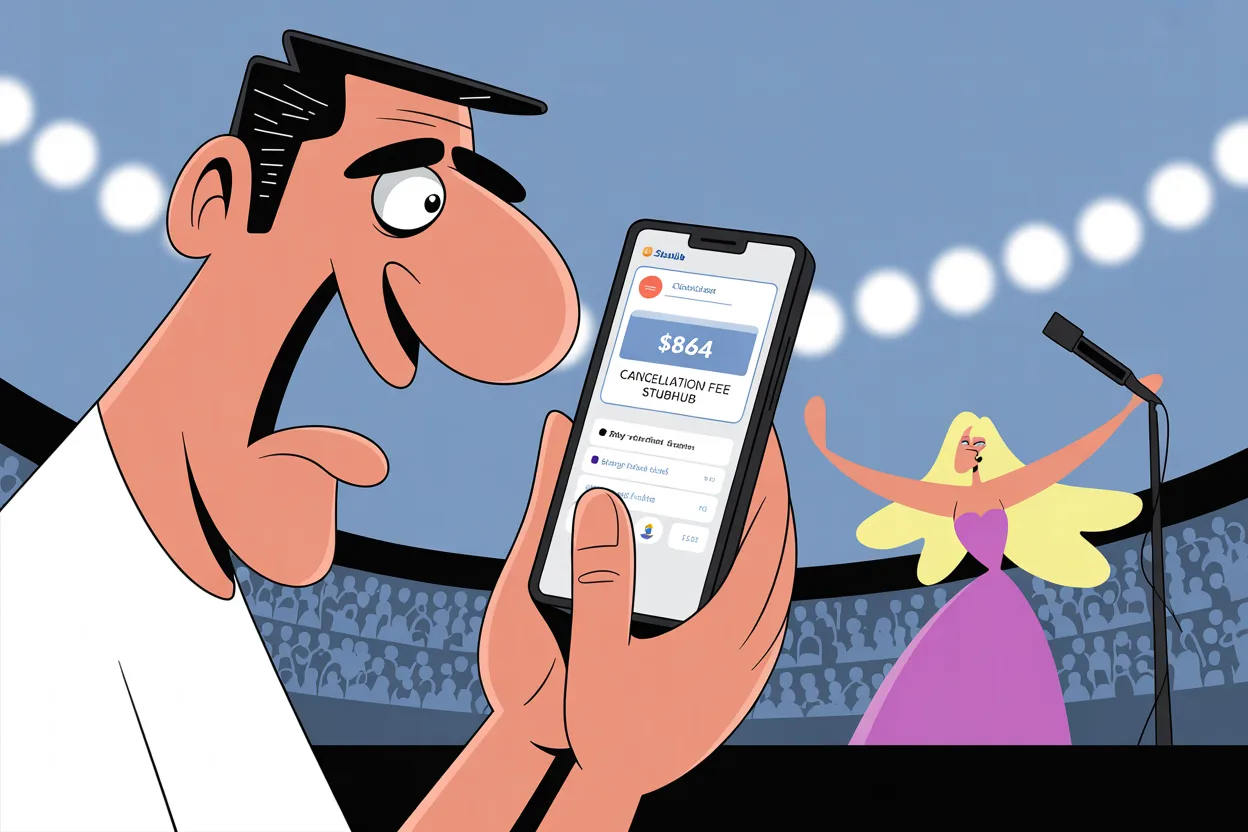
This StubHub rep’s “help” with Coldplay tickets cost me $3,000!

Paul Avron’s daughter bought three Coldplay tickets at Hard Rock Stadium in Miami for $1,027, nine months before the show, as a birthday gift for her best friend and the friend’s dad. On the day of the concert, the StubHub app said the tickets were being released, but they never appeared. With the show already starting, the family called StubHub in a panic and asked for the tickets or replacements so the group could get in. The last representative refused to provide replacement tickets and said they had to buy new ones, promising StubHub would refund the original $1,027. The rep said he saw three tickets for just $1 more than the original purchase and sent a link. The tickets were actually $1,000 each, and StubHub charged the credit card $3,000. The family disputed the charge with their credit card company and contacted StubHub directly, but both representatives said they would not credit the account. The family never accepted or used the expensive tickets and never attended the concert. StubHub’s FanProtect Guarantee promises valid tickets or your money back, and says StubHub will find comparable replacement tickets when possible.

Editorial cartoon of a disappointed woman with shoulder-length hair resting her chin on her hand while holding up a smartphone showing the orange StubHub app, seated at a table against a pink wall with a vintage-style concert poster for The Lumineers hanging on the wall behind her, illustrating a frustrated concertgoer who received the wrong tickets and struggled to get a refund through StubHub's confusing return policy

Help! StubHub’s confusing ticket return policy cost me $1,176

Sharon McMonagle paid $1,176 for four club section tickets to a Lumineers concert through StubHub. The confirmation email included no seat numbers, and the day before the show StubHub sent tickets for a completely different section with no club access. StubHub asked her to accept the wrong tickets and transfer them back, which she feared would lock her into ownership. An agent told her to send a screenshot proving she had not accepted the tickets. After 45 days, StubHub said she would receive nothing because she had not returned the tickets through Ticketmaster, tickets she never accepted in the first place. StubHub advertises a FanProtect Guarantee promising that buyers who do not receive the tickets they ordered will get comparable replacements or a full refund.

Editorial cartoon showing a confused balding middle-aged man in a white shirt and tie standing on his front lawn looking up at a small light blue mini refrigerator that has been mysteriously returned to his porch steps after being picked up by FedEx, illustrating how third-party seller returns can fail in unexpected ways

Walmart told me to donate my broken refrigerator — then things got strange

Howard Friedman bought a beverage refrigerator from Walmart that did not get cold. After Walmart arranged a return, his replacement came from third-party seller Ca’Lefort and also failed. FedEx picked up the broken refrigerator then mysteriously delivered it back to his porch days later. Ca’Lefort refused returns without original packaging and offered only 50 percent off a replacement. Walmart told him to donate the broken refrigerator to charity and promised a refund that never arrived. Multiple calls produced dropped calls and apologies but no resolution. Federal consumer protections under FTC rules apply even with third-party marketplace sellers.

Editorial cartoon showing a confused customer holding out a credit card to a stern rental car counter agent who raises her hand to refuse it, with parked cars visible through the window in the background, depicting how Europcar agents pressure customers into buying duplicate insurance and refuse third-party coverage

Hotels.com and Europcar charged me twice for a one-way rental. Can I get my money back?

Lawrence Signori prepaid Hotels.com $338 for a one-way Europcar rental in Porto, Portugal, with the one-way fee clearly included in his reservation. At pickup, the Europcar counter agent added $155 for the one-way fee, $155 for mandatory Premium Protection insurance, and a $97 Premium Station Surcharge despite his airport reservation. Europcar claimed only $243 of the prepayment was applied to the rental, with the rest going to Hotels.com as commission. Hotels.com initially provided only vague responses about the duplicate charges totaling $407.

Illustration showing a frustrated couple standing under a large white VIP tent at a concert venue, with the tent blocking their view of the illuminated stage and crowd in the background, depicting how Ticketmaster sold premium second-row seats without disclosing the view obstruction

Ticketmaster sold me “great seats” that turned out to be obstructed. Where’s my refund?

Vincent Manierre paid $475 each for second-row Oasis concert tickets at the Rose Bowl, expecting a clear stage view. A VIP tent blocked one-third of the stage. The tickets were not labeled obstructed view despite Ticketmaster’s stated policy requiring such disclosure. Ticketmaster refused a refund, claiming the event organizer controls refunds but would not reveal who that organizer is. Under Federal Trade Commission rules, selling tickets without disclosing obstructions when company policy promises such labeling can constitute deceptive trade practices.