in this case
- A woman’s stolen credit card is used for a large purchase at Sam’s Club, but her bank refuses to refund the charge.
- She argues she couldn’t have made the purchase because she’s not a Sam’s Club member, but this “perfect alibi” isn’t enough to prove fraud.
- After hitting a wall with her bank, she needs help to get the fraudulent charge reversed.
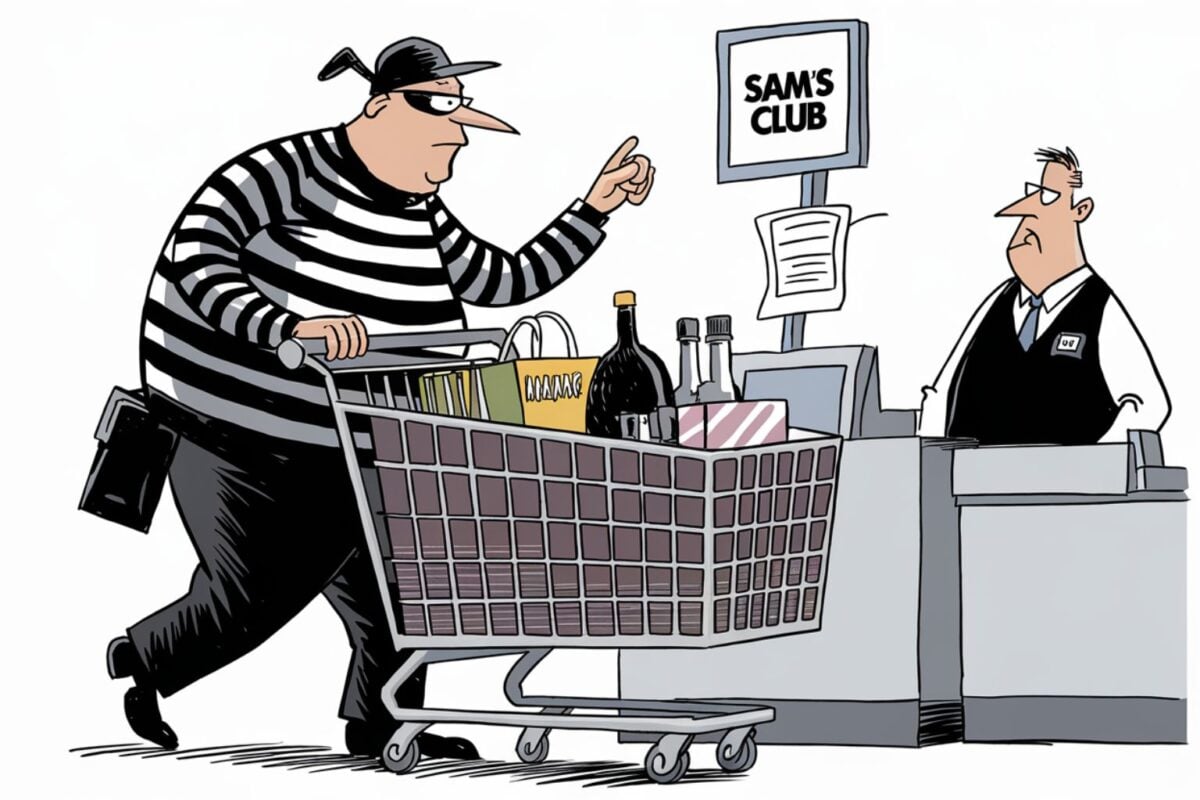
Barbara Bowman’s credit card was stolen and used at Sam’s Club. She wants a refund, and she has the perfect alibi: She’s never been a Sam’s Club member.
Question
My USbank Kroger credit card was stolen, and the thief charged $1,238 at a local Sam’s Club. The thief also used my stolen Capital One and Cabela’s credit cards to try and charge $1,032 and $1,238, respectively, all at the same Sam’s Club. Fortunately, the Capital One and Cabela’s charges were declined, and the companies issued new credit cards.
I reported the theft to USbank the next day, called Sam’s Club to report the fraudulent charges, and filed a police report. I’ve called US Bank at least once a week since this happened. I gave them the police report case number and the name and number of the supervisor at Sam’s Club who I spoke with. US Bank is still saying I must pay the $1,238.
I am almost 80 years old with excellent credit. Also, I have never been a Sam’s Club member. Please help me! — Barbara Bowman, Delphi, Ind.
Answer
You shouldn’t have to pay for this, but not for the reasons you think.
You did everything right by reporting the theft to your bank, the merchant, and the police. You also kept a detailed record of your communication, which is important.
It helps that you were never a Sam’s Club member, but unfortunately, that doesn’t prove your innocence. A quick review of Sam’s Club policies shows it accepts all major U.S. credit cards, but they do not have to belong to the member. So, for all Sam’s Club knows, you could have given your card to a friend who was a member, and the charges would have been legitimate.
Read more insightful reader feedback. See all comments.
Still, it’s unacceptable that US Bank refused to remove the fraudulent charges from your account. Under the Fair Credit Billing Act, your bank should have clawed back the money from Sam’s Club. You had a police report and all of your documentation was watertight. (Here’s the best guide to resolving your consumer problem.)
You could have escalated your case in writing to one of the executives at your bank or at the retailer. I list the names, numbers and email addresses of the USbank executives and the Sam’s Club executives on my consumer advocacy site, Elliott.org.
Lately, I’ve noticed a lot of credit card disputes that are summarily dismissed because the bank is using artificial intelligence to determine if a claim is valid. I don’t know if that happened in your case, but if I had to make an educated guess, I would at least say that your bank didn’t review your dispute carefully enough.
You asked my advocacy team for help and I contacted Sam’s Club on your behalf. In response, you received a notice that USbank had closed your case and issued a full credit to your account. “This nightmare is finally over,” you told me.
The fraud dispute checklist
What to do when you find a fraudulent charge on your credit card. For more details, see our complete guide to credit card disputes.
1. Act immediately
Call the fraud department number on the back of your credit card as soon as you discover the charge. Ask them to freeze the account to prevent further fraudulent activity.
2. File a police report
Contact your local police department to file an official report. This creates a legal record of the theft and is crucial evidence for your dispute.
3. Put it in writing
Follow up your phone call with a formal dispute letter to your bank. Sending it via certified mail provides additional protection under the Fair Credit Billing Act.
4. Escalate if necessary
If your initial dispute is denied, don’t give up. Send a brief, polite email to a customer service executive at the bank, including your police report number and all relevant details.
Related reads

Have a question about this story? Tell us what happened — we read every comment.
Join the conversation