in this commentary
- With record passenger numbers expected, travelers are increasingly worried about missing their flights this summer.
- A traveler who arrived two hours early for a domestic flight still missed it because of long lines and strict baggage cutoff times.
- His costly ordeal highlights a growing problem for summer travelers: even when you follow the rules, the system can still fail you.
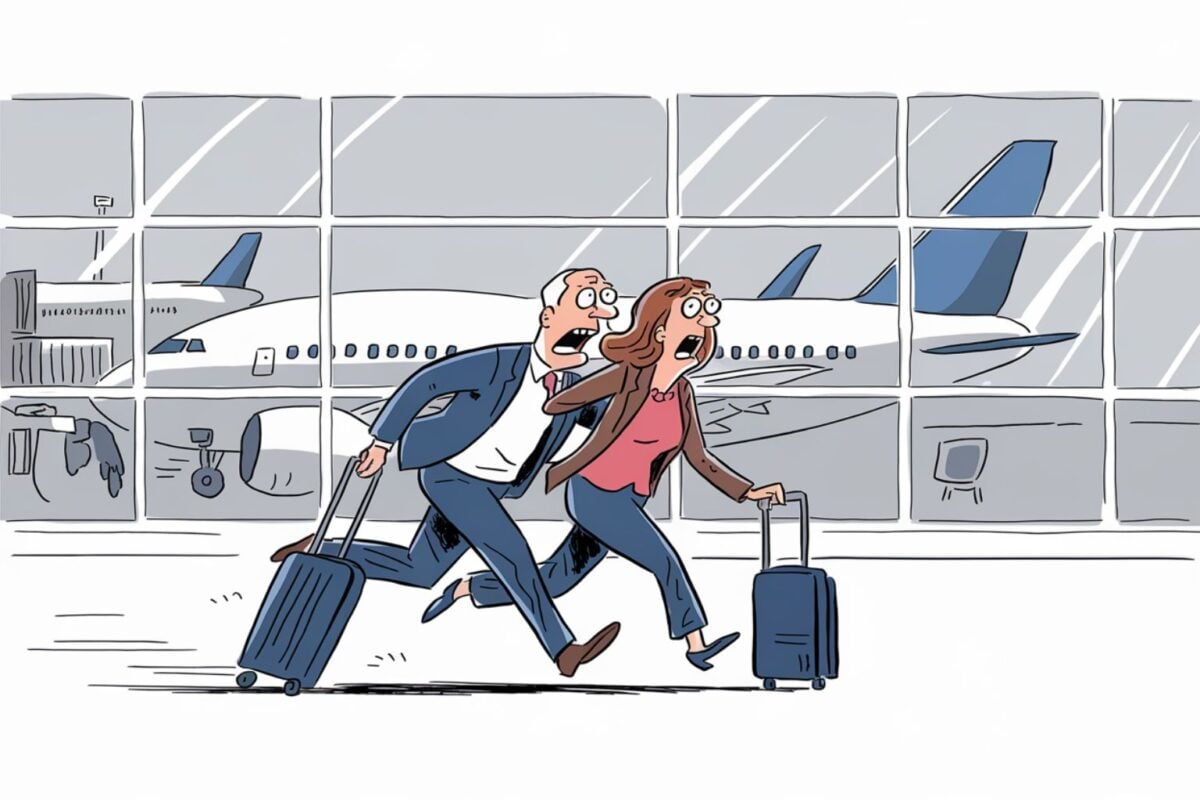
Ever had this nightmare? You’re racing through the airport, dodging slow-moving travelers, swerving to avoid those annoying golf carts, only to arrive breathlessly at your gate just as the doors close.
Your flight is gone. Your trip is ruined.
Darrel Reid knows all too well the pain of missing a flight. Earlier this year, he and his wife arrived two hours early at Dallas-Fort Worth International Airport for a 7:05 a.m. flight to Los Angeles.
They thought they had plenty of time. But they didn’t.
“By the time we parked, took the shuttle, and got to the ticket counter, it was 6 a.m.,” says Reid, a salesman from Mesquite, Texas. “An airline representative told us we couldn’t check our bags because we’d missed the cutoff time. The gate agent couldn’t have cared less.”
Missing a flight isn’t just inconvenient. It’s expensive, stressful, and can take a wrecking ball to your travel plans. And it will probably happen more often than ever this summer. With record-breaking passenger numbers expected, airports are bracing for chaos. Delays, long lines, and overbooked flights are the new normal.
People are afraid. One survey by Faye Travel Insurance found that almost a quarter of air travelers (23 percent) were worried they would miss their flight.
Missing your flight can be expensive
Missing a flight can have a domino effect. If it’s your outbound flight, your airline could cancel your return. Miss a connection, and you could be stranded overnight. Add in the cost of rebooking fees, hotel stays, and missed reservations, and the price tag can easily run into the thousands.
For Reid, who had booked a vacation package to Disneyland with his family through Expedia, the solution was to spend more money.
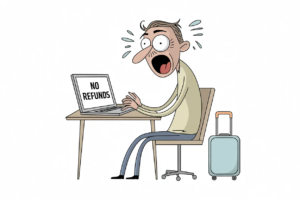
Frontier wouldn’t put him on the next flight because it listed him as a “no show,” forfeiting his entire ticket. So he paid an extra $800 to get to Los Angeles so he could rescue his vacation. He tried to file a claim with his travel insurance, but it would not cover a missed flight.
“It was a real ordeal,” he says.
Anyone can miss a flight
Even the most experienced travelers can miss a flight. Often, it’s because airports are confusing places.
Nick Brennan recently missed a flight from Rome to London.
“I was at the wrong gate,” says Brennan, the CEO of a telecommunications company in London. “There were two flights to Gatwick leaving at the same time — one with Vueling, one with Wizz Air. I saw the right destination and time on the departure board, but I didn’t notice the airline. By the time I realized my mistake, it was too late.”
Another leading cause of missed flights: underestimating how long it will take to get to the airport. Amrita Bhasin missed her flight from New York to San Francisco because she underestimated New York traffic and then had to stand in a long security line.
“I’m used to SFO, where security takes two minutes,” says Bhasin, who runs a software company in San Francisco. “At JFK, it took forever. I’ll never make that mistake again.”
I’ve missed a few flights, too. Once I forgot my passport at home, and by the time I made it to the airport, the plane had left. Another time, I got stuck in a long security line. In both cases, I got lucky. The airline rebooked me on the next available flight at no extra charge. But it was embarrassing, and I should have known better.
How early should you get to the airport?
The cardinal rule of air travel used to be: arrive two hours early for domestic flights, three hours for international. Not this summer.
You’ll want to add an hour to that, especially during peak travel times, which is pretty much the entire month of August.
I know what you’re thinking. Three hours? Once you factor in the trip to the airport, it might be faster to just drive to your destination instead of flyin. Good point. You might want to consider ditching your flight during the busy summer travel period and just driving — unless you’re headed abroad.
But if you must fly, here’s how to avoid missing your flight:
Book smarter flights
A 30-minute connection might work in theory, but it’s a gamble. Flights have minimum connection times, which are set by a joint airport and airline commission, but they are guidelines and they can sometimes be inaccurate. Choose a flight that gives you at least an hour to connect, and longer if you have to change terminals.
Note your airline’s baggage cutoff times
That’s where Reid went wrong. Most airlines require checked bags to be dropped off at least 30 to 60 minutes before departure. Some budget carriers, like Frontier and Spirit, have even stricter rules.
Use technology to your advantage
Download your airline’s app and enable push notifications. The app will alert you to gate changes, delays, and boarding times. Always double-check your gate on the app, not just the departure board. Otherwise, you could end up like Brennan — going to the wrong gate.
Pro tip: Pack a portable charger in your carry-on, not in your checked bag. A dead phone means no boarding pass, no flight alerts, and no way to rebook if something goes wrong.
Apply for the fast lane
If you’re a frequent traveler, consider applying for TSA PreCheck or CLEAR. PreCheck lets you breeze through security without removing your shoes, belt, or laptop. CLEAR skips the ID check line altogether.
Read more insightful reader feedback. See all comments.
Know your rights
If you miss a flight and it’s the airline’s fault (for example, insufficient connection time), the airline must book you on the next available flight. Even if it’s your fault, you can ask for consideration under the “flat tire” rule, an informal guideline that says if you made a good-faith effort to get to the airport on time, you’ll get on the next flight at no extra charge.
What should you do if you miss your flight?
Missing a flight isn’t the end of the world, even though it feels that way. If you’re at the gate, ask an agent about your options. (Don’t forget the flat tire rule, which could save you hundreds of dollars on a new flight.)
Whether your delay is the airline’s fault or your fault, your best course of action is always to use good manners. Don’t demand. Don’t snap your platinum card on the counter and declare, “Do you know who I am!” Instead, calmly ask if your airline can accommodate you on the next flight.
Before you book another flight yourself, make sure you’ve exhausted all of your options. That includes asking your travel agency — in Reid’s case, Expedia — or your travel insurance company for help. While it’s true that travel insurance generally doesn’t cover missed flights, your insurance company’s 24/7 concierge might be able to help you get to your destination with a minimum of headache and hassle.
I asked Expedia about Reid’s missed flight. “We are always available to advocate for our travelers and strive to find the best possible resolution, including speaking with the airline and requesting flexibility in such cases,” a representative told me. It also reiterated the advice to arrive extra early for your flight, especially this summer.
Missing your flight is the ultimate travel faux pas this summer. It’s costly and stressful. But use my tips and it’s almost completely avoidable.
Never miss a flight again
This summer travel season is expected to be chaotic. Use this checklist to make sure you’re not left behind at the gate.
Arrive extra early
The old “two hours for domestic, three for international” rule isn’t enough this summer. Add at least an hour to that, especially if you’re checking bags.
Book smarter flights
A 30-minute connection is a recipe for disaster. Give yourself at least an hour between flights, and even more if you have to change terminals or go through customs.
Apply for the fast lane
Long security lines are a major cause of missed flights. Programs like TSA PreCheck or CLEAR can save you valuable time and reduce stress at the security checkpoint.
Know baggage cutoff times
Most airlines require you to check your bags 45 to 60 minutes before departure. If you miss this deadline, you won’t be able to check your luggage—or board your flight.
Use your airline’s app
Enable push notifications for real-time alerts on gate changes, delays, and boarding times. Always trust the app over the airport departure boards, which can be slow to update.
Related reads

Have a question about this story? Tell us what happened — we read every comment.
Join the conversation