The travel industry is redefining what it means to get your money back. You’re not going to like it.
Just ask William Farrer, a retired attorney from San Rafael, Calif., who thought he was booking a refundable room at a full-service hotel in New Orleans.
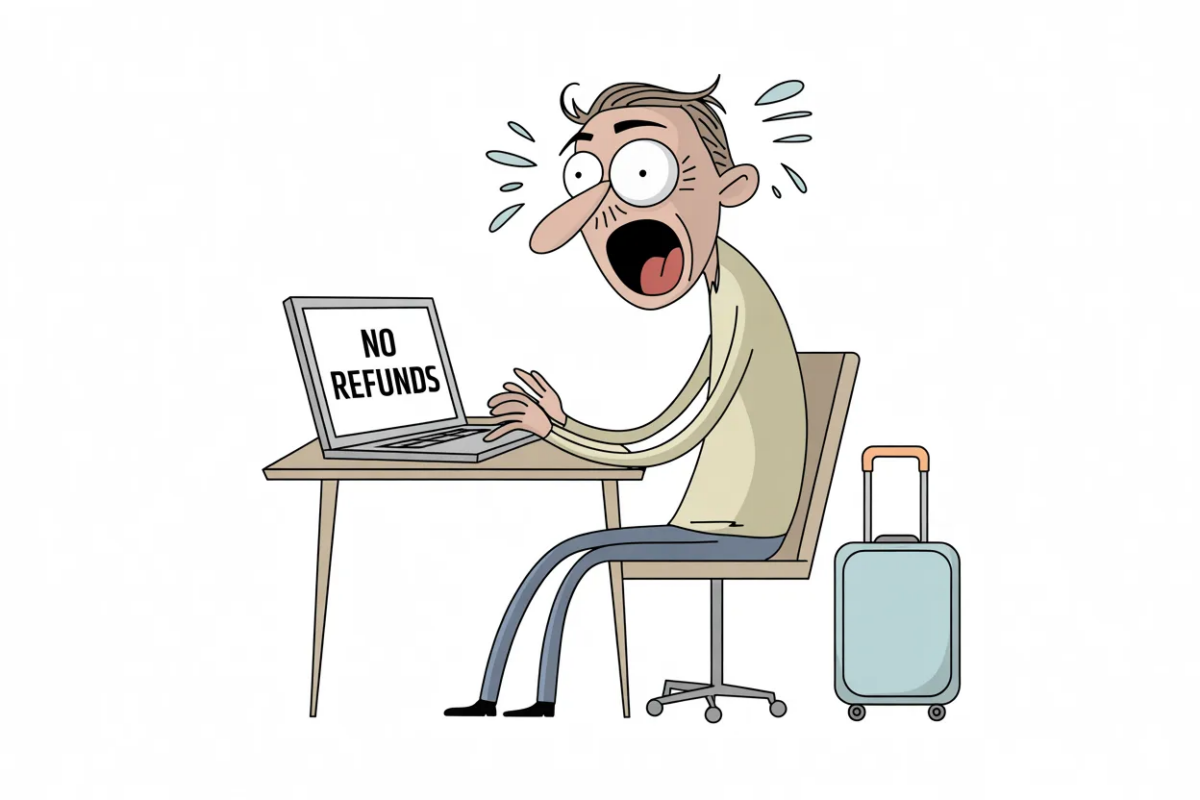
He typed the hotel’s name into Google, clicked the first result, double-checked the terms — which promised the room was “refundable for a limited period” — and hit confirm. Seconds later, an email arrived from a booking site, informing him that the “limited” time had already expired and that his $3,228 was spent. Wow, that was fast!
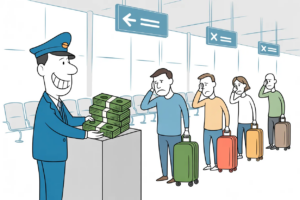
It’s the travel industry’s latest shell game. The word “refundable” used to mean you’d get your money back. Now it means something closer to you might get some of your money back, under specific conditions, minus fees you weren’t clearly told about, after a fight that could consume months of your life.
“In most consumers’ minds, a refundable ticket should provide a full refund to the original form of payment if you cancel before departure,” says Chip Lupo, an analyst with WalletHub. “That’s what you’re generally entitled to. But some travel providers may try to get you to accept a credit or voucher instead.”
Why a refundable booking may not return all your money
When you book a refundable trip through an online travel agency, you’re buying two promises. The airline’s fare rules say refundable, but the agency’s service contract may say something else.
That “something else” often includes a $30 nonrefundable distribution charge—a fee airlines and agencies pass along for using the Global Distribution System, the software backbone that connects travel agents to airline inventory.
“Some airlines apply a distribution charge,” says Maria Atanasova of Stars Desk, a luxury travel agency. “This fee is typically around $30 and, in many cases, is nonrefundable even when the ticket itself is fully refundable.”
A $30 fee doesn’t sound like much. But you paid for a refundable fare and didn’t get one.
Agencies hide their own fees in the fine print, too. Many online agencies compete on price by discounting fares below what airlines publish, then relying on change and cancellation fees to survive.
“They rely on service fees for changes or cancellations to offset the loss on sale,'” Atanasova explains. In other words, the bargain fare you found on a comparison site may have a hidden string attached—and that string tightens the moment you try to cancel.
“‘Refundable’ in travel now often means conditional,” says Alen Baibekov, CEO of Economy Bookings, “not complete.”
Some hotels charge fees when they send you a refund
It’s not just the big guys playing this game. Stephen Fofanoff manages the Domaine Madeleine Hotel near Olympic National Park in Port Angeles, Wash.—a small family property that learned a painful lesson during the pandemic.
“We never want to charge any guest unnecessarily,” Fofanoff says, noting that all fees are clearly disclosed when guests book a room. Card processors typically keep the fee from the original sale. Some charge another fee to send the money back.
“We were forced to adjust our policy to cover the costs just to remain open,” he says. That adjustment added about 5% to every cancellation.
His hotel now offers what he calls a “choose your own cancellation” policy. Guests can reschedule for free, but a cash refund, when due, costs something.
“As a small family-owned hotel, we simply can’t afford the burden that giant corporations impose on us,” Fofanoff says.
Credit card processing fees are an unglamorous and underreported tax on small businesses, and consumers ultimately foot the bill. What’s frustrating isn’t that these costs exist, but it’s that the word “refundable” doesn’t acknowledge them.
Guests book a refundable rate expecting a full return, but they don’t always get it.
“Refundable,” says Rahul Telang, a professor of information systems at Carnegie Mellon University, “does not mean the payment is risk-free.”
How to get a full refund from a booking site
You don’t have to put up with these partial refunds. Here’s what to do.
Take a screen shot. Screenshot the checkout page that says “fully refundable.” Then compare it to the confirmation email that adds fees or credit-only language. That’s the advice of Rene Fornaris, a vice president at a two-way radio retailer, who has watched this pattern play out in his business. “If they didn’t clearly disclose the deduction before you paid, that’s where people actually win,” he says.
Book direct. Online travel agencies are notorious for adding surprise fees or changing the definition of “refundable” to offering a credit or something less than all your money back. “You have more leverage when something goes wrong,” says Joe Cronin, president of International Citizens Insurance.
Consider travel insurance. “Travel insurance can cover you for prepaid, nonrefundable travel costs,” explains Paul-Adrien Maizener, U.S. CEO of Redion (formerly Generali). That means you’ll get a full refund—but only under certain conditions. (You can also get a “cancel for any reason” policy, but you’ll typically only get between 50 to 75%of your money back.)
“Always read the fine print,” warns Susan Sherren, founder of the luxury travel agency Couture Trips. “Never rely on verbal assurances over the phone—ensure everything is in writing.”
You can also ask for help. That’s what Farrer, the attorney from California, did. He asked me about his nonrefundable “refundable” room, and I asked his online travel agency. After seven months of chasing his booking site and the hotel through a maze of noreply email addresses and dead-end phone trees, he finally got his money back.
He had a four-word verdict: “This is complete BS.”
How to spot a booking site posing as the hotel
Impostor sites can show up at the top of your internet search results. They look like a hotel and maybe even use the hotel’s logos. But check the actual address: If it’s not the company’s, you’re dealing with a third party, which may not give you a full refund when you ask.
The worst of them are amateur jobs, without proper security credentials. If your browser has the right settings, it will stop you before you can even make a booking.
Always, always, check the confirmation email immediately and compare it to what you saw at checkout. Any change in refundability terms is your signal to act fast. Agencies sometimes have a short grace period to cancel even a nominally nonrefundable booking, but don’t count on it.
The word “refundable” used to mean only one thing. You could get all your money back. Now it’s a contract term buried inside a contract term, wrapped around a processing fee, owned by a subsidiary of a booking platform.
Efforts are underway to stop the shady operators who impersonate hotels. Illinois lawmakers introduced bills in 2026 requiring those sites to disclose that they aren’t affiliated with the hotel. A Georgia proposal would make that kind of misrepresentation an unfair and deceptive trade practice.
Until regulations catch up, treat “refundable” the way you’d treat a “lifetime guarantee” from a company that’s only been in business for six months — which is to say, be skeptical. And get everything in writing.

Have a question about this story? Tell us what happened — we read every comment.
Join the conversation