Muted digital illustration of a distressed man in a suit sitting with his head in his hands at an airport, blurred travelers passing behind him.

The $1,863 mistake: Why a missing last name cost one passenger his ticket

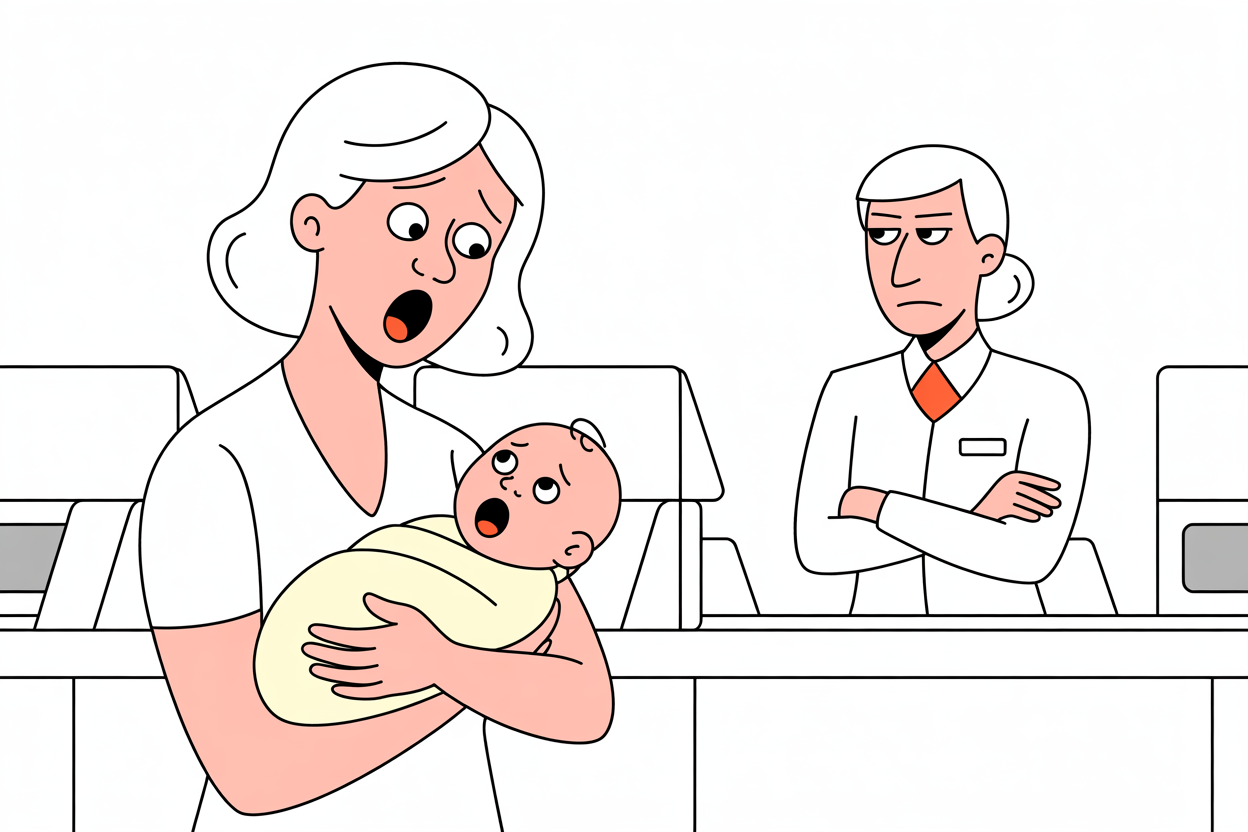
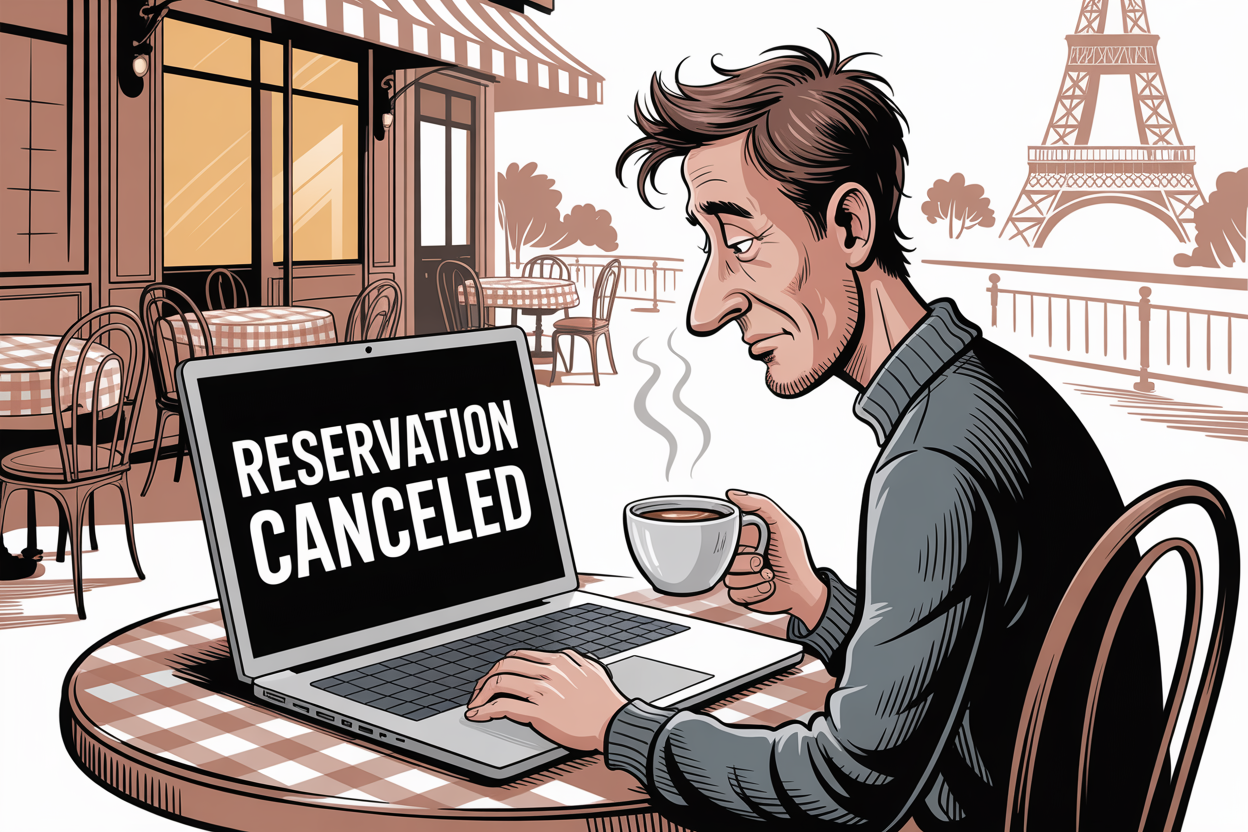
Saurabh Kumar had a passport, a plane ticket, and a plan to visit family in Delhi. He was good to go, or so he thought. The trouble was hiding in plain sight on his passport: his full name sits in the given-name field, and the surname line is blank. That is ordinary in parts of the world, but a headache for Western airline systems that insist on a last name. When Expedia’s booking form demanded one, Kumar did what most people would do, he split his name into a first and a last and clicked buy. He had done it before and flown without a hitch. This time, at the Toronto airport, the Porter Airlines computer stopped him cold. The name on his ticket did not match the name on his passport, and to a security system built to screen millions against international watchlists, close enough is not enough. Porter said only the ticketing airline, Qatar Airways, could authorize a fix. Qatar was not at the counter. And the clock was running out.

Cartoon of a grinning car salesman with a cash-filled thought bubble gesturing toward a white SUV as a customer stands with arms crossed at a dealership lot.

How to get the car you reserved without falling for the upsell scam

Have you ever heard of the car rental upsell scam? Neither had Steve Sphar. When the business consultant from Sacramento arrived to pick up a compact car from Europcar in Granada, Spain, the company had run out of vehicles. So it handed him an SUV and said he could swap it for his reserved model the next day, a seemingly generous fix. Then he made the swap, and Europcar charged him a $423 “customer choice” fee. It looks like a clever variation on an old rental-counter ploy, and experts say it is spreading as fleet shortages and inflation squeeze the industry. Running out of cars and then charging extra for a bigger one is legal, they note, but that does not make it right. The industry standard when a company oversells is simple: upgrade the customer for free. Some companies, though, see an oversold lot as an opportunity, offering two bad choices, wait for hours or pay a ransom, and betting you will not want to delay your vacation. Sphar contacted Europcar to reverse the charge.

Black and white cartoon of an annoyed traveler with a rolling suitcase glaring at an airline agent behind a check-in counter.

You’re mad at the wrong machine

Does the TSA want to measure your luggage? You might think so after a viral aviation report warned that the agency’s newer 3D scanners have smaller entry tunnels than the old X-ray machines, and that an oversized carry-on might not fit, potentially sending you back to the counter to check it. Travelers connected the dots fast: the government as the airlines’ baggage enforcer, turning every overpacked bag into a checked-bag fee. It is a textbook case of decoy outrage, a fake scandal that soaks up all the anger a real one deserves. The tunnels are indeed smaller, and the TSA advises asking a screener for help. But there is no algorithm flagging a bag an inch too wide, and no documented wave of passengers being marched back to pay up. If your bag fits and passes screening, it flies. The scanner panic is a non-story. The question it accidentally raises, about a government that already helps airlines keep the true cost of flying out of the advertised price, is not.

Cartoon of a distressed woman standing at her front door, hands to her face, as a UPS driver stands by his truck with his hands raised in an empty-handed shrug.

Michael Kors and UPS are playing hot potato with my $687 refund — how do I win?

Lina Mahmoud’s $687 Michael Kors order never showed up. UPS investigated, declared the package lost, and confirmed in writing that the refund should come from the shipper, Michael Kors. That should have settled it. Instead, Michael Kors refused, pointing to a proof-of-delivery photo that, she says, does not clearly show her package at all. She was told the claim was denied and that this was the final answer, and when she kept pushing, she says customer service agents began disconnecting her live chats. She was left feeling as though the company now viewed her as a fraud, caught in a game of corporate hot potato: the carrier says the retailer owes the money, the retailer hides behind a questionable image, and the customer is stuck in the middle. It is a stark reminder of how much the burden of proof can fall on the shopper when a package goes missing, and of what recourse you really have when the standard customer-service channels simply stop answering.

Cartoon of a shocked woman standing between two twin beds with visibly stained sheets in a hotel room, a city skyline through the window behind her.

They advertised two queen beds and a clean room. I got neither—and a $922 charge.

Rebekah Singleton booked a room with two queen beds at a Brooklyn hotel through Booking.com because she specifically needed the queen beds. What she got was something else entirely. The beds measured out to roughly 50 inches wide, a full size, not a queen, and the room itself was filthy: sheets marked with grease stains, hair, and what looked like suspicious red stains. The second room she was offered was worse, with red splatter across the floor. She did not feel safe, so she left that night and found another hotel. Then the real ordeal began. The hotel denied her photo evidence. Booking.com dragged the matter out for weeks and offered only a small goodwill credit. She disputed the $922 charge with her credit card, which briefly credited her before rebilling the entire amount once the merchant pushed back. She was left out nearly a thousand dollars for a room she never used, caught between a property, a platform, and a card issuer, each pointing elsewhere, and left asking what a booking site actually owes you when the room it sold bears no resemblance to the one you paid for.

Cartoon of a distressed man holding a paper marked "BANNED" and clutching his head in a rental car lot, while a smiling rental agent gestures beside a row of cars.

Banned for a century: How one driver beat the car rental blacklist

Carlos Brown walked up to the rental counter in Cleveland expecting a car. Instead, he got a lifetime ban. A state transportation specialist who had rented dozens of cars that year alone, every payment cleared and every car returned without a scratch, Brown watched the agent’s computer crash, heard her read his license details to headquarters, and learned in that moment that he was on the company’s Do Not Rent list. His loyalty account was terminated on the spot over a mistake from years earlier. Brown’s case pulls back the curtain on the hidden world of rental car blacklists: proprietary “Do Not Rent” lists that can bar you from every brand a company owns. The reasons vary, from unpaid bills to damage claims to simply being rude to an employee, and unlike your credit report, you have no legal right to see the file or dispute it. The Federal Trade Commission does not regulate these lists. Companies do not have to give you a hearing. They can just say no.

Cartoon of a weary traveler standing with a red suitcase beside a self-service check-in kiosk while three uniformed airport employees nearby chat among themselves and ignore her.

Self-service fatigue hits travel: Why are we having a DIY backlash?

Judy Williams stood in two lines at the airport just to drop a single checked bag, and then the machine rejected it, again and again. The real insult was not the glitchy kiosk. It was the three employees standing nearby, chatting and hugging, who did not lift a finger to help. That small scene is the reality of do-it-yourself travel: you do the unpaid work, and when the system fails, you are on your own. Across the industry, more of travel’s routine tasks have been handed to the traveler, the app check-in, the self-tagged bag, the help center that loops without ever reaching a person, and the convenience can start to feel like something closer to abandonment. Self-service technology, one customer-experience expert notes, was never meant to replace human support. It was meant to enhance it. In travel, the gap between that intention and the reality keeps widening.

Line-art cartoon of an annoyed woman standing on her front steps with a hand to her head, watching a delivery van drive away down her suburban street.

Shein sent my package to my old address after I requested a return. Can I get a refund?

Alyssa Klenotich placed a $153 Shein order, then realized the site had autofilled her old address. She tried to fix it on the Shein website, but it was too late for the company to change anything. So she went to the carrier, SpeedX, and asked it to return the package to the sender so she could get a refund, and SpeedX accepted the request in writing. Then it delivered the package to the old address anyway, and her items were gone. SpeedX kept sending her form responses telling her to talk to the merchant, and she could not see why a loss the carrier caused was suddenly her problem to chase. Here is the principle worth knowing when a shipment goes sideways: you almost always go back to the merchant first, because that is the company you have a contract with and the one that hired the shipper, and the seller, not the carrier, is the party with the authority to issue your refund.

Cartoon of a shocked older couple sitting on a couch staring at a phone showing the Princess Cruises app, reacting to news that their booking has gone wrong.

He paid $2,369 for his cruise, but Princess canceled the reservation anyway

Robert Battaglia paid $2,369 for a Panama Canal cruise with Princess, booked through a travel agent, and he and his wife Norma paid the final balance a day before it was due. Two days later, he opened the Princess app and the reservation was gone. When his travel agent called, a representative said the couple were in default for nonpayment and owed roughly $2,000 more, though no one could say where the charge came from. It eventually traced back to a Princess Plus upgrade his wife had tried to add online, only for the website to report that the purchase failed and tell her to handle it later. Princess canceled the booking anyway and kept $1,298 as a cancellation fee, even though the account showed no balance due and the agent could see no pending charge. Here is the principle worth holding onto before you accept a cancellation like this: when a customer pays on time and the company’s own statement shows nothing owed, the burden is on the company to explain any later charge before it takes punitive action, not after.

Cartoon of a glum man standing alone outside a packed UFC arena as crowds stream past him to the entrance, illustrating a fan shut out of an event he paid for but could not attend.

StubHub’s FanProtect guarantee fails: The $4,606 ticket he never got

Roland Nazariyan paid $4,606 to see a UFC fight, and he missed the main event. He had ordered three tickets through StubHub on the day of the fight, and when none of them arrived in time, he called the platform. It refunded the first two orders after he sent screenshots showing the tickets were never delivered. The third and most expensive order sat in limbo, marked as in final escalation, and then came back denied: a seller had claimed the ticket was transferred, and StubHub told him he had never even contacted the company about it, despite its own emails in the thread asking him for proof. Here is the standard worth holding any reseller to before you accept a denial like this. StubHub’s FanProtect guarantee promises that you will get your tickets in time for the event, and if not, comparable or better tickets or your money back. A guarantee, in other words, is only as good as a company’s willingness to honor the words it is built on.