
in this commentary
- A U.S. passport went through the wash during a week in Singapore. State Department guidance says water damage voids a passport, meaning an in-person embassy visit, a $130 fee, and a race against an upcoming border crossing into Malaysia.
- The mishap raises a bigger question: why do travelers still depend on a fragile paper booklet at all? Hundreds of thousands of U.S. passports are lost or stolen every year, and modern borders already scan faces and biometrics in seconds.
- Several countries have moved past paper, clearing travelers with facial and biometric checks alone. The chip, not the booklet, is now the real document, raising the question of what it would take for the United States to catch up.
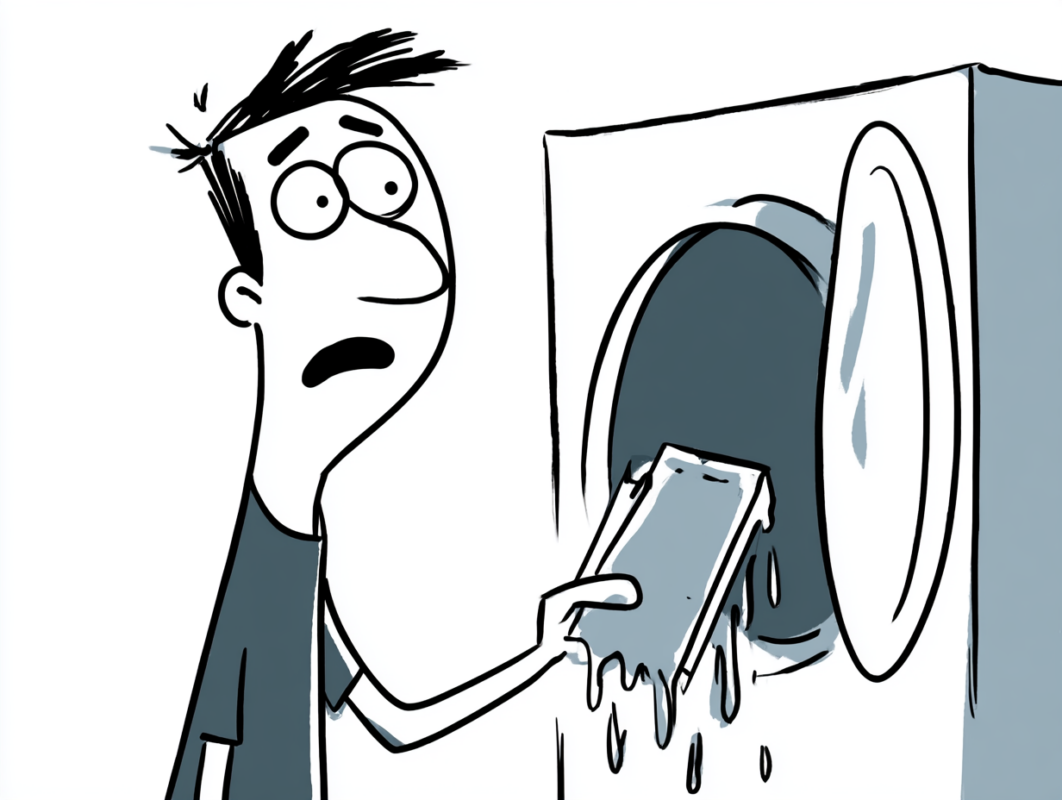
My U.S. passport just went through the laundry.
It couldn’t have happened at a worse time. I’m in Singapore for a week, and I need a valid passport to leave the country. According to the State Department, I probably don’t have one.
The little blue book that proves I’m an American spent half a cycle on “heavy duty” before I remembered it was in my back pocket. It’s been sitting on the windowsill in my apartment, drying out since then.
The State Department’s guidance is clear: “significant” damage, including water exposure, voids my passport. I’m supposed to apply for a new one in person in the U.S. Embassy, fork over the $130 application fee—and pray the replacement arrives before I have to drive to Kuala Lumpur.
But my passport drama got me thinking: Why do we even need these fragile documents in the first place?
Maybe we don’t.
Travelers lose their passports all the time
My passport panic is shared by many travelers. The State Department estimates that around 300,000 U.S. passports are lost or stolen each year. Globally, INTERPOL’s Stolen and Lost Travel Documents database, a clearinghouse used by border officers worldwide, contains tens of millions of entries.
It turns out there’s a solution. What’s missing is the political will to admit that the paper passport is a relic that’s far outlived its usefulness.
We’ve already built a global system that scans your face, fingerprints and travel history in milliseconds but then asks you to back it all up with a 24-page paper booklet you can ruin by spilling your morning espresso on it.
Why your passport book is a museum piece
Think about what a passport actually is. It’s really just a chip covered in empty, securely water-marked pages. Those pages exist because, once upon a time, a uniformed agent slammed a rubber stamp onto them when you crossed a border.
Today, almost nobody stamps anything. At many modern airports, you walk up to an eGate. A camera matches your face to the chip in your passport, which itself contains a digital copy of your photo and biometric data. The agent — if there is one — barely looks up.
The chip is the document. The booklet is window dressing.
More than 150 countries now issue electronic passports (e-passports) with embedded chips, based on standards set by the International Civil Aviation Organization (ICAO)—the U.N. body that governs travel documents. Critically, however, these e-passports remain physical objects, vulnerable to washing machines and pickpockets.
Sorry, but this whole conversation is coming from a very Western and EU perspective. “Oh, let’s just go with a digital passport” completely disregards MANY countries all over the world that don’t have the technology to handle that. Cripes, even Belize can’t handle a boarding pass on your phone, you have to print out a paper one. Is this an issue in France or Japan? No. Is it a possible issue in the Congo, Guatemala, or several dozen less developed countries? Absolutely. Your solution is very self serving.
Read more insightful reader feedback. See all comments.
A few countries are already past paper
Finland ran the world’s first cross-border pilot of a digital travel credential with Croatia a few years ago. Passengers only needed to look at a camera and hold their passport above a reader for a moment. The early findings showed significantly faster border processing times, averaging less than 8 seconds, compared with about 25 seconds for typical automated lanes.
Singapore, where I currently live, has gone even further. Since 2024, the Immigration & Checkpoints Authority has fully rolled out passport-less clearance across all four terminals at Changi Airport. Residents clear immigration with facial and iris biometrics. Average screening times have been reduced by 60 percent, from 25 seconds to 10 seconds.
I had a chance to see Singapore’s checkpoint when I arrived last week from Sydney. I was shocked by how quickly and effortlessly it all went. It was like walking through a subway turnstile.
In the United States, the Transportation Security Administration has begun accepting electronic credentials at airport screening areas. The TSA allows travelers to use their digital IDs at more than 250 airport checkpoints, including U.S. passports stored in Google Wallet, Apple Wallet and CLEAR. But the ID on your phone isn’t recognized as a passport when you cross the border—at least not yet.
There’s a silver lining. At least the U.S. State Department now accepts online passport renewal for eligible adult applicants. The government has already issued more than 7.3 million passports through the online system to rave reviews from travelers. But an electronic passport remains elusive.
What needs to happen next
If you can apply for your passport online, you should also be able to receive a credential to your phone, secured by the same biometric technology that already runs every eGate on earth. Carry the physical booklet as a backup if you must, the way airlines still print boarding passes for people who like paper. But cross the borders with your face as an ID.
This isn’t science fiction. The standards and hardware already exist. ICAO published the technical specification years ago. What’s missing is broader commitment by governments.
The single biggest reason Americans don’t have passports — and between 45 and 50 percent of us still don’t — is the tedious application process. It is expensive and requires a trip to a post office and a specific photo.
Why not digitize the whole pipeline, the way every other modern government service has been digitized? That would remove a real barrier to international travel. More Americans abroad is, on balance, a good thing for everyone — including, I suspect, us.
What about my passport?
Here’s how my passport episode ended: I tried to make an emergency appointment with the U.S. embassy in Singapore, but it was closed Memorial Day and then for the Muslim holidays. By the time a consular official called me back on Thursday, it was too late to do anything. I had to press on.
The passport dried out nicely. In Singapore’s oppressive humidity, expected some cockling from the pages, but once they dried out and I pressed them, they looked perfect. Only one page—an expired visa to Laos—had a signature that bled into the adjoining page.
On Friday, I crossed the land border between Singapore and Malaysia. The remaining ink smudge on my visa page didn’t even register, and I sailed right through the checkpoint. But I stayed up all night worrying, and that was no fun.
Digital passports can’t come soon enough. In the meantime, my best advice is to store your passport in a safe place when you’re traveling—and never, ever your back pocket.
Your voice matters
The technology for a phone-based passport already exists, and a handful of countries have moved past the paper booklet entirely. Yet most travelers still carry a fragile document they can ruin in a washing machine. The gap is less about engineering than about political will and trust.
- Should the United States be required to offer a phone-based digital passport that travelers can use to cross international borders?
- Should the government be required to cap or eliminate passport application and replacement fees once the process is fully digital?
- Should travelers have a legal right to a free emergency travel document when an embassy fails to respond in time?
What you need to know about damaged passports and digital travel credentials
Quick answers to the most common questions about what voids a passport, how digital and biometric travel is changing borders, and what tools exist for travelers today.
Does water damage void a passport?
Yes. The U.S. State Department considers significant damage, including water exposure, enough to void a passport. If your passport has been through water, a washing machine, or otherwise significantly damaged, you generally need to apply for a replacement in person, including at a U.S. embassy if you are abroad, and pay the application fee.
What should I do if my passport is damaged while traveling abroad?
Contact the nearest U.S. embassy or consulate as soon as possible to apply for a replacement or an emergency travel document. Build in extra time before any planned border crossing, since replacements can be delayed. Keeping a photocopy or a photo of your passport can help speed the process if the original is damaged or lost.
What is an e-passport?
An electronic passport, or e-passport, is a passport with an embedded chip that stores a digital copy of your photo and biometric data. More than 150 countries now issue them, based on standards set by the International Civil Aviation Organization. Importantly, an e-passport is still a physical booklet, so it remains vulnerable to damage, loss, and theft.
Can I use a digital passport on my phone to cross a border?
Not yet in the United States. The TSA accepts digital IDs, including passports stored in Google Wallet, Apple Wallet, and CLEAR, at more than 250 airport checkpoints for domestic screening. However, a phone-based ID is not currently recognized as a passport for crossing international borders. The technology exists, but broad government adoption has not happened.
Which countries have moved past paper passports?
A handful of countries have piloted or rolled out biometric, passport-free border clearance. Some now clear eligible travelers using facial and other biometric checks alone, reducing screening times significantly. These programs show that border systems can rely on biometrics and chips rather than a stamped paper booklet, though most travel still requires the physical document.
Can I renew my U.S. passport online?
Yes, for eligible adult applicants. The U.S. State Department now accepts online passport renewal and has issued millions of passports through the online system. Online renewal can save eligible travelers a trip to the post office, though a fully digital, phone-based passport for border crossings is not yet available.
How can I keep my passport safe while traveling?
Store your passport in a secure, dry place, never in a back pocket where it can be lost, pickpocketed, or accidentally washed. Keep a backup photo or photocopy separate from the original. Knowing how to escalate a problem can also help if a government office is unresponsive during an emergency.

Have a question about this story? Tell us what happened — we read every comment.
Join the conversation