
in this case
- Elizabeth Webley bid $500 for an upgrade on a Swiss International Air Lines flight from Zurich to San Francisco, and the airline accepted. When her plans changed and she rebooked, she assumed the upgrade would move to the new flight or be refunded. It did neither, and she was told to pay for a new upgrade.
- Swiss called the bid nonrefundable on a voluntary change and pointed to its FAQ. But Webley had a screenshot of the terms she agreed to at purchase, which said that if she changed her flight she was entitled to a full refund of the bid amount, as long as her fare allowed rebooking.
- Her case opens a window onto what happens when an airline’s marketing promise and its customer-service script say two different things, and raises the question at the center of the dispute: when the terms you agreed to contradict the FAQ quoted back at you, which one is supposed to win?
NEW: Listen to the companion podcast about this story with exclusive details you won’t find in this article.
Elizabeth Webley thought she’d found a deal when she bid $500 for an upgrade on a recent Swiss International Air Lines flight from Zürich to San Francisco, and the carrier accepted.
But then Webley’s plans changed. She voluntarily rebooked her flight, assuming her upgrade credits would either transfer to the new itinerary or be refunded to her card.
They weren’t.
“The upgrade was not carried over to my new flight,” says Webley. “I was forced to pay again for a new upgrade”.
Webley asked for a refund of her original $500. Swiss said nein.
Her case offers a fascinating look into the murky world of airline terms and conditions, where policies often contradict themselves and “nonrefundable” doesn’t always mean what you think it does. It also introduces a phenomenon I call the ghost upgrade—a product you pay for, but which vanishes the moment you touch your airline reservation.
Webley’s problem also raises several critical questions for anyone trying to fly in comfort without paying full fare:
- How do airline bid upgrades actually work, and what are your rights?
- Does a “voluntary” flight change always mean you forfeit your ancillary fees?
- How can you win a dispute when the airline cites its own FAQ against you?
Will Webley lose her $500? Let’s find out.
She should be entitled to a refund, since those were the terms she saw, but not to a change in flight with same-priced upgrade. The fact that the flight she was on had room for someone to upgrade doesn’t mean the next one will.
Read more insightful reader feedback. See all comments.
Running into a Wall of Nos
Webley contacted Swiss immediately. She pointed out that according to the terms she saw when she purchased the upgrade, she was entitled to a refund.
The airline’s customer service agents disagreed.
“Please note that a bid upgrade is nonrefundable,” an agent told her. “Additionally, the provided document does not specify the condition of the upgrade.”
Another representative doubled down on the denial.
“We regret to inform you that we are unable to honor your request for a refund of the bid upgrade, as it is nonrefundable in the event of voluntary cancellation of your reservation,” she said.
That’s a standard airline defense maneuver: The Wall of No.
Agents are trained to recite the strictest interpretation of the rules to make you go away. And usually, it works. Most passengers shrug, curse the airline gods, and eat the loss.
But Webley had something the agents didn’t know about: digital evidence.
“I have provided a screenshot of these terms,” she wrote to the airline, attaching the file. “My fare allowed rebooking—I am therefore entitled to a refund of my bid upgrade.”
The terms were explicit. They said that if a passenger changes a flight, “you are entitled to a full refund of the Bid Upgrade amount” provided the original fare allows a rebooking.
Yet, the agents kept pointing to a different rule—the one about “voluntary” cancellations.
Frustrated and $500 poorer, Webley contacted my advocacy team.
Is she right? Or did she just make a $500 donation to the airline’s corporate treasury?
How do airline bid upgrades actually work, and what are your rights?
If you’ve ever received an email a few days before your flight asking if you want to “bid” for a better seat, then you’ve encountered the strange economy of the upgrade auction.
It feels like a game, but it is a binding contract. And like all contracts in the travel industry, the text is heavily weighted in favor of the airline.
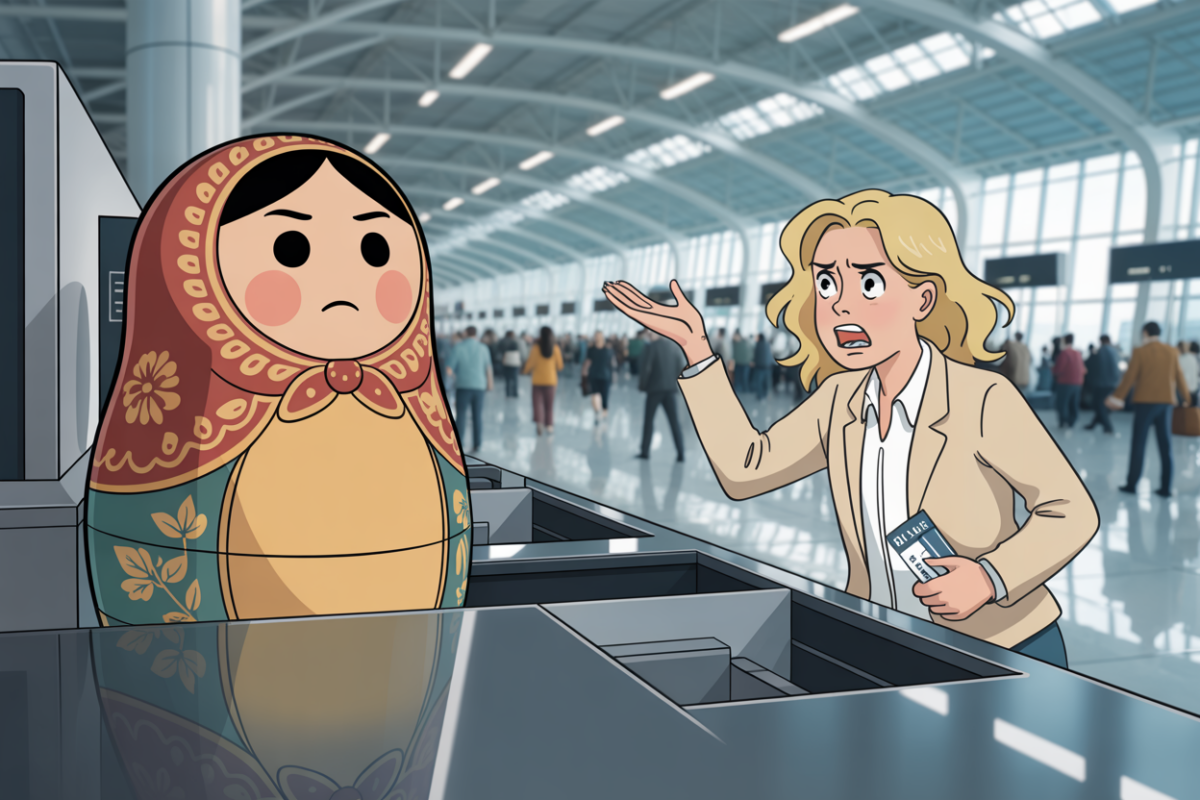
When you submit a bid, you’re essentially agreeing to a separate set of terms and conditions that sit on top of your original ticket rules. This creates a Russian nesting doll of rules. Your original economy ticket has one set of cancellation rules. Your upgrade has another.
Here is the friction point: Generally, upgrade bids are nonrefundable and unchangeable. The logic is that the airline has given you a discount on a premium seat (compared to the full fare), and in exchange, you give up flexibility. If you cancel your trip, you lose the bid. That’s the industry standard.
However, “standard” does not mean “universal.”
Airlines often have specific clauses for rebooking. Some carriers allow you to transfer the upgrade to a new flight if the aircraft type and route are the same. Others, like the version of the terms Webley saw, offer a refund if the underlying fare allows for changes.
The problem is that these terms are often buried in a pop-up window during the bidding process. Once you click “submit,” that window disappears. When a dispute arises weeks later, the airline agent is looking at a cheat sheet or a general FAQ, not the specific contract you agreed to at the moment of purchase.
This creates a ghost upgrade scenario. You believe you bought a product with a refund clause. The agent sees a product that is nonrefundable.
So who’s right?
Legally, the specific terms presented to you at the time of purchase prevail over a general FAQ on a website. But proving what you saw is difficult. Airlines change their websites constantly. A rule that existed on Tuesday might be rewritten by Friday.
Unless you have a photographic memory—or an actual photograph—you are at the mercy of the airline’s record-keeping. And as we will see, Swiss’s record-keeping was not very Swiss.
Does a “voluntary” flight change always mean you forfeit your ancillary fees?
In the lexicon of airline customer service, “voluntary” is the most expensive word you’ll ever hear.
There are two types of changes in the travel world: involuntary and voluntary. An involuntary change is when the airline cancels your flight, swaps the aircraft, or changes the schedule so significantly that you miss a connection. In these cases, you have rights. The Department of Transportation (in the U.S.) and EU 261 (in Europe) provide significant protections.
If the airline messes up, it generally has to refund your ticket and your fees, including seat assignments and upgrades.
A voluntary change is when you mess up, or simply change your mind. You get sick, your meeting changes locations, or you just decide to fly on a different day.
Historically, a voluntary change meant you forfeited everything. But the landscape is shifting. During the pandemic, airlines eliminated change fees for many main cabin tickets to coax people back onto planes.
That created a new expectation among travelers: flexibility.
However, that flexibility rarely extends to ancillary fees—the extras like baggage, seat selection, and upgrades. You might be able to move your economy seat to a new flight for free, but the $500 you paid to sit in business class usually stays with the airline.
You hit the “change flight” button on the app, thinking everything will move over. The app might even say “No Change Fees!”
That’s what Webley thought, too. But the app didn’t warn her that her upgrade was about to be vaporized.
“I voluntarily rebooked my flight, assuming my upgrade credits would either transfer or be refunded,” she says.
But here is where the story pivots. Webley wasn’t just assuming, The terms she agreed to explicitly stated: “If you wish to change your flight you are entitled to a full refund of the Bid Upgrade amount.”
And she had a screenshot to prove it.
Swiss had created a policy that broke the “voluntary means you lose” rule. It just forgot to tell its customer service agents about it. The agents were operating on the default setting—voluntary equals forfeiture—while Webley was operating on the specific contract governing her upgrade.
This highlights a massive breakdown in internal communication. When marketing teams write generous policies to sell upgrades, but support teams are trained on restrictive policies to deny refunds, the passenger gets crushed in the gears.
How can you win a dispute when the airline cites its own FAQ against you?
When Webley contacted my team, she had hit a dead end. She had the truth on her side, but the airline had the money. Swiss agents were quoting their internal policy manual like scripture.
“The provided document does not specify the condition of the upgrade,” one agent claimed, dismissing her evidence.
That feels like corporate gaslighting.
So, how do you fight back when the company tells you that black is white? You have to be more organized than the airline is. Webley’s case is a textbook example of how to document a purchase.
1. Screenshot everything. I can’t emphasize this enough. If you’re buying something online—especially a travel product with complex restrictions—take a screenshot of the final checkout screen and the terms and conditions. Don’t rely on a link. A timestamped screenshot is a smoking gun. You can do that by pushing Windows key + Shift + S on your PC or Command + Shift + 3 on a Mac.
2. Isolate the contradiction. Webley didn’t just say “I want my money.” She said, “Your FAQ says X, but my contract says Y.” She forced the airline to look at the discrepancy.
3. Use the Elliott Method. When the front door is slammed in your face, go through the window. Front-line agents often don’t have the authority to override a system that says “nonrefundable.” They are reading a script. You need to reach someone who can read the actual situation. Here are the Swiss executives.
By the way, I publish the names and email addresses of the executives for nearly every major airline on my advocacy site, Elliott.org. A polite, concise email to a VP of Customer Service, attaching the proof that their own agents are ignoring, often yields a quick fix.
But in Webley’s case, even her persistence wasn’t enough. She needed a bigger megaphone.
The turbulence clears
My advocacy team contacted Swiss on Webley’s behalf. At first, the airline gave us the same stiff-arm it gave her.
“In case of a voluntary change of booking by the passenger, a standalone refund of a bid upgrade is not permitted,” a representative told our advocate, Dwayne Coward.
He directed us to the airline’s FAQ, which seemed to support the denial. It stated clearly: “Standalone Refund of Bid Upgrade is not permitted.”
It looked like Webley was out of luck. The FAQ was public, it was clear, and it was draconian.
But we didn’t give up. We pressed the issue, furnishing the airline with the text from the screenshot Webley had taken—the terms she explicitly agreed to.
“If you wish to change your flight after your offer has been accepted you are entitled to a full refund of the Bid Upgrade amount,” the terms said.
We asked Swiss a simple question: Which terms prevail? The ones on the website today, or the ones the customer signed when she bought the upgrade?
Swiss consulted with a “specialized department” within customer service.
That is when the turbulence cleared.
“It turns out that the customer would indeed have been eligible for a refund,” the Swiss representative responded.
The culprit? Bad writing. And a bad website.
“It appears that conflicting information in our FAQ led to this misunderstanding, and we will update the wording to prevent similar cases in the future,” the representative said.
It wasn’t that Webley was wrong; it was that Swiss didn’t know its own rules. The airline processed a full refund of the $500.
“I really appreciate the effort you put into resolving this,” Webley told us. “It’s so reassuring to know that there is a person that will take the time to help consumers.”
We are happy to help. But this victory shouldn’t have required a consumer advocate. It should have been resolved the moment Webley sent that screenshot.
The lesson here is simple: In the digital age, you are your own best record keeper. Don’t trust the airline to remember what it promised you. Capture the promise and save it. Then if the airline tries to renege, show it the receipts.
And if it still says nein? You know where to find us.
A paid upgrade that vanishes the moment you rebook, and an FAQ that contradicts the fine print. Webley’s case taps into something a lot of travelers have run into.
Your voice matters
Bid upgrades and refunds: what to know before you rebook
Paid upgrades come with their own fine print, and it does not always match the airline’s FAQ. Here is what travelers ask most. This is general information, not legal advice.
A bid upgrade is an auction. A few days before departure, the airline invites you to name a price for a better cabin, and if it accepts your offer, you pay for the upgrade on top of your original ticket. It can feel like a game, but it is a binding contract with its own separate terms layered over your ticket rules. Usually not, as a general rule. The trade-off is that you get a premium seat below full fare in exchange for giving up flexibility, so if you cancel, you typically lose the bid. But “standard” is not “universal.” Some airlines let you move the upgrade to a new flight on the same route and aircraft, and some offer a refund if your underlying fare allows changes. The specific terms you agreed to are what matter. It depends entirely on the terms attached to that upgrade. Even when an airline waives change fees on the ticket itself, that flexibility often does not extend to extras like baggage, seat selection, or upgrades. Do not assume a paid upgrade will automatically follow you to a new flight. Check the exact wording before you rebook. An involuntary change is the airline’s doing, a cancellation, an aircraft swap, or a schedule change big enough to break your trip, and it usually triggers refund rights, including for fees. A voluntary change is when you change your mind or your plans shift. Historically a voluntary change meant forfeiting extras, though some upgrade terms now provide a refund in that situation. The word “voluntary” often decides who keeps the money. As a general principle, the specific terms presented to you when you bought the product carry more weight than a general FAQ posted on the site later, which airlines can and do rewrite. The practical challenge is proof. If you did not capture what you saw at purchase, you are left relying on the airline’s records, so a saved, timestamped screenshot is your strongest evidence. Screenshot the checkout screen and the terms at the moment of purchase. On a Mac, press Command, Shift, and 3; on Windows, press the Windows key, Shift, and S. A timestamped image of the exact terms you agreed to is far stronger than a link to a page the airline may edit later. Agents often read from a script and cannot override a nonrefundable flag. Isolate the contradiction in writing, then escalate politely to a customer-service executive with your proof attached. If you are still stuck, a consumer advocate may be able to help. For more, see Elliott Advocacy’s consumer help resources.What is a bid upgrade?
Are bid upgrades refundable?
What happens to my upgrade if I change my flight?
What is the difference between a “voluntary” and “involuntary” change?
The airline’s FAQ contradicts the terms I agreed to. Which one wins?
How do I prove what the terms said when I bought?
What can I do if front-line agents keep denying me?

Have a question about this story? Tell us what happened — we read every comment.
Join the conversation