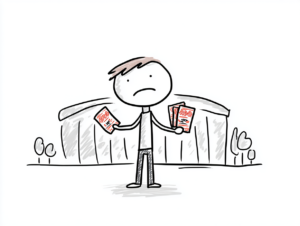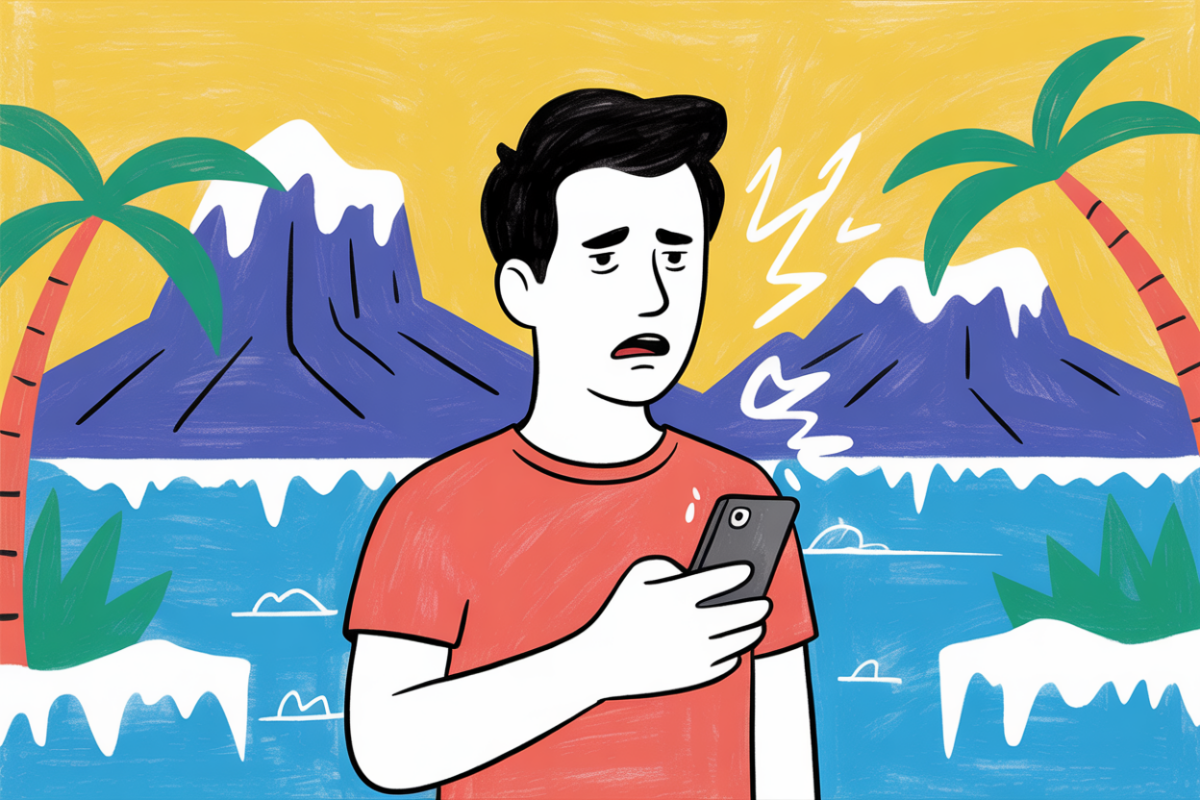
One of the last things you’d expect at this time of year in a place like Chino Valley, Ariz., is a problem with a freeze. But that’s exactly what Robert Boisvert got when he tried to buy a new car.
At his request, Boisvert’s Experian credit report had been frozen for the better part of a year. (That’s a security measure that prevents identity thieves from opening new accounts in your name by restricting access to your credit report.) No problem, he figured — just thaw it out, apply for the car loan, and get on with life.
It worked for Equifax and TransUnion. But not for Experian.
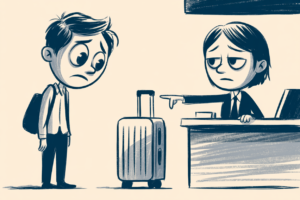
Boisvert, a police officer with a credit score above 800, did everything the law required to unfreeze his account. He sent two certified letters to Experian’s processing office in Texas, each including the identity documents the company demanded: copies of his ID, utility bills, the works. He spoke by phone and text to a representative, then a supervisor, and finally emailed Experian’s CEO.
His credit report remained frozen solid.
Then he found us.
Boisvert’s case raises several important questions that every consumer who has ever frozen their credit should know the answers to:
- What does the law require Experian to do when you ask it to lift a credit freeze?
- What happens when a company tells you the freeze is lifted — but your bank says otherwise?
- How can you tell the difference between a legitimate Experian customer service rep and someone trying to sell you a protection plan?
We’ll get to all of that. First, let’s let the story unspool a little more, because it gets strange.
After an unsuccessful attempt at identity theft (hint to thieves: Spell my name correctly) my wife and I opened accounts at the three major credit reporting agencies and froze all 6 accounts.
It was a nuisance only once, when a bank wanted a credit report so I could open a large CD. I went elsewhere.
Everyone should freeze their credit. It is a good safety measure these days.
The runaround
Boisvert’s story started when he could no longer access his Experian account. He says his account had been hacked and that someone had changed his phone number in the system. Because of that, a representative said, he couldn’t verify Boisvert’s identity digitally — and therefore couldn’t lift the freeze electronically.
The fix? Send proof of identity to Experian via certified mail, which is what Boisvert did.
After the second mailing — this time, addressed specifically to a higher-level representative at Experian — Boisvert heard nothing back. When he pressed for an update, Experian gave him an eight-digit code to use as a login. Wait 24 hours, the representative said, and the system will update.
It didn’t.
But the weirdness didn’t stop there. A separate supervisor, a woman Boisvert was told worked “in a nearby building,” reached out by text. A few messages in, Boisvert figured out she wasn’t actually an Experian employee at all. She was a supervisor for Experian’s Identity Theft Protection Program—a paid product.
Her parting message: “We will assist you in removing the freeze as soon as today or tomorrow.”
Boisvert thought his account hadn’t been compromised, but that Experian was using his access trouble to sell them its “protection program.”
It was a reasonable inference. Every time Boisvert said no to the paid service, the free help evaporated.
That’s when he wrote to my team. My colleague Dwayne Coward took the case and contacted Experian on his behalf.
What does the law actually require Experian to do when you ask it to lift a credit freeze?
The Fair Credit Reporting Act, a federal law that protects consumers, is clear on this. When you request a freeze be lifted online or by phone, the bureau must comply within one hour. If you mail your request — which Boisvert did, twice — the company has three business days from receipt to act.
By the time Boisvert reached out to our team, he’d been waiting three months.
In 2024, the last year for which numbers are available, Americans filed about 2.7 million complaints about credit or consumer reporting, more than 85 percent of the total complaints received by the Consumer Financial Protection Board. Complaints about credit reporting spiked by 182 percent compared to the monthly average for the prior two years—an indictment of how these companies treat the people whose financial lives they control.
Experian had an obligation to lift this freeze promptly. When its own internal processes failed, there should have been a real escalation path. Instead, Boisvert got a mysterious woman hawking a paid subscription, and then silence.
I’ve covered consumer advocacy for a long time, and I’ve developed what I’ll call a complexity tax theory of corporate customer service. The harder a company makes it to exercise a legal right, the more likely it is to sell you a fee-based shortcut. The more calls it takes, the more certified letters you send, the more PINs that don’t work, the more attractive that $19.99-a-month protection plan starts to look. It’s not unique to Experian, but Boisvert’s case is one of the more brazen examples I’ve seen.
Tip: If you’re in Boisvert’s situation, document everything. Certified mail is your friend. And if the company misses the three-business-day window, you have grounds for a complaint with the Consumer Financial Protection Bureau and potentially a lawsuit.
What happens when Experian says the freeze is lifted — but your bank says otherwise?
When we followed up with Experian, it took two weeks to get an answer.
“We looked into this,” a representative told us. Experian claims Boisvert’s credit report was unfrozen successfully the day he asked for it three months ago.
“We sent him a letter confirming the unfreeze,” the representative added.
Huh?
More than two months of calls, texts, certified letters, and pleading with strangers about his hacked account — all of it apparently moot, because the freeze had already been lifted.
“Sounds great,” Boisvert told us. “But my account is still frozen.”
Hang on. Experian sent him a new PIN, which didn’t work. He tried his original PIN. It didn’t work, either. And he’d never received the letter Experian claimed to have sent.
So what actually happened?
We started to compare the notes between what Boisvert was saying and what Experian claimed. The letter Boisvert received apparently did not communicate that the freeze had been lifted. Rather, it suggested his account was still inactive.
Our best guess: Experian had sent the wrong form letter.
Incidentally, the CFPB sued Experian last year, alleging that when handling disputes, it “sends consumers notices that fail to inform them of the investigation results, and instead provides information that is confusing, ambiguous, incorrect, or internally inconsistent.”
The corporate response that everything was “unfrozen successfully” also didn’t address the fact that Boisvert’s online account was, functionally, broken. A security freeze and the ability to log in to your account are two different things, a distinction that matters more than most consumers realize.
The freeze controls who else can see your credit. Your account controls your own access. Boisvert’s freeze was gone, but he couldn’t get in the door to prove it.
If you ever find yourself in a standoff with a credit bureau, you need written documentation from a lender confirming they tried to pull your report and were denied. That’s your proof. Without it, Experian can simply point at its own screen and say, “looks fine to us.” With it, you have a paper trail that no form letter can dismiss.
But what about that suspicious salesperson trying to upsell him “protection”?
How can you tell the difference between a legitimate Experian rep and someone trying to sell you a protection plan?
This is where Boisvert’s story gets genuinely unsettling. When Experian first connected with Boisvert, the representative was helpful, attentive, and full of explanations. But in the end, each “problem” came back to the same solution: Boisvert needed Experian’s Identity Theft Protection Program.
Looking back, it’s possible that the helpful Experian employee might not have been an employee at all. The woman who later texted Boisvert “from a nearby building” was confirmed not to be an Experian employee — she worked for the protection plan vendor, not the bureau itself. How many of those calls were genuine Experian support, and how many were sales masquerading as service? Boisvert can’t be sure. Neither can we.
Experian offers a paid product called CreditLock, as well as its IdentityWorks protection service. These are legitimate products. But a lock, unlike a freeze, isn’t governed by federal law — and it isn’t free. Advocates consistently recommend the free credit freeze over paid lock services, because freezes carry legal protections that locks do not.
The tell, in Boisvert’s case, was consistency: every time he said no to the paid product, the assistance dried up. A real customer service representative doesn’t tie resolution to an upsell. If you’re hearing, “there’s nothing more I can do” every time you decline a paid product, you’re either talking to someone with no real authority — or someone whose job is to sell, not to help.
Here’s what to do instead: Hang up and try a different channel. The federal government maintains a free, direct process for credit freeze requests at annualcreditreport.com. Experian also has an online freeze management tool that works independently of whatever customer service rep you reached. And if you genuinely can’t get traction, the CFPB complaint portal at consumerfinance.gov puts your complaint in front of the company in a way that creates a paper trail and a public record.
By the way, you can also find Experian’s executive contacts on this site. A polite, concise email to a senior executive — with your documentation attached — tends to get a different caliber of response than anything you’ll find at the end of an 800 number.
A resolution — and a twist
After our team contacted Experian, the company insisted the freeze had been lifted shortly after the request. But that still left Boisvert unable to access his own account — which, it turned out, was a separate problem from the freeze itself.
Boisvert, to his credit, didn’t wait around for a corporate resolution. He called his bank, explained the situation, and it gave him a direct back-channel number for Experian. An associate there confirmed the freeze was indeed gone — but walked Boisvert through what the problem actually was: He’d also been locked out of his online account, a separate problem.
They started a case number and began walking him through rebuilding his Experian account from scratch — something the first “representative” apparently had no interest in doing, despite months of phone calls.
Did Experian’s wrong form letter cause three months of unnecessary delay? Almost certainly. Did someone on Experian’s end see a man trying to exercise a free legal right and steer him toward a paid product instead of fixing the actual problem? I’ll let you draw your own conclusions.
Boisvert, for his part, was just glad to have a path forward. As of this writing, he expects to create a new account and finally apply for that car loan.
I’ll be honest: I can’t tell you that Experian deliberately tangled this man’s account to sell him a subscription. I can tell you that the incentives to do so are structurally built in, that the CFPB has sued Experian for sending consumers confusing, ambiguous, inconsistent notices, and that nearly three in four Americans already believe credit bureaus intentionally make this stuff hard.
After Boisvert’s case, I’m having a harder time arguing with them.

Have a question about this story? Tell us what happened — we read every comment.
Join the conversation