Nala Fox assumed she was safe at her five-star resort in Negril, Jamaica. The postcard-perfect beach, the friendly staff, and the high price tag all implied that security was included.
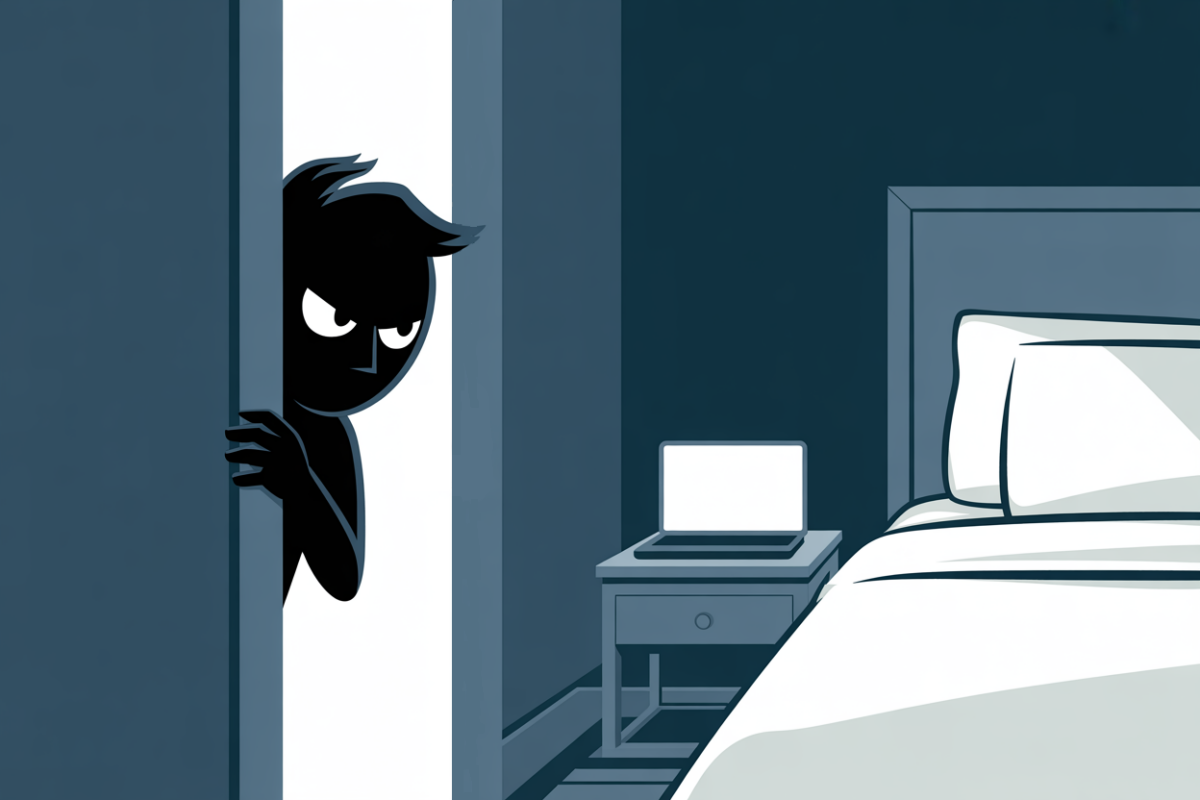
One afternoon, before she took a nap, she left her sliding balcony door cracked open.
It was a simple lapse. When she woke, her carry-on bag was gone, passport inside.
“The security desk shrugged, saying this sometimes happens,” says Fox, who runs an online educational platform.
The thieves weren’t master criminals rappelling from the roof. They were opportunists walking through an open door.
Fox was suffering from resort security amnesia. This condition affects otherwise street-smart travelers the moment they smell the signature scent of a luxury hotel lobby. They assume that because they paid a premium, they’ve entered a fortress.
They haven’t. They’re in a high-traffic public space where the wealthy and the opportunistic brush shoulders.
As the busy travel season kicks off, a wave of resort security amnesia is sweeping through hotels, turning savvy travelers into easy marks. From cloned key cards to the false security of a second-floor room, your favorite vacation spot comes with hidden vulnerabilities. Knowing about them can help you avoid becoming a statistic.
Why we drop our guard
Why do we get so careless? Experts say it’s baked into the vacation experience. We pay to relax, and that includes letting our guard down.
“The biggest danger isn’t what’s happening outside the resort. It’s typically what guests assume about safety inside,” says Joe Orsak, president of 24 & 7 Security & Investigations. “Most travelers let their guard down once they check in. They’ll leave balcony doors unlocked or toss key cards on pool chairs, thinking they’re in a secure bubble.”
Orsak calls resorts “soft targets.” They have predictable routines and porous perimeters. Many rely too heavily on visible security cameras—”security theater”—that comforts guests without stopping crime.
“Resorts may feel like safe havens, but that sense of comfort can sometimes lead travelers to let their guard down,” says Raymond Yorke, a spokesman for Redpoint Resolutions. He says more people than ever are suffering from resort security amnesia—forgetting the basics once they’re in vacation mode.
“Common slip-ups include leaving valuables unattended by the pool, failing to use in-room safes, propping open balcony doors, or oversharing location details on social media,” Yorke says.
The key card trap
That plastic rectangle in your pocket is often the weak link. Complacent guests treat key cards like disposable coasters.
“The person holding the key card is the biggest vulnerability,” says Dave Meister, a cybersecurity expert at Check Point Software. “People treat them like they’re disposable, but they’re access tokens. If someone else gets hold of it, they have direct access to your room.”
Meister warns that magnetic stripe systems—still widely used at older properties—are also vulnerable to cloning. A thief can brush up against you or swipe a card left on a table and create a duplicate in seconds.
But the real risk isn’t just high-tech cloning—it’s human behavior. Most hotel room compromises stem from low-tech carelessness or simple social engineering, like someone convincing staff to reissue a key, tailgating into secure areas, or taking advantage of a guest who misplaces their card and doesn’t report it.
“I’ve watched travelers hand their key sleeve to someone helping with luggage without realizing the room number is printed right on it,” says Daniel Loo, a principal security-risk consultant at North Star Group. “A stranger doesn’t need to steal a wallet—they just need the room number and 30 seconds when you’re at the pool.”
This is why Anna Greenberg, a personal injury attorney who has represented victims of sexual assault in hotels, advises extreme caution. She says the number one cause of hotel sexual assaults she sees involves employees playing fast and loose with keys.
“All that stands between you and a predator on the other side of the hotel door is a keycard—something that can be obtained easily from poorly trained hotel staff,” Greenberg says.
Steven Lambert, a seasoned hotel general manager, advises guests to take control of the check-in process.
“Do not ask or share a specific room number when booking,” Lambert says. If a clerk announces your room number to the lobby, Lambert suggests asking for a different room immediately.
The open flank
If the front door is the first line of defense, the balcony is the open flank, as Nala Fox found out in Jamaica.
“I’ve handled cases where intruders bypassed hallways entirely by moving across connected balconies at night,” says Loo. “Most guests don’t even consider that angle.”
Even when you think you’ve locked up, the hardware might fail you. Matt Goodwin, now the president of Viper Security, became an expert only after being victimized at a resort.
Security cameras captured a ghostly figure walking into his room and leaving with his cooler, which the thief used to transport Goodwin’s stolen belongings.
“A simple piece of steel over the door latch that I’ve seen a million times at other commercial buildings was never installed at the resort we stayed at,” Goodwin says. “After testing it, I found I could actually get in faster with a butter knife than I could with the key.”
The predator at the bar
Resorts are social places. You make friends. You trust the staff. But predators rely on this trust.
Lindsay Dollinger, a network marketer attending a conference in Punta Cana, Dominican Republic, took a staff golf cart shuttle back to her room.
“A man took me and of course asked my room number and if it was just me,” Dollinger recalls. “I told him yes.”
On her second night, someone used a key to try to enter her room. Dollinger had engaged the security latch—a move that likely spared her from a physical confrontation.
“The man wouldn’t go away and kept trying to push into the room forcefully, speaking Spanish to let him in,” she says.
The hotel later claimed it was a security guard doing a welfare check, but Dollinger hadn’t called for one. The incident changed how she travels.
“From that point on, we did not tell any of the golf cart drivers our room number and in fact had them drop us off near our room,” she says.
Liability and the fine print
When things go wrong, guests often assume the resort—or their travel insurance—will make them whole. That is a faulty assumption.
Chrissy Valdez, senior director of operations at Squaremouth, warns that insurance coverage often hinges on whether the traveler took “reasonable care.”
“Leaving an expensive piece of technology, like a camera, unattended at the pool could be deemed negligence, making it hard to claim reimbursement, even if you bought an insurance policy,” Valdez says.
Resorts themselves are often protected by liability waivers and local laws that limit their responsibility for theft. If you leave your sliding door open, the loss is usually on you.
Where does the blame lie?
Is it the guest’s responsibility to be paranoid, or the resort’s responsibility to be impenetrable?
Ideally, it’s both. But experts say resorts are failing to communicate the risks because they don’t want to spoil the paradise illusion.
“Resorts generally fall short in communicating security risks effectively, often prioritizing a welcoming atmosphere over candid warnings,” says Michael O’Rourke, CEO of Advanced Operational Concepts, a security consulting firm. He calls for resorts to provide “transparent, reassuring info packets” at check-in.
Lucinda Faucheux, co-founder of Travel Support Circle, agrees.
“A simple briefing at check-in would help out a lot,” she says. “A reminder to keep passports locked away and to keep an eye on anything left on sunbeds already changes how people move around the property.”
Terence Leung, a manager at LodgeLink, suggests “small nudges” like key card reminders by the pool or door sensors that chime when a balcony is unlocked.
“Informed guests create their own safety without costly monitored access systems,” Leung says.
Who is responsible?
Guests can’t force resorts to upgrade their locks. But they can cure their own complacency. It starts with attitude.
“I love a slightly paranoid traveler,” says John Rose, the chief risk advisor to Altour. “Not afraid to travel but also not an easy target for bad things to happen.”
Here is how to lock down your next trip:
- Audit your room. “Simply making sure the door fully latches every time is one of the strongest, simplest forms of security,” says Darien Long, a senior vice president at dormakaba, a security access firm. Don’t just let it click; give it a tug.
- Use your hardware. Jesse Singh, founder of a supply chain company and a frequent hotel guest, advises using the deadbolt or chain every time you are inside. “The physical deadbolt is the last line of defense that can be guaranteed to work,” he says.
- Zip your lips. As etiquette expert Lisa Mirza Grotts advises, treat your room number “like your Social Security number: private and never shared.”
- Be boring. Don’t flash cash. Don’t wear the Rolex to the pool. Alyse Race, author and founder of The Invisible Tourist, suggests blending in. “Visitors commit security breaches by keeping jewelry in open luggage,” she notes.
The goal isn’t to spend your vacation looking over your shoulder. It’s to secure your perimeter so you can actually relax. A few seconds of paranoia at the door allows for hours of peace by the pool.
The intruder doesn’t always need a key
You can take every precaution, but security is never guaranteed. Alessandro Foti, owner of Bretton Woods Vacations in New Hampshire, warns that in remote areas, nature is watching.
Once, a bear saw a propped-open door and ran in to steal a bag of trash.
“We had a mother bear who made it all the way to the kitchen, opened the refrigerator, and helped herself to leftovers,” Foti says.
The lesson is universal: Lock your door. When you treat your room like a fortress, you can keep those uninvited guests out—even the wildlife.
Resolve it yourself
Something go wrong at your hotel? Build your path to a fix.
Answer two quick questions and get a step-by-step plan tailored to your situation.
Your plan

Have a question about this story? Tell us what happened — we read every comment.
Join the conversation