in this commentary
- Fear of delays is causing a surge of “gate campers,” travelers who arrive at the airport too early.
- This behavior, driven by anxiety, leads to crowded gates, hogged seats, and frustrated fellow passengers.
- Find out if you’re really saving time or just adding to the problem, and learn what you should do instead.
Have you started arriving at the airport gate early? Like, way early?
Mary Vogel has. For her upcoming flight from Chicago to Paris, she’ll get to the terminal more than three hours before her scheduled departure.
“I’m afraid there will be delays at the screening area,” says Vogel, a librarian from Glenview, Ill. “I don’t want to miss my flight.”
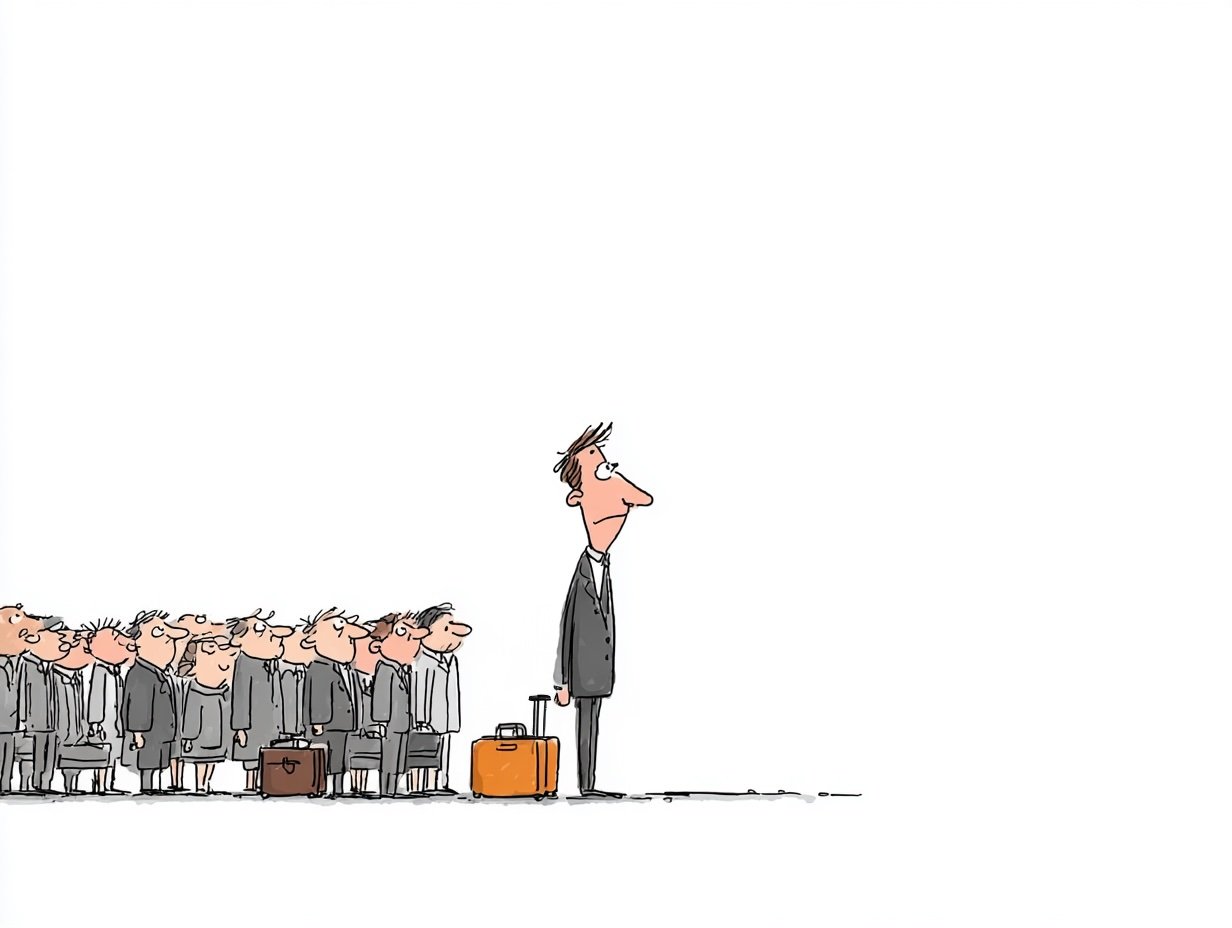
Vogel joins a growing group of air travelers who are showing up early — and in some cases, far too early — for their flight. There’s a name for these passengers: gate campers. A recent survey found that 95 percent of early birds were driven by fear. Philadelphia, Orlando and Atlanta had the most gate campers in the United States.
“It’s no surprise we’re seeing more travelers arrive early and camp out at their gates,” says Eric Napoli, chief legal officer at AirHelp. “There are many different factors: the holidays approaching and the government shutdown happening, plus strict and often confusing rules about carry-ons, people are anxious about potential delays or missed flights or simply are afraid there won’t be a place for their carry-on if they aren’t the first to board.”
But how do you know if you have gate camper tendencies? Is there a better way of ensuring you don’t miss your flight than showing up extra early? And what, if anything, should you do differently this holiday travel season when it comes to your flight?
Your voice matters
Travel anxiety is causing many passengers to camp out at their gates hours before a flight, clogging terminals and annoying fellow travelers. But others say arriving early is the only way to ensure you don’t miss your flight. We want to hear your thoughts.
- How early do you really arrive for a flight? Are you a proud “gate camper”?
- What’s your worst experience with airport crowds or waiting at the gate?
- What’s your single best tip for a stress-free airport experience (besides just showing up early)?
Are you a gate camper?
So how can you tell if you’re getting to the airport too early? Generally, you need to be at the airport at least two hours before your domestic flight and three hours before your international flight. Some airports have earlier recommended check-in times or earlier cut-off times for your luggage, which your airline should tell you about. And during the busy holiday travel season, you might want to add an hour, just to be safe.
If you arrive earlier than that, you’re a gate camper. And you’ll know that you’re pushing the limits if your airline counter is not yet open to check you in for your flight.
But there’s good news if you find yourself with a few hours to spare. Sometimes, an airport is a destination unto itself. My favorite example is Singapore, which has one of the best malls in all of Asia, the Jewel Changi Airport, outside the gate area. It even has the world’s tallest indoor waterfall, called the Rain Vortex.
Another tip: If your family tells you that you’re getting to the airport too early, you probably are. (I speak from personal experience.)
“Generally, you need to be at the airport at least two hours before your domestic flight and three hours before your international flight. “
No, you really don’t. If you’re not checking bags, an hour is fine, and 90 minutes is ample.
Read more insightful reader feedback. See all comments.
How to avoid getting to the airport too early (and still make your flight)
Travel expert Phyllis Stoller says gate campers are an unfortunate by-product of fear, and they worsen the air travel experience for everyone.
“These folks take over extra seats with their luggage and stuff,” she says. They also hog all the power outlets and sometimes they literally camp out at the gate area, spreading out blankets and neck pillows, and having a messy picnic on the terminal floor. (Related: Love is in the air: The most annoying things couples do when they travel.)
But the most annoying behavior is something Stoller calls a seat kidnapper. That’s a passenger who claims three seats for themselves and then spreads out with their luggage or even tries to take a nap.
So now you know what not to do. But still, what if you’re worried about missing your flight — a legitimate concern during the holidays?
Justin Crabbe, the CEO of a private jet service, says instead of worrying, travelers should sign up for real-time updates on delays, gate changes, and other flight-related difficulties through the airline’s app. Also:
- Check the crowds before you fly. Processing time information is available at several airports on the Customs and Border Protection site.
- Fly during off-peak times. There are fewer passengers, so you won’t have to fight the crowds.
- Don’t check luggage. That adds stress, and there’s an earlier cut-off time for checking your bags. If you can avoid checking a bag, you’ll save time and avoid becoming a gate camper.
And take a deep breath. If you follow the airline’s recommendations and you still miss your flight, here’s a little secret: It’s called the flat tire rule. If you tried to make it to the airport on time but couldn’t because of traffic or an accident, the airline will usually put you on the next available flight at no charge. Just remember to ask about the flat-tire rule.
Should you be “pre-punctual” this holiday travel season?
But wait — shouldn’t you arrive extra early if you’re flying during Thanksgiving, Christmas or New Year’s?
Yes and no.
Yes, you should add an hour to your scheduled arrival time, just to be safe. But no more.
And for heaven’s sake, don’t spread your belongings all over the waiting area, says etiquette expert Jodi RR Smith.
“Waiting at the gate is rarely the best option,” she says. “Instead, pre-punctual travelers should avail themselves of some of the airport’s amenities. There are restaurants and shopping. Often, there are spas and workout spaces. Occasionally, there are historical exhibits and selfie sites.”
Believe it or not, a visit to the airport is also a great opportunity to exercise.
“Once, while waiting for a flight, I was able to walk a full 5K by visiting every gate in every terminal,” Smith says.
Not bad.
Get there too early, and you risk becoming one of those pesky gate campers. Get there at the right time, and you’re practically guaranteed to make your flight.
Are you a “gate camper”?
Arriving too early for a flight just adds to the stress
Are you arriving too early?
How to avoid the stress (and wait)
If you are early: use the airport
What you’re saying
Readers are split on the “gate camper” phenomenon. While some agree it’s driven by anxiety, many argue it’s a necessary strategy. The top comment from OnePersonOrAnother challenges the 2-3 hour rule, stating 90 minutes is “ample” if you aren’t checking bags.
-
The 2-3 hour rule is debatable
Top commenter OnePersonOrAnother leads the charge, calling the 2-3 hour rule unnecessary. George Schulman points out the irony: airlines demand a 3-hour arrival, but staff often “did not show up until 2 hours before flight time.”
-
It’s about traffic, not the terminal
Many self-proclaimed “gate campers” like Dave and AJPeabody say their early arrival is insurance against unpredictable traffic to major airports. Dave says he’d rather nap at the gate for four hours than risk disaster on the “Jersey Turnpike.”
-
The “flat tire rule” is a risky bet
The article’s advice to rely on the “flat tire rule” is challenged by GradUT. He warns that with flights being completely full, the “next available flight” might not be in a few hours, but “a day or two (or more) later,” making early arrival the only safe option.

Have a question about this story? Tell us what happened — we read every comment.
Join the conversation