
in this case
- Shiri Willcot’s travel agent tried to book her 13-year-old daughter Ryan on a connecting flight from Los Angeles to Costa Rica, but United’s policy prohibits unaccompanied minors on connecting flights.
- A United supervisor overrode the system, approved the reservation, charged the $300 unaccompanied minor fee, and a recorded call two days before the flight confirmed Ryan could board without issue.
- United agents at LAX refused to let Ryan board, citing the no-connecting-flights policy. For a month afterward, United claimed no record of the original flight existed despite Willcot having confirmation emails, the $300 charge, and the recorded call.
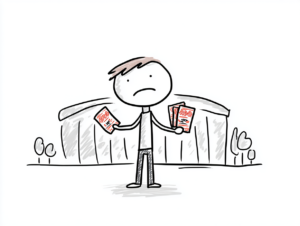
When Shiri Willcot’s travel agent tried to book a flight for her 13-year-old daughter Ryan from Los Angeles to Costa Rica with a connection in Houston, the reservation system said no.
United Airlines doesn’t allow unaccompanied minors on connecting flights. Full stop. It’s right there in the policy: children ages 5 to 14 traveling alone can only fly nonstop.
But then something unusual happened: A United supervisor intervened during the initial booking process, overrode the system, and approved the reservation. The airline even charged Willcot’s credit card the $300 unaccompanied minor fee.
And just two days before the flight, a United representative confirmed on a recorded call that Ryan “would have no problem boarding.”
But two days later, at the ticket counter at Los Angeles International Airport, there was a problem.
United agents refused to let Ryan board. “They wouldn’t even look up the flight,” Willcot says. “They just kept saying she shouldn’t have been booked on a connecting flight.”
This case raises several important questions about airline policies and passenger rights:
- Can airlines authorize exceptions to their own policies, then deny passengers at the gate based on those same policies?
- What documentation proves a passenger has been wrongfully denied boarding when the airline claims no record exists?
- Who’s responsible when a travel agent obtains verbal authorization from an airline, but the airline later disputes it happened?
But let’s get back to the flight that wasn’t, and the poor teenager left stranded at LAX.
How did this happen?
Here’s the backstory: Willcot had been planning a family vacation to Costa Rica. The itinerary seemed straightforward: Ryan would fly from LAX to Houston, where Willcot would meet her, and they’d continue together to San Jose, Costa Rica.
But not so fast. United’s unaccompanied minor program prohibits connecting flights for children under 15 traveling alone. The system simply wouldn’t process Ryan’s booking.
“I just spoke with United and they manually configured United’s flights for us,” Ryan Gomez, one of Willcot’s travel agents at RZRV Travel, wrote in an email to Willcot immediately after completing the booking. “Usually, they don’t allow indirect flights (connections) for minors, so they had to get authorization for us.”
The booking went through. United issued a confirmation. The airline charged her credit card a $300 unaccompanied minor fee.
Everything appeared in order.
“We followed up with United on two additional occasions prior to travel to reconfirm there would be no issue, and were assured the booking was valid,” RZRV Travel later confirmed in a written statement. “Notes were also added to the reservation during those calls.”
The last call, confirming her daughter could board the flight, was recorded by her. (You know, for quality assurance purposes.)
Airline employee here. People try to dump their kids with the airlines all the time with no contingency plan if something goes wrong. If a child is unaccompanied, an adult must stay in the gate area not just until the child is boarded, but until the plane is in the air.
What is the airline supposed to do with a child if the aircraft boards then a last minute mechanical or weather issue prevents take-off and they have to de-board? Airlines are not babysitters, and have to protect themselves from liability if there is a flight interruption.
The fact that the adult’s flight from Portland had not posted a delay yet does not mean it was not going to be delayed. Employees are generally privy to weather and operational delay info before it is officially posted, and ultimately it WAS delayed. So the gate agent should board this UM not knowing HOW delayed the adult’s flight would be?
That was a pretty risky plan to fly in just hours before the child arrived. At the very least that mother should have come in the night before. Had that mother’s flight been delayed or canceled, I promise you that gate agent would have had to take the fall.
Read more insightful reader feedback. See all comments.
The trip that required a supervisor override
United’s denial of boarding set off a cascade of problems. Ryan’s father, who’d taken her to the airport, couldn’t get her a replacement ticket on the same flight. Willcot ended up purchasing a one-way ticket for Ryan to fly alone from Los Angeles to Costa Rica a day later.
When Willcot tried to get answers from United, things got stranger. Customer service representatives told her their system showed only a one-way return ticket, but no record of the original outbound flight and no record of the denial at LAX. (Related: Oh no! United Airlines changed our flight, and now we can’t make our connection.)
It was as if the whole thing had never happened.
Except Willcot had the confirmation emails. She had the $300 charge on her credit card statement. She had screenshots of her travel agent’s chats with United. And she even had a recorded call assuring her that her daughter could board the flight.
United’s written responses came next, each one contradicting the last.
First, the airline said the travel agency had booked against policy without authorization. Then it claimed no supervisor would have approved the itinerary. Later, a United representative left Willcot a voicemail admitting one explanation was “wrong” and promising a corrected version.
Can airlines authorize exceptions to their own policies, then reverse them?
United’s unaccompanied minor policy is unambiguous: children 5 to 14 must travel on nonstop flights only. No connections, no exceptions.
Except when there are exceptions.
Airlines do make policy overrides. They’re called supervisor approvals for a reason. Gate agents can’t authorize them, but managers and supervisors can. It happens when a passenger has a compelling reason, when circumstances are unusual, or when the airline determines the standard rule shouldn’t apply.
In Ryan’s case, the circumstances were specific: her mother would be arriving in Houston on a separate flight before Ryan’s connection to Costa Rica departed. United’s own policy states that unaccompanied minors must “be met by another parent, legal guardian, or responsible adult upon deplaning at the final destination.”
Willcot would be there, eliminating the unaccompanied part of the connection.
The travel agents couldn’t have completed the booking without United’s intervention. When you try to book an unaccompanied minor on a connecting flight through United’s website, the system displays “N/A” for all dates.
“It is not possible to book an unaccompanied minor with a layover through United’s system,” RZRV Travel confirmed. “A United representative placed us on hold, consulted a supervisor, and then confirmed that they could override the system and book the flight over the phone for us. Without that override, the reservation could not have been issued.”
So what happened? Did United authorize the booking or not?
According to United’s contract of carriage, “no employee or agent of UA has the authority to alter, modify, or waive any fare rules or any provision of the Contract of Carriage unless authorized by a corporate officer of UA.”
That’s the airline’s position. No corporate officer authorized Ryan’s travel on a connecting flight, United claims, therefore no valid exception existed.
But if no authorization existed, how did the ticket get issued? How did the $300 unaccompanied minor fee get charged? How did three separate United representatives — including one on a recorded call two days before departure — confirm Ryan could fly?
The answer appears to be that someone at United did authorize it. The airline just doesn’t want to admit it.
What documentation proves wrongful denial when the airline has no record?
Here’s where Willcot’s case gets a little strange. For a full month after the LAX denial, United claimed to have no record of Ryan’s original flight.
When Willcot contacted customer service through the online portal, a representative reviewed the account.
“Our records show only a one-way return ticket,” he told her. No outbound flight from LAX to Houston. No connection to Costa Rica. And no denial at the airport.
Willcot sent screenshots of the booking confirmation. She sent the credit card statement showing the $300 unaccompanied minor charge. She sent call logs from her travel agents.
United’s response: Sorry, we don’t see it in our system.
This is where things get difficult for passengers. Airlines control the records and their own reservation systems. They control what’s documented and what isn’t. If an airline says something didn’t happen, and its system shows no record, how does a passenger prove otherwise?
Willcot had documentation, but it wasn’t enough. Email confirmations can be dismissed. Credit card charges prove payment but not authorization. Call logs show a conversation occurred, not what was said.
The recorded call was Willcot’s strongest evidence, but United never acknowledged it. The airline’s written responses repeatedly stated that no United representative “would have been authorized” to confirm Ryan could travel on connecting flights. Whether one actually did was irrelevant, according to United’s airline logic.
A few weeks later, Willcot sent a formal demand letter to United, requesting $20,000 in compensation.
And just when you think things couldn’t get any stranger, they do. A manager sent another response after Willcot filed a complaint with the Department of Transportation, contradicting the first one. The United rep even left a voicemail saying to disregard the earlier email because it was “wrong.”
Within a month, United had decided on its final narrative: the travel agency booked against policy, no authorization was given, and the airline’s denial at LAX was appropriate.
“The customer’s travel agency booked an unaccompanied 13-year-old child on an itinerary with a connecting flight, which is not permitted under our unaccompanied minor policy,” United told my team after we asked about this case.
But there was one more twist.
Who’s responsible when verbal authorization later gets disputed?
A few weeks later, United provided additional context to my advocacy team: Willcot’s flight from Portland to Houston had been delayed. She wouldn’t have arrived before Ryan’s connecting flight, United claimed, violating the requirement that an adult meet the unaccompanied minor upon deplaning.
This was the first time anyone had mentioned a delay.
According to United, Willcot’s flight delay registration showed at 10:01 p.m. Pacific time — right around when Ryan was checking in at LAX. The initial delay projection showed Willcot arriving 15 minutes after Ryan’s scheduled arrival in Houston.
If true, this would potentially justify United’s denial. The airline’s unaccompanied minor policy requires an adult to be “at the gate 30 minutes before their arrival time.” If Willcot couldn’t be there, Ryan couldn’t fly as an unaccompanied minor.
Except the timing doesn’t add up.
Willcot’s flight wasn’t scheduled to depart Portland until 11:59 p.m. — nearly two hours after Ryan checked in at LAX. When Ryan was denied boarding around 10 p.m., Willcot’s flight hadn’t even been posted as delayed yet.
“At the time of Ryan’s denial, no delay was yet posted for our flight,” Willcot says. “The first announcement came later and was only a 15-minute delay.”
More importantly, the ticket agents at LAX never mentioned Willcot’s flight or any delay. Willcot asked them to look up her reservation to confirm she’d arrive first. They refused, stating simply that unaccompanied minors shouldn’t be booked on connecting flights.
If the real reason for the denial was the delay, why didn’t United say so at the time? Why did the airline’s subsequent explanations never mention it until three months later, after multiple other rationales had failed?
“United has shifted its story multiple times, with each new explanation contradicting the last,” Willcot notes. “If there had been a valid reason, it would have been stated consistently from the start.”
United’s contract of carriage allows the airline to refuse transportation for safety reasons. If United genuinely believed Ryan would arrive in Houston with no adult present to meet her, denying boarding would be appropriate.
But that requires United to have known about the delay, checked Willcot’s flight, and determined she couldn’t arrive on time. None of that appears to have happened at LAX. The agents simply saw a connecting flight for an unaccompanied minor and said no.
The travel agency maintains its position: United authorized the booking, reconfirmed it twice before departure, and only denied it at the gate based on policy — not operational issues.
“Ultimately, the decision to authorize, deny, or compensate lies with United Airlines,” RZRV Travel told us.
United also maintains its position: the travel agency booked against policy without proper authorization, and the denial was appropriate.
So what was the resolution?
United refunded Ryan’s unused flight segment from LAX to Houston: $375. The airline also refunded the $300 unaccompanied minor fee and offered 25,000 MileagePlus miles “as a gesture of goodwill.”
Total value: approximately $1,000, depending on how you value the miles.
Willcot spent $679 on the replacement Alaska Airlines ticket. She spent hours on phone calls, emails, and documentation trying to piece together what happened. And her 13-year-old daughter was denied boarding after her family had done everything United told them to do.
Our advocate Dwayne Coward asked the airline repeatedly to explain the supervisor override, the multiple conflicting explanations, and the disappearing reservation records. United declined to comment beyond its prepared statement blaming the travel agency.
We also contacted RZRV Travel, giving the agency an opportunity to respond. Initially reluctant to be involved, the agents eventually provided a detailed account supporting Willcot’s version of events.
“This reservation could not have been completed without United Airlines’ intervention,” an agency representative wrote. “We followed up with United on two additional occasions prior to travel to reconfirm there would be no issue, and were assured the booking was valid.”
After reviewing all the documentation — confirmation emails, call logs, credit card statements, United’s contradictory written responses, and the timeline of events — the truth became clear to us. United must have authorized an exception to its unaccompanied minor policy, allowed the booking to be ticketed, collected payment, then reversed course at the gate without a clear explanation.
Willcot may yet pursue legal action. For now, she’s left with an expensive extra airline ticket and an unresolved grievance with an airline.
“I don’t need to keep proving what I lived through,” Willcot says. “I was fully aware of the contract of carriage — and what United relied on the night of the flight was the connection rule, which they had already broken by finalizing and confirming the booking.”
Bottom line: When you get an exception to the rules, make sure you get it in writing. Documentation may not prevent airlines from changing their mind — but it makes it harder to pretend the conversation never happened.
Your voice matters
United authorized a 13-year-old’s connecting flight, charged the $300 unaccompanied minor fee, reconfirmed the booking twice, and then denied boarding at LAX. Records of the original flight vanished for a month. The airline’s explanations changed three times.
- Should airlines be legally bound by recorded supervisor approvals once payment is charged and a confirmation email is sent to the passenger?
- Should the U.S. Department of Transportation require airlines to preserve all reservation records and disclose them to passengers within 72 hours of a written request?
- Should airlines face automatic statutory damages when their gate agents deny boarding for a policy violation the airline itself authorized at booking?
What you need to know about United Airlines unaccompanied minor policy denials
Quick answers to the most common questions about United Airlines unaccompanied minor connection rules, what happens when an airline authorizes an exception then reverses it, and how to document and enforce an airline’s verbal authorization.
United Airlines unaccompanied minor policy prohibits children ages 5 to 14 from flying alone on connecting flights. They can only travel nonstop. The policy applies to all bookings made through United’s website, which displays “N/A” for all dates when attempting to book a minor on a connecting itinerary. United charges a $300 unaccompanied minor fee per booking, and an adult must meet the minor at the gate within 30 minutes of arrival.
United supervisors can override the booking system to authorize exceptions when standard rules would otherwise block a booking. However, United’s contract of carriage states that no employee or agent has authority to alter, modify, or waive any provision of the contract unless authorized by a corporate officer. This means a supervisor override can be reversed if United later determines no corporate officer approved the exception. Always request written confirmation.
If United denies boarding after the booking was authorized, you may be entitled to a refund of the unused flight segment, the unaccompanied minor fee, and goodwill compensation typically offered as MileagePlus miles. Your replacement ticket costs are not automatically reimbursed. Document every conversation, save all confirmation emails, and file a complaint with the U.S. Department of Transportation. See Elliott Advocacy’s guide to how consumer complaints work.
Save every email confirming the booking, the credit card statement showing fees, screenshots of the airline app or website, and any chat transcripts with the travel agent or airline representative. Where legal, record reconfirmation calls. Request that agents add detailed reservation notes describing the supervisor override. Email a written summary of every phone conversation back to the airline customer service team for an audit trail.
File a formal complaint with the U.S. Department of Transportation at transportation.gov. Include your booking confirmation, credit card statement showing all fees, any recorded call transcripts, screenshots of the original booking, and the airline’s contradictory written responses. The DOT requires the airline to respond formally to your complaint within 60 days. DOT complaints often produce faster resolution than continued direct customer service contact.
A contract of carriage is the legal agreement between an airline and its passengers covering everything from refund rights to denial of boarding. United’s contract of carriage limits who can authorize policy exceptions to corporate officers. The contract often defaults in the airline’s favor when verbal authorizations are disputed. Read the full contract before booking unusual itineraries. Contact United Airlines executive customer service when standard channels fail.
If United denies boarding after charging your card for the ticket and unaccompanied minor fee, you can dispute the charge under the Fair Credit Billing Act for services not as advertised. Notify your card issuer within 60 days of the first statement showing the charge. Provide your full documentation package. See Elliott Advocacy’s complete guide to chargebacks and winning credit card disputes.
What is United Airlines’ unaccompanied minor policy on connecting flights?
Can a United supervisor authorize an exception to the unaccompanied minor policy?
What happens if United denies boarding after authorizing your booking?
How do you prove an airline authorized a policy exception?
How do you file a complaint with the U.S. Department of Transportation?
What is a contract of carriage and why does it matter?
Can you file a credit card chargeback for a wrongful denial of boarding?

Have a question about this story? Tell us what happened — we read every comment.
Join the conversation