Like many people, Debra Beasley is frustrated by the rising cost of travel insurance. Every time she books a trip, she gets an offer to buy optional coverage—and it all adds up.
“I’ve shelled out thousands of dollars,” says Beasley, an accountant from Fort Collins, Colo.
Beasley says she’s tried using coverage from her credit card, but her tour companies wanted to charge her more to pay by credit card, “and sometimes the credit card coverage was insufficient to cover the trip,” she adds.
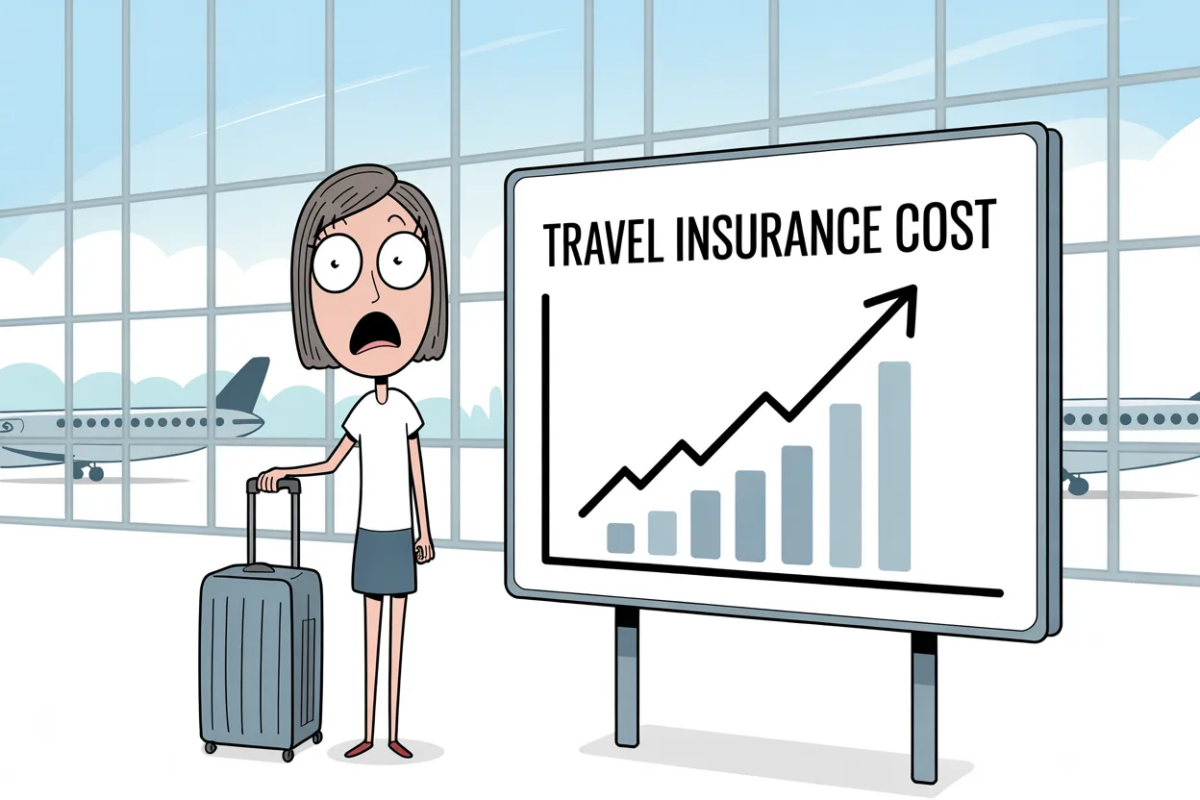
It’s a common problem. The cost of travel insurance has been rising steadily, as have travel costs in general. Travelers are looking for ways to save money on their next trip without sacrificing essential coverage.
“Rising premium prices are a direct result of higher overall travel costs and inflation,” says Chris Carnicelli, CEO of Generali Global Assistance. “Most travel protection plans are priced as a percentage of the total trip cost, so as airfare and accommodations become more expensive, premiums naturally increase. Travelers are insuring a larger financial investment than they were even a few years ago.”
Why are travel insurance premiums rising now?
It feels like everything related to travel is more expensive, and insurance is no exception. Some travelers report premiums jumping 10 to 20 percent over last year.
“Most rate changes reflect claims experience from the past 12 to 24 months, particularly as medical costs rise, airline reliability declines, and hurricane seasons grow longer,” says Wendy Stahl, director of product development at Axatravelinsurance.com. She says that’s prompted travelers to take a hard look at their existing coverage that might be useful when traveling, including health insurance, auto policies, and credit cards, as well as what parts of your trip are nonrefundable.
There are no reliable numbers related to the price increase. But experts say one cause is medical inflation, which is outpacing regular inflation by 3 to 4 percent. Also, people are traveling more since the pandemic, leading to higher claim volumes, which has led to higher rates. And the actual cost of providing some services has also risen.
“Remote area evacuations cost anywhere from $150,000 to $300,000,” says Cody Schuiteboer, a financial advisor who has helped clients lower their travel insurance costs. “Insurers are offsetting these costs with higher premiums.”
I have used medical-only policies because I am willing to accept the closed-ended risk of the trip cost itself. That type of coverage tends to be very limited as to types of perils and degree of reimbursement, too many hoops for my comfort.
But medical expenses are open-ended, and could cause me to lose my house if there were a significant medical event outside the United States. Domestic medical insurance plans and most credit cards rarely provide medical coverage, and those that do typically limit coverage to an inadequate $50,000 and may exclude evacuation coverage.
I buy single-trip coverage: $1 million medical, $500,000 evacuation, $0 deductible.
But simply shopping by price can be problematic, according to industry experts.
“Like any plan, you have to fully understand what you are getting beyond coverage limits,” says Brandon Bates, president of the U.S. Travel Insurance Association, a trade group. “Look closely at the benefit limits, policy exclusions, covered perils, and coverage time frames. Do your research to find the plan that best fits your type of trip and your specific concerns.”
But how?
A tailored approach to saving on travel insurance
To combat these price hikes, some insurers are offering specialized products that allow travelers to pay only for the specific risks they face.
Daniel Durazo, director of communications at Allianz Partners USA, suggests that travelers may want to consider if a policy that only covers medical emergencies or only covers trip cancellations fits their travel needs. He adds that it’s important to understand what you’re giving up if you don’t select a policy that covers both cancellations and post-departure problems.
For example, Allianz’s OneTrip Emergency Medical plan provides up to $50,000 in emergency medical coverage for travelers who aren’t worried about losing their nonrefundable trip deposits. Conversely, its OneTrip Cancellation Plus plan is for travelers who may already have health coverage but want to protect up to $5,000 in trip costs.
“If you’re traveling with kids, buying Allianz’s OneTrip Prime can save money by covering kids 17 and under for free when traveling with a parent or grandparent,” Durazo adds.
Beyond traditional reimbursements, new digital tools are being integrated to save travelers both time and out-of-pocket expenses. Durazo notes that insured Allianz customers with emergency medical benefits may have access to the Allyz mobile app, which includes up to three virtual or in-person doctor visits per trip at no additional cost. This can be a significant money saver if you need to see a doctor while traveling.
The Three-Trip Rule for annual insurance
Insurance experts say if you leave home more than twice a year, you are likely overpaying for your policy.
“Buying protection trip-by-trip is inefficient and expensive,” says Bill McIntyre, a director at Global Rescue. He says an annual travel insurance policy may align with the way people are traveling today: frequently, unpredictably, and often more than once a year.
Jacob Charles, a personal finance expert, uses what he calls the Three-Trip Rule. If you travel three or more times a year, single-trip plans are a waste of money. He pays about $380 for an annual plan that covers everything.
Schuiteboer, the personal finance expert, saw this work for a client who was spending $85 to $120 per trip on insurance. Since she traveled six times a year, her bill hit $600. By switching to a $300 annual plan, she cut her costs in half with the same coverage.
Save money by eliminating overlap
Most travelers are over-insuring their trips without realizing it. For example, you might have a premium credit card that covers trip cancellations. Your primary health insurance might work overseas. Your homeowner’s insurance might even cover your stolen laptop.
“Many travelers buy the same item twice without the slightest idea of it,” says Paul Ferrara, a senior wealth counselor based in Toronto.
That’s because travelers seldom review their primary health plan regulations before booking a trip.
“For example, the majority of people have twice the evacuation coverage they require on a typical vacation,” he says. “Reducing these overlaps is the quickest method to reduce your premiums while maintaining your actual safety net.”
This kind of insurance unbundling has been going on for a while, where travelers pick and choose the coverage they want instead of buying a gold-plated, comprehensive policy.
“Skip comprehensive if all you need is medical,” says Andrea Woroch, a money-saving expert. She says standalone medical plans can cost under $10 per day and still provide emergency care and evacuation.
Charles, the personal finance advisor, says he saved $240 on a recent trip to London by realizing his credit card already covered the $10,000 trip cancellation portion. He bought a cheap, medical-only policy instead.
The solution: A careful audit of your coverage—and maybe an annual policy
Saving on travel insurance starts when you book, according to experts.
“Don’t check the box at checkout,” says Suzanne Morrow, CEO of the travel insurance marketplace InsureMyTrip. “One of the biggest mistakes travelers make is purchasing trip protection directly at the point of sale through an airline, cruise line, or booking site. These plans are often more limited and more expensive than third-party policies.”
Also, be careful about what you insure.
“Most travel insurance cancellation policies only refund nonrefundable trip expenses,” says Lauren McCormick, a spokeswoman for travel insurance site Squaremouth. “So you should only insure the amount you’ve paid that is ineligible for a refund. If your purchases can be refunded without travel insurance, then it makes sense to exclude them from your policy to save money overall.”
Beasley, the accountant who complained about overpaying for travel insurance, says she conducted a full audit of her coverage. She reviewed the things that mattered most to her, including medical, trip interruption and evacuation.
“I finally bought an annual plan that will cover the losses of my most expensive trips,” she says. “And never looked back.”
She estimates she’s saved thousands of dollars in travel insurance. And now, when she gets to the last checkout screen, she just clicks “continue.”

Have a question about this story? Tell us what happened — we read every comment.
Join the conversation