You don’t have to be in the direct path of a hurricane for it to ruin your next vacation. And this year, which is quieter than most, is no time to let your guard down.
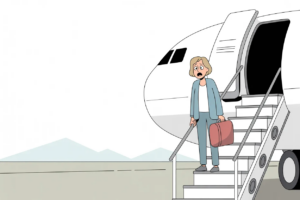
“We often see ripple effect claims where a traveler is stranded because their incoming aircraft is stuck in a hurricane zone,” says Terry Boynton, co-founder and president of Yonder Travel Insurance.
The sun may be shining when you leave and the weather forecast at your destination may be perfect, but your plane could be stuck on the tarmac in Miami, waiting out a tropical storm.
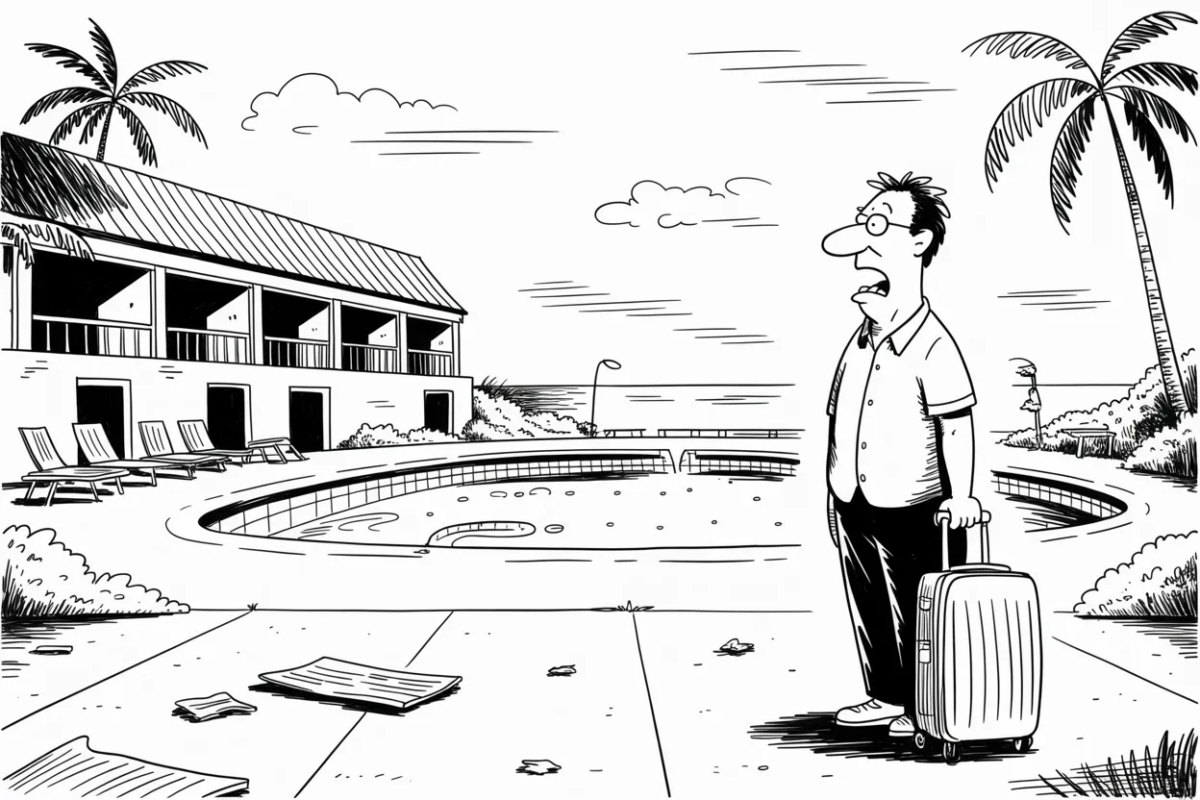
If you’re brave enough to travel inside the hurricane belt this time of year, you could reach your resort and find a debris field, with the lobby serving as a staging area for relief efforts.
“A common misconception is that hurricanes will either miss them or won’t seriously disrupt their trip,” says Bill McIntyre, a director at Global Rescue.
U.S. travelers are spending a record-breaking $226 billion on summer vacations, according to Allianz Partners. Data from travel insurance marketplace Squaremouth shows a 39 percent surge in searches for hurricane-related coverage last year.
They have good reason to be nervous. The storm on the radar isn’t the only one that can hurt you.
That’s worth reiterating even during a quiet year for hurricanes. NOAA’s latest update predicts 7 to 13 named storms, 2 to 6 hurricanes and 0 to 2 major hurricanes, with a 75 percent chance of below-normal activity; to date the season has produced two named tropical storms and one hurricane.
For travelers, that threat is the invisible storm: the cascading effects of a hurricane that can ground your flight a thousand miles away, turn a “technically open” resort into a disaster zone, leave vacation rentals with hidden mold and structural damage, or expose you to legal and insurance loopholes that leave you stranded and uncovered. But there are ways to avoid that kind of trouble.
Keep in mind that hurricanes are (obviously) not the only storms that can wreak havoc on your travel plans. We went to northern Florida a few years ago for a funeral. The day before the funeral, a strong thunderstorm went through the area. Our hotel lost electricity for a few hours and many trees lost branches. The funeral was canceled because a huge tree branch fell across the entrance road and no one was able to remove it in time.
Add in tornadoes during a thunderstorm and the damage really multiplies. Blizzards can do damage, too.
We were in Taiwan when a typhoon hit. By the time it got to us, it was a tropical depression. We saw more and heavier rain than we ever have and just watched movies waiting the storm out. Just stepping the two feet from the overhang we had to the video store next door would get us drenched no matter how fast we moved.
Technically open, but practically ruined
One invisible hazard is the “technically open” situation. This happens when a storm hits a destination weeks before you arrive. The sun is out, the hurricane warning is gone, and the hotel manager insists they are “open for business.”
But “open” is a relative term.
“There are times when a storm does not rise above a tropical storm but hits in just the right way that the tourism areas are affected,” says Christopher Falvey, co-founder of Unique NOLA Tours in New Orleans. You might arrive to find power outages, contaminated water, or closed amenities.
Thomas Carey, a partner at a law firm in Clearwater, Fla., who has handled hurricane-related injury cases for nearly 40 years, warns that the most dangerous invisible hazards in these scenarios are mold and hidden structural damage.
“We saw a spike in premises liability cases where tourists rented properties that looked fine in photos but had compromised floor joists, hidden mold from roof leaks, or balconies with water-damaged supports,” says Carey.
He cites a heartbreaking case where a client fell through rotted decking at a Florida Airbnb. The owner knew about the roof damage from a storm the previous year but hadn’t fixed the structure underneath. Because of Florida’s statute of limitations, the client waited too long and couldn’t file a claim.
Carey’s advice? “Text the host asking specifically: ‘Was this property inspected after [named storm]’ and ‘Do you have documentation of repairs?’ That written communication becomes evidence.”
Why traveling too soon after a storm is dangerous
Even walking around a post-storm city can be fraught with hazards.
Joe Caputo, personal injury lawyer in Austin, Texas, has represented dozens of clients injured during the aftermath of storms. “The invisible hazard nobody talks about is the 2 to 3 week period after landfall,” he says.
He recalls cases where people stepped on nails hidden in debris or tripped over concealed damage on commercial properties that hadn’t been inspected yet. And if you think the property owner will just pay your medical bills, think again.
“The insurance coverage gap that destroys injury claims is the ‘Act of God’ defense,” Caputo says. Property owners will claim the hurricane absolves them of liability.
It gets worse when you’re driving. Ron Harper, a licensed paralegal from Ontario, Canada, says travelers often wrongly assume their insurance covers them if they get into an accident on storm-damaged roads.
“I have witnessed cases where drivers received a fine due to passing through a flooded intersection which was technically open despite the danger,” Harper says. “Normal travel policies do not cover legal defense expenses associated with traffic offenses.”
The “named storm” rule
So, how do you protect yourself? If you wait until you see the swirl on the weather map, it’s already too late.
“Once it’s a named a storm, it becomes a foreseen event,” says Boynton.
This is the insurance industry’s “named storm” rule, and it trips up travelers every year.
“If you buy your ticket or your insurance policy after the storm has formed, your policy isn’t going to cover those losses because you knew about the risk,” explains Michael Giusti, an analyst at insuranceQuotes.com.
So how to get around the rule?
“The ‘named storm’ rule simply means you need insurance in place before the storm has a name,” says Wendy Stahl, a travel insurance product director at AXA Partners US.
One more thing: You can’t get a refund if you cancel your vacation because you’re worried about a storm.
“Standard travel insurance doesn’t cover weather anxiety or discomfort with a forecast,” says Kayla LeClerc, owner of Whimsical Wishes Travel Concierge.
The “Cancel For Any Reason” solution
If you’re the type of traveler who would be miserable if the hotel pool was closed or if you had to look at a pile of debris on the beach, consider Cancel For Any Reason (CFAR) coverage. It’s more expensive than standard coverage, but it allows you to cancel your vacation for any reason, including storm concerns, and receive a partial refund.
“If your trip hasn’t officially been canceled, but you know you would be miserable if you went, then a ‘cancel for any reason’ policy would be worth it,” says Giusti.
But there’s a catch. You can’t buy this policy the day before you fly.
“CFAR must typically be purchased within 1-21 days of your very first trip payment,” warns Boynton. “You can’t wait until hurricane season starts to add it to your policy.”
Should you cancel your vacation if there’s a hurricane coming?
The invisible hazards of hurricane season—the diverted flights, the moldy rentals, the hidden nails, and the “Act of God” loopholes—are reason enough to pause.
Daniel Durazo, a spokesman for Allianz Partners USA, notes that in 2025 alone, his company received almost 3,000 claims for hurricane-related disruptions. More than half were related to Hurricane Melissa, a catastrophic Category 5 storm.
“Melissa was an extreme example of how hurricanes can impact travel plans and how severe weather events can occur quickly and unpredictably,” he says.
If you’re booking travel during hurricane season, watch the weather—and the calendar. Buy your insurance early, consider the CFAR upgrade, and if a storm hits near your destination, ask for proof of repairs before you check in.

Have a question about this story? Tell us what happened — we read every comment.
Join the conversation