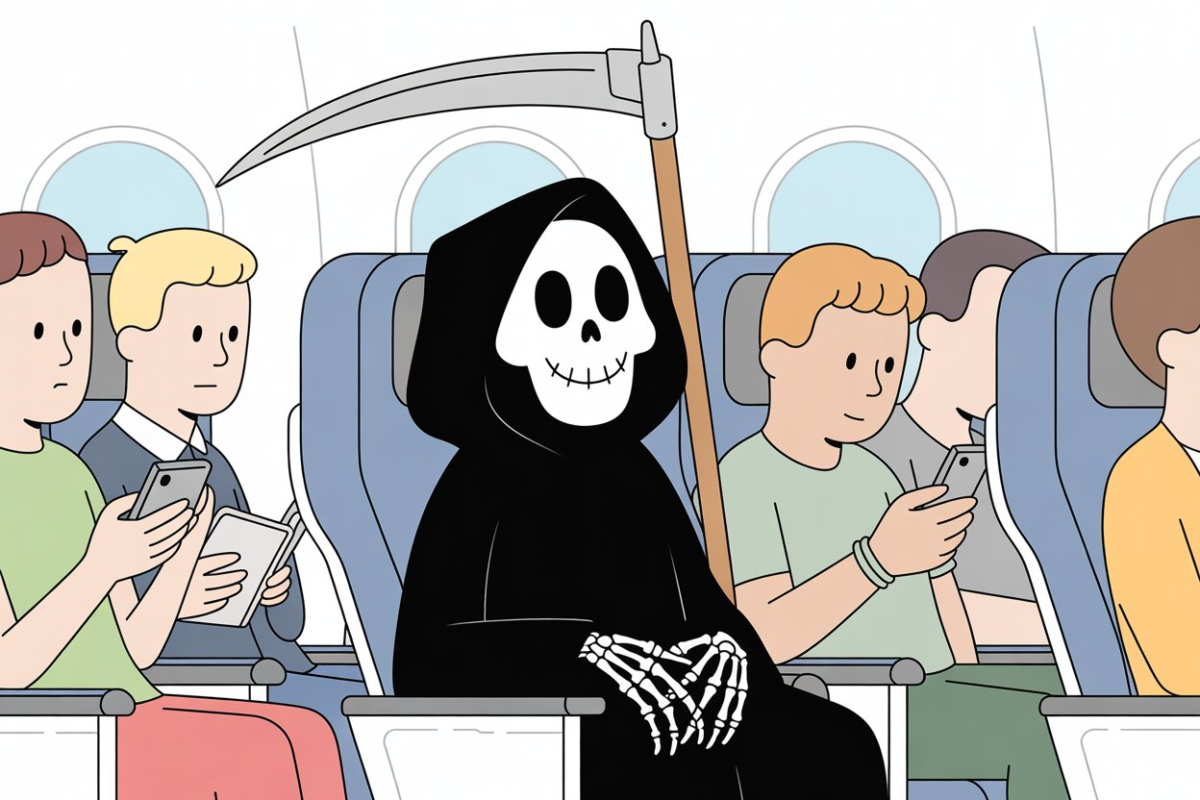
Sometimes, a vacation can be a one-way trip.
Dying abroad, while rare, is a heart-wrenching challenge for grieving families, from navigating foreign bureaucracies to repatriating remains. But careful planning, including buying the right travel insurance and clear communication with loved ones, can soften the blow and ensure the final journey home is as smooth as possible.
The U.S. State Department reported 6,062 deaths of U.S. citizens abroad in 2022, the last year for which statistics are available. That’s a nearly 10 percent jump from the previous year. While the pandemic skewed 2021’s numbers lower, the trend is clear: More Americans are traveling, and with that comes a higher chance of something going tragically wrong.
“Anything that can happen while you’re at home can also happen while you’re traveling,” says Daniel Durazo, a spokesman for Allianz Partners USA. That includes dying.
Experts say few travelers proactively discuss end-of-life wishes or arrangements with their families before an international trip. But they should.
Patty Zamora knows this all too well. Her mother, battling liver cancer, wanted one last trip to Chile, to see her family. Sadly, she got a sepsis infection in Santiago and passed away after two weeks in the hospital.
“Lucky for us, my mom had dual citizenship and Chile has universal health care,” recalls Zamora, who works for a university in Cleveland. “In the end, she spent two weeks in the hospital before she passed. We didn’t have to pay a dime.”
The U.S. embassy in Santiago quickly sent her the necessary paperwork, which she handled online.
“Thank goodness I didn’t have any hiccups along the way,” she says.
Death abroad can be a paperwork nightmare
Others aren’t so fortunate. Imagine the overwhelming grief compounded by a language barrier and complex local laws. That’s exactly what happened to Toni Fleisher, whose husband died unexpectedly while she was on a family vacation in Puerto Vallarta, Mexico.
Fleisher doesn’t speak Spanish, and when paramedics couldn’t revive her husband at their hotel, she found herself in an emergency room, unable to understand anyone. Worse, the doctor on duty didn’t want to sign her husband’s death certificate. (At the time, there was a scam involving fake death certificates being issued in Mexico.)
Thankfully, her hotel assigned a staff member to act as a translator. He helped Fleisher sort out the death certificate and other paperwork, and even offered her family a ride to the crematorium.
“The hotel also extended our room for two complimentary nights and provided meals while it handled everything,” she recalls.
Back in the U.S., Fleisher still faced numerous hurdles, including understanding the Mexican legal system and needing an English translation of the Mexican death certificate for various services. She contacted her congressional representative, who assigned a staff member to help her through the process.
The paperwork maze of death abroad
Dying abroad can be a bureaucratic nightmare. Massive medical bills, endless insurance forms, and the incredibly complex challenge of bringing remains home await your next of kin. It’s enough to overwhelm anyone, especially when you’re already grieving.
Adrienne Sasson, a travel advisor with Rubinsohn Travel, says a death on vacation is complicated even for a travel professional.
“It’s a very difficult situation,” she says. “There is nothing you can say to console the family or friends.”
Many travelers are on their own when a companion or relative dies on vacation. The first step is to contact the U.S. embassy in the country where the death has occurred, says Mike Hallman, CEO of Medjet.
Only a spouse or next of kin can fill out the report, called the Consular Report of an American Citizen Abroad.
“The embassy can then help get the proper local authority to issue the death certificate, and process it for acceptance by U.S. authorities,” he says. “It can also recommend a local funeral home, which can prepare the body for the return.”
But it can be a difficult process and without someone to help, it is almost too much for some families.
“If there’s no repatriation protection or insurance, families are left navigating an emotionally and financially devastating situation alone,” says Dan Stretch, a paramedic and senior manager of medical operations for Global Rescue.
Parham Nikfarjam, a senior trial attorney with J&Y Law, has helped families through this kind of tragedy.
“You’re not just grieving,” he says. “You’re navigating foreign laws, different customs, and often a language you don’t speak.”
Nikfarjam says the process involves embalming, official paperwork, permits, and specialized transportation, with costs running into the thousands of dollars.
The high cost of coming home
Avril Ewing, a licensed funeral professional from Toronto, warns that costs can spiral.
“It is very easy to be preyed upon at one’s time of acute sorrow by unscrupulous funeral directors in countries that don’t have laws that protect the consumer,” she says. While preparing and transporting a body in North America might cost a few thousand dollars, in a country without strict funeral laws, “you could be given a bill for 10 to 20 times that amount,” she warns.
She’s right. Without insurance coverage, families can face astronomical costs to bring someone home.
Roave Travel, a company that regularly supports clients across the U.S., Mexico, and international destinations, has seen families face costs between $6,000 and $20,000 to bring a loved one home. The process includes everything from securing official death certificates to working with airline-approved funeral homes, meeting international health regulations, and coordinating transport.
The logistics are sometimes wildly complicated. Each country has unique regulations. Autopsy requirements and cultural customs vary between countries. And then there’s the decision of whether to cremate or transport the body home via air cargo.
Helen Scherrer-Diamond, an insurance agent who specializes in travel policies, says repatriation costs can be exorbitant when you transport a body. She recalls a recent case involving a client who died on a cruise.
“It cost the wife $11,000 just to bring his body back,” she recalls.
How insurance and memberships can help
This is where proper preparation, especially through travel insurance or medical evacuation memberships, becomes invaluable.
“Travel insurance has a number of benefits that can help someone in this situation,” says Jeff Rolander, vice president of claims for Faye Travel Insurance.
Most comprehensive travel insurance policies include a repatriation of remains benefit, which covers the costs of preparing and safely transporting the body home. Major travel insurance companies also offer 24/7 assistance from experts who understand local laws and logistics. For other insured travelers on the trip, there’s typically trip interruption coverage to help with unused portions of the trip and change fees for early returns.
Nikfarjam of J&Y Law says travel insurance or a medical evacuation membership like Medjet or Global Rescue can be a “lifeline.”
“If your policy covers repatriation, it can cover those expenses and manage the logistics, which is a major relief when you’re emotionally and logistically overwhelmed,” he says. “Some services will even assist with foreign bureaucracy and communication.”
David Hawkraven, owner of Designed Travel, a luxury travel advisory company, recently experienced this firsthand when a client he booked for a Greece cruise drowned in a freak accident.
“I was quickly able to get the surviving family members on a flight back home, and travel insurance covered the cost difference,” he recalls.
Repatriating the body was less straightforward. A required autopsy meant the body would remain in Greece for at least 10 days, with travel insurance and the U.S. Embassy working together to bring his client’s remains home after that.
Smart travelers are thinking about death
It may sound morbid, but smart travelers are considering death before they travel. Dave Dzurick, a project manager from Tucson, Ariz., regularly visits Canada. He recently called his insurance company to make sure it covered repatriations.
“Some of the policies also include coverage for the spouse to accompany the body,” he notes. “While we’ve never had to use it, just knowing we’d be taken care of at such a stressful time is reassuring.”
Here’s what you can do now to ensure you’re ready for a worst-case scenario:
Get the right insurance. Comprehensive travel insurance with explicit repatriation of remains coverage is non-negotiable for international trips. Don’t assume your health insurance or a standard travel policy will cover everything. Read the fine print.
Draft or update your will and designate a medical power of attorney. Clearly communicate your wishes to loved ones. This goes beyond just financial matters; it includes preferences for cremation or burial, and where you’d want your remains to be. If you’ll be abroad for a while, make sure your will is translated and reviewed by a local attorney.
Fill out Privacy Act Form DS 5505. This form allows the State Department to share information about you with your family if something happens.
Make copies of important documents. That includes your passport, insurance policies, and emergency contacts. Store digital backups securely online and share them with a trusted family member or friend back home.
Sign a power of Attorney document and a Health Care Proxy. These documents empower someone to make decisions on your behalf if you’re incapacitated.
Know where the U.S. Embassy or consulate is located and how to reach it. Have its after-hours contact information as well.
Keep notes. If something does happen, document everything: who you talk with, names, numbers, and key details. This can be invaluable when stress makes remembering things difficult. And it may be the key to filing a successful travel insurance claim.
“I’m not planning on dying anytime soon”
James Flaherty has a busy year of travel planned ahead, which includes trips to the UK and Mexico.
“I’m not planning on dying anytime soon,” says Flaherty, 89.
Flaherty has travel insurance that will cover all the basics, including repatriation of remains and trip interruption.
“I don’t want my children to panic, wondering how to get the old man’s body back,” he says. “I’m sure travel insurance will make it a lot easier, even though there will be some bureaucracy to deal with.”
His advice: Don’t take a chance on your final journey.
Dying abroad can turn into a bureaucratic and financial nightmare waiting to crush your grieving loved ones under mountains of paperwork and bills. Comprehensive travel insurance with crystal-clear repatriation coverage can protect you. Skip the planning, and you could be burdening your loved ones with not only the grief of your death, but a mountain of paperwork.

Have a question about this story? Tell us what happened — we read every comment.
Join the conversation