Jerry Auer thought he’d bought great seats to see AC/DC at Notre Dame Stadium in Indiana. But he was thunderstruck when the seating chart on StubHub didn’t match reality.
Auer believed he had front row seats. He checked the map on StubHub, saw Section 121 was right by the action, so he dropped $506 on his tickets.
Just one small problem. StubHub’s map didn’t reflect reality. When Auer cross-referenced his purchase with the official venue map, he realized he hadn’t bought front-row access. He’d bought overpriced seats behind the stage.
Auer contacted the company immediately, but instead of a “thank you” for spotting its mistake, he says a representative hung up on him.
“I was not treated nicely,” he says.
Auer found himself on a highway to hell, spending the next few months stuck in a customer service escalation loop. Finally, he contacted our advocacy team.
This case raises several important questions:
- Does the StubHub’s FanProtect Guarantee cover technical errors made by the platform itself?
- How can consumers prove a website was displaying incorrect information at the time of purchase?
- What should you do when a company fixes a mistake but refuses to acknowledge it impacted your order?
Can you trust the map on a third-party ticket site?
When you’re navigating the secondary ticket market, you aren’t just buying a seat. You’re buying a representation of a seat.
Auer relied on the visual data provided by StubHub, which clearly showed his section adjacent to the stage. The trouble is that these platforms often pull data from various sources, and occasionally, the wires get crossed.
In this instance, the map was literally flipped.
If a posted event map doesn’t reflect the true situation, any tickets sold while the map remains posted should be refunded.
If the ticket seller later corrects the posting, that’s great, but by itself that doesn’t make whole anyone who purchased the tickets sold before the correction is made, and denying them refunds for their tickets is acting in bad faith.
Here’s the StubHub map.
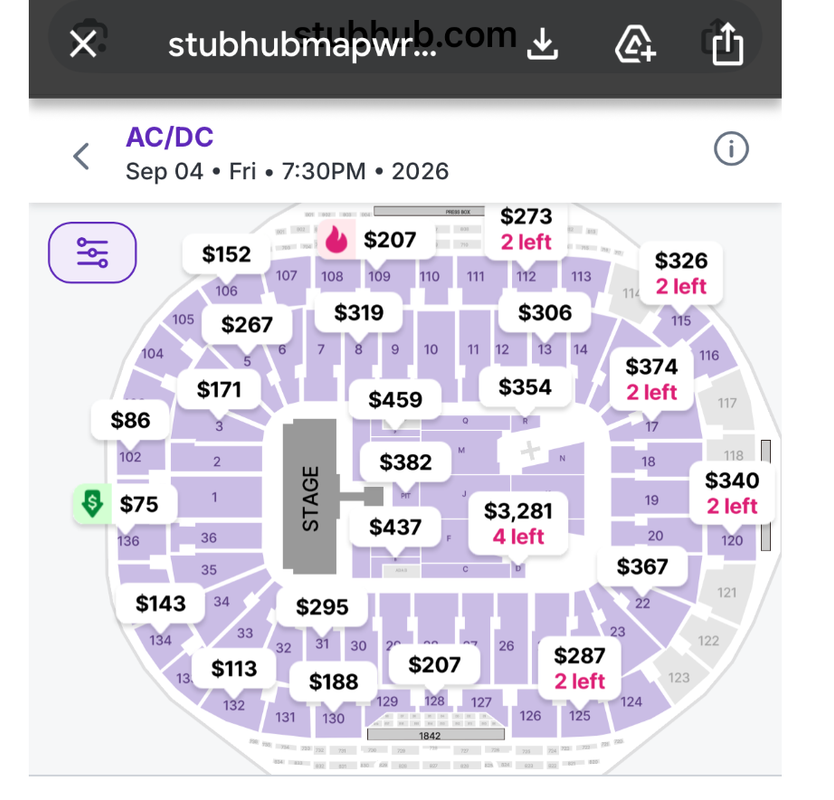
And here’s the actual map.
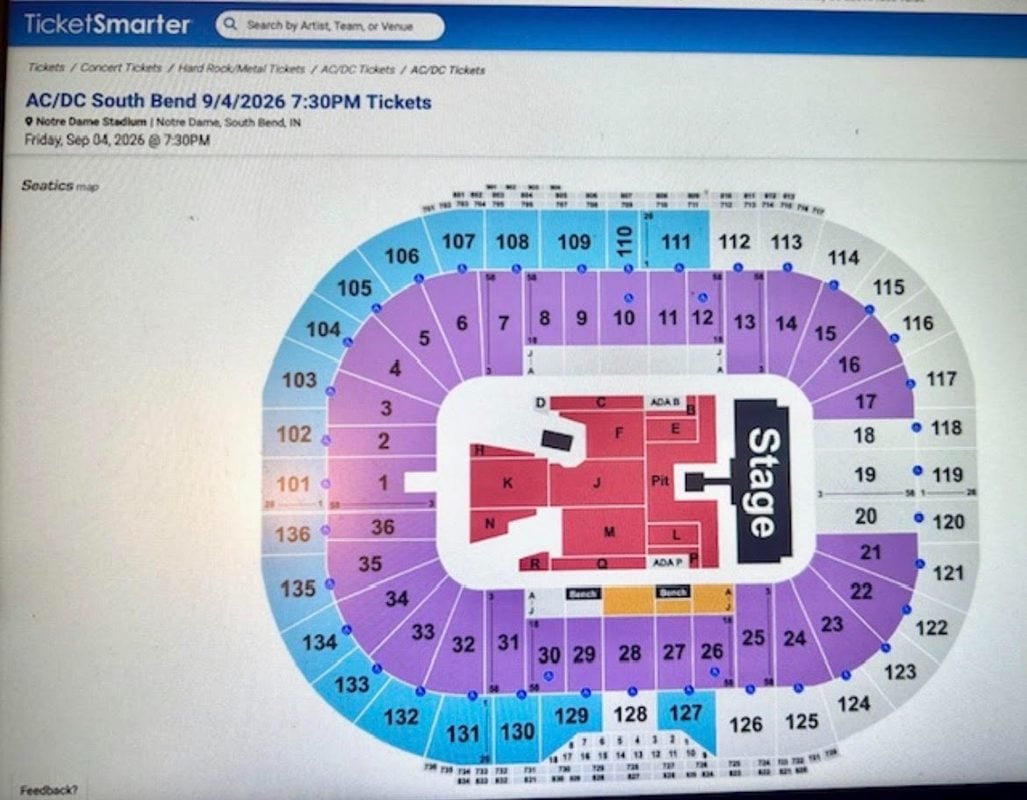
Oops.
Auer was proactive about the problem. He told StubHub the map was wrong, and the very next day, the company fixed it.
But then came the corporate gaslighting. Once the map was corrected, StubHub looked at his order and told him that his seats aligned exactly with the now-correct map. They essentially told him he’d bought backstage tickets because the map said they were backstage—ignoring the fact that when he bought his tickets, the map told him the seats were in the front.
This is a classic “gotcha” moment. StubHub’s initial stance was that all sales are final unless there’s a seller error. Since the seller listed the correct section and row, StubHub argued the transaction was valid, conveniently forgetting that its own interface led Auer to that section under false pretenses. It’s a reminder that while the FanProtect Guarantee sounds like a warm blanket, it’s often more like tissue paper when technical glitches happen.
Why the paper trail must include visual evidence
I tell people all the time to start a paper trail—even when they don’t think they need it. Usually, that means keeping every email and text message.
But in the world of digital interfaces, a picture is worth a thousand texts. Auer did something incredibly smart and, frankly, quite unusual: He took a screenshot of the incorrect map when he realized something was fishy.
Most people don’t think to do this. We assume the official site is right, or that if it’s wrong, the company will have a record of the change. They don’t. Or if they do, the front-line customer service agents can’t—or won’t—access that history.
Auer’s screenshot was the smoking gun. Without it, he was just another fan with buyer’s remorse, a category StubHub uses to deny refunds.
If you are booking a special seat—whether it’s a specific view, an aisle seat for accessibility, or a front stage spot—you must document the interface. Websites are ephemeral. They change in an instant, often to hide the evidence of the creator’s own blunders. Auer’s persistence in sending these screenshots over and over was the only reason this case stayed alive.
What happens when escalation leads to a dead end?
Auer was stuck in the escalation loop for months. StubHub told him it was waiting for an internal team to review the case. Meanwhile, they told him nothing could be done until the tickets were transferred to him—which wasn’t scheduled to happen until the day of the concert in September.
What a brilliant stall tactic. If a customer has to wait until the day of the show to verify an error, they’ve already spent the money, traveled to the venue, and lost all their leverage. StubHub’s virtual assistant even suggested he could just relist the tickets if he wasn’t happy.
Translation: “We took your money for a mistake we made, and now you can try to take someone else’s money to break even.”
Auer refused to accept this. He quoted the FanProtect policy, went to the BBB, and eventually found his way to my desk. He knew that he hadn’t made a mistake. He’d bought a product based on a faulty premise.
When a company tells you that the internal team is reviewing it, they’re often just hoping you’ll get bored and go away. Auer didn’t go away.
Will he get his tickets fixed?
When I reached out to StubHub, it gave me the same answer it had given Auer. The tickets were for the correct seats. End of story.
So I sent the screen shots.
StubHub reviewed the “before” and “after” maps and finally admitted the map was inadvertently flipped at the time of purchase.
StubHub refunded Auer’s $506, putting him back in black. It also sent him a 25 percent discount voucher for his trouble and offered to help him find replacement tickets. StubHub is also reviewing other purchases made during that flipped window to make sure other fans weren’t left in the dark.
Auer’s case is a cautionary tale. For those about to rock, don’t trust the pixels. Verify the venue map elsewhere, and for heaven’s sake, take a screenshot. You never know when you’ll need to prove that “front stage” actually meant “behind the speakers.”

Have a question about this story? Tell us what happened — we read every comment.
Join the conversation