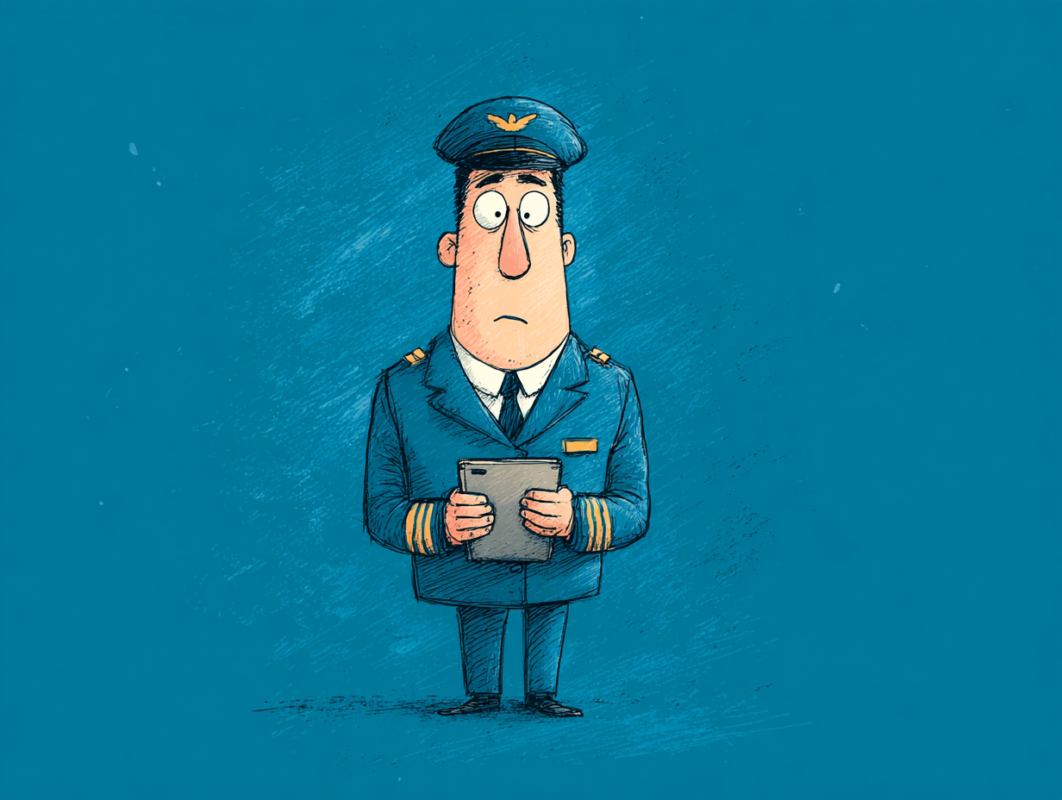
Rafael Guimaraes understands international borders. As a business jet pilot based in Brazil, he spends his life navigating different jurisdictions. But he recently encountered a border he couldn’t cross: the digital line between Amazon.com and Amazon.de, Amazon’s German site.
As a result, he lost a huge part of his digital identity.
It started with a few declined credit card transactions in Costa Rica. Within 48 hours, his 25-year-old account had been locked, his Prime membership had been canceled, and his entire Kindle library—two decades of digital purchases—had evaporated into thin air.
When he tried to fix it, he entered a customer service “no-man’s-land.” Amazon’s American representatives told him the problem was with the German site. But the German team told him it was with the American site. Meanwhile, he received password recovery emails in German, asking for a phone number he’d never owned.
This case raises several important questions:
- Can a company delete your entire digital history without a human review?
- What happens to your paid digital content when a platform bans you?
- How do you escape a loop between international branches of the same company?
Will Guimaraes lose his entire digital Kindle library? Let’s open the book on his case and find out.
“Account closed”
Guimaraes’ trouble began a few months ago, when Citibank declined his card for a $650 purchase while he was in San Jose, Costa Rica. His bank confirmed there were no blocks or fraud flags. Guimaraes, ever the problem-solver, tried a smaller $35 purchase, which went through. But when he tried larger amounts again, the algorithm grew suspicious and put his account on hold.
A few days later, things looked hopeful. He received an email stating, “We have restored your access to this account. You can now sign in and place orders.” He placed 11 small orders to avoid triggering the fraud sensors.
An hour later, the “Account Closed” sign went back up in his inbox—this time, for good.
“I was told my account was permanently closed and my data was deleted,” Guimaraes recalls. “No explanation was given.”
Then the situation got weird. When he attempted to recover his password on the U.S. site, the system sent him a verification code from Amazon Germany, written entirely in German. To finalize the recovery, the site demanded a phone number ending in “20.”
Guimaraes has never had a phone number ending in 20.
He emailed Amazon, called, and even filed a BBB complaint. Every time, he got the same robotic response: Your account is closed. We can’t tell you why. Goodbye.
That’s when he contacted the A-Team.
Can a company delete your digital history without human review?
The short answer is: They shouldn’t, but they do.
In Guimaraes’ case, the automation was clearly in the pilot’s seat. Amazon’s system saw a U.S. credit card being used in Costa Rica by a pilot with shipping addresses in multiple U.S. locations and regional accounts in four countries. To a fraud-detection bot, that’s a red alert.
Guimaraes offered to provide his government-issued photo ID, bank statements, and proof of address to a human reviewer. Amazon ignored the offer.
If you find yourself in this algorithmic prison, the first step is to establish a paper trail. Guimaraes did this perfectly, documenting every call and saving every email. Take a holistic approach. Your identity might get corrupted as your case gets shuffled between different divisions. In Guimaraes’ case, the algorithm believed he was someone else.
Now that’s weird.
What happens to your Kindle library when you are banned?
This is the $800 question—the estimated value of Guimaraes’ digital library. When you buy a digital book or movie, you aren’t usually buying the file. You’re buying a license to access it. If the company closes your account, that license often vanishes.
Amazon told the BBB that “once an account is closed, we cannot access its details.” This is a terrifying prospect for anyone with 25 years of digital purchases. It effectively means that a single suspected fraud event can lead to the digital execution of your entire library. Guimaraes was so concerned that he put his Kindle in airplane mode just to preserve the books already downloaded to the device.
If you’re facing a similar situation, I recommend appealing to the company’s executive contacts. I list the contact information for Amazon on my consumer advocacy site, Elliott.org.
How do you break a circular deflection loop?
Guimaraes was caught in a classic “not our problem” loop. Amazon.de told him to contact Amazon.com. Amazon.com told him that “since this matter involves Amazon.de, you’ll need to contact them directly.”
When international subsidiaries of a global giant start pointing fingers at each other, it’s a sign that their interconnected systems are broken. Amazon admitted to the BBB that accounts are interconnected, yet it claimed they couldn’t help because the marketplaces are “independent.”
They can’t have it both ways.
To break the loop, you have to escalate. If the front-line support and the BBB fail, it’s time to reach out to a professional who can get a real person to look at the problem.
How the A-Team solved the case
I contacted Amazon on Guimaraes’ behalf, including his detailed timeline and the evidence of the German-routing security flaw.
Within 48 hours of our intervention, the permanent closure was reversed.
“Great news! My Amazon.com account has been fully restored!” Guimaraes told me. He regained his 25 years of purchase history, his entire Kindle library, and his Prime membership. Amazon also sent a security email from the German branch confirming the unauthorized phone number was finally removed.
Lessons learned from the lost library
- The paper trail is your parachute. Guimaraes’ success was due largely to his meticulous documentation. Without it, I couldn’t have successfully advocated for him.
- Verify your recovery info regularly. Guimaraes discovered a phone number ending in “20” that wasn’t his. Periodically check your account security settings to ensure no unusual recovery methods have been added.
- Don’t take “permanent” as the final word. Companies often use words like “permanent” and “deleted” as a deterrent. As this case proves, “deleted” often just means it’s hidden behind a digital curtain that any trained human specialist can pull back.
If you find yourself locked out of your digital life, don’t give up. Instead, double down. Keep a record, escalate to the executives, and if all else fails, you know where to find me.
Resolve it yourself
Stuck with a complaint? Build your path to a fix.
Answer two quick questions and get a step-by-step plan tailored to your situation.
Your plan

Have a question about this story? Tell us what happened — we read every comment.
Join the conversation