in this case
- An American Airlines agent refused to check a passenger’s bags for a code-share flight, incorrectly claiming his 93-minute connection was too short.
- Forced to buy a new $708 ticket on the spot, the passenger was then caught in a classic blame game between American and Alaska Airlines.
- The case reveals the hidden complexities of minimum connection times and the challenges of getting refunds when partner airlines refuse to take responsibility.
Thomas Larson thought he’d done everything right when he booked a flight from Raleigh-Durham to Ketchikan, Alaska. He’d bought a multi-airline itinerary through Alaska Airlines: The first leg was on American Airlines to Phoenix, then continuing on Alaska Airlines to Seattle and Ketchikan.
His connection in Phoenix was a seemingly safe 93 minutes.
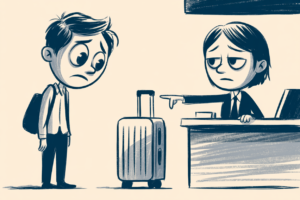
But when an American Airlines agent in Raleigh-Durham refused to check his bags — claiming the connection fell short of a 90-minute minimum — Larson faced an impossible choice: miss his flight or buy a second ticket.
Larson quickly forked over $708 for a new one-way fare on the same flight, plus baggage fees. He hoped American Airlines would sort it out after he arrived in Alaska.
Of course, it didn’t.
Larson’s case raises three important questions that could apply to your next flight:
- Can agents arbitrarily deny baggage check-in?
- Who’s responsible when partner airlines disagree on policies?
- How do you get refunds when airlines point fingers at each other?
Let’s start with what went wrong — and why your next trip could hinge on the answers.
“Whoever booked this didn’t allow enough time for your bags”
Larson had booked his tickets directly through the Alaska Airlines website. There were no warnings or notations on his itinerary. It appeared that his luggage would be checked in Raleigh and returned to him in Ketchikan.
Your voice matters
This passenger was caught in a classic code-share nightmare, trapped between two airlines with conflicting rules and no one willing to take responsibility. We want to hear your thoughts.
- Have you ever had an airline refuse to check your bags because of a tight connection?
- When something goes wrong on a multi-airline ticket, who should be on the hook: the airline that sold the ticket or the one operating the flight?
- What’s your best advice for dealing with an airline agent who is misinterpreting the rules?
At 5:40 a.m., the American agent scanned Larson’s Alaska-issued ticket. Her screen flashed red.
“Whoever booked this didn’t allow enough time for your bags,” she said. “Bags need 90 minutes in Phoenix.”
But there were two problems.
First, Alaska Airlines had created the reservation — so that “whoever” was its code-share partner.
Second, his stopover was 93 minutes, which is three minutes more than American required.
“She didn’t try to fix it,” Larson recalls. “She just said, ‘Fly tomorrow.’”
When he pressed to have a supervisor review his problem, the agent allegedly whispered to a colleague: “Sometimes you have to be rude to make them go away.” (Here’s our best guide to planning your next trip.)
With minutes to board, Larson had no choice but to buy another ticket to Phoenix on the spot on the same flight. (I’ll get to that later.) He says the gate agents were confused that there were two reservations under the same name.
Alaska Airlines said Larson’s flight from Phoenix to Ketchikan would remain valid.
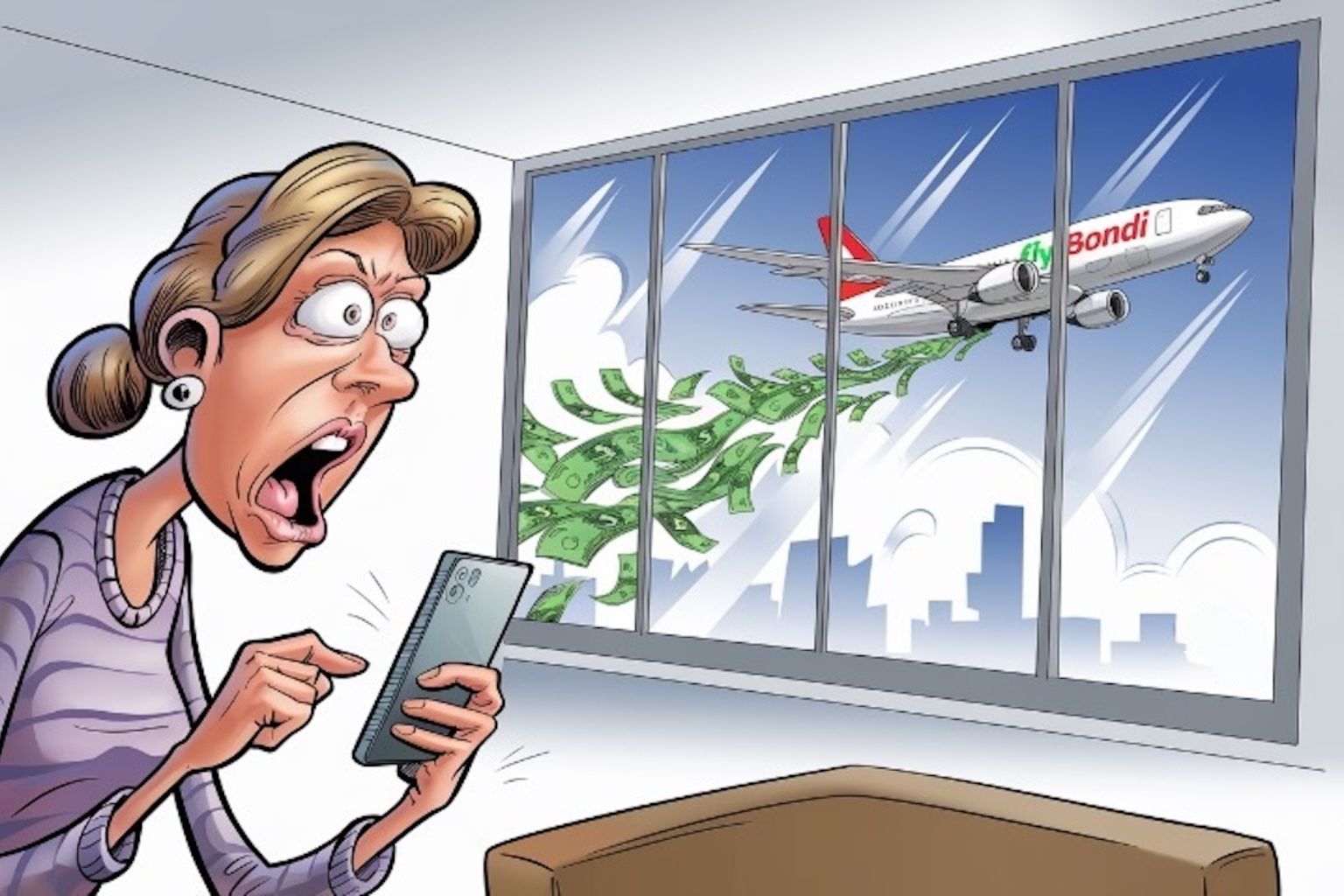
But getting a refund for the ticket he couldn’t use proved Kafkaesque. American told him to ask Alaska. Alaska said talk to American. Both ignored his emails.
“It felt like a scam,” Larson says.
The true villain here is the complexity of code-shares. It’s a cartel mechanism designed by huge, consolidated airlines to confuse accountability and fleece the public. We need better regulation.
Read more insightful reader feedback. See all comments.
Can agents really deny baggage check-in over connection times?
Yes, they can.
Airlines publish minimum connection times (MCTs) for passengers and their bags. These can vary by airport and code-share partnership. In Phoenix, American’s MCT for Alaska flights is 90 minutes. Alaska’s is 60.
When MCTs conflict, the operating carrier’s rules apply. But here’s the rub: Larson’s connection met Alaska’s threshold. And there was plenty of time. The American agent didn’t even have to request a short connection waiver to override the system, because Larson had 93 minutes between flights.
So the American Airlines agent in Raleigh could have refused Larson’s luggage, even thought they had no reason to do so.
“It was clear that she was either incompetent or inexperienced,” Larson says. “She had to keep asking the gentleman next to her for help. Instead of making attempts to work through the issue, she ignored me, hoping I would go away.”
The true villain here is the complexity of code-shares. It’s a cartel mechanism designed by huge, consolidated airlines to confuse accountability and fleece the public. We need better regulation.
Read more insightful reader feedback. See all comments.
Who’s responsible when partner airlines disagree on policies?
Answer: It’s complicated — but the ticketing airline usually owns the problem.
Airlines operate under interline agreements or contracts that let them sell seats on each other’s flights. But these pacts often lack clear accountability clauses. If your ticket starts with AS — that’s Alaska Airlines — that would be your first call. But the operating carrier, American, controls the experience on the first leg of the flight.
Translation: Alaska took Larson’s money, but American controlled the baggage decision.
Most carriers require 60- to 90-minute minimum connections for the transfer of bags on interline itineraries. Alaska’s policy is 60 minutes domestically. American’s is 90 minutes. The American agent incorrectly applied American’s stricter rule, even though Alaska was the ticketing airline and the connection time met American’s MCT requirement.
Airlines use a sophisticated formula to determine minimum connection times. Most passengers assume the times are for passengers, but really, it’s just as important that airlines can transfer their baggage.
How do you get refunds when airlines point fingers at each other?
Larson’s first mistake was paying under pressure. Buying a duplicate ticket at the last minute and assuming you can work it out later rarely works in a passenger’s favor. You’re better off missing the flight and applying pressure to the airline to fix the problem it created.
Mistake number two: Allowing the airlines to play “pass the buck.” American Airlines created this problem by being totally incompetent.
By the way, it’s unclear how buying a second ticket solved the problem in American Airlines’ view. Larson boarded the same flight and checked the same amount of luggage. My advocacy team asked American Airlines about this, and I’ll have its response in a moment.
Once you’ve paid twice for your ticket, you still have options.
- Ask for a refund. Larson emailed American immediately. That was a necessary first step. Always create a paper trail.
- Get the ticketing airline involved. Alaska should’ve advocated for him under DOT rules on through-ticketed baggage.
- Complain to the Department of Transportation. Airlines have 30 days to respond to a government complaint.
- File a chargeback. After all, Larson paid for a ticket he couldn’t use. His credit card might return the money under the Fair Credit Billing Act.
I reviewed Larson’s paper trail between him, American and Alaska, which brings me to his final mistake. Although he started a paper trail by emailing the airlines involved in this fiasco, he appeared to have spent a lot of time on the phone negotiating with them and then getting bounced between the carriers.
A phone call is a great way to resolve a problem when you’re stuck at the airport and need to get rebooked on a flight. But for refunds, you need a reliable paper trail that shows you asking for your money back and the airline’s response.
Will he ever get his money back?
Our advocacy team was genuinely baffled by Larson’s case. What was the ticket agent in Raleigh thinking when she declined his luggage? How did buying a new ticket resolve this problem and allow him to fly on the same itinerary? Why did American refuse to refund an obvious duplicate ticket?
I asked American Airlines, but it did not answer. It did, however, issue a full refund for Larson’s second ticket, including his luggage charges.
It’s a long overdue resolution to a truly bizarre case — and a reminder that when you’re booking a codeshare or interline flight, pay attention to your connection time. Because sometimes your airline isn’t.
Your code-share survival guide
How to avoid the blame game on multi-airline trips
Before you fly
At the airport
What you’re saying
This story of a baffling baggage blunder has you all fired up. You’re not just questioning the agent’s fuzzy math; you’re pointing the finger at a much bigger problem: the deliberately confusing world of codeshare flights, which you see as a system designed to fail.
-
You say codeshares are a rigged game
“The true villain here is the complexity of code-shares,” says our top commenter, Mr. Smith, calling them a “cartel mechanism designed…to fleece the public.” You agree, arguing that when things go wrong, the codeshare system makes it nearly impossible to figure out who is responsible.
-
You’re baffled by the agent’s reasoning
Many of you, like Eric and Brielle, did the simple math and concluded the agent was just plain wrong (93 minutes is, in fact, more than 90). You’re even more confused, like Bruce Burger, as to why buying a brand-new ticket for the same flights would magically solve a connection time issue. It just doesn’t add up.
-
This feels painfully familiar
This story has opened the floodgates to your own frustrating travel tales. Mark Raskind shares a similar story of conflicting rules between American and British Airways. Many of you, like Gerri Hether, are asking a fundamental question: How is an average traveler even supposed to know what these secret Minimum Connection Times are in the first place?
What you’re saying
You’re completely baffled by this baggage blunder. As many of you point out, the agent’s math was just wrong, and the incident exposes the absurd, anti-consumer complexity of codeshare flights and their hidden rules.
-
You’re stuck on the agent’s math
The most glaring problem for you? As 7cats mom and Eric and Brielle note, since when is 93 less than 90? You can’t get past the agent’s basic arithmetic failure, and George Schulman jokes the employee was “probably told that there would be no math required.”
-
You blame the codeshare “gotcha”
Our top commenter, Mr. Smith, calls codeshares a “cartel mechanism,” and you agree. Trvlingrl points out that having different MCTs for partner airlines is “a real gotcha,” and Chris Johnson wonders why the airline would even sell a ticket that its own system considers invalid.
-
You say the “fix” makes no sense
Like Bruce Burger and OnePersonOrAnother, you’re mystified as to how buying a *new* ticket solved a baggage transfer time problem. It suggests to you that the agent’s initial refusal wasn’t based on a real logistical issue, but a system-generated error they didn’t understand.
-
You call MCTs a “black box”
Many of you share Gerri Hether’s frustration: Where are these rules? You note that MCTs are impossible to find and, as George Schulman points out, airline computers seem to ignore them anyway, sometimes booking impossible connections.


Have a question about this story? Tell us what happened — we read every comment.
Join the conversation