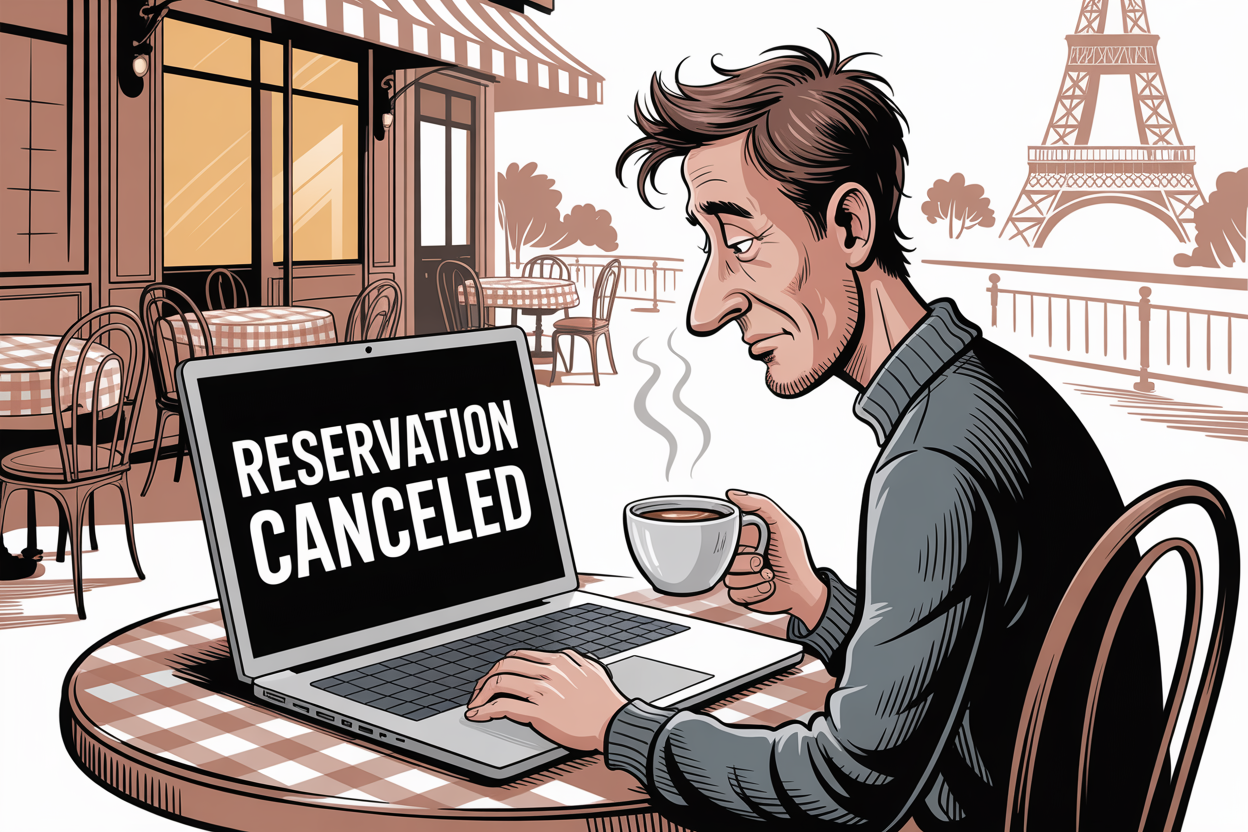
Cartoon of a dismayed man at a Paris cafe table, Eiffel Tower behind him, staring at a laptop screen that reads "RESERVATION CANCELED."

Travel companies say their customers are no-shows—but are they?

On a recent flight from San Francisco to Paris, Dan Skilken was a no-show. It was not his fault. A weather delay scrambled his first leg, the airline rebooked him, and then someone pushed the wrong button, so the system decided he had missed his connection. He only found out when he tried to check his return reservation from France and discovered he had no tickets at all. Because that is how it works: miss one leg of a flight, and the airline quietly cancels the rest. Skilken knew the industry well enough to sort it out, but plenty of travelers do not, and lately there are more of them. Teresa McGee flew from Detroit to Charlotte on American Airlines without a hitch, then tried to fly home and was told she had no ticket. She had a boarding pass proving she had flown the outbound. The airline could not tell her why, only that it had labeled her a no-show and that a new ticket would cost her. Cases like these keep landing in my inbox, and they raise an uncomfortable question. When a company marks a paying customer a no-show and keeps the money, is that a clerical slip, or has the no-show become a quiet little revenue stream?
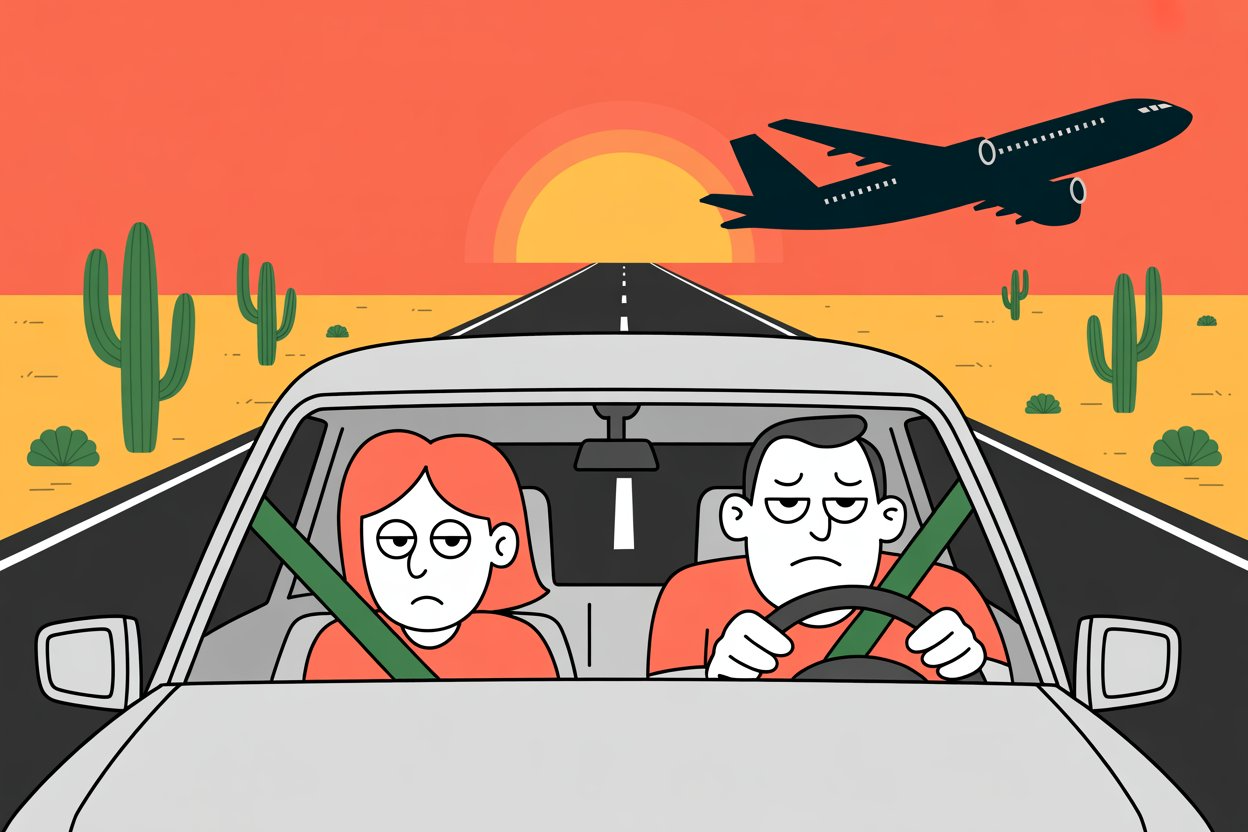
Cartoon of a weary couple driving a car down a straight desert highway lined with cactuses at sunset, as an airplane flies overhead.

American Airlines delayed my flight, so I drove. Why can’t I get a refund?

Michael Damarino and his wife thought they had done everything right. They booked refundable American Airlines tickets through Expedia from Boston to Tucson by way of Phoenix, paying extra for the flexibility. Then a 90-minute delay in Phoenix, blamed on a sick first officer and a baggage weight problem, made them miss their connection. With no later flights available, they did the resourceful thing: they rented a car and drove the final 100 miles so they would not lose their vacation. What they did not realize is that solving the airline’s problem themselves had quietly turned them into a “no-show” for that last leg. In the airline’s system, skipping a flight without canceling it first triggers a clause that can cancel the rest of your itinerary and wipe out the ticket’s value, even when you paid for a refundable fare. American offered only a flight credit and called the ticket nonrefundable. Expedia pointed back to the airline, and the airline pointed to Expedia.

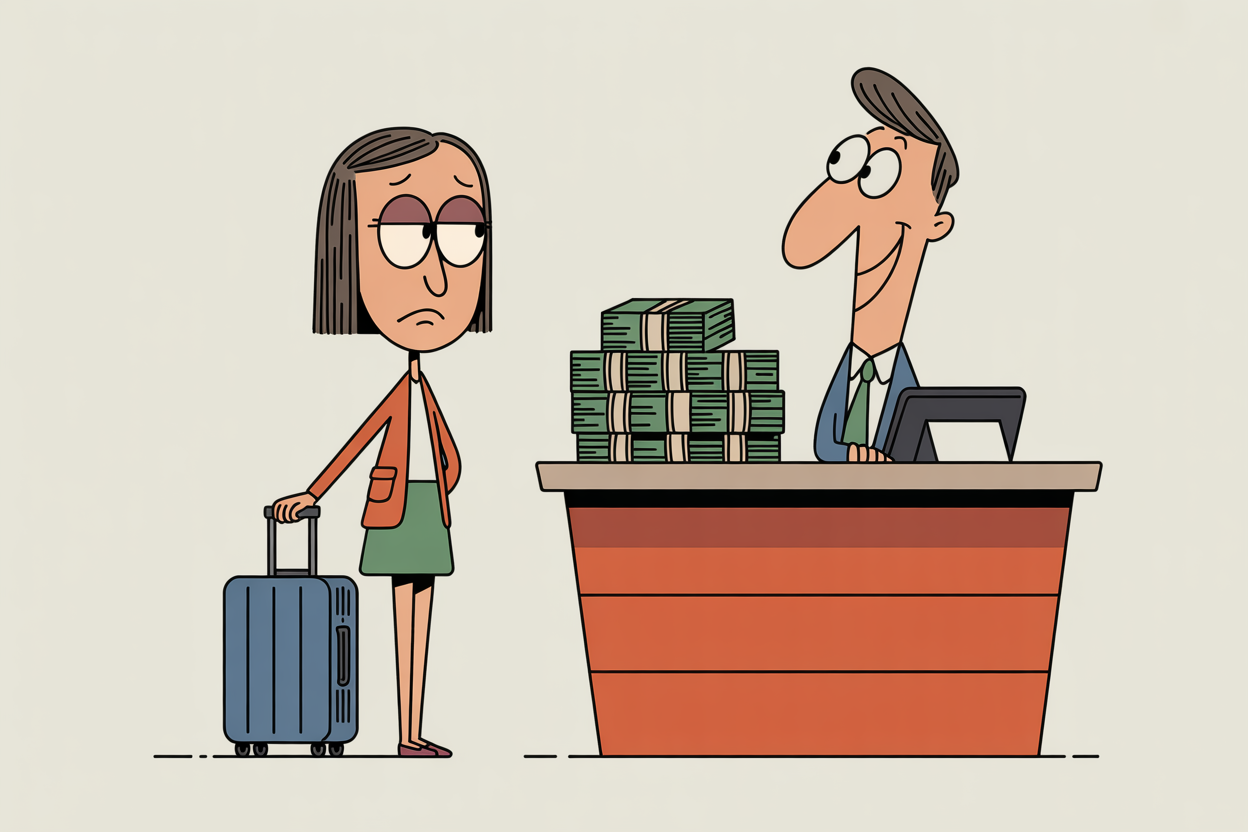
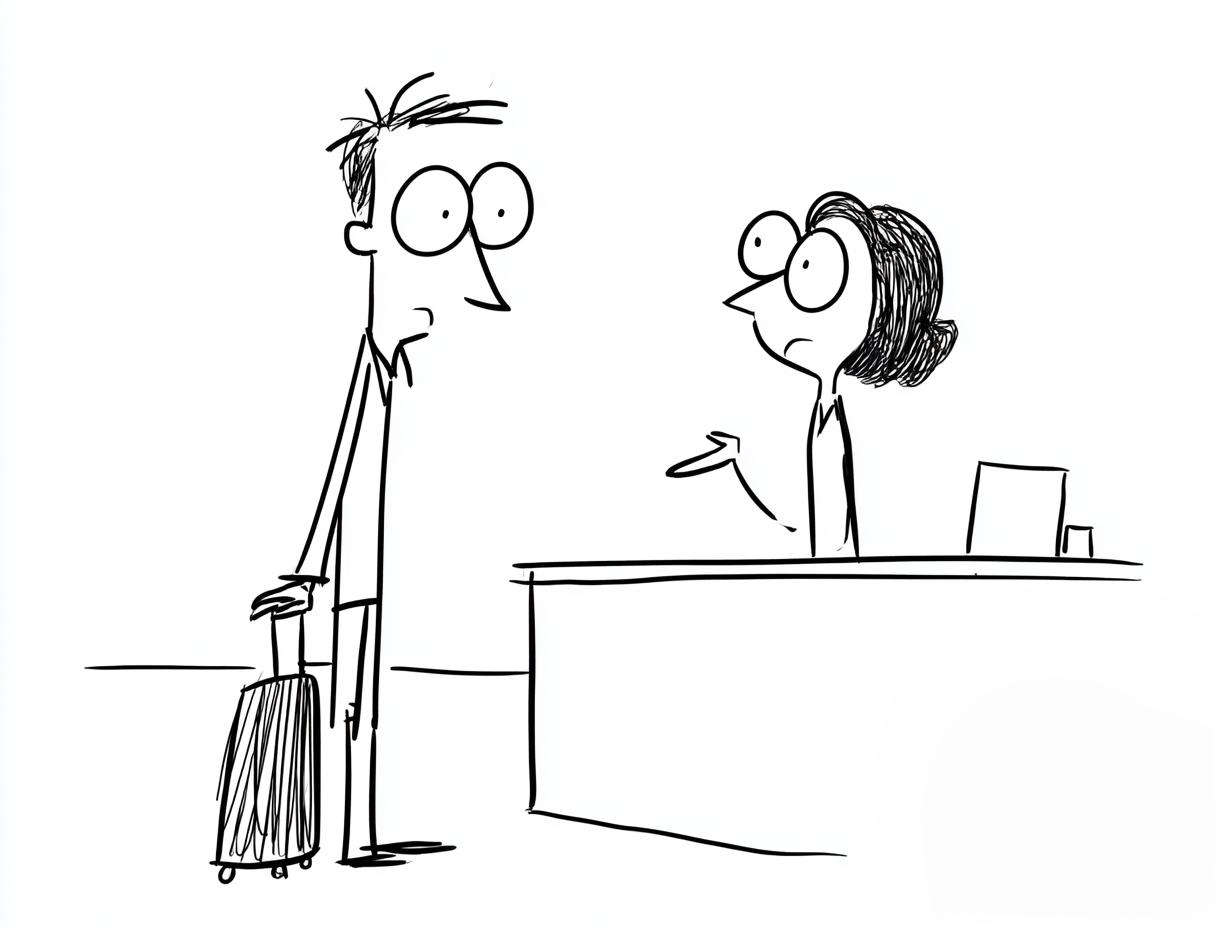
Minimal black and white line cartoon of a wide-eyed traveler holding a rolling suitcase at an airport counter while an agent behind the desk gestures, suggesting a conversation about baggage.

The war is over. Let’s bring airline baggage fees down now.

Peace negotiators may be dotting the i’s on a deal to end the Iran war, but air travelers are paying attention to something else: the cost of their checked bags. Remember when jet fuel prices spiked after the fighting broke out earlier this year? Every major American airline rushed to raise its checked bag fees. United, American, Delta, Southwest, JetBlue, they all went up. The airlines blamed the war, and at the time they had a point, since fuel had roughly doubled. But then the ceasefire came, oil pulled back from its highs, and guess what? Not one airline has announced it is bringing its luggage fees back down. There is a name for this pattern, and once you see how it works, and what Europe just did about bags while U.S. carriers went the other way, the summer ahead at the airport starts to look very different.

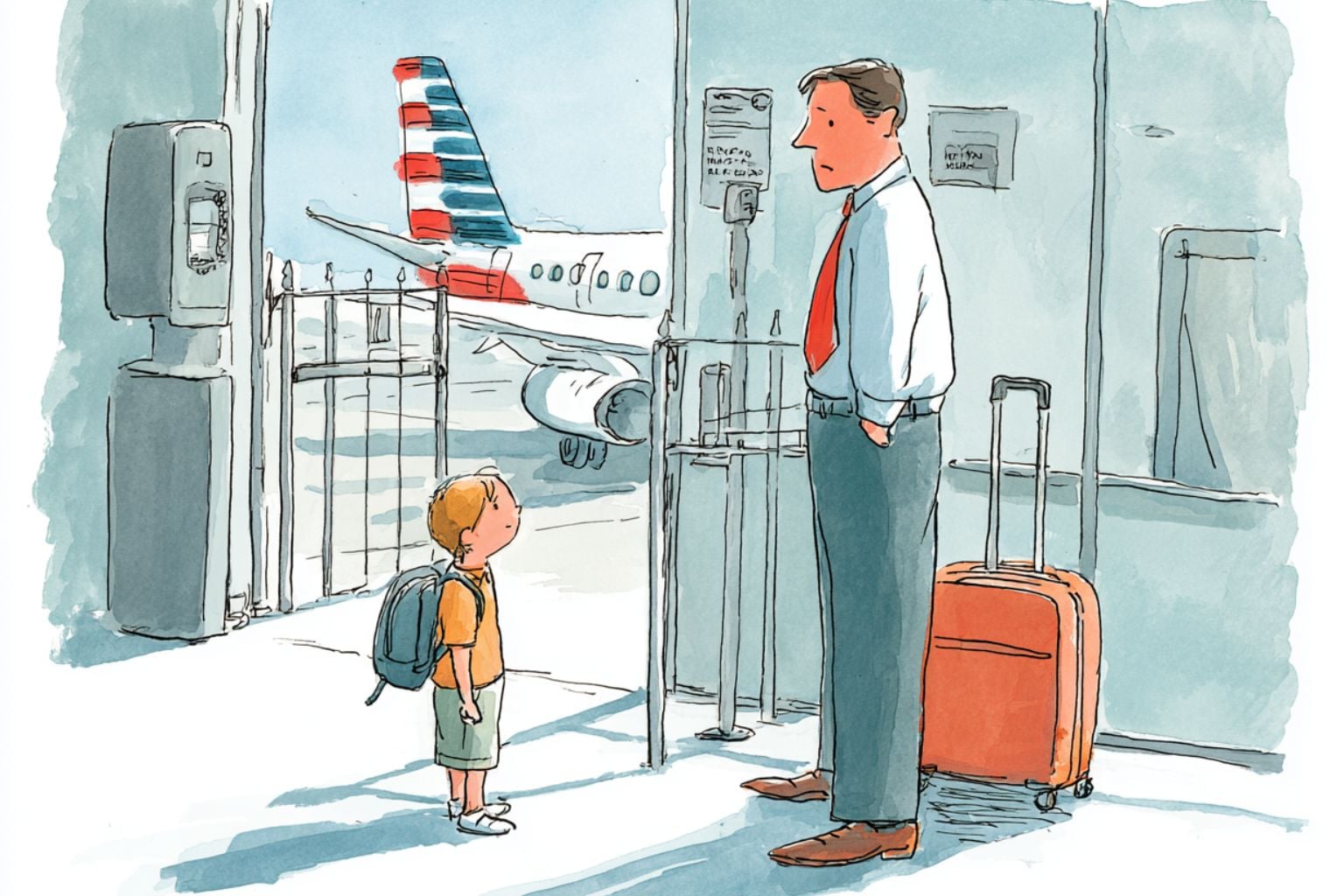
Watercolor editorial illustration of a father in a white shirt and red tie standing with his young son who carries a backpack at an American Airlines departure gate, with an American Airlines plane visible through the window beyond the closed gate door, illustrating how families get separated when airlines pull passengers from boarding lines and document involuntary bumping as voluntary

American Airlines claims I voluntarily gave up my seat, but that’s a lie

Charles Shearer was traveling from Cleveland to Japan for his mother-in-law’s funeral when American Airlines pulled him and his young son from the boarding line. His grieving wife boarded alone while gate agents offered $500 vouchers, with one even verbally acknowledging the bumping was involuntary. American later documented the incident as voluntary in its system, denying him the federal compensation of up to $2,150 per passenger that involuntary bumping triggers when passengers arrive over two hours late. Federal law mandates 400 percent of one-way fare in cash compensation, paid at the airport on the day of the flight.

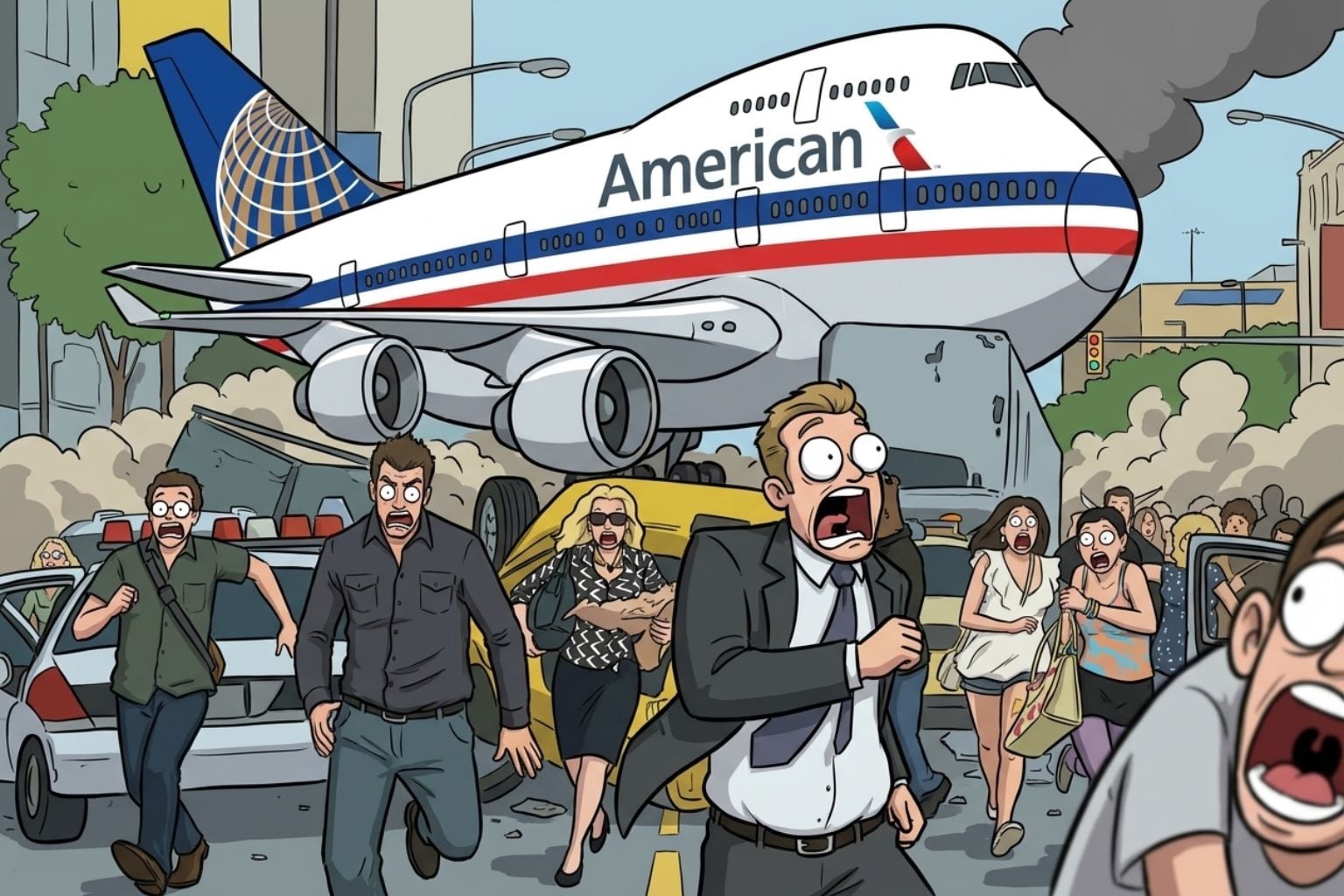
Editorial cartoon illustration of shocked and panicked travelers running away from an enormous airplane featuring both American Airlines red-white-blue livery and United Airlines globe logo, symbolizing consumer anxiety about the proposed United-American Airlines merger that would control 40% of the U.S. market

Should we allow United and American to merge?

The United Airlines–American Airlines merger everyone feared may actually be happening.

United Airlines CEO Scott Kirby reportedly met with administration officials at the White House in February to float an audacious proposal: a combination with American Airlines.

Are airline tickets too expensive?

If you haven’t looked at airfares lately, you might want to sit down before you read this. The numbers on the screen aren’t a glitch. They’re the shocking new reality of a Middle East conflict.