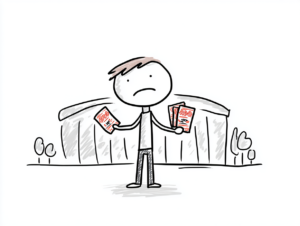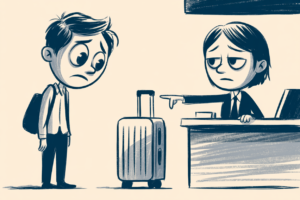

in this case
- Paul Nelson and Gail Klein paid $868 for two first-class tickets from Philadelphia to Fort Lauderdale. They checked in 24 hours early and arrived at the airport at 6 a.m. When they went to priority check to fix Nelson’s missing TSA PreCheck, the agent gave him a printed boarding pass listing him as standby with no explanation.
- At the gate, Nelson got a boarding pass for seat 17F in main cabin. When he questioned it, agents told him he didn’t have a ticket at all. He’d been bumped. Klein flew alone while Nelson booked a last-minute Southwest flight through Nashville for $199.
- American offered a flight credit instead of cash despite involuntary denied boarding. When they couldn’t use the credit in time, American offered 10,000 bonus miles with no explanation. Nelson was entitled to cash compensation of 400 percent of his fare (up to $1,675) plus a full refund under federal regulations.
When is a first-class ticket not a first-class ticket? When you’re Paul Nelson and you’re flying on American Airlines.
Nelson and his travel companion, Gail Klein, thought they had premium tickets on a recent flight from Philadelphia to Fort Lauderdale. They’d checked in online exactly 24 hours before departure. They’d even arrived at the airport early to verify their IDs and check their luggage at the priority counter.
But somewhere between the online check-in and the gate, Nelson’s confirmed first-class seat simply vanished.
“An American Airlines gate agent told Paul that they could not rebook him for another flight that day,” Klein recalls.
The couple had fallen victim to what I call the “downsizing shuffle” – an increasingly common airline practice where passengers with confirmed seats get bumped when carriers change to smaller equipment for a flight.
This case raises several important questions:
- Can airlines bump confirmed first-class passengers when they downsize aircraft?
- What compensation are passengers entitled to when involuntarily denied boarding?
- How should travelers protect themselves against unexpected aircraft changes?
A confirmation that meant nothing
Klein and Nelson’s ordeal began at 6 a.m. when they arrived at Philadelphia International Airport for their nonstop flight to Florida. Everything seemed normal until they noticed Nelson’s boarding pass was missing his TSA PreCheck designation. Nelson is a PreCheck member.
“We went back to priority check to have the change made and they gave Paul a printed boarding pass which now listed him as standby,” Klein explains. (Related: Help! I paid Expedia $1,459 for an airline ticket that doesn’t exist.)
The agent at the priority counter offered no explanation. He simply told Nelson to “resolve this at the gate.”
What happened next reads like a customer service horror story.
At the gate, Nelson received a boarding pass for seat 17F — a seat in the main cabin. When he questioned his new seat assignment, the ticket agent offered an indifferent response. Then, when he tried to board, an agent told him he didn’t have a ticket at all. He’d been bumped from the flight.
At that point, Klein faced a terrible choice: fly alone or forfeit their trip entirely.
Klein chose to fly alone to retrieve their checked luggage, leaving Nelson to book a last-minute Southwest Airlines flight, with a connection through Nashville, for $199.
He expected American Airlines would quickly refund his ticket. But that didn’t happen.
That’s the craziest story I’ve ever heard. How can he have seat 17F, then not have it? You don’t have a boarding pass with a seat number without a confirmed reservation. It sounds like the gate agent decided to bump him because he questioned the seat number. People don’t realize gate agents lie. They see a huge line and want you out of their way. I worked behind the counter of an airline one day and was shocked how easily lies were told.
Read more insightful reader feedback. See all comments.
The American Airlines credit runaround
When Nelson initially contacted American to get his money back, the airline offered him a flight credit instead of cash – despite the fact that he’d been involuntarily denied boarding from a confirmed seat. Klein and Nelson couldn’t use the credit within the required timeframe, making it essentially worthless.
“Paul wrote back to American Airlines, asking how they could refuse to refund the cost of the ticket which he was unable to use because he was bumped from the flight,” Klein says.
American never responded to his question, but offered 10,000 bonus miles to him and Klein as compensation for the “inconvenience.” The airline offered no explanation for how a confirmed first-class passenger could be bumped in the first place.
That’s when Klein contacted my advocacy team.
Can airlines bump confirmed first-class passengers when they downsize aircraft?
Unfortunately, yes. Airlines routinely change aircraft for operational reasons — in airline lingo, it’s called an “equipment change” — and when they do, passengers holding confirmed reservations can find themselves without seats. This practice, while legal under federal regulations, represents one of the industry’s most obnoxious habits.
The Department of Transportation requires airlines to ask for volunteers before involuntarily denying boarding, but this requirement applies primarily to oversold flights. When airlines downsize aircraft, the rules become murkier.
American Airlines’ contract of carriage gives it broad authority to change aircraft and reassign seats. The carrier’s Rule 25 states that it may “substitute alternate aircraft” and that “American will not be liable for failure to provide reserved seat accommodations.” (Related: American Airlines claims I voluntarily gave up my seat, but that’s a lie.)
However, Klein and Nelson’s case illustrates a fundamental problem with this system. When airlines sell premium seats months in advance, then downsize aircraft without adequate compensation, they’re essentially practicing bait-and-switch tactics.
And ultimately, American didn’t just downgrade him into an economy class seat. It bumped him from the flight. Here’s what an airline owes you when it denies you boarding.
The couple paid $868 for two first-class tickets, expecting premium service. Instead, they received separation anxiety, a $199 charge for a new ticket, and a 4-hour wait.
That’s not the product they purchased.
Airlines defend aircraft changes as operational necessities, but passengers increasingly view them as cost-cutting measures disguised as safety protocols. When carriers consistently oversell premium cabins — as they might have here — knowing they may need to downsize, they’re lying to their customers.
Klein and Nelson’s experience suggests confirmed ticket reservations are increasingly worthless. If airlines can unilaterally change the terms of service after payment, what exactly are passengers buying?
What compensation are passengers entitled to when involuntarily denied boarding?
Federal regulations require substantial compensation for involuntary denied boarding, but airlines often try to minimize these payouts through creative interpretations of the rules.
Under Department of Transportation regulations, passengers involuntarily denied boarding are entitled to immediate cash compensation of up to $1,675, depending on the length of delay and ticket price. This compensation is in addition to refunds or rebooking assistance.
Airlines frequently offer flight credits instead of cash, hoping passengers won’t know their rights. In Klein and Nelson’s case, American initially offered only a flight credit despite clear involuntary denied boarding.
The key distinction is between voluntary and involuntary denial of boarding. When airlines ask for volunteers and passengers accept travel vouchers, that’s voluntary. When passengers are bumped against their will – as Nelson was – that’s involuntary, triggering federal compensation requirements.
If passengers accept the flight credits, airlines are off the hook for the cash payments.
American’s initial offer of 10,000 miles and a flight credit fell far short of federal requirements. At a minimum, Nelson was entitled to cash compensation of 400 percent of his one-way fare (up to $1,675) plus a full refund of his unused ticket.
The airline’s reluctance to pay proper compensation isn’t surprising. It’s a profitable policy. Many passengers simply accept whatever airlines offer, unaware of their rights.
How should travelers protect themselves against unexpected aircraft changes?
Protecting yourself against airline equipment swaps requires vigilance, documentation, and realistic expectations about carrier reliability.
- Nothing is guaranteed. When it comes to an airline seat, there’s no sure thing until you’re physically occupying it. Even first-class passengers with confirmed reservations made six months in advance can be bumped when airlines change aircraft.
- Keep meticulous records. Klein and Nelson’s case got a lift partly because they maintained detailed records of their interactions with American. Saving confirmation emails, boarding passes, and photographs of gate displays showing aircraft changes.
- Check in early and arrive at the airport with extra time. Airlines often bump passengers in reverse order of check-in, so earlier is better. Monitor your flight status obsessively in the 24 hours before departure, since equipment changes often occur with minimal notice.
- Consider purchasing travel insurance that covers trip interruption. But read the fine print carefully. Many policies exclude coverage for airline operational changes, focusing instead on weather delays and medical emergencies.
- Know your rights under federal denied boarding regulations. Airlines bank on passenger ignorance about compensation requirements. If you’re involuntarily denied boarding, demand cash compensation immediately. Don’t accept vouchers or credits as initial offers.
Klein and Nelson’s experience also highlights the importance of booking directly with airlines rather than third-party sites. Direct bookings typically receive better treatment when problems arise, and, although they deny it, airlines prioritize their own customers over agency bookings during irregular operations.
That’s a hard truth about first class: While premium tickets offer enhanced comfort and service, they don’t guarantee immunity from operational disruptions. Factor potential rebooking costs and delays into the travel budget.
Airlines view passengers as revenue units rather than valued customers, and their operational decisions reflect this priority. The only defense against corporate indifference is informed advocacy and persistent follow-up.
Klein and Nelson learned these lessons the hard way, but their persistence ultimately paid off.
The power of advocacy
After weeks of airline stonewalling, Nelson called my team and our intervention with American produced swift results. The airline acknowledged its error and began making things right.
American refunded $434 to Nelson’s credit card and promised an additional $1,800 flight credit for the involuntary denied boarding. But as Klein and Nelson discovered, promises from airlines don’t always materialize immediately.
The airline refunded the fare, blaming “some sort of processing issue,” but the $1,800 credit failed to appear in Nelson’s account. That required another round of intervention from our advocate, Dwayne Coward. Finally, after our team’s follow-up contact, an airline representative called Nelson to apologize and immediately issued the promised credit.
“We can’t thank you enough for your help,” Klein wrote after the resolution. “We are so grateful that Elliott Advocacy has devoted itself to helping consumers resolve their claims.”
Klein and Nelson’s case illustrates both the problem and the solution with airline customer service. Air carriers will gladly accept premium payments while providing substandard service recovery when things go wrong. But persistent advocacy – armed with knowledge of federal regulations – can force accountability.
American Airlines ultimately did the right thing, but only after our team intervened. Without outside pressure, Klein and Nelson might have been stuck with their unacceptable vouchers and unanswered emails.
The real lesson here isn’t about airline reliability – we already know that’s questionable. It’s about the power of informed advocacy to transform corporate indifference into responsible customer service.
Sometimes, you just need to know who to call.
Your voice matters
Paul Nelson and Gail Klein paid $868 for first-class tickets and checked in 24 hours early. When fixing missing TSA PreCheck, the agent gave Nelson a standby boarding pass. At the gate, he was told he had no ticket and was bumped. American offered flight credit instead of required cash compensation.
- Should airlines be prohibited from bumping first-class passengers with confirmed reservations when they downsize aircraft?
- Should airlines be required to automatically pay cash compensation for involuntary denied boarding instead of offering flight credits?
- Should airlines face penalties when they change aircraft and can’t accommodate all confirmed passengers?
What you’re saying
Readers questioned how he had seat 17F then didn’t, warned gate agents lie easily, and noted American bumps far more passengers than Delta.
-
Gate agents lie to clear lines
sister7 called it the craziest story. You don’t get a boarding pass with a seat number without a confirmed reservation. She suspects the gate agent bumped him for questioning the seat. She worked behind an airline counter one day and was shocked how easily lies were told. George Schulman said he would not have left the check-in counter when given a standby boarding pass. The problem needs solving there, not exported to a gate agent.
-
American bumps way more than Delta
OnePersonOrAnother said American bumped about 7,000 people last year (3 per 100,000 passengers). Delta bumped literally nobody in the first half of 2025 and has been in single digits for years. Delta offers more voluntary compensation until somebody gives up their seat. Dee Eagle books first three rows of first class so if they downsize, those seats should still exist.
-
Airlines do anything to avoid paying
GradUT said airlines will say and do anything to keep from paying legally-required compensation. People are more concerned with getting to their destination than asserting their rights. Gerri Hether noted even the advocacy team had to go back after the airline a second time to get resolution. Mandy said think first-class means luxury? Think again.

Have a question about this story? Tell us what happened — we read every comment.
Join the conversation