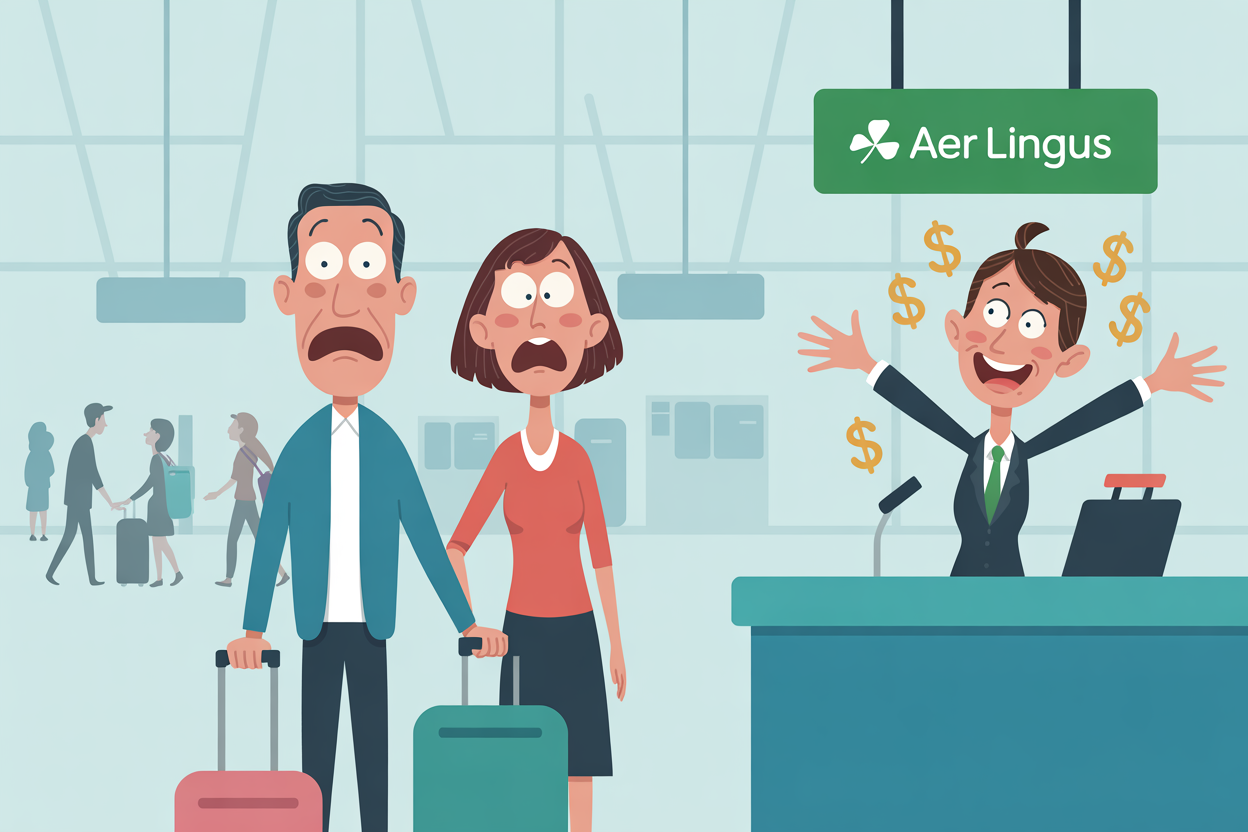
Cartoon of a shocked couple with rolling suitcases at an airport as a grinning airline agent throws up his arms amid floating dollar signs beneath an Aer Lingus sign.

My airline ticket disappeared. Why did I have to pay $8,206 to get home?

Steve Miller thought he and his wife had valid tickets home. He had booked a Minneapolis-to-Dublin roundtrip through Orbitz, and when Aer Lingus canceled a segment, Orbitz rebooked them and confirmed the new itinerary. The My Trips page showed the change. The Aer Lingus app showed them booked. Everything said they were good to go. Then, at the gate in Dublin for the flight home, Aer Lingus refused to let them board, saying Orbitz had never properly confirmed the change. It turns out there is a critical difference most travelers never think about: a reservation holds a seat, but a ticket is the payment for it, and you can have a confirmation code with no valid ticket behind it. In the airline’s computer, the couple existed as passengers who had not technically paid. Stranded overseas and needing to get home that day, Miller was told the only seats left were in business class, at a price that ran into the thousands.

Muted digital illustration of a distressed man in a suit sitting with his head in his hands at an airport, blurred travelers passing behind him.

The $1,863 mistake: Why a missing last name cost one passenger his ticket

Saurabh Kumar had a passport, a plane ticket, and a plan to visit family in Delhi. He was good to go, or so he thought. The trouble was hiding in plain sight on his passport: his full name sits in the given-name field, and the surname line is blank. That is ordinary in parts of the world, but a headache for Western airline systems that insist on a last name. When Expedia’s booking form demanded one, Kumar did what most people would do, he split his name into a first and a last and clicked buy. He had done it before and flown without a hitch. This time, at the Toronto airport, the Porter Airlines computer stopped him cold. The name on his ticket did not match the name on his passport, and to a security system built to screen millions against international watchlists, close enough is not enough. Porter said only the ticketing airline, Qatar Airways, could authorize a fix. Qatar was not at the counter. And the clock was running out.

Cartoon of a grinning car salesman with a cash-filled thought bubble gesturing toward a white SUV as a customer stands with arms crossed at a dealership lot.

How to get the car you reserved without falling for the upsell scam

Have you ever heard of the car rental upsell scam? Neither had Steve Sphar. When the business consultant from Sacramento arrived to pick up a compact car from Europcar in Granada, Spain, the company had run out of vehicles. So it handed him an SUV and said he could swap it for his reserved model the next day, a seemingly generous fix. Then he made the swap, and Europcar charged him a $423 “customer choice” fee. It looks like a clever variation on an old rental-counter ploy, and experts say it is spreading as fleet shortages and inflation squeeze the industry. Running out of cars and then charging extra for a bigger one is legal, they note, but that does not make it right. The industry standard when a company oversells is simple: upgrade the customer for free. Some companies, though, see an oversold lot as an opportunity, offering two bad choices, wait for hours or pay a ransom, and betting you will not want to delay your vacation. Sphar contacted Europcar to reverse the charge.

Cartoon of a shocked woman standing between two twin beds with visibly stained sheets in a hotel room, a city skyline through the window behind her.

They advertised two queen beds and a clean room. I got neither—and a $922 charge.

Rebekah Singleton booked a room with two queen beds at a Brooklyn hotel through Booking.com because she specifically needed the queen beds. What she got was something else entirely. The beds measured out to roughly 50 inches wide, a full size, not a queen, and the room itself was filthy: sheets marked with grease stains, hair, and what looked like suspicious red stains. The second room she was offered was worse, with red splatter across the floor. She did not feel safe, so she left that night and found another hotel. Then the real ordeal began. The hotel denied her photo evidence. Booking.com dragged the matter out for weeks and offered only a small goodwill credit. She disputed the $922 charge with her credit card, which briefly credited her before rebilling the entire amount once the merchant pushed back. She was left out nearly a thousand dollars for a room she never used, caught between a property, a platform, and a card issuer, each pointing elsewhere, and left asking what a booking site actually owes you when the room it sold bears no resemblance to the one you paid for.

Cartoon of a distressed woman at an airport with a red suitcase, reaching toward her boarding pass as it floats away in a glowing puff, vanishing from her hands.

My wife’s airline ticket vanished, then Hawaiian Airlines charged me an extra $575

James Phillips did everything by the book. He booked two first-class, round-trip tickets through the Hawaiian Airlines app, one for himself and one for his wife Linda, purchased one after the other on the same credit card. Within minutes, he had written confirmations for both. Then they got to the Honolulu airport. The agent told him his ticket was fine, but Linda’s, confirmed and paid for, had simply been voided. No one could say why. Her seat had already been sold to someone else. To get her on a later flight, Phillips had to buy a brand-new ticket that cost $575 more than the one he had already paid. The airline first hinted his card had been declined, then tried to pin it on a third-party booking channel he had never used, even though he booked directly and had the confirmation to prove it. Who should eat the cost of a mistake the passenger did not make, and what it took to get a straight answer, is where this case turns.

Illustration of a worried woman in a tank top standing at a cruise ship railing, shading her eyes with one hand as she scans the horizon against a clear blue sky.

SAS lost her luggage—then a motel in Stockholm found it

After Patrice Krecek’s suitcase did not arrive at Stockholm’s airport, she did everything right. She filed a Property Irregularity Report with SAS. She submitted a claim. She called customer service, more than once. Maybe she should have checked the Motel L Alvsjo, a 40-minute drive away, because that is exactly where her luggage turned up five weeks later, how it got there a mystery wrapped in pink duct tape. Inside that bag was most of her clothing for a 14-night cruise, including a new sweater she had bought just for the trip and never got to wear. Her husband had wrapped the case in hot pink tape so it would be easy to spot on the carousel, a detail that would matter more than he could have guessed. The motel could only hold the bag for a month before donating it. SAS had the address, the photos, and clear instructions, and still the suitcase sat 4,000 miles away. What it took to finally get it moving, and whether a claim filed one day late would cost the Kreceks everything, is where this case turns.

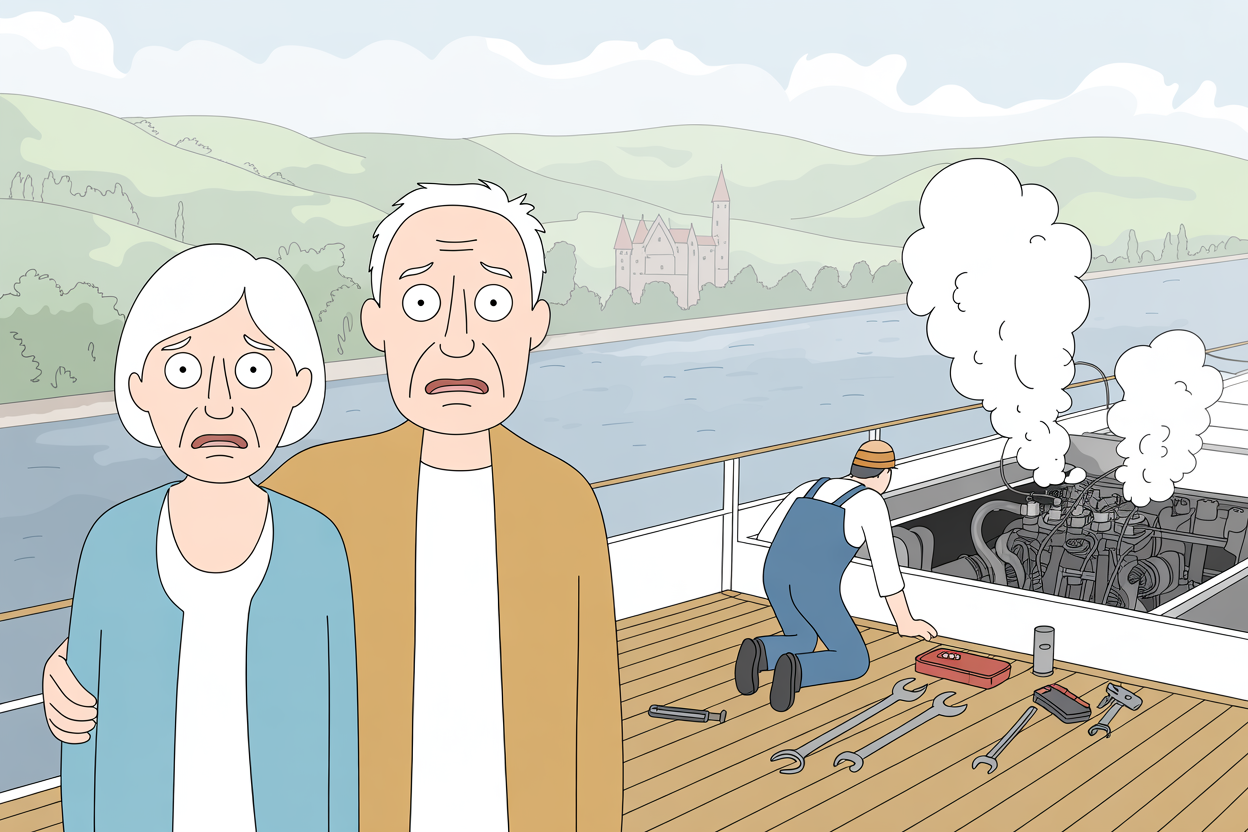
cartoon of a worried older couple standing on a river cruise deck while a mechanic kneels over a smoking engine behind them, with green hills and a castle along the Rhine in the background.

Can this company refuse to cover my costs for a canceled river cruise?

Michael Cawley and his wife had been looking forward to a relaxing six-day Rhine River cruise with CroisiEurope, a gentle start before they carried on to Dublin. What they got instead was a series of mechanical problems and a lot of anxiety. The ship stopped cruising early the first night. The next morning, scuba divers worked under the hull, the departure ran late, and an excursion was scrapped. Then, around midnight, the ship hit something. The hull shook, and at 1:30 a.m. every passenger was roused and herded into the lounge. By the next morning the verdict was in: the cruise was canceled, a bad motor. With nonrefundable travel waiting at the far end and no help yet in sight, the couple booked their own train and hotel to keep their connection, only to be offered an alternative too late to use. CroisiEurope returned the cruise fare. What it decided to do about the rest of their money, and the European law it leaned on to justify it, is where this case turns.

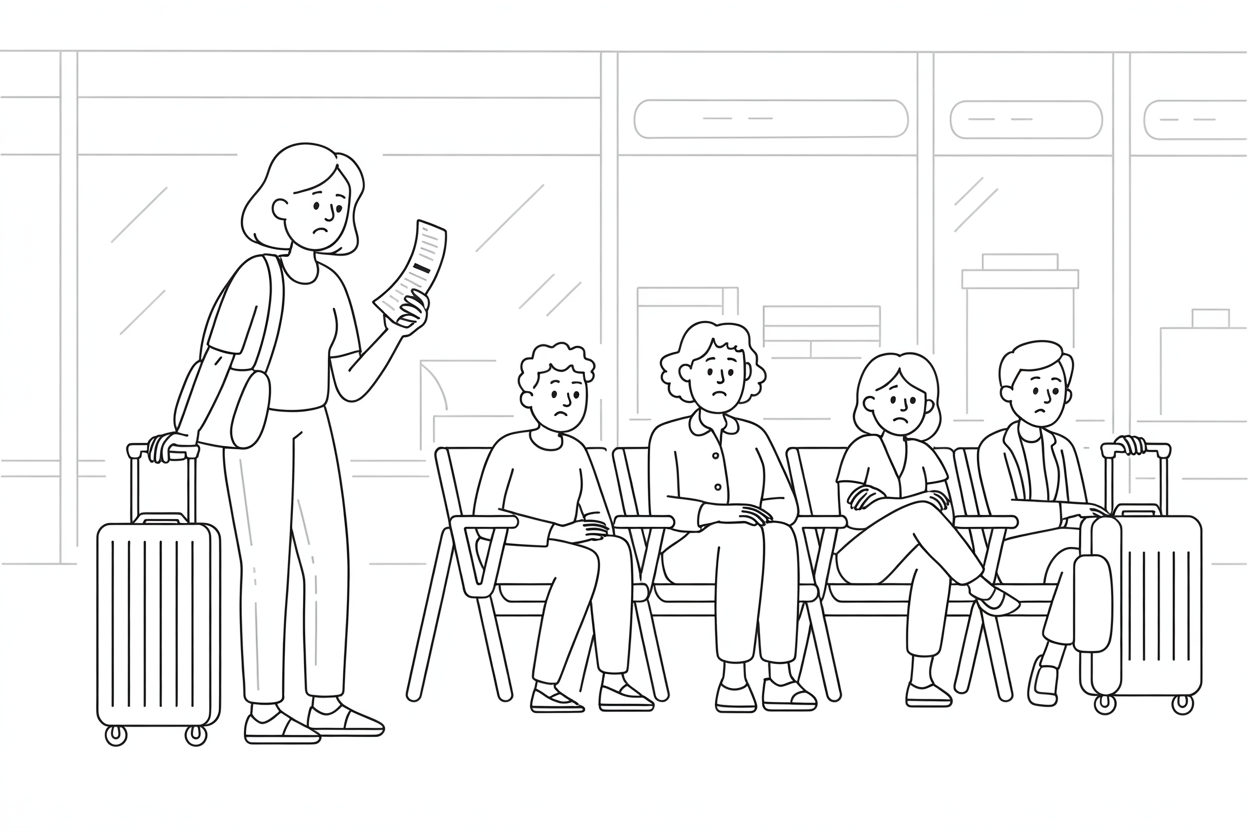
Line cartoon of a worried woman holding a boarding pass and pulling a suitcase as her family of three sits anxiously in airport gate seats behind her.

“A travel nightmare”: United changed my flight but never told me — now I’m out $2,000

Krupa Singampalli had booked a United trip home from Australia for her family of four, with business class upgrades bought using miles and a copay for each passenger. The outbound leg went smoothly. The return became a nightmare. At 1 a.m. in Cairns, she opened the United app and saw her 74-year-old mother’s seat had quietly slipped to waitlisted. A schedule change had rerouted the whole family through Sydney, except the message announcing it had never reached her inbox. When they got to the airport, the partner airlines could not find their reservations, the agents pointed at one another, and a flight departed without them while she was still on hold. Desperate and unwell, she bought four new one-way tickets out of her own pocket just to keep moving. Only later did she learn what United had done with the seats she thought she still had, and what the airline would say when she asked it to make the whole thing right.

Cartoon of a shocked older couple sitting on a couch staring at a phone showing the Princess Cruises app, reacting to news that their booking has gone wrong.

He paid $2,369 for his cruise, but Princess canceled the reservation anyway

Robert Battaglia paid $2,369 for a Panama Canal cruise with Princess, booked through a travel agent, and he and his wife Norma paid the final balance a day before it was due. Two days later, he opened the Princess app and the reservation was gone. When his travel agent called, a representative said the couple were in default for nonpayment and owed roughly $2,000 more, though no one could say where the charge came from. It eventually traced back to a Princess Plus upgrade his wife had tried to add online, only for the website to report that the purchase failed and tell her to handle it later. Princess canceled the booking anyway and kept $1,298 as a cancellation fee, even though the account showed no balance due and the agent could see no pending charge. Here is the principle worth holding onto before you accept a cancellation like this: when a customer pays on time and the company’s own statement shows nothing owed, the burden is on the company to explain any later charge before it takes punitive action, not after.

Illustration of a worried couple beside a yellow rental car with its hood up on a snowy Alpine road, the man on his phone for roadside help as a man in lederhosen inspects the dead engine.

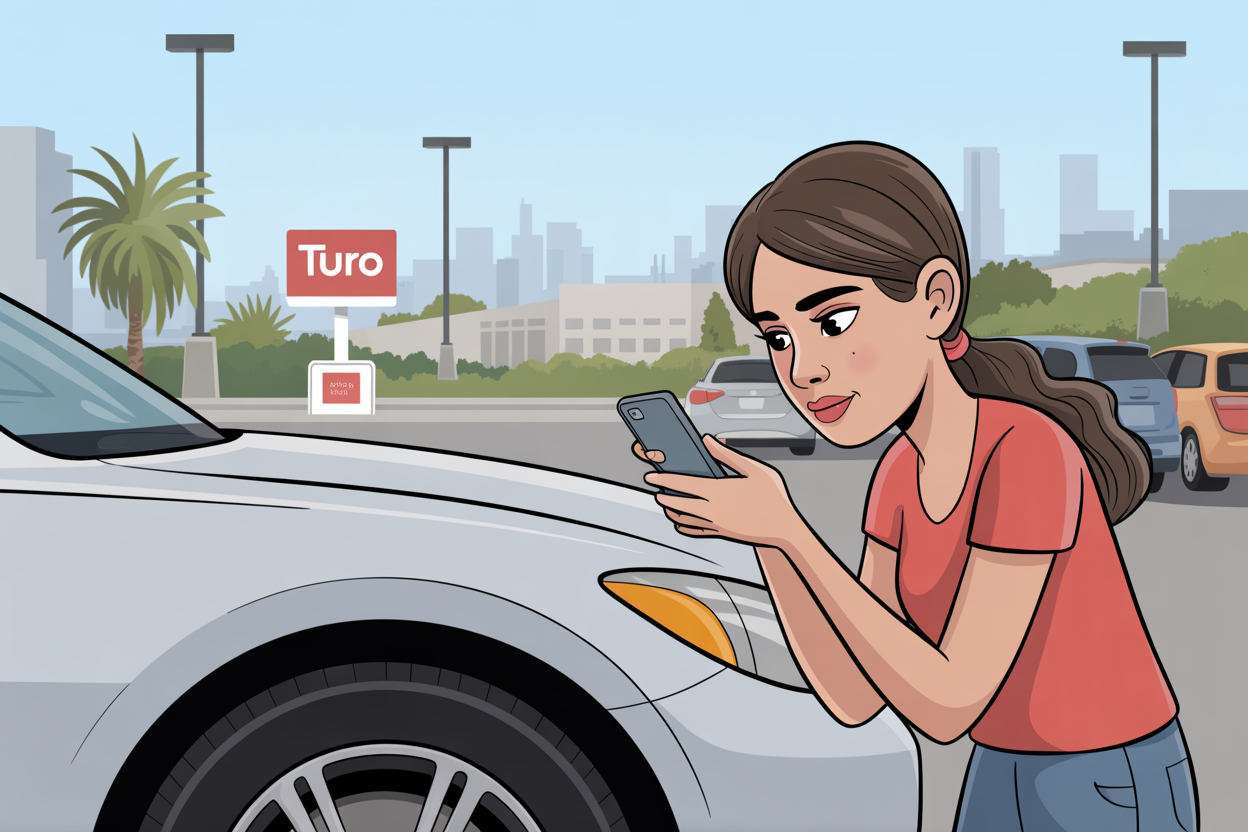
Help! Alamo charged me $1,000 after my car battery died in the Swiss Alps

Kjell-Erik Berggren rented a car from Alamo at Geneva Airport for a six-day trip through Switzerland, and it worked perfectly until the last morning. Staying in a mountain village at 1,500 meters, he and his group woke to a cold, frosty morning and a car that was completely dead: no lights, no starter, nothing. Roadside assistance told them to leave the vehicle and find another way to the airport, which they did at considerable expense. Then, two months later, Alamo charged more than $1,000 to his credit card with no prior agreement or warning, on two invoices showing different totals that did not even match what was charged. The company pointed to a roadside protection product he had declined and an insurance deductible he had chosen. But there is a principle worth knowing before you accept a charge like this: rental companies are typically responsible for mechanical and electrical breakdowns that are not caused by customer negligence or misuse, and a battery that dies on a cold morning after five days of normal use points to a defect in the vehicle, not a mistake by the driver.