
in this commentary
- For a decade, the travel industry’s golden rule has been to live like a local and rent an apartment in a residential neighborhood in search of something authentic.
- A traveler in Lisbon watched the bakery and the barbershop on his street get replaced by boutique rentals and brunch spots aimed at people like him. He realized he was part of the problem.
- That raises a question: If everyone insists on living like a local, who is left to actually be one?
Damien Zouaoui used to be a true believer in living like a local. He scoured online listings for authentic-looking apartments in up-and-coming neighborhoods, shopped at local markets, and tried his best to blend in.
Then came the trip to Lisbon that changed everything.
His street, located in a quiet residential neighborhood, had lost its bakery. The local barbershop was gone too—replaced with boutique rentals and overpriced brunch spots “catering to people like me,” recalls Zouaoui, the co-founder of a wellness company in Denver.
Then he witnessed the argument.
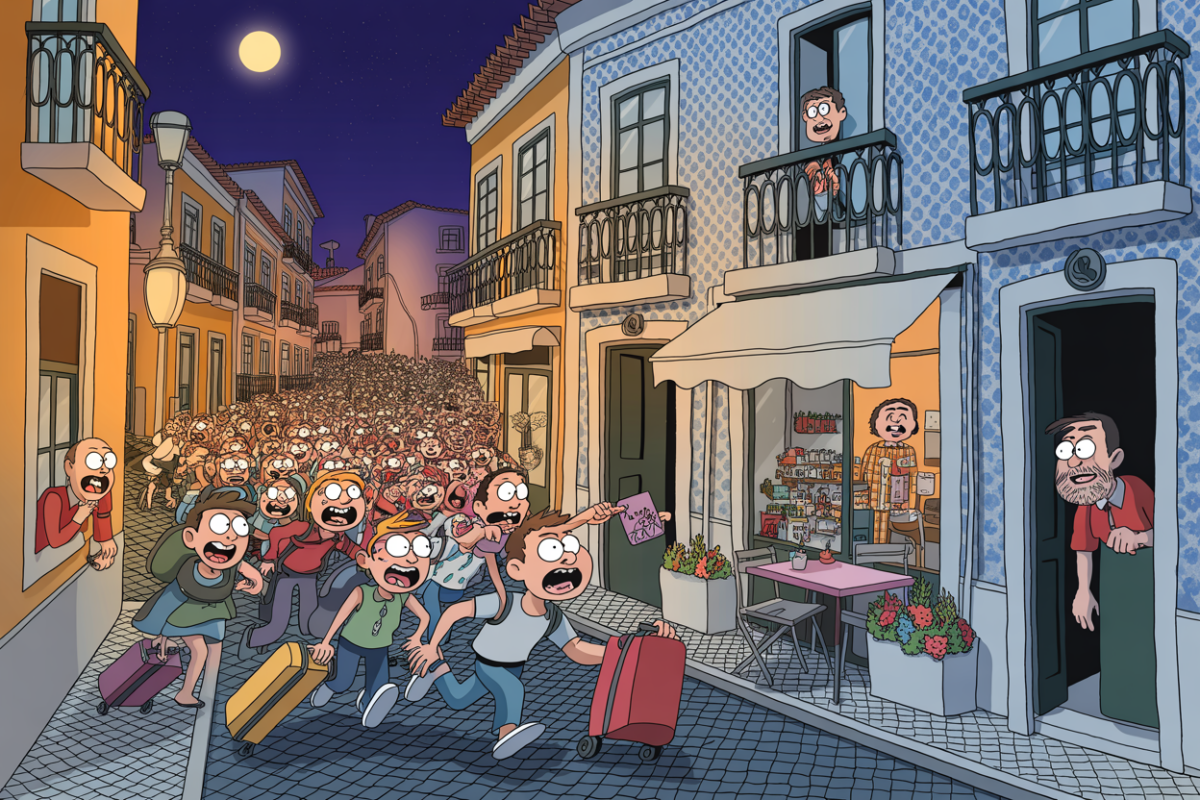
“I watched my host get into a shouting match with his neighbor over yet another guest’s rolling suitcase clattering down the cobblestones,” he recalls. “That moment hit hard.”
Zouaoui realized he was no visitor, but part of an invading force.
For the last decade, the travel industry’s Golden Rule has been to live like a local. Shun the tourist traps, skip the hotels, and embed yourself in residential enclaves to find true authenticity.
I’ve had a front-row seat to this gentrification with a passport. I’m on the road 350 days a year, often staying in rental apartments. In fact, I’m writing this from an Airbnb in Newmarket, a neighborhood in Auckland, and it’s located between a car repair shop and a Chinese grocery store. So much for authenticity.
Let’s stop this disruptive force before it ruins the summer of 2026. Experts say it displaces residents, inflates housing costs, and ruins the neighborhoods you claim to love. Maybe the most ethical — and enjoyable — way to travel now is to stop pretending you live there and embrace your status as a tourist.
A couple of days in Venice brought the impact of STRs home to me a few years back. Locals had put up stickers on lampposts and walls: “We hope you tourists all enjoy living in our former homes.”
As for Venice, it was heaving with people, everything was low quality and super expensive, utterly ruined.
Read more insightful reader feedback. See all comments.
The high cost of fake living
The problem with living like a local is simple math: When everyone does it, no locals are left. Tourists push out the very communities they claim to love.
Daniel Guttentag, a professor at the College of Charleston, says this desire is “silly.” Tourists do not want the reality of local life—the rush hour commute, the cooking, the school run. They want the backdrop without the burden.
The cost of this fantasy is real housing. Short-term rentals strip homes from the market. A McGill University study found that in Canada’s largest cities, landlords removed nearly 14,000 homes from the long-term market to serve tourists. In New York City, 13,500 apartments vanished into the short-term rental void, driving up rents for actual residents by hundreds of dollars a year.
Jennifer Kaplan, a sustainability strategist, argues you can’t find an authentic experience in a hollowed-out neighborhood.
“When authenticity becomes commercialized at scale,” she says, “it loses its authenticity by definition.”
Why do we persist? Ego. Thomas Plante, a psychology professor at Santa Clara University, suggests we are driven by “virtue signaling and narcissism.” We want to feel superior to the masses on the tour bus. We want to be travelers, not tourists. But by refusing to visit the places built for us, we destroy the places built for others.
In defense of the tourist trap
The alternative is the one thing we are trained to avoid: the tourist trap.
Urban planners and sustainable tourism experts argue that designated tourist areas—often derided as “traps”—act as necessary protective barriers for a destination. They concentrate the noise, the trash, and the crowds in areas designed to handle them, leaving residential neighborhoods for, you know, the residents.
“Tourist places are tourist places for a reason,” says Alex Veka, the founder of Vibe Adventures. “They have the infrastructure, the permits, the tax laws, and workers trained to handle mobs.”
In fragile ecosystems, these zones are vital. Shishir Dubey, who runs Jungle Revives in India, learned this the hard way. Early in his travels, he chased “authentic” off-grid jungle stays, hiring local jeeps and camping in buffer zones.
“I got lost for hours and nearly died of thirst,” Dubey recalls. “A near-miss elephant charge was my wake-up: Pretending to be local endangered everyone.”
Now, he sticks to official zones and licensed guides.
“Tourism infrastructure isn’t a trap,” he adds. “It’s a lifeline.”
How to be a good tourist
If you want to avoid gentrification with a passport this summer, you don’t have to give up on culture. You just need to change your approach.
“Why not act like a tourist and a local?” asks Thomas Swick, author of the memoir Falling into Place. “Stay in a hotel but eat where the locals eat. Visit the sights one day and explore neighborhoods the next. Embracing both identities will result in a broader and richer experience.”
Here is how to do it:
Stay in a hotel. They’re created for visitors. They employ locals, pay commercial taxes, and have security. “Hotels exist for travelers,” says Zouaoui. “They don’t displace families or schools.”
Hire licensed guides. “A good concierge or tour guide will steer you to places that want visitors and away from fragile blocks,” says Justin Brown, a frequent traveler based in Singapore.
Visit the landmarks. There’s no shame in seeing the Eiffel Tower or the Colosseum. These icons are in tourist areas, and your ticket price often supports their conservation.
Dropping the “local” facade is liberating. You no longer have to worry if you are annoying the neighbors—or inadvertently raising the rent.
“I’ve started to enjoy the classics,” Zouaoui told me. “When I was in Rome last, I walked to the Trevi Fountain at sunrise with a cappuccino in hand—and it was magical. No guilt, no awkward play-acting. Just the joy of being exactly what I was: a visitor.”
He’s right. The most respectful way to travel is to stop faking it. Stop the gentrification with a passport. Some places weren’t meant for you. They’re meant to be seen, appreciated, and then left to the people who actually call them home.
Your voice matters
OK, this commentary cuts against a decade of travel advice. I’d like to get your thoughts.
- Do you think short-term rentals in residential neighborhoods harm the places we visit? Or is that blame misplaced?
- When you travel, do you look for an apartment in a residential area, or book a hotel in the visitor district? What drives that choice?
- Is there such a thing as a good tourist trap, a place built for visitors that you actually enjoyed and would recommend?
Living like a local: the debate, and what to do instead
A decade of travel advice says to blend in. This commentary argues the opposite. Here is what readers ask most.
What is “gentrification with a passport”?
It is shorthand for what happens when enough visitors chase authenticity in residential neighborhoods that they change the neighborhood itself. Bakeries and barbershops give way to boutique rentals and businesses aimed at visitors, and the character that drew people there in the first place erodes. The core argument of this commentary is that when everyone tries to live like a local, fewer locals are left.
Do short-term rentals really affect housing?
Research from McGill University has found that large numbers of homes were pulled off the long-term rental market in major Canadian cities and in New York, with associated rent increases for residents. Estimates vary by city and by study, and the effect is concentrated in dedicated, full-time, entire-home listings rather than someone renting a spare room occasionally.
Is staying in a vacation rental always harmful?
Not necessarily, and reasonable people disagree. The concern researchers raise centers on dedicated commercial listings that permanently remove housing in tight markets, rather than on all home sharing. Local rules differ widely, and some destinations actively want visitors in certain districts. The article’s argument is about the aggregate effect of a trend, not a verdict on every booking.
Why do experts defend the “tourist trap”?
Because designated visitor areas function as buffers. They have the infrastructure, permits, and trained staff to absorb crowds, which concentrates noise, traffic, and waste in places built to handle them and leaves residential streets to residents. In fragile natural areas, sticking to official zones and licensed guides is also a safety matter.
Does being a tourist mean skipping local culture?
No, and that is the point of the middle path several sources suggest. You can stay in a hotel and still eat where residents eat, see the landmarks one day and wander a neighborhood the next. The idea is to drop the pretense of living somewhere, not to avoid the place.
What can I actually do differently on my next trip?
Consider booking a hotel rather than an apartment in a residential building, use licensed guides who know which areas welcome visitors, and do not feel guilty about the famous sights, since admission often supports their upkeep. Checking a destination’s local short-term rental rules before you book is also worth the few minutes.
Is there a counterargument?
Yes. Supporters of home sharing point out that rentals can spread tourist spending into neighborhoods that see little of it, that they suit families and longer stays better than hotels, and that hotels bring their own crowding and labor concerns. Housing pressure also has many causes beyond tourism. Where you land may depend on the specific city and its rules. For more travel coverage, see Elliott Advocacy.

Have a question about this story? Tell us what happened — we read every comment.
Join the conversation