
Cartoon illustration of a worried traveler holding a soaked passport beside a washing machine after it accidentally went through the laundry.

It’s time to kill the passport

A U.S. passport went through the wash during a week in Singapore, half a cycle on heavy duty before its owner remembered it was in a back pocket. State Department guidance is clear that significant damage, including water exposure, voids a passport, which means applying in person at a U.S. embassy, paying a $130 fee, and racing to get a replacement before an upcoming border crossing into Malaysia. The mishap raises a larger question: why do travelers still depend on a fragile paper booklet at all? Hundreds of thousands of U.S. passports are reported lost or stolen each year, and modern borders already scan faces, fingerprints, and travel history in milliseconds. More than 150 countries now issue electronic passports with embedded chips, yet those documents remain physical objects vulnerable to washing machines and pickpockets. A few countries have started clearing travelers with facial and biometric checks alone, suggesting the chip, not the booklet, has become the real document. The question is what it would take for the United States to follow.

Editorial cartoon showing an anxious traveler in a blue polo shirt grimacing as he stuffs a large purple roller suitcase into an open green airport trash can, with empty seating areas and large glass windows visible in the background, illustrating the increasing trend of travelers abandoning their luggage at airports to avoid baggage fees

The great luggage abandonment: Why travelers are ditching their bags at the airport

Travelers are increasingly abandoning their luggage at airports and hotels to avoid baggage fees that can exceed the value of the bags themselves. Hotels in Tokyo and Osaka now post warning signs about luggage abandonment fees while Narita Airport reportedly stores dozens of unclaimed bags daily. Kansai Airport in Osaka and Chubu Airport in Nagoya report similar pile-ups. Asian carriers known for strict baggage fee enforcement contribute to the trend, along with Japanese tourists buying cheap rolling luggage for shopping trips and abandoning it before flying home. Airports hold abandoned bags 30 to 90 days before disposal.

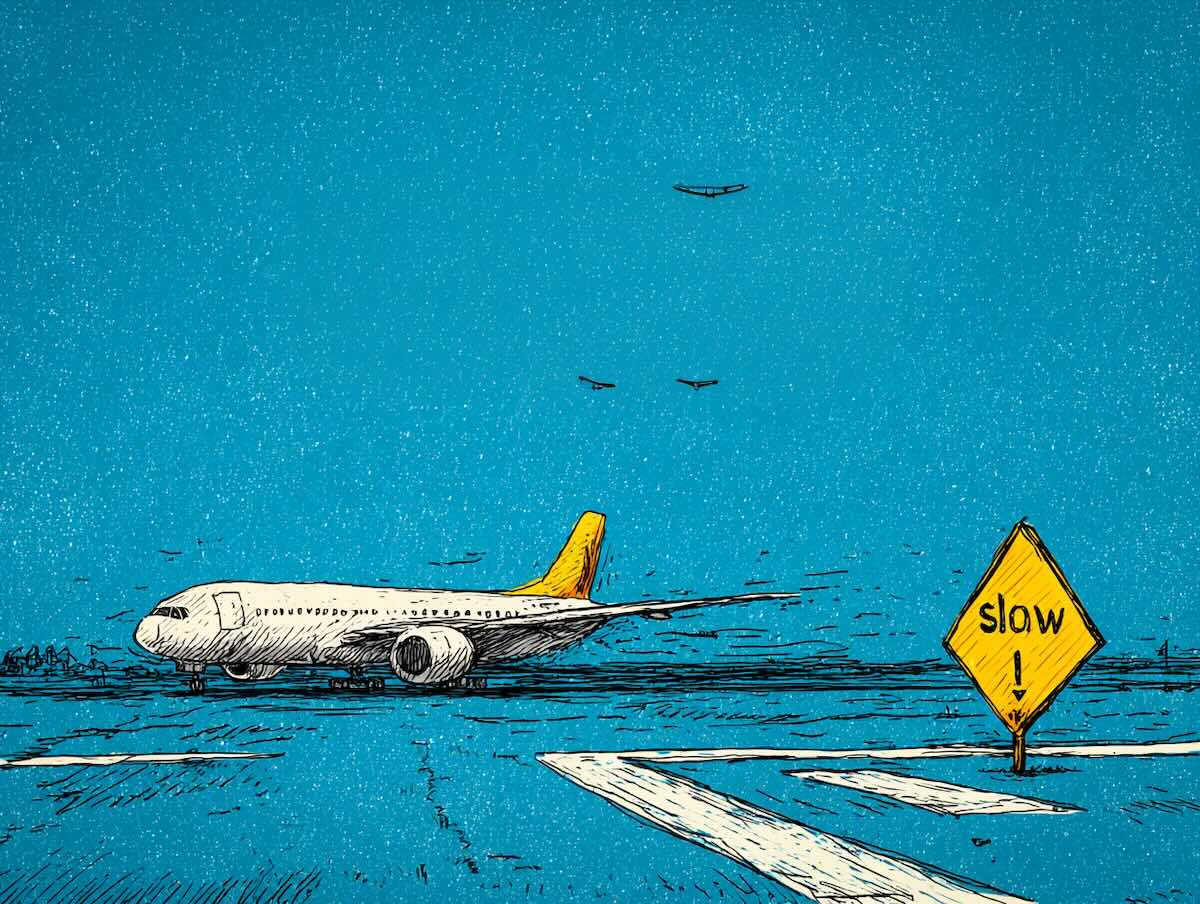
A slow plane comin'.

CONSUMER ALERT: Why your next flight might be stuck in the slow lane—and what to do about it

If you’re heading to the airport this weekend, you might want to pack a little extra patience. As of midnight Friday, the Department of Homeland Security is out of money, and that means the people keeping our skies safe are back to working for IOUs. (We discussed the effectiveness of federalized security screeners on Saturday, and we’re still having a great conversation if you want to join.)