If you’re heading to the airport this weekend, you might want to pack a little extra patience. As of midnight Friday, the Department of Homeland Security is out of money, and that means the people keeping our skies safe are back to working for IOUs.
(We discussed the effectiveness of federalized security screeners on Saturday, and we’re still having a great conversation if you want to join in.)
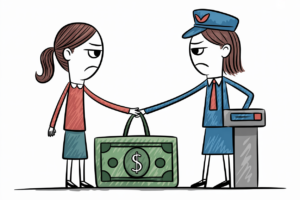
It feels familiar because it is. We just went through a record-breaking 43-day shutdown last fall that cost the travel industry a staggering $6 billion, by some estimates. Now, thanks to a fresh political stalemate over immigration policy, we’re looking at a sequel. While politicians in Washington trade barbs, the 61,000 TSA screeners who live paycheck to paycheck are the ones being asked to hold the line—for free.
The fallout—and sick-out—at the terminal
This isn’t a total government shutdown, but for travelers, it’s still going to hurt. Here’s the reality of what’s happening on the ground:
Essential but unpaid. About 95 percent of TSA employees are considered “essential,” meaning they have to show up, but they won’t see a dime until the shutdown ends.
The sick-out effect. During the last shutdown, unpaid officers eventually started calling in sick to find side gigs that actually pay the rent.
Longer security lines. When staffing drops, checkpoints close. We’re already seeing warnings of spiked wait times and missed flights. During the government shutdown, add another hour to your check-in times, just to be safe.
TSA is already reporting a 25 percent jump in officers quitting because they’re tired of being pawns in budget fights.
A history of travel turmoil
The 2025 shutdown was a useful lesson in how fragile our aviation system is. During that 43-day stretch, we saw a massive $140 million daily hit to the economy and more than 6 million travelers negatively affected. (Related: CONSUMER ALERT: Airlines are hiking bag fees—again.)
At its peak, the strain became so intense that unpaid air traffic controllers and TSA agents began calling in sick in such high numbers that airports like Philadelphia were forced to close security checkpoints, and flight capacity was slashed at major hubs just to stay safe.
How to protect your trip
You shouldn’t have to pay for Washington’s inability to pass a budget, but it’ll still cost you. If you have to fly, arrive at the airport at least three hours early, even for domestic trips. Check your flight status frequently. While air traffic controllers are currently funded and getting paid this time around, a skeleton crew at security can still cause a boarding gate to stay empty.
The takeaway: Don’t wait until you’re standing in a line that snakes out the terminal door to check the news. Monitor the DHS funding status daily and give yourself twice as much time as you think you need at the airport.
(If you’re looking for someone to help you navigate a canceled flight or a refund dispute, you can always find company contacts and advocacy tips at Elliott.org.)
The last word on needing the TSA (or not)
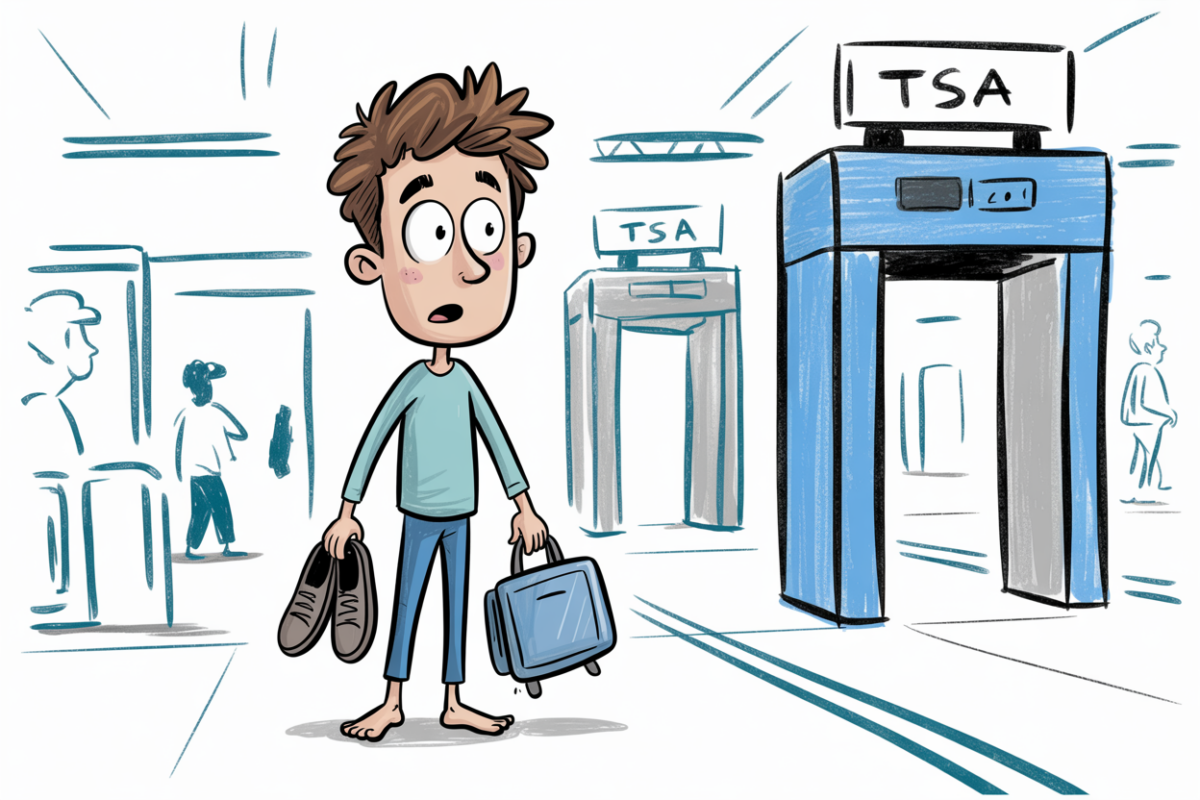
The TSA began as a post-9/11 federalization of airport security, but its multibillion dollar price tag and historical 95 percent failure rate in internal tests raise serious questions about its continued necessity. While the presence of uniformed officers provides some psychological reassurance, experts suggest that reinforced cockpit doors and a more vigilant public are the true deterrents against modern threats. With private security models in Europe and Canada proving to be significantly more cost-effective, it may be time to move away from this taxpayer-funded circus and toward a more efficient, private alternative. Here’s our discussion on this topic. You’re welcome to join us now.
This is the most connected city for travelers
You’ve spent months planning the perfect working vacation in a sun-drenched European capital, only to find out your hotel’s so-called “high-speed” Wi-Fi is slower than a dial-up connection from 1998. That’s a common frustration for travelers who need more than just a bed and a view to stay productive. (Related: Your vacation rental is changing this spring. Here’s what you need to know.)
Connectivity isn’t just a luxury anymore. It’s the backbone of how we travel, work, and stay safe in unfamiliar territory. A new report from Holafly, provider of eSIMs, has put some numbers behind the noise, ranking the world’s most connected cities based on everything from data costs to Wi-Fi density.
The winners—and the wallet-drainers
The results might surprise you. While we often think of Western tech hubs as the leaders, the top spots are a mix of Asian value and European infrastructure.
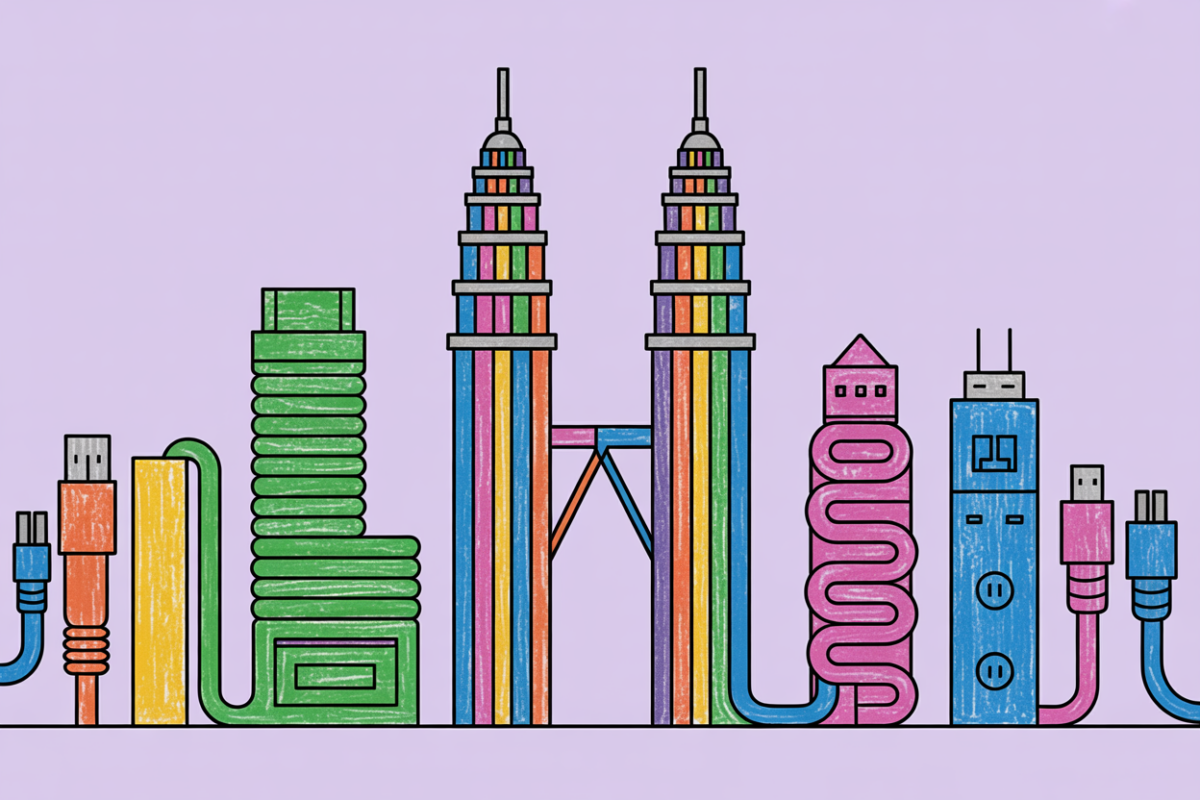
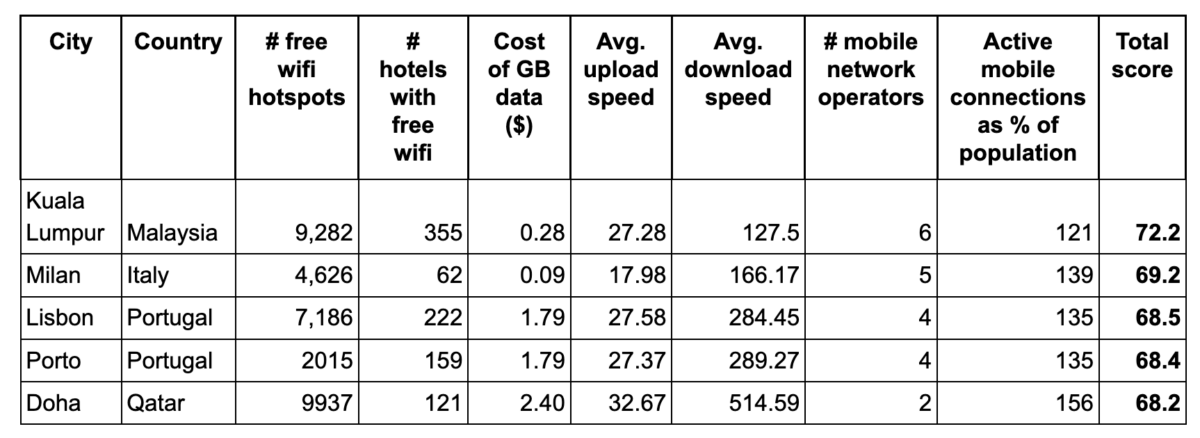
- Kuala Lumpur takes the crown. With a top score of 72.2, Malaysia’s capital offers a massive 38.2 free Wi-Fi spots per square kilometer and mobile data that costs just $0.28 per GB.
- Milan is the bargain hunter’s choice. If you’re looking for the cheapest mobile data in the top ten, head to Italy, where you’ll pay just $0.09 per GB.
- Portugal is a digital nomad’s preferred location for cheap connectivity. Both Lisbon and Porto cracked the top five, offering excellent Wi-Fi availability and download speeds that average well over 280 Mbps.
- Doha wins on raw speed. Qatar’s capital boasts a blistering 514 Mbps average download speed, but you’ll pay for it at $2.40 per GB.
Here’s the full list along with the scores.
How to stay connected and secure
Don’t wait until you’re wandering the streets of a foreign city to figure out your data plan. Before you leave, check if your phone supports eSIM technology, which lets you download a local data plan the second you land, bypassing the overpriced airport kiosks. If you must use public Wi-Fi, stay off sensitive sites like your bank or medical portal and always use a VPN to encrypt your data.
Beware of the “free” Wi-Fi trap: Even in connected cities, public networks are often unencrypted and slow, making them a playground for hackers looking to intercept your banking details.
You can find more tips on staying safe and choosing the right travel tech at Elliott.org.
The takeaway: Italy and Portugal are the top European destinations for cheap, fast wireless connections. Anywhere else, and you might find yourself paying a high price for third-world speeds.

Is this another “here we go again” moment?
The upcoming week sure feels familiar. I can almost see those long lines and canceled flights again. Can you? What are you planning to do about it? Our comments are open.
💬 Comment now
Have a question about this story? Tell us what happened — we read every comment.
Join the conversation