in this commentary
- Travel costs have surged 23 percent since 2019, with U.S. hotel rates jumping from $103 to $162 per night — a 58 percent increase — while airlines strip away included amenities like checked bags, seat assignments, and meals, charging extra for what was once standard.
- The pain is particularly acute for younger travelers, with 72 percent of Gen Z and Millennials reporting that travel has become too expensive, forcing many to delay or abandon vacation plans as inflation eats into disposable income.
- Despite industry executives seeming perplexed that customers won’t pay ever-higher prices, there are still ways to travel affordably: buying packaged tours in bulk, choosing airlines that still include checked bags (like Turkish, Qatar, and Emirates), and avoiding peak travel seasons when the industry extracts maximum prices for minimum service.
Does it cost too much to travel?
For people like Tim Plyant, the answer is yes. This summer, he plans to avoid travel entirely — it’s just too expensive.
“I can’t believe what they’re charging,” says Plyant, an architect from Austin, Texas.
He’s especially upset about the soaring cost of food at the airport. “I’m on an expense account and I still have a hard time procuring food at these prices,” he says.
The cost of travel has risen by 23 percent since 2019, according to the U.S. Travel Association. Affordability affects everyone, but it’s a particular problem for young people. A poll by EF Go Ahead Tours found that 72 percent of Gen Z and Millennials say the cost of travel is too high. The likely culprits? Inflation and other non-travel expenses have made it increasingly difficult to pay for a vacation.
“Nearly every part of the journey, from flights and hotels to everyday add-ons, comes with surprise fees and fluctuating prices,” says Melissa DaSilva, Trafalgar’s deputy CEO. “Many travelers are waiting longer to book, hunting for the lowest fare, and looking for more price certainty up front.”
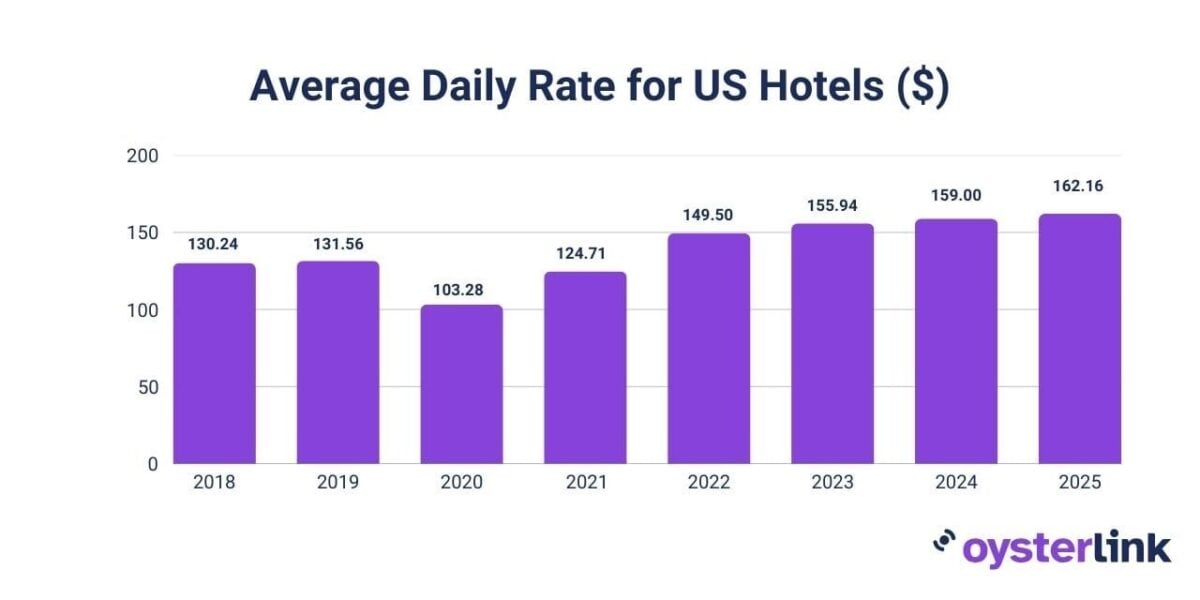
Source: Oysterlink
How expensive is travel?
I could show you a series of graphs with airfares, hotel rates and gas prices to illustrate the rising cost of travel. One of the most dramatic would be the surge in average U.S. hotel rates, from $103 a night in 2020 to $162 a night in 2025, an increase of almost 58 percent.
But there’s a bigger picture. It’s not just the base fares and gas prices, but a combination of the destination, your travel preferences — and the extras the travel industry throws at you when you arrive
And lately, there have been a lot of extras.
Dave Dzurick, a project manager from Tucson, Ariz., says he would not travel at all if his kids didn’t live on the other side of the country. (Related: Have travelers become their own worst enemy?)
“Airlines have removed any vestige of comfort,” he complains. “A checked bag and a seat assignment used to be part of the ticket — now you have to pay extra for it. At least they’re not charging to use the bathrooms … yet.”
In other words, the base prices tell only part of the story. It’s also the surcharges that few people talk about that combine to make travel less affordable.
So what’s the answer to the question: How expensive is travel? For many Americans, it’s just too expensive.
One strategy would be to “reallocate” your budget. Spend the money on the airfare but stay at a cheaper hotel or hostel. Drive to the outskirts of a city (or to its airport), park, take public transportation, and pay for the in-city hotel. Or stay outside the city and use public transportation from the suburbs into the city each day.
Or go somewhere well off the beaten track, perhaps a road trip visiting two or three smaller cities rather than a single big city. Portland, Maine and Manchester, New Hampshire both have nice art museums and hotel prices less than Boston. It’s a 90-minute drive between Manchester and Portland. You could also go to Concord, New Hampshire — the state Historical Society has an interesting White Mountains art exhibit — and Portsmouth, New Hampshire, visiting Strawberry Banke’s “Skansen” style collection of historic houses.
Read more insightful reader feedback. See all comments.
Maybe the travel industry has lost touch with its customers
I’m always on the road, and I have a chance to see this from a different perspective. Sure, I get to pay some of the crazy prices everyone else does. Like Plyant, I’m outraged by the cost of airport food, and not just in the States. I spent more than $30 on two sandwiches in Bangkok recently. Come on!
But I also get to talk to airline executives, hotel owners and vacation rental managers to get their points of view. And they’re honestly perplexed when people don’t fork over hundreds of dollars a night for their products. They seem to forget that inflation has eaten up a lot of their customers’ disposable income.
These industry leaders have cut their products to a shell of what they once were. Airline tickets, which once included a carry-on bag, a checked bag, a seat assignment and a meal, are now stripped-down versions of their former selves. The seats have shrunk, and you pay extra for everything, sometimes even for a carry-on item. Some of the hotels I’ve visited lately don’t change your towels and sheets or clean your room every day, and have also eliminated amenities like soap and lotion. And they’re charging much more than they used to (see chart).
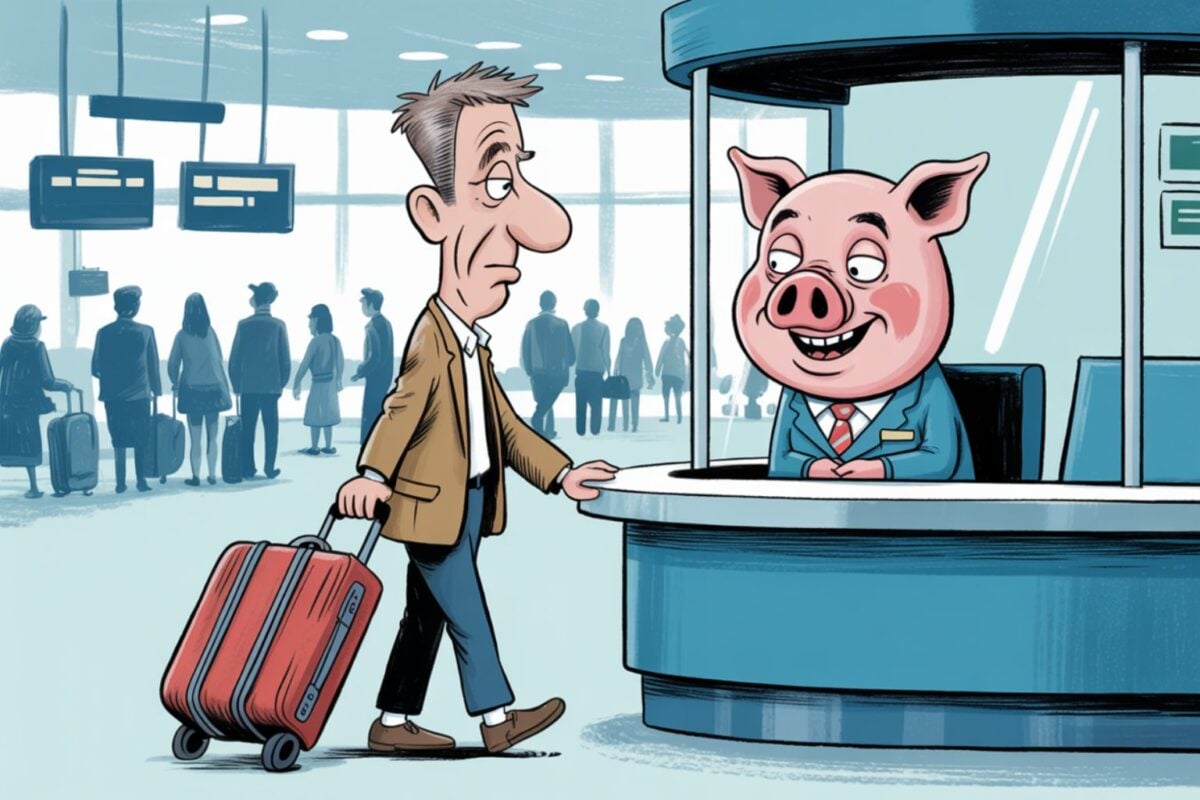
I think large parts of the travel industry have lost touch with their customers. They’re charging more for less and they don’t understand the economic realities their customers are facing.
Can you still travel affordably?
Fortunately, there are still ways of traveling without breaking the bank.
- Buy in bulk. That’s the idea behind companies like EF Go Ahead Tours, which caters to a younger crowd, and Trafalgar, a tour operator that has a more mature client base. Buy your flights, hotel rooms and meals as part of a package, and you can save money.
- Choose a company that gets it. For example, airlines like Turkish Airlines, Qatar Airways, and Emirates often include a checked bag in their economy class fares. I’ve also come to appreciate brands like Holiday Inn and Hilton Garden Inn for having a quality product at a fair price.
- Zig when everyone else zags. If you’re thinking about traveling during the upcoming spring break and summer travel season, here’s my advice: Don’t do it. It’s open season on travelers’ wallets. The industry knows it has you over a barrel, and it will try to extract the highest prices and give you the lowest levels of service. Instead, travel during the shoulder season and choose your destination carefully.
It’s a shame this is happening. Travel used to be a reward — a chance to unwind, reconnect, and explore. But for some Americans, it’s become an unaffordable luxury. The only question is, at what point will we reach the breaking point, when people just refuse to go anywhere?
I suspect we’re closer to it than anyone thinks.
Your voice matters
Travel costs have surged 23 percent since 2019, with airlines stripping away basic amenities like checked bags and seat assignments while hotels charge more for less service. Has the industry lost touch with travelers?
- Should airlines be required to include at least one checked bag and a seat assignment in every ticket price?
- Have you canceled or postponed a vacation in the past year because travel became too expensive?
- What’s your breaking point — at what price would you simply refuse to travel?
What you’re saying
Readers debated whether travel’s 23 percent price surge reflects genuine inflation or industry greed, with some pointing out that costs rose slower than overall inflation while others highlighted the painful combination of higher prices and vanishing amenities. The conversation revealed creative workarounds — and deep frustration with an industry that seems disconnected from travelers’ reality.
-
The inflation vs. greed debate
smd did the math and found that travel costs actually rose slower than overall inflation — 23 percent versus 29.2 percent for the consumer price index. But Sheryl countered that this misses the point: not only did prices rise, but hotels stopped cleaning rooms daily, added fees for parking, early check-in, energy charges, and “payment processing,” while airlines stripped away basic amenities. M.C. Storm captured the frustration perfectly: airlines removed every basic amenity, then hiked the base fare anyway.
-
Voting with your wallet — or not
Ben argued that airlines and hotels will only drop prices if people stop paying them, while Tim voted “no” on regulation, saying passengers should reward or punish airlines through their booking decisions. But Evelyn Cushman Rathe, who flies nearly weekly, pointed out the flaw in this logic: flights and hotels are jam-packed with barely an empty seat or room in sight. Dangerous Ideas echoed this, noting that if demand is still high despite costs, the industry has little incentive to lower prices or restore amenities.
-
Creative workarounds and their limits
deemery suggested reallocating budgets — splurge on airfare but stay in hostels, or skip big cities entirely for road trips through smaller towns like Portland, Maine and Manchester, New Hampshire. Mark agreed, preferring premium plane cabins over premium hotels since “they actually give you stuff” rather than just bills for resort fees and parking. But GradUT pushed back: organized tours don’t appeal to many travelers, international carriers don’t help with domestic trips, and families are locked into spring break and summer travel. Tina offered one solution that’s working: switching loyalty to Turkish, Qatar, and Emirates, where a checked bag and basic dignity still come standard.

Have a question about this story? Tell us what happened — we read every comment.
Join the conversation