
in this commentary
- Travel experts say tourists are increasingly their own worst enemy, from ordering contaminated street smoothies despite tap water warnings to carving initials into the Colosseum, with younger travelers taking more risks and showing permissive attitudes about drugs and vandalism.
- The four fatal flaws: entitlement (demanding Starbucks and English everywhere), rudeness (defacing ancient temples), skipping fine print (losing entire hotel stays), and lacking empathy (treating service workers poorly and viewing their culture as inferior).
- The solution is remembering you’re a guest, not owed fast service or home comforts. Travel is a privilege, and the fastest way to ruin a trip is assuming everything will be like home and throwing a tantrum when it isn’t.
The coconut smoothie test is hardly a scientific way of determining if you’re a savvy traveler. But it’s highly effective.
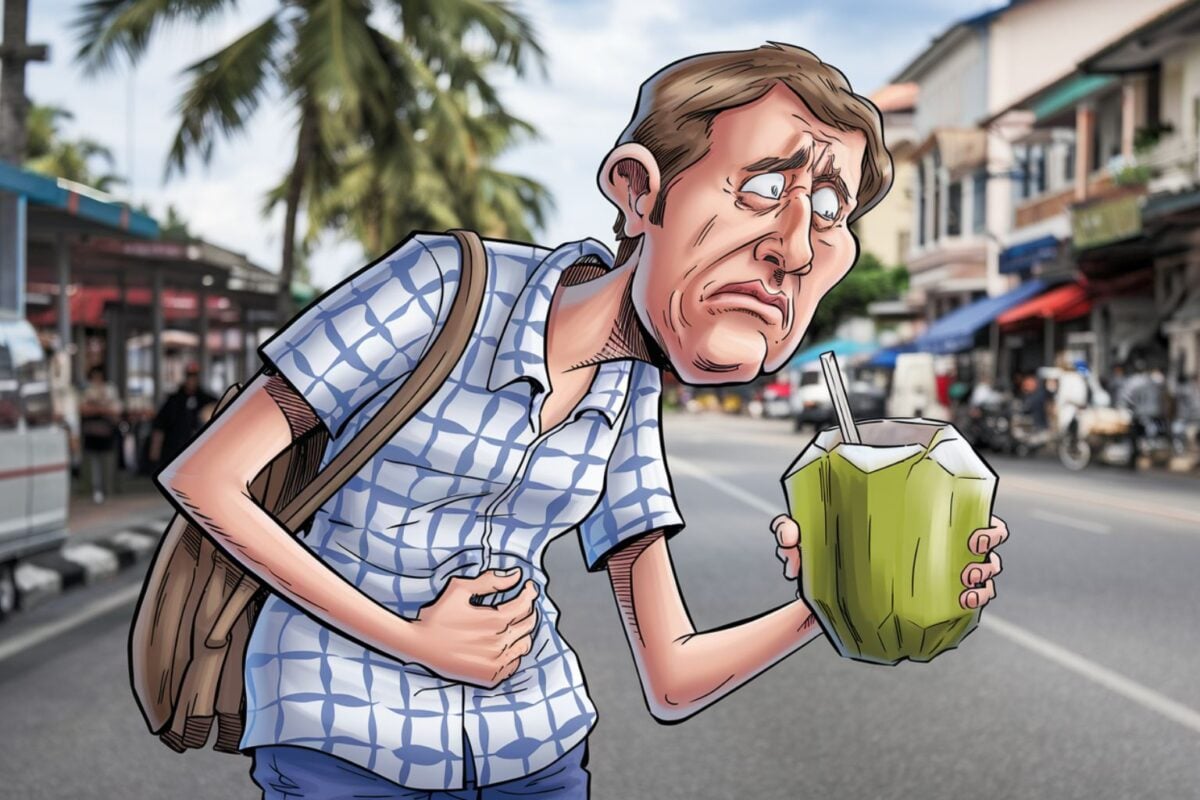
On a recent trip to Malaysia, I used it to measure the aptitude of other tourists, and I have to say, I was disappointed. Visitors get a stern warning about drinking tap water when they visit a place like Kuching.
But street food is hard to resist. I saw the Western tourists ordering coconut smoothies from the small stalls along Padungan in Chinatown. And then, not even 24 hours later, I witnessed the same people in the lobby of my hotel, clutching their stomachs in pain. Their vacation was over.
And I had to wonder: Are travelers becoming their own worst enemy?
A “shift” in traveler behavior
It’s a fair question, according to experts — and a timely one. Travelers like to blame their airline, car rental company or hotel for their terrible trip, but there seems to be a growing consensus that many of the troubles are self-inflicted.
“There’s definitely been a shift,” says John Gobbels, the chief operating officer of Medjet, a company that provides air medical transport and security response services.
He should know. When things go wrong, he gets the call to evacuate someone who fell off an unsafe zipline, drank a contaminated smoothie from a street vendor — and landed in a hospital somewhere.
Note this is just not US travelers. I have found younger Chinese travelers are the same, pushy and wanting to check off experiencing the most popular sites. They are as addicted to social media as any other culture.
Read more insightful reader feedback. See all comments.
You’ve probably seen the headlines of nude tourists roaming Bali’s sacred temples, of motorcyclists driving across a pedestrian bridge in Florence and of people carving their initials into the walls of the Colosseum in Rome.
Gobbels says part of the problem is generational. Younger travelers take more risks and have a permissive attitude about everything from recreational drugs to graffiti. Another part of it is the overall decline of good manners.
How are travelers becoming their own worst enemy?
How do you tell when someone is their own worst enemy? I mean, besides avoiding street smoothies in Southeast Asia?
They’re entitled. Travelers often demand all the comforts of home — 24/7 service, air conditioning, Starbucks in the lobby. “It can be cringeworthy when people assume everyone speaks English,” says Thomas Plante, a psychology professor at Santa Clara University. “People act as if they are still in their own country rather than in someone else’s culture.” This doesn’t just make them unlikeable. It can also turn tourists into targets, especially during times of geopolitical turmoil (like now).
They’re rude. Tourists say and do things they’d never imagine doing at home. You know, like carving their initials into a thousand-year-old temple at Angkor Wat. Or telling people that this place is a little bit like where they’re from, only not as nice. “Being rude or pushy never helps,” says Christopher Falvey, the co-founder of a New Orleans tour operator. “On our walking tours, we’ve never seen anyone have a more enjoyable experience by being rude — but we’ve seen people try.” Good one. Actually, being rude can single you out for bad treatment, and it often does.
They skip the fine print. You know the saying, “The large print giveth, the fine print taketh away”? It applies to travel. Especially travel. But for some reasons, people think the travel industry is exempt. “Ignoring the details results in stress at the last minute and financial loss,” says Arvind Rongala, a frequent traveler and the CEO of a corporate training company. He recently witnessed a family lose what they had paid for an entire hotel stay because they thought their rooms were refundable. They weren’t.
They lack empathy. They don’t care about other travelers or the people they meet at their destination. It’s all “me-me-me.” And that can ensure they have a bad experience because people will go out of their way to make sure they suffer. Roni Weiss, the executive director of a travel nonprofit, calls this the empathy gap. “It’s where someone who is looking to relax ends up overlooking that service workers are human beings, as well. Not to mention a sense of entitlement that one’s own culture is superior and treating others disrespectfully, even in their own homes — sometimes literally.”
The solution? Be realistic and polite
Experts say travel has changed a lot since the pandemic, according to Minkyung Kim, who teaches marketing at Carnegie Mellon University’s Tepper School of Business. Airlines are struggling to keep up with costs, and customers are becoming more demanding.
“People feel like they’re paying more but not getting better service in return,” she says.
Robyn Sekula, a frequent traveler and consultant from New Albany, Ind., says the best thing you can do as a traveler is to remind yourself that you are a guest, wherever you are visiting. Be polite, kind, and grateful — not pushy and demanding.
“If you find yourself getting impatient in a different culture, take a deep breath and remind yourself that travel is a privilege,” she adds.
That’s good advice. Travelers make plenty of mistakes, but perhaps the worst is thinking that they’re owed something — like fast service, amenities like home, or even the ability to communicate with someone in English.
It’s great when those are available, of course. And make no mistake, if you’re not getting what you paid for, you should politely speak up. But there’s no faster way of ruining a trip than assuming everything will be exactly like it is back home — and throwing a tantrum if it isn’t.
“Travelers often make their own trips worse without realizing it,” says Jackie Steele, a hospitality professional who works for Magic Guides, a site dedicated to Disney vacations.
So as we head into the holiday travel season, don’t be like those other travelers. Don’t become your own worst enemy.
Your voice matters
Travel experts say tourists are increasingly their own worst enemy, showing entitlement by demanding home comforts everywhere, rudeness by defacing ancient sites, skipping fine print that costs them thousands, and lacking empathy by treating service workers poorly. The solution? Remember you’re a guest and travel is a privilege.
- Should destinations implement stricter penalties or educational requirements for tourists who vandalize cultural sites or behave disrespectfully toward local customs?
- Is the rise in entitled tourist behavior a generational shift, or is it the result of travel becoming too affordable and accessible for people who aren’t prepared for different cultures?
- Have you witnessed tourist behavior abroad that made you embarrassed to be from the same country, or have you caught yourself acting entitled while traveling?
What you’re saying
Readers debated whether entitled tourist behavior is new or dates back to “The Ugly American” in 1958, with many blaming social media, COVID-induced narcissism, and treating vacations like checklists. The consensus: being rude gets you the worst treatment, while learning basic phrases and respecting local culture opens doors.
-
This isn’t new, just louder
George Schulman referenced “The Ugly American” from 1958. Frank Loncar noted it’s not just Americans, finding younger Chinese travelers equally pushy. Gary B blamed upbringing, social media creating consequence-free behavior, and COVID making people seek control.
-
Respect pays dividends
Gary B got special menu items for learning German, while Americans demanding English got abbreviated service. Pattipeg Harjo never found the French rude because she tried speaking their language. Tina called being a jerk the fastest way to get the worst treatment.
-
Social media and checklist tourism
Sandra Gershenfeld blamed social media, with people pushing for the perfect photo. AJPeabody noted cramming four days into a day and a half turns vacations into stressful checklists. JAASON witnessed three guys kicked off a Jamaica resort for urinating on property.

Have a question about this story? Tell us what happened — we read every comment.
Join the conversation