
in this commentary
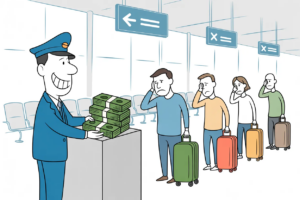
- Travelers are increasingly questioning recommendations from professionals. Travel agents collect commissions, influencers take payments from destinations, and bloggers earn kickbacks from credit card companies for biased advice.
- A Global Rescue survey shows 85 percent of travelers are concerned about geopolitical instability, yet they are proceeding with their plans despite the risks. Skepticism cuts both ways.
- Cautious skepticism is healthy when evaluating tourism-engine search results and influencer endorsements. But ignoring State Department advisories and visa requirements can lead to serious consequences.
When Sharon von Wolffersdorff booked a flight from Seattle to Rome, she considered ignoring the experts’ advice.
The experts — in her case, her airline and airport — assured her that she could make a flight connection in Frankfurt in an hour. But she was skeptical.
“I experienced a nerve-wracking transfer in Paris a few years ago,” says von Wolffersdorff, a retired Spanish teacher from Seattle. “We didn’t want to do that again.”
She’s one of many travelers who are questioning recommendations from the pros. Travelers have always been contrarians, but never like this. And their timing, just before a summer market by uncertainty, couldn’t be worse.
“We’re in an age where skepticism is the default setting,” says psychologist Frank Niles. “So when a professional says, ‘Don’t go there’ or ‘Do it this way,’ some travelers instinctively do the opposite.”
So why are travelers being more skeptical? When should you be contrarian — and when shouldn’t you? And what is the biggest mistake the skeptics are making when they travel?
Whose advice are travelers ignoring?
There’s a reason travelers are distrustful: The experts are getting it wrong too often.
“I’m always disappointed when I listen to travel experts,” says Stephanie Ward, a marketing executive from Dallas. “They give you the tourist experience, which is usually subpar and more expensive.”
Who’s on the “ignore” list?
- Travel agents who care more about collecting commissions than helping a customer.
- Travel influencers who are getting paid by a destination or hotel to say positive things.
- Travel bloggers who endorse points-earning credit cards and then take a generous kickback from the credit card company while offering misleading advice.
Travelers say they’re done listening to the nonsense they’ve been fed.
“The decision to not take advice comes from being burned in the past,” explains Alex Beene, a frequent traveler in Nashville who works for the state government. “I’ve listened to glowing feedback on hotels that were costly, only to discover when I got there it didn’t feel worth the hefty price I was paying.”
I can relate to the Frankfurt example. Once Delta changed our flight and gave us ONE hour in Amsterdam to make our connection to Florence. When I called to complain the CS rep insisted that was the legal time mandated and they weren’t required to provide more time!
I asked, so you think the plane can land, offload passengers, they can get through immigration and Amsterdams second round of security, I can walk to my new gate and board all in less than an hour because they close those jetway doors 15 minutes before a flight? She had nothing to say to that, because it’s physically impossible. I did not listen to her and ended up rebooking for the next day. So here, the “expert” had useless advice.
Read more insightful reader feedback. See all comments.
When should you be a skeptic?
A little skepticism is always healthy. (Except for this column, of course. Every word I write is completely true.)
One big mistake travelers make is assuming everything online is worth knowing.
“The top things that come up to do in a foreign city on Google are all part of a tourism engine,” says Aaron Nichols, a research specialist in Longmont, Colo., who spent years traveling around the world. “There’s a lot of people who have invested a lot of time in making sure that your attention is directed to those things.”
You’ll even want to put on your contrarian hat when you find information that appears to be helpful.
Just because it’s the first search result, or the source declares itself to be an “expert” or “thought leader,” doesn’t make it true. Dig deeper. Your expert source might be manipulating the search engine results or enriching themselves from poorly disclosed affiliate arrangements, so it’s probably best to look elsewhere for people you trust.
And you’ll want to listen to yourself when your instincts set off warning flares. “Trust your instinct,” says Ron Podmore, a teacher from Seattle who travels extensively. If something is making you nervous, chances are there’s a good reason behind it. Doing the opposite of what your instincts tell you may put you in danger. This step is especially important when you’re planning a trip. When you hear a little voice in your head that says, “I don’t like it,” you should listen.
When should you not be a skeptic?
While there are times that healthy skepticism is essential, there are absolutely times when you should listen to the right experts.
When it comes to safety. Dan Richards, CEO of Global Rescue, a security membership organization, says you don’t want to be a contrarian when it comes to your personal safety. Listen to the pros. Heed the advice of the U.S. State Department. Yet too many travelers are doing the opposite. His latest survey of travelers shows 85 percent of travelers are concerned about geopolitical instability. “Yet they’re proceeding with their plans despite the risks,” he says. That might not end well. (Related: Can you trust those government travel advisories? Maybe not — and here’s why.)
If it’s time-tested or official advice. If your destination has visa requirements, or if there are official warnings about safety there, don’t ignore them. “You risk serious trouble,” says Liam Perkins, a marketing executive from Los Angeles who travels frequently. His pet peeve: Contrarians who ignore etiquette advice and end up doing something offensive. Don’t dismiss those tips; you’ll just end up embarrassing yourself.
In other words, there are some occasions when you don’t want to ignore the expert advice. So when should you be skeptical?
Travelers should be cautiously skeptical
Ignoring the advice of professionals isn’t necessarily a bad trend. It’s only bad when you take it too far.
Cai Glushak, the chief medical officer for AXA Partners US, sees all kinds of travelers who contract serious diseases and traumatic injuries in risky locations. “These circumstances were easily avoidable by following government advisories,” he adds.
At the same time, hundreds of thousands of travelers would have been better served if they’d ignored the advice promoted by internet search engines and points-bloggers last summer, and selected a destination that was off the beaten path or less expensive. Or chose a different flight with a more lengthy layover.
That’s what von Wolffersdorff, the Spanish teacher, is doing.
“We’re definitely looking for a longer connection,” she says.
She’s right. A few years ago, I had a flight from Lisbon to Doha through Frankfurt. I was worried about the 1 ½ hour connection time, but my airline told me I’d be fine. My flight arrived on time, but I spent almost 45 minutes waiting in an immigration line. I arrived at my gate just as they were closing the door to the flight, and I had to wait for the next one.
So as you start planning your holiday trip, the best expert advice is to be cautiously skeptical. I’ve shown you how to find the good advice, but the rest is up to you.
Your voice matters
Travelers are pushing back against influencer advice, commission-driven travel agents, and points-blogger endorsements. But knowing when to be skeptical and when to listen to professionals is a skill many are getting wrong.
- Should travel influencers be legally required to clearly disclose all paid partnerships, comped trips, and affiliate arrangements before recommending destinations or hotels?
- Should points and miles bloggers be required to disclose the exact dollar amount of credit card sign-up commissions they earn from each recommendation?
- Should airlines be required to display realistic minimum connection times based on actual immigration and security wait times rather than airline-friendly estimates?
What you need to know about evaluating travel advice in 2026
Quick answers to the most common questions about when to trust travel experts, how to spot paid influencer recommendations, and which official sources you should never ignore when planning your trip.
Why are travelers ignoring expert advice?
Travelers are ignoring expert advice because the experts are getting it wrong too often. Travel agents collect commissions from suppliers. Influencers receive paid partnerships and comped trips from destinations. Points bloggers earn kickbacks from credit card companies for biased endorsements. Skepticism has become the default setting after travelers have been burned by recommendations that prioritized commissions over honest advice. See Elliott Advocacy’s guide to how consumer complaints work.
Which travel professionals should you be most skeptical of?
Be most skeptical of travel agents who collect commissions from specific suppliers, influencers paid by destinations or hotels, and bloggers who endorse credit cards while earning generous kickbacks. Their financial incentives directly conflict with giving you honest advice. Also question self-declared experts and thought leaders whose credentials are unclear. Look for explicit disclosure of paid partnerships and affiliate arrangements before trusting any recommendation.
Why are Google search results unreliable for travel research?
The top things to do in any foreign city on Google are part of a tourism engine. Companies invest significant resources in search engine optimization to direct attention to specific attractions, often paying for visibility. Authentic local experiences rarely rank on page one. The first search result is often heavily promoted rather than the most accurate or valuable. Always dig deeper than the top results and cross-check across independent sources.
When should you NEVER ignore expert travel advice?
Never ignore expert advice on personal safety, official government advisories, visa requirements, and destination-specific etiquette. The U.S. State Department issues Level 3 reconsider travel and Level 4 do not travel advisories based on serious risk assessments. AXA Partners’ chief medical officer notes that many travelers contract serious diseases and injuries in risky locations that were easily avoidable by following government advisories. See Elliott Advocacy’s travel insurance guide.
How do you know if a travel influencer is being paid?
Federal Trade Commission rules require influencers to disclose paid partnerships, comped trips, and affiliate relationships clearly. Look for hashtags like ad, sponsored, or paid partnership in posts. Check whether reviewers stayed at hotels free of charge or received free flights. Many influencers bury disclosures in hidden text or fail to disclose at all. If financial relationships are unclear, treat the content as advertising rather than independent advice.
How long should airline connection times really be?
Airlines often display minimum connection times that are theoretically possible but practically risky. Immigration lines, security re-screening, and gate changes can consume the entire buffer. For domestic connections, build in at least 90 minutes. For international connections at major hubs, allow at least 2 hours. At unfamiliar airports or those with known immigration delays, schedule 3 hours or more. Trust your instinct over airline-friendly minimum estimates.
What sources can you actually trust for travel advice?
Trust sources without commercial ties to the products they evaluate. The U.S. State Department for safety advisories at travel.state.gov. The CDC for health requirements. Government tourism boards for official destination information. Nonprofit consumer advocates that disclose their funding model. Independent local guides recommended by people you actually know. Always check whether the source discloses their financial relationships before trusting their recommendations.

Have a question about this story? Tell us what happened — we read every comment.
Join the conversation