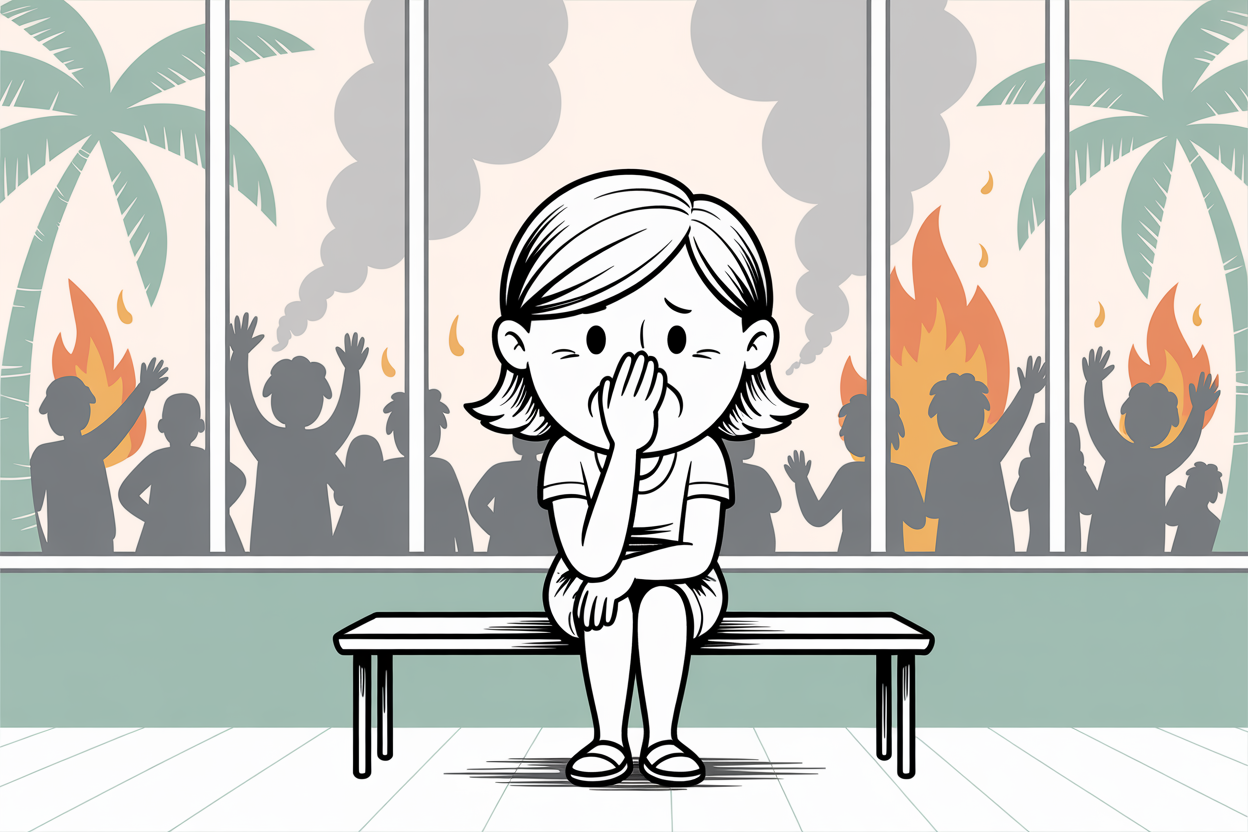
Illustration of a worried young traveler sitting inside an airport as smoke, flames, and panicked crowds appear outside the windows.

When your vacation turns dangerous: How do you know it’s time to leave?

Kate McCulley, a journalist based in Prague, knew it was time to leave Madagascar. Flights were getting canceled, protests had moved outside her hotel in Antananarivo, and the country was on the verge of a military coup. The police blanketed the neighborhood in tear gas. After several days of trying, she finally caught a flight to Réunion. Most travelers face a much harder version of her call. After months of planning and thousands of dollars spent, deciding whether to cut a vacation short when conditions shift is rarely simple. Civil unrest, a natural disaster, a sudden spike in crime, or a slow drift in local sentiment can each push a manageable risk toward a real threat. Government advisories often lag behind reality on the ground, tour operators have an interest in downplaying risk, and standard travel insurance generally will not cover a trip cut short on fear alone. There is no algorithm for the stay-or-leave decision, but security professionals point to clear early triggers that separate a manageable situation from a dangerous one, if travelers know what to watch for.

Editorial illustration showing four silhouetted figures with their hands raised to their heads in confusion or doubt, standing on concentric ring patterns and looking up at a large dark-blue globe of Earth with a giant white question mark hovering in front of it, illustrating how travelers are increasingly questioning the recommendations of professional travel experts in an age of paid influencers and commission-driven advice

Travelers are ignoring the advice of professionals. Here’s why that could be a mistake.

Travelers are increasingly skeptical of professional advice, ignoring travel agents who collect commissions, influencers paid by destinations, and points bloggers earning kickbacks from credit card companies. A Global Rescue survey shows 85 percent of travelers are concerned about geopolitical instability yet proceed with their plans despite the risks. Cautious skepticism is healthy when evaluating tourism-engine search results and influencer endorsements that dominate Google’s first page. But ignoring U.S. State Department advisories at Level 3 reconsider travel or Level 4 do not travel can lead to serious consequences. The chief medical officer at AXA Partners US says many travelers contract serious diseases and traumatic injuries in risky locations that were easily avoidable by following government advisories.