
in this commentary
- On Tahiti’s outer islands of Raiatea and Huahine, far from the overwater-bungalow postcard, sustainability is not a slogan. It is a rhythm of daily life set by the land and the tides.
- A woman given two months to live built an off-grid jungle kitchen and healed herself through a return to nature. A vanilla farmer works only half a day because the bean refuses to be rushed.
- These islanders measure wealth in a currency most travelers have forgotten how to spend, and the officials shaping Tahiti’s future are quietly betting your next trip on it.
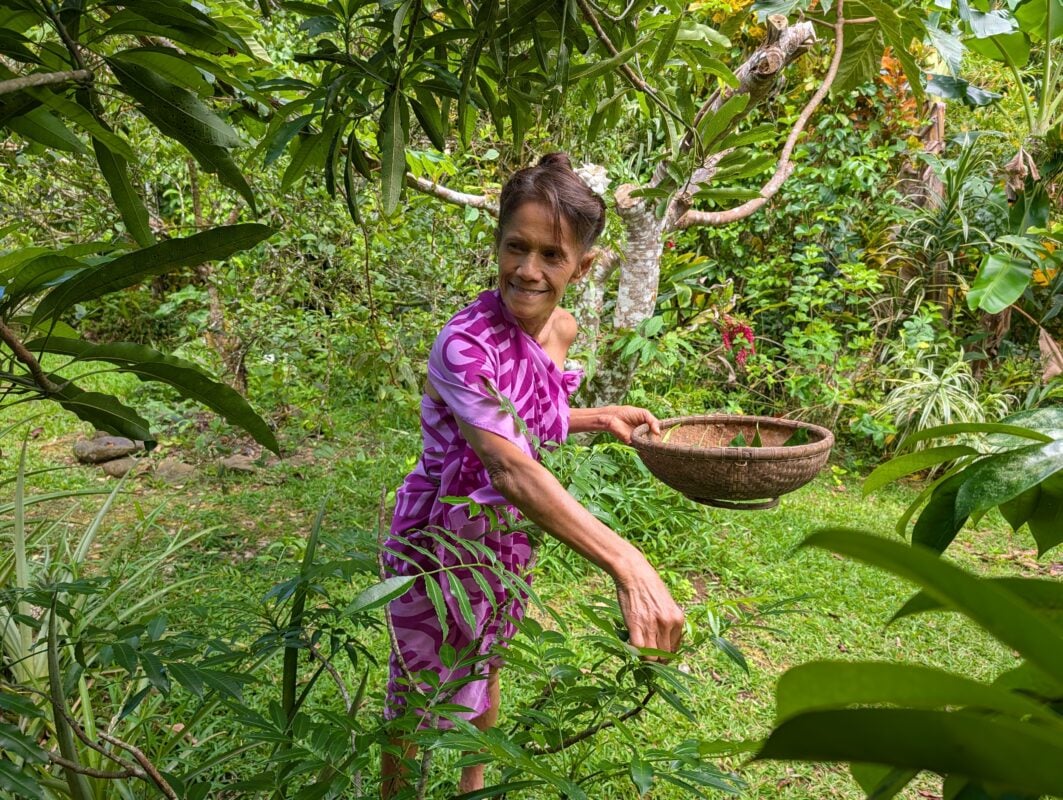
Vicky Tohopu’s quiche defies French tradition. She binds it not with butter and flour, but with a grated breadfruit shell harvested steps from her open-air kitchen. Inside there’s a fragrant mixture of coconut, basil, and lime pulled from the valley’s volcanic soil.
Under the table, a puppy named Cleopatra, marked by natural eyeliner, chews on a guest’s slipper.
“Everything is vegan,” Tohopu says.
She gestures to the jungle surrounding the NIU Shack on the island of Raiatea. The air smells of wet earth and heavy rain, worlds away from the manicured, overwater-bungalow fantasy of French Polynesia.
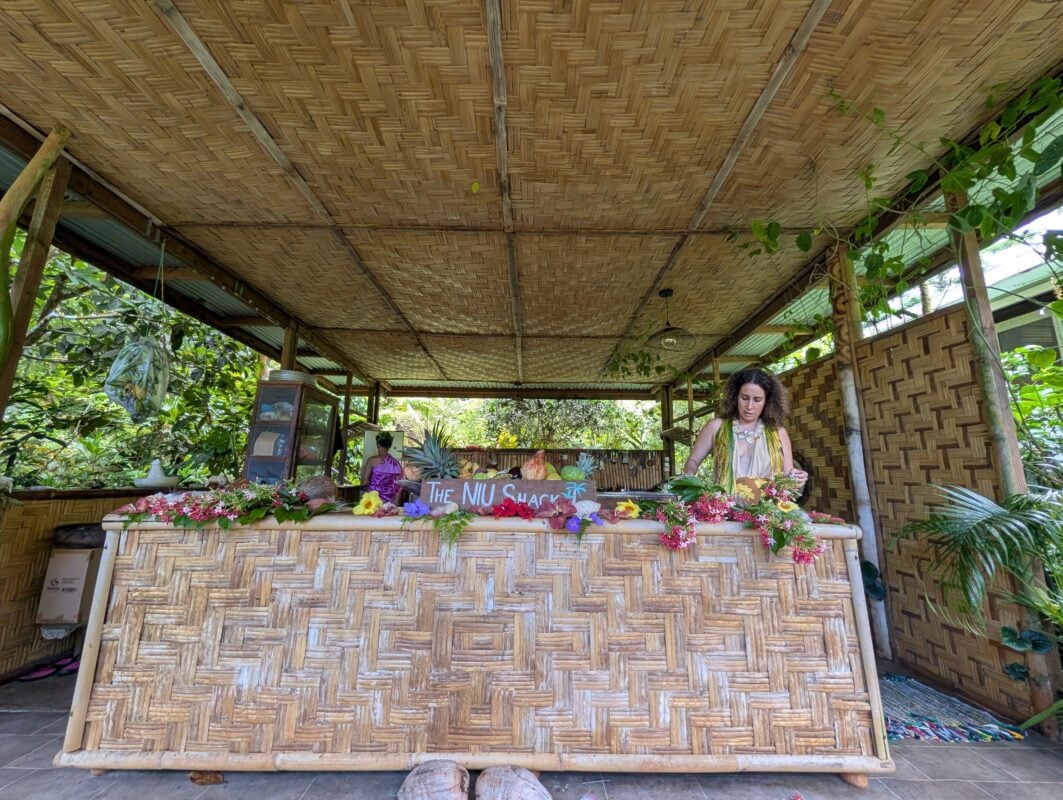
NIU Shack’s open-air kitchen in Tahiti. (Photo by Aren Elliott)
Survival in the mountains
Tohopu built this mountain refuge to survive. Fifteen years ago, doctors gave her two months to live. She rejected the diagnosis and returned to her ancestral land. She unplugged herself from the grid, installed solar panels, and pumped fresh water from the river.
She healed herself through a radical return to nature, and now she feeds visitors the proof: fresh coconut water that fizzes on the tongue like soda, a natural carbonation that occurs as the nut dries and the sugars turn.
“This is the beginning of the process,” she tells visitors who come for yoga and plant-based cooking. “The real change happens when you get back home.”
French Polynesia
Tahiti’s outer islands, where time moves differently
Click a marker to explore the places in this story.
Select a marker on the map to learn more about each location.
Raiatea
Island — French PolynesiaKnown as the sacred island of French Polynesia, Raiatea is the second largest of the Society Islands. It is home to NIU Shack, an off-grid mountain refuge founded by Vicky Tohopu, who rebuilt her health after a terminal diagnosis by returning to her ancestral land. The island anchors a way of life defined by solar power, fresh river water, and plant-based food grown steps from the kitchen.
NIU Shack
Sustainable destination — RaiateaVicky Tohopu’s open-air mountain refuge sits at the edge of a jungle valley, fully off the grid. Guests come for yoga, plant-based cooking, and fresh coconut water that naturally carbonates as the nut dries. “The real change happens when you get back home,” Tohopu tells visitors. Learn more at niushack.com.
Huahine
Island — French PolynesiaA short ferry ride from Raiatea, Huahine is an island where slowness drives the economy. It is famous for Tahitian vanilla, hand-pollinated and cured over months without shortcuts, and for ancient stone fish traps near the village of Maeva that have guided mullet and snapper into fishermen’s hands since 1888.
La Mao Vanilla Plantation
Agriculture — HuahineGuide Joe Maraama walks visitors through this working vanilla farm where the Pacific pace is law. The orchid vine requires three years to mature; farmers hand-pollinate it before noon and rub every bean by hand once or twice a week for four months during curing. Tahitian vanilla commands its global premium because farmers here refuse to hurry.
Maeva fish traps
Cultural heritage — HuahineNear the village of Maeva, ancient stone V-shaped fish traps cut across the shallows. Some date to 1888. No bait, no lines, no fuel: mullet, snapper, and parrotfish ride the high tide in, then find they cannot leave at low tide. The design is as efficient today as when it was built.
Tahiti Nui (Papeete)
Main island — French PolynesiaThe main island and capital, Papeete, is the administrative and tourism hub of French Polynesia. Tahiti Tourisme sustainability coordinator Erwin Eperania is working to reframe the island’s tourism future: “Sustainability is not just about conservation. It’s about respect for land, sea, and the people whose hands care for them.” More at tahititourisme.com.
Tohopu offers a hard reset. It is a sustainability measured not in carbon credits, but in human survival.
A different reality thrives on Tahiti’s outer islands. Here, sustainability is not a slogan, but a rhythm of life dictated by the land and the ancestors. In a world obsessed with speed and efficiency, these islanders believe real resilience requires a different currency entirely: patience.
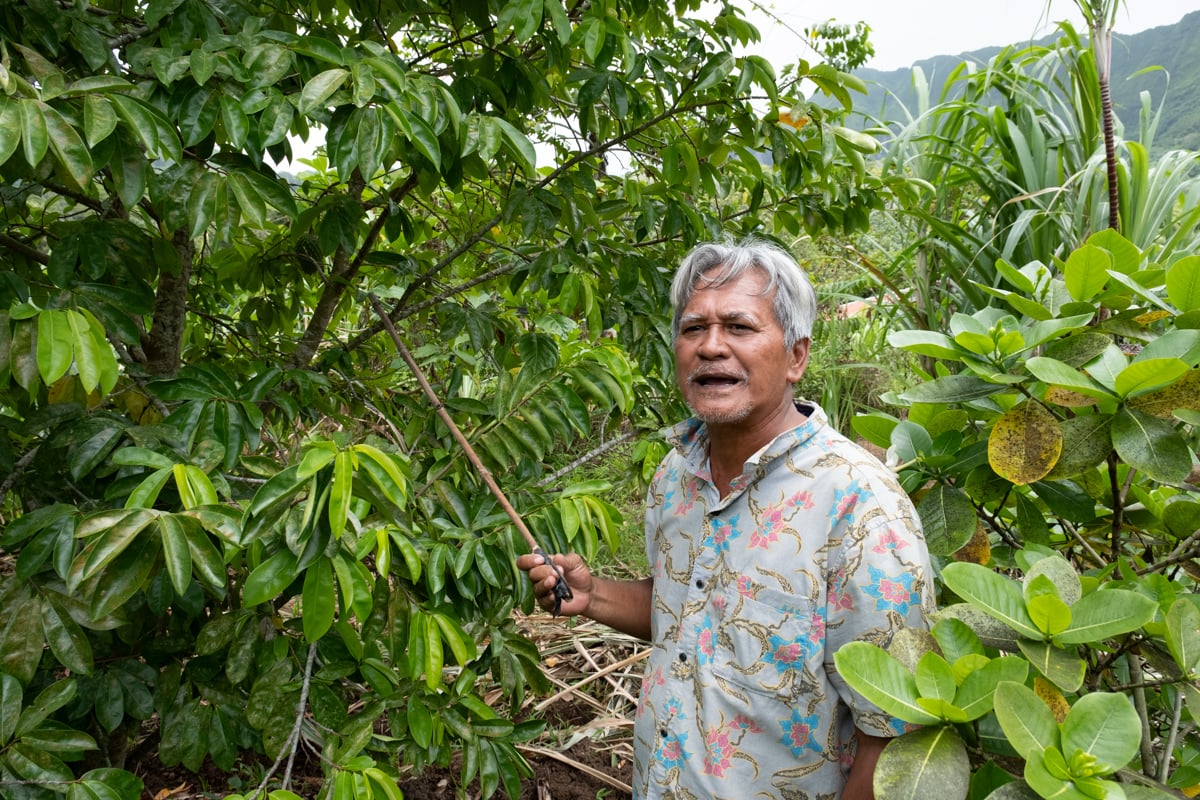
Joe Maraama guides visitors through a fruit farm on the Tahitian island of Huahine. (Photo by Aren Elliott)
The rhythm of the vanilla bean
On Huahine, a short ferry ride from Raiatea, slowness drives the economy.
On a plastic folding table at the La Mao plantation, the air is heavy and fragrant. Joe Maraama, a guide with a comedian’s timing, holds up a dark, wrinkled pod. Vanilla refuses to be rushed. The vine demands three years to mature. When the orchid finally blooms, it opens only in the morning; farmers must pollinate it by hand before noon. This clock dictates the island’s rhythm.
“You work only half a day,” Maraama says. “No rush.”
Locals surrender the afternoon to the Pacific pace: fishing, swimming, drinking beer, playing ukulele.
Harvest deepens the commitment. Beans can’t simply bake in the sun. Farmers have to cure them for three hours a day over four months to capture the flavor. Then, to distribute the oils and texture, farmers rub every bean by hand once or twice a week.
Maraama grins and pantomimes the motion. “One massage, one shot,” he laughs, referencing the local brew, Hinano Beer.
Tahitian vanilla commands a global price because farmers won’t hurry. Its value lies not just in flavor, but in the refusal to trade quality for speed.
Interesting question, give up air conditioning for a slowcation. It would depend. A scorching summer in Greece, I will take the A/C. Summer in Polynesia, I will happily give up A/C for the peaceful tradewinds and island time. I was on Easter Island where wifi was only available for brief periods when a satellite passed overhead. Jarring the first day, but by the second I was happy to wander among the moai and actually think about why and how they got there, rather than rush to Google. Sometimes a holiday where sustainability and the local pace of life is exactly what I want, or need.
Read more insightful reader feedback. See all comments.
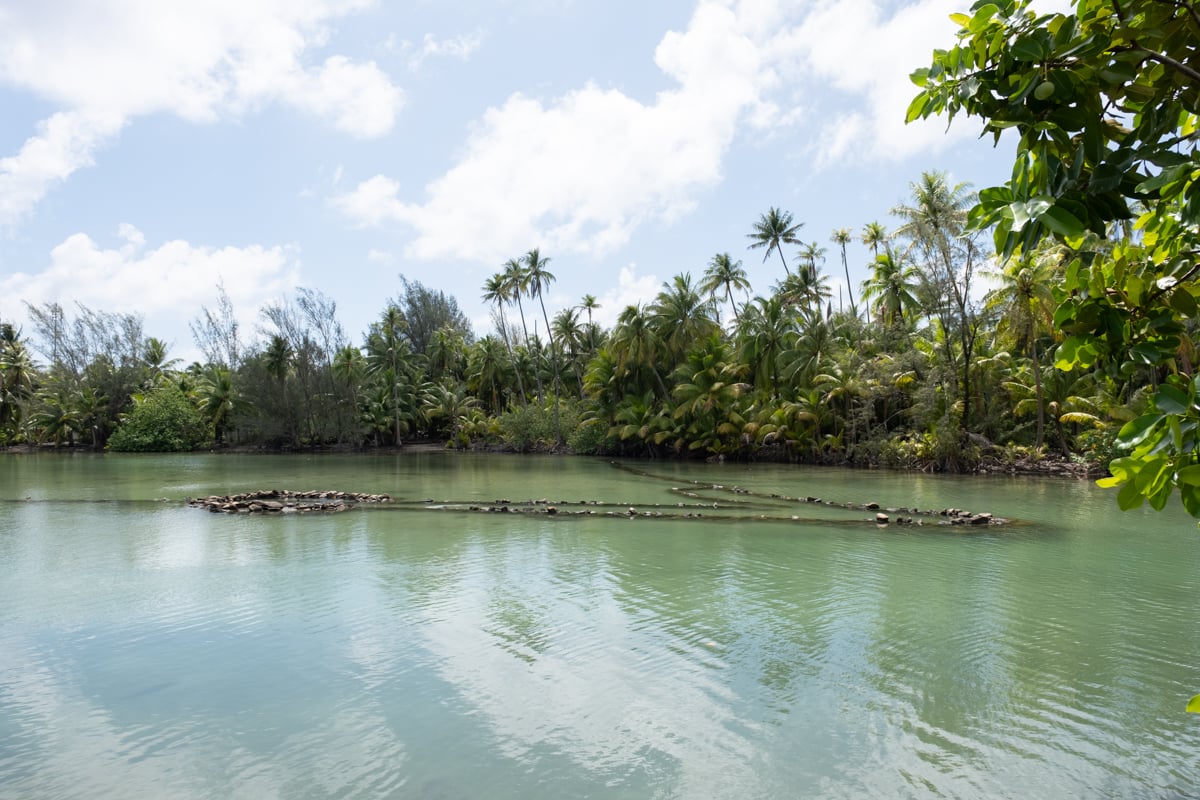
This ancient fish trap is a hallmark of the tradition of sustainability in Tahiti. (Photo by Aren Elliott)
Waiting for the tide to turn
Huahine’s landscape proves that working with the environment is better. Near the village of Maeva, ancient stone V-shapes cut across the water. These fish traps, some dating to 1888, catch mullet, snapper, and parrotfish riding the high tide back to the sea.
They require no bait, no lines and no fuel.
“The fish come in at high tide,” Maraama says. “At low tide, they can’t go out.”
This sustainable technology lets the fisherman sit back with a cooler of beer for 30 minutes. The ocean delivers dinner.
Ancestral practice meets modern living
Erwin Eperania, the sustainability coordinator for Tahiti Tourisme, says Tahiti is looking beyond carbon footprints on the outer islands.
“Sustainability is not just about conservation,” he says. “It’s about respect for land, sea, and the people whose hands care for them.”
The government moves to protect this fragile economy of patience. It has applied for a Protected Geographical Indication (PGI) to shield the hand-massaged Tahitian vanilla bean from cheap global rivals.
Tahiti is also rewriting your itinerary. Officials encourage tour operators to send visitors to off-grid spots like the NIU Shack, perhaps to prove that luxury does not require air conditioning.
Yet challenges remain. Fresh water is scarce, and trash gets shipped back to Tahiti Nui.
Eperania offers a spiritual directive: “Let the Mana of each island set the pace.”
(Mana is a sacred force that embodies the life and spirit of the islands, the people, and the culture.)
Tourism officials hope travelers will stop rushing and settle into the local rhythm.
“When travelers slow down,” Eperania adds, “they leave a lighter footprint.”
On Raiatea and Huahine, locals measure their worth differently. They trade quick profit for quality, and connectivity for patience. The price of paradise is not a room rate. It is the willingness to slow down to massage a bean, or wait for the tide.
Your voice matters
The outer islands ask travelers to trade speed and connectivity for patience. We would love to hear how that idea lands with you and your own travels.
- Have you ever taken a trip that forced you to slow down, and did it change how you traveled afterward?
- Would you choose an off-grid stay with no air conditioning or wifi if it meant a deeper sense of place?
- What does sustainable travel mean to you: carbon math, respect for local culture, or something else entirely?
What you need to know about visiting Tahiti’s outer islands
Raiatea and Huahine offer a slower, more sustainable side of French Polynesia. Here is what travelers should understand before they go.
They are outer islands of French Polynesia, part of the Society Islands, reachable from the main tourist hubs. Huahine sits a short ferry ride from Raiatea. Both are quieter and less developed than the famous overwater-bungalow resorts, with daily life still shaped by the land and sea. Sustainability here is built into how people live rather than marketed as a feature. Off-grid kitchens run on solar power and river water, vanilla is cured slowly by hand, and centuries-old stone fish traps catch dinner using only the tides, with no bait, lines, or fuel. The NIU Shack is an off-grid, open-air kitchen on Raiatea run by Vicky Tohopu, who built it as a mountain refuge and serves an all-vegan menu drawn from the surrounding valley. Visitors come for plant-based cooking and yoga in a setting far removed from a typical resort. Because farmers refuse to rush it. The vine takes about three years to mature, the orchid must be pollinated by hand in the morning, and the beans are cured for hours a day over months and hand-rubbed regularly. That labor and patience, not just the flavor, is what gives the bean its global value. Near the village of Maeva, stone V-shapes cut across the water, some dating to the 1800s. They catch fish like mullet, snapper, and parrotfish on the tides, requiring no bait, lines, or fuel. They are a working example of technology designed to cooperate with the environment. Not necessarily. Officials are encouraging off-grid stays specifically to show that luxury does not require air conditioning. Travelers who come expecting a slower, less connected experience tend to get the most out of these islands. Slow down to the local pace, support hand-made local products, and tread lightly, since fresh water is scarce and trash is shipped back to the main island. Letting the rhythm of each place set your schedule leaves a lighter footprint. For more trip-planning help, see our consumer guides for smarter travelers.Where are Raiatea and Huahine?
What makes these islands a sustainable destination?
What is the NIU Shack?
Why is Tahitian vanilla so expensive?
What are the ancient fish traps on Huahine?
Do I need air conditioning or wifi on the outer islands?
How can I travel here responsibly?

Have a question about this story? Tell us what happened — we read every comment.
Join the conversation