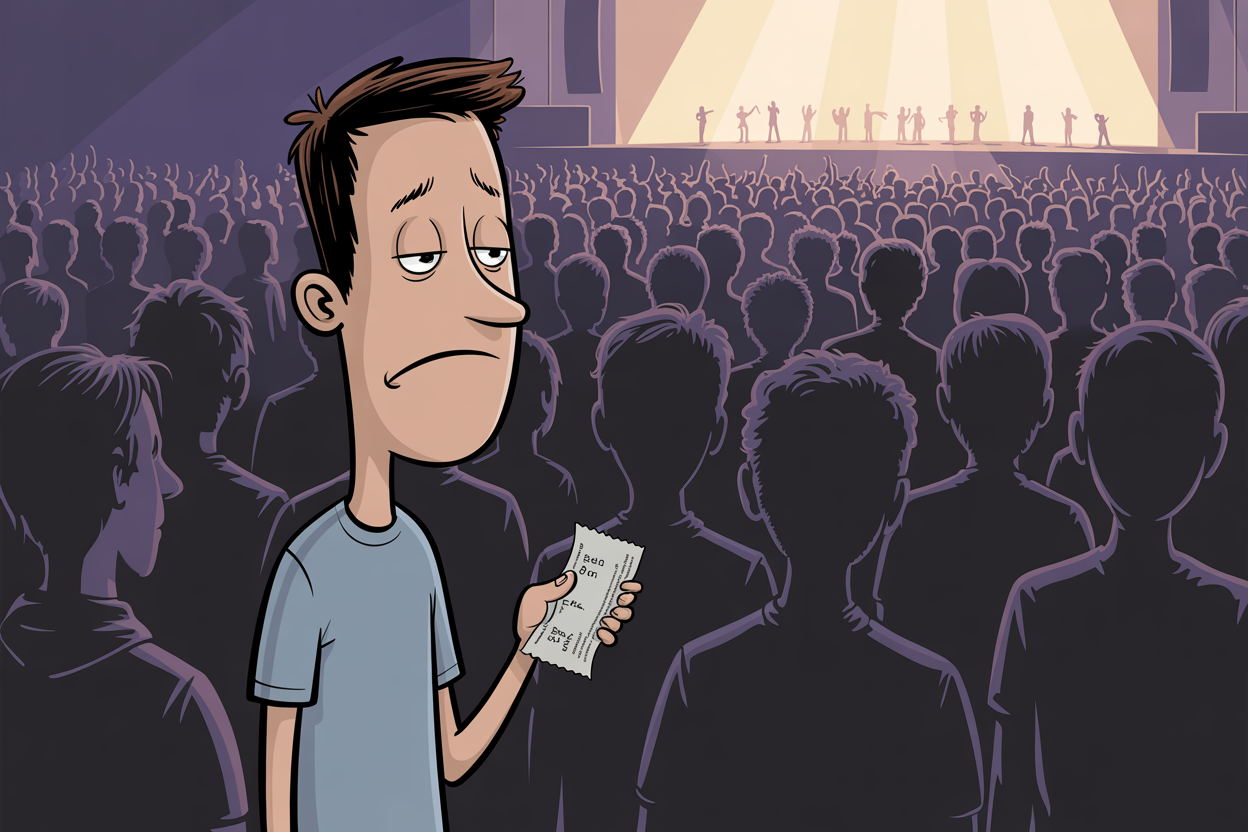
Cartoon of a disappointed concertgoer holding a ticket stub while standing in a packed crowd far from a brightly lit stage where performers appear as tiny distant figures.

SeatGeek promised first-row seats. I got section G instead!

Sean Thomas paid SeatGeek $2,744 to see The Weeknd, and the listing made the value clear: premium floor seating in the first five rows, plus a special VIP merchandise bundle. Then the tickets arrived. They were for Section G, a long way back from the stage, and the VIP package did not match the terms SeatGeek’s own rules require. When he complained, the answers kept shifting. First a representative told him “first five rows” actually meant a general zone, not literal rows. When he disproved that, the company redefined the stage itself, suggesting runways now count as part of it, and then uploaded a brand-new seat map after he filed his complaint. His Buyer Guarantee was supposed to protect him against exactly this. What happened when he invoked it, and what SeatGeek finally said about his $2,744, is where the case turns.
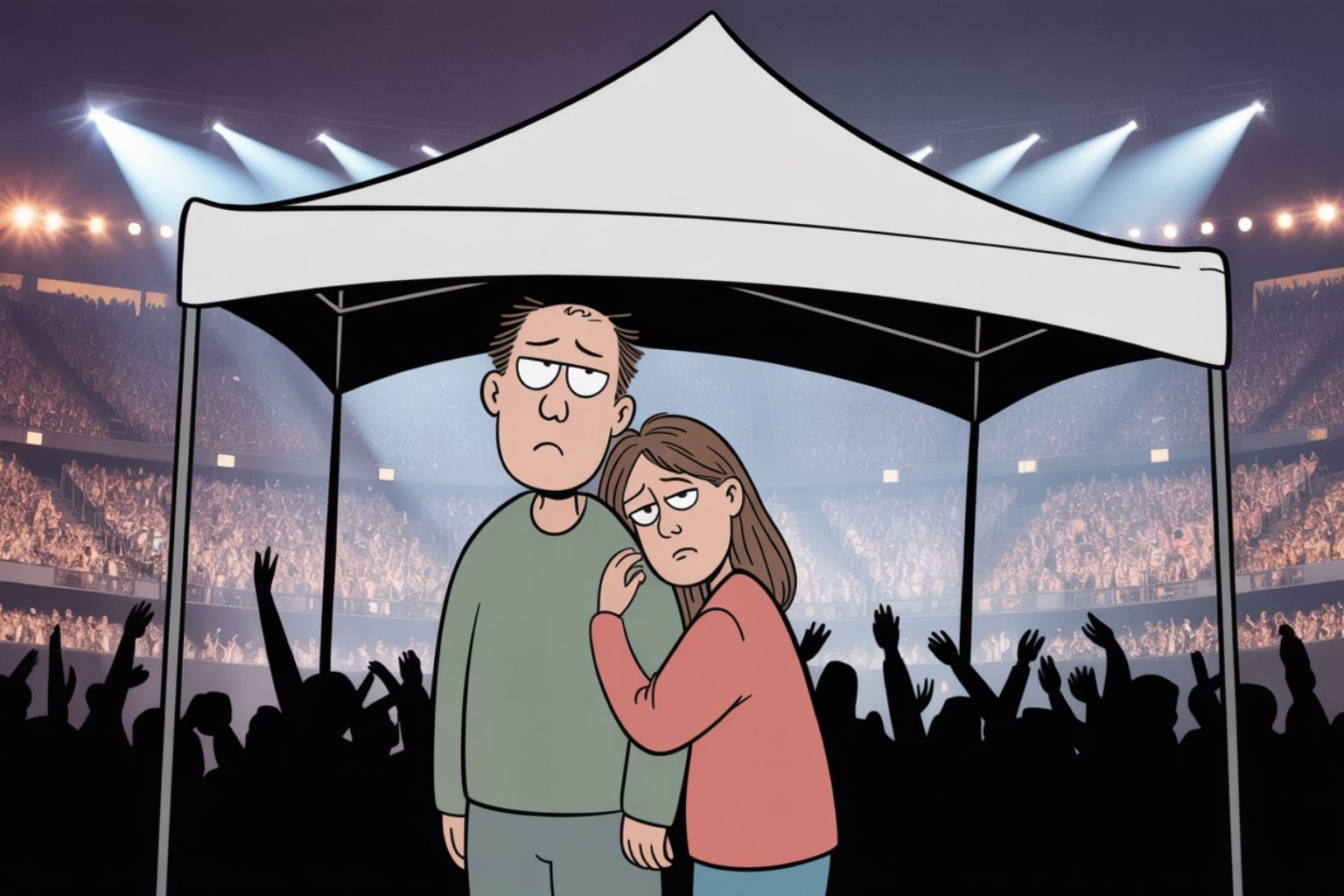
Illustration showing a frustrated couple standing under a large white VIP tent at a concert venue, with the tent blocking their view of the illuminated stage and crowd in the background, depicting how Ticketmaster sold premium second-row seats without disclosing the view obstruction

Ticketmaster sold me “great seats” that turned out to be obstructed. Where’s my refund?

Vincent Manierre paid $475 each for second-row Oasis concert tickets at the Rose Bowl, expecting a clear stage view. A VIP tent blocked one-third of the stage. The tickets were not labeled obstructed view despite Ticketmaster’s stated policy requiring such disclosure. Ticketmaster refused a refund, claiming the event organizer controls refunds but would not reveal who that organizer is. Under Federal Trade Commission rules, selling tickets without disclosing obstructions when company policy promises such labeling can constitute deceptive trade practices.