in this case
- Patrick Bruce booked Condor Airlines flights through Orbitz for his family, with the website explicitly listing Economy Classic fares that included one free 70-pound checked bag for both legs, confirmed in the itinerary.
- Condor’s email revealed the return flight was actually booked as Economy Zero with no checked bags, and the outbound baggage allowance was only 50 pounds, not 70 — forcing Bruce to pay $540 for three return-flight bags he was promised for free.
- Despite repeated contacts via chat, Orbitz blamed its booking platform TravelFusion and directed Bruce to contact Condor, while Condor confirmed the fault lay with Orbitz’s inaccurate listing and nothing had changed post-booking.
Patrick Bruce books flights through Orbitz with “free” checked bags — only to learn the airline’s ticket includes no such perk. Who’s responsible for his $540 baggage fee shock?
Question
I booked a Condor Airlines flight from Portland to Frankfurt through Orbitz for my family. Orbitz’s website explicitly listed the fare as Economy Classic, which included one free 70-pound checked bag for both legs. The confirmation itinerary confirmed this.
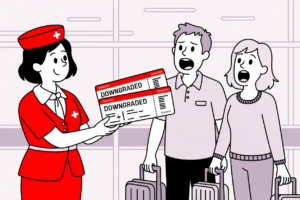
But Condor’s email showed something different: Our return flight was booked as Economy Zero — with no checked bags included. Worse, the outbound flight’s baggage allowance was listed at 23kg (50 pounds), not the 70 pounds Orbitz stated.
I contacted Orbitz repeatedly via chat. After days of delays, it directed me to Condor, which confirmed nothing had changed post-booking. The fault lay with Orbitz’s inaccurate listing.
The technical disconnect between Orbitz, TravelFusion, and Condor Airlines is a classic API mapping error. When an aggregator incorrectly flags an “Economy Zero” ticket as “Economy Classic” in its front-end UI, it is a failure of data integrity.
Under Department of Transportation regulations, the agency responsible for the display is legally liable for the misinformation, regardless of which backend platform provided the flawed data.
Read more insightful reader feedback. See all comments.
Orbitz blamed TravelFusion, its booking platform, and stonewalled me with cookie-cutter replies to “contact the airline.” When I threatened to report it for fraud, Orbitz doubled down on deflection.
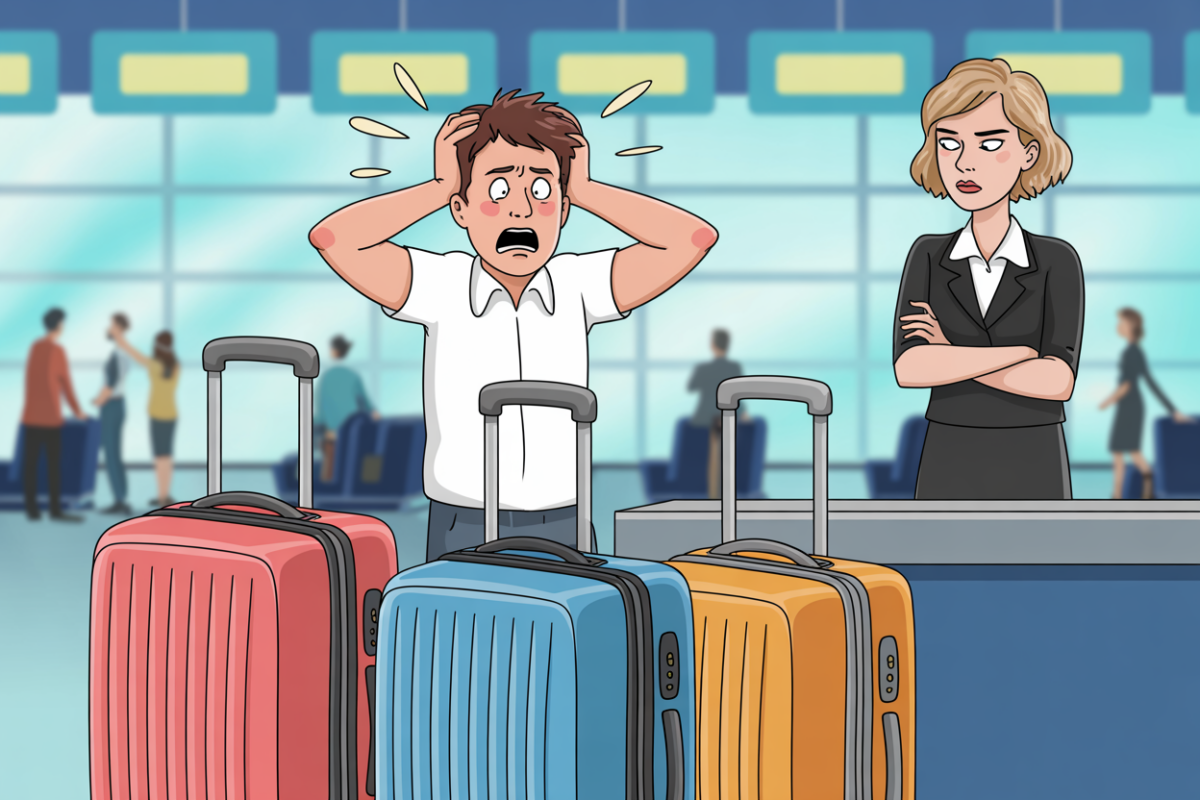
I paid $540 for three return-flight bags I was promised for free. Orbitz must honor its advertised fare and reimburse me. Can you help? — Patrick Bruce, Troutdale, Ore.
Answer
Orbitz should have stood by its advertised fare — no excuses. When an online travel agency displays specific amenities like baggage allowances, it’s legally obligated to honor them under the Department of Transportation regulations, which prohibit “deceptive or misleading” fare descriptions. Orbitz’s own itinerary listed Economy Classic with a free checked bag. Orbitz, and its parent company Expedia, can’t pass the buck to Condor or TravelFusion.
You handled this by the book. You checked airline policies before booking, preserved your correspondence, and escalated calmly. I have two recommendations. First, when you make a booking, always take screenshots in case the confirmation doesn’t match up with the booking screen. (Related: Avis charged me $250 for smoking weed in my rental car. But I don’t even smoke!)
Also, as a sidenote, there’s no such thing as a “free” bag. Whether it’s included in your fare or it’s a benefit of your credit card, you are paying for it.
You could have also escalated this to Orbitz’s executive contacts. I list them on my consumer advocacy site, Elliott.org.
My advocacy team contacted Expedia Group on your behalf. A spokesperson admitted, “The baggage information provided by the airline may have been unclear.” Expedia says it’s working with Condor to “clarify” the baggage details.
Orbitz says your flight did not include a checked bag, but agreed to reimburse your $540 as a courtesy.
Online agencies like Orbitz profit by aggregating airfares. But when they misrepresent those airfares, they should own the fallout. As I’ve noted before, cases like yours rarely end well. When airlines and online agencies finger-point, you often pay the price. But not this time.
Your voice matters
Patrick Bruce booked flights through Orbitz that explicitly advertised Economy Classic fares with free 70-pound checked bags. But Condor’s confirmation showed Economy Zero with no bags included, forcing him to pay $540 for baggage that was promised for free.
- Should online travel agencies be legally required to honor the baggage allowances and amenities they advertise, regardless of what their booking platforms or partner airlines claim?
- When there’s a discrepancy between what an online travel agency advertises and what the airline delivers, who should be financially responsible — the agency that made the promise or the customer who trusted it?
- Have you ever been charged for baggage or amenities that were listed as included when you booked through an online travel agency?
What you’re saying
Readers reached a strong consensus: third-party booking sites are no longer worth the risk. While some debated the legal nuances of pricing errors, most agreed that an online travel agency must own the promises it displays on its checkout screen.
-
The “book direct” drumbeat
Commenters including CasaAlux, Pattipeg Harjo, and Joe X pleaded with fellow travelers to stop using online travel agencies (OTAs). They argued that saving a few dollars upfront rarely justifies the massive headaches caused by third-party communication failures.
-
A “courtesy” or a legal obligation?
M.C. Storm and George Schulman criticized Orbitz for framing the $540 refund as a “courtesy.” Miles Will Save Us All called the mismatched baggage allowance a classic bait-and-switch, while The Brown Crusader noted that DOT regulations make the booking platform legally liable for its front-end display, regardless of API errors from backend systems like TravelFusion.
-
The “fat finger” debate
Taking a contrarian view, Berkinet warned against forcing companies to honor every advertised mistake. They pointed out that if we demand zero mercy for corporate technical glitches, consumers must also give up their right to beg for refunds when they make their own “fat finger” booking errors.

Have a question about this story? Tell us what happened — we read every comment.
Join the conversation