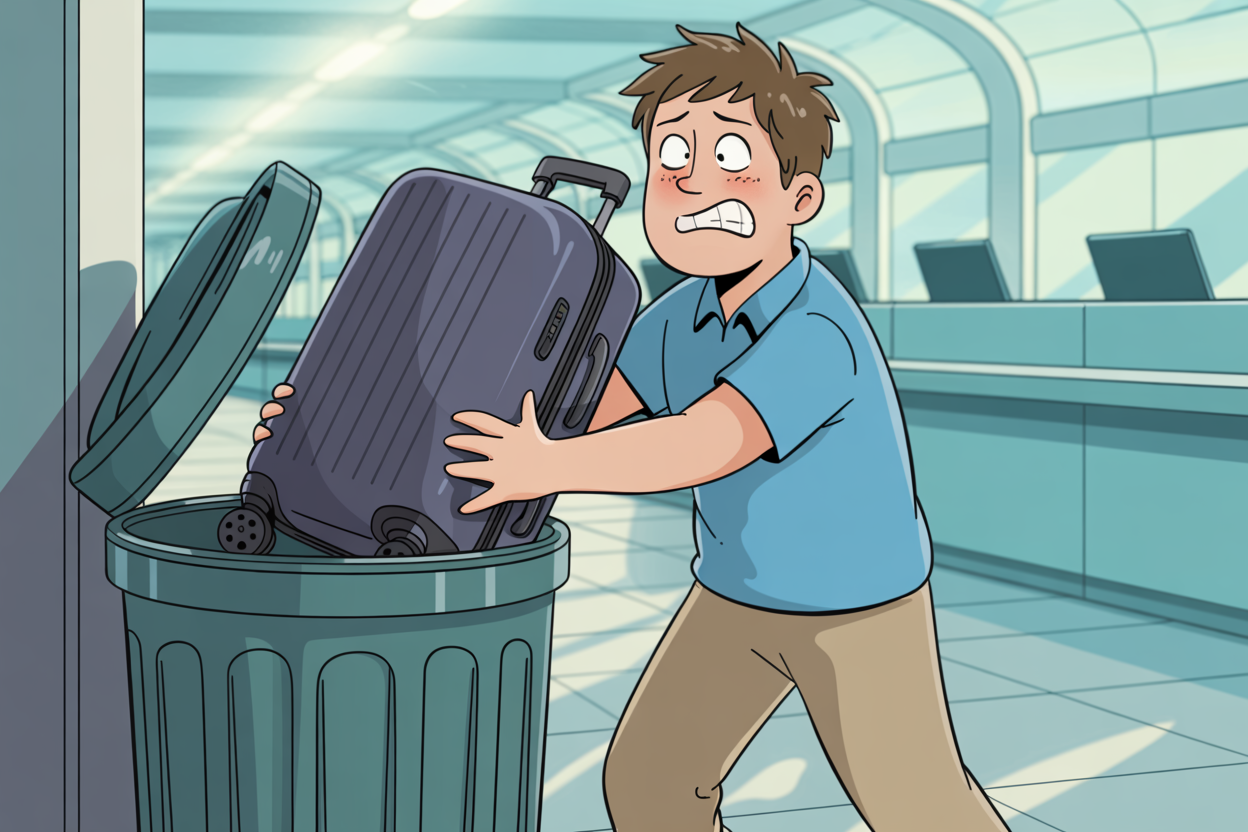
Editorial cartoon showing an anxious traveler in a blue polo shirt grimacing as he stuffs a large purple roller suitcase into an open green airport trash can, with empty seating areas and large glass windows visible in the background, illustrating the increasing trend of travelers abandoning their luggage at airports to avoid baggage fees

The great luggage abandonment: Why travelers are ditching their bags at the airport

Travelers are increasingly abandoning their luggage at airports and hotels to avoid baggage fees that can exceed the value of the bags themselves. Hotels in Tokyo and Osaka now post warning signs about luggage abandonment fees while Narita Airport reportedly stores dozens of unclaimed bags daily. Kansai Airport in Osaka and Chubu Airport in Nagoya report similar pile-ups. Asian carriers known for strict baggage fee enforcement contribute to the trend, along with Japanese tourists buying cheap rolling luggage for shopping trips and abandoning it before flying home. Airports hold abandoned bags 30 to 90 days before disposal.

Editorial illustration of an elderly man standing alone at the bright orange wooden door of a blue-toned classic French apartment building with wrought iron balconies, depicting Alan Nathan waiting for his missing luggage in Neuilly-sur-Seine after Luggage Forward and FedEx claimed phantom delivery

Luggage Forward promised to deliver my luggage. Instead, it delivered disappointment!

Alan Nathan paid Luggage Forward $1,400 to ship four bags from Sonoma, California to Neuilly-sur-Seine, France, including his wife’s critical medical equipment. The premium service offered an on-time guarantee promising double the shipping fee for late deliveries. The shipping company asked for documents showing arrival into Ireland despite the clearly stated French address. FedEx then marked the bags as delivered and signed for by someone named Lou Ann, but Nathan’s building has no front desk and the concierge confirmed no contact from any delivery driver.

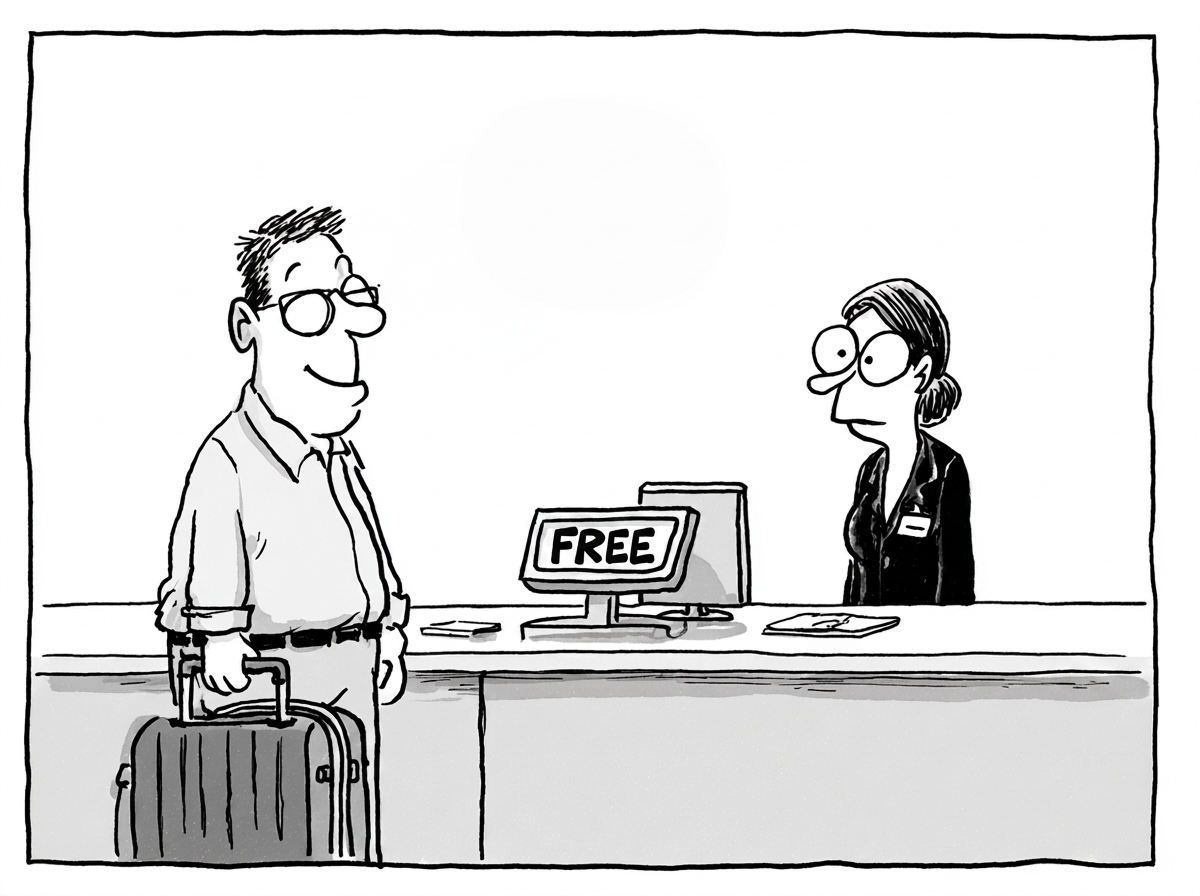
Editorial cartoon showing a smiling passenger with glasses holding a rolling suitcase at an airline check-in counter, where the agent's computer screen displays the word "FREE," illustrating the proposal to make checked bags free as a condition of any Spirit Airlines government bailout

If Spirit Airlines gets a government bailout, bags should fly free

Spirit Airlines has reportedly asked the Trump Administration for $360 million in emergency funding as jet fuel prices doubled following the Iran conflict. After 9/11, Congress provided $5 billion in grants and $10 billion in loan guarantees to airlines. The COVID-19 Payroll Support Program delivered over $50 billion with conditions including killed change fees, capped executive pay, and restricted buybacks. Any new bailout should require Spirit to include one free checked bag in every fare for a minimum of five years, making taxpayer support deliver tangible passenger benefits.

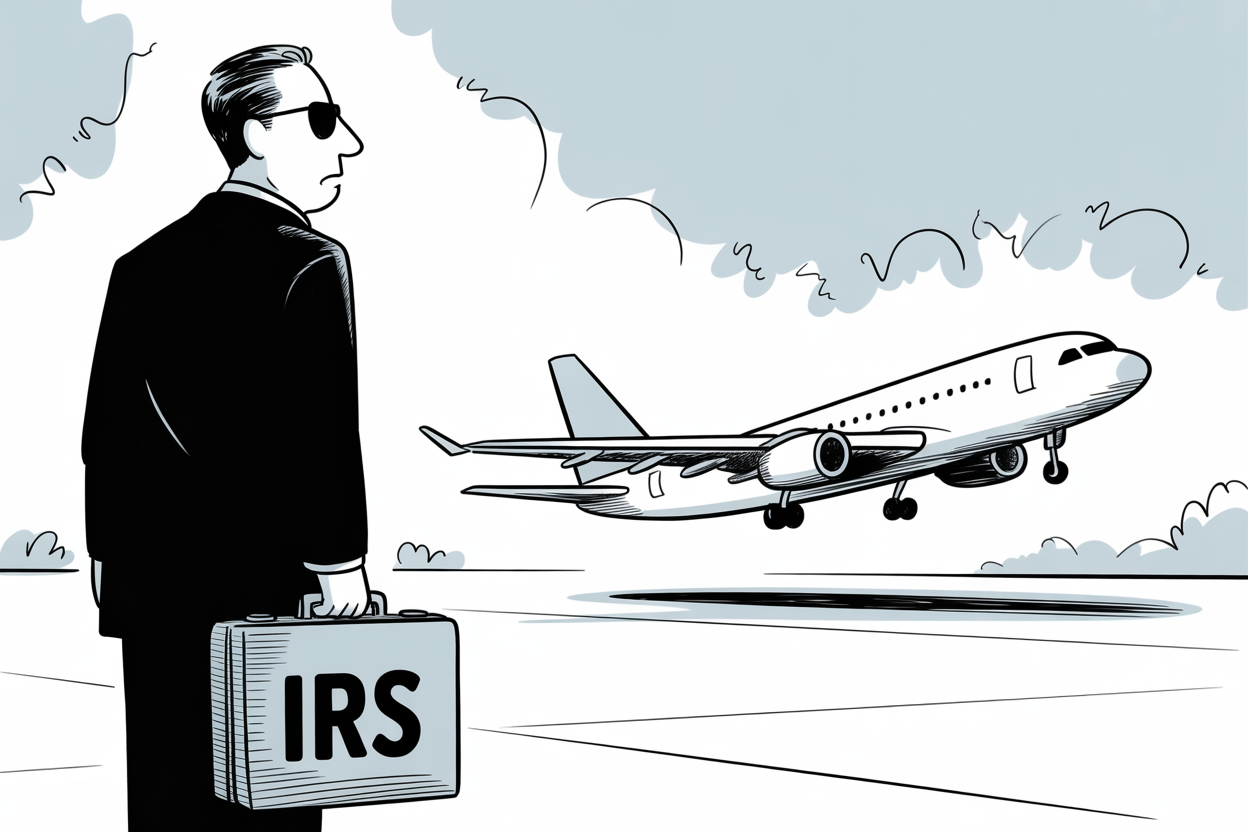
Editorial cartoon showing an IRS official in a dark suit holding a briefcase labeled "IRS" watching a commercial airplane taking off, depicting the tension between tax authorities and budget airlines seeking a tax holiday during the jet fuel crisis

Budget airlines want a tax holiday—but where’s yours?

The Association of Value Airlines, representing Spirit, Frontier, and Allegiant, is asking Congress to suspend the 7.5 percent federal excise tax on domestic tickets and the $5.30 per-segment fee, citing the jet fuel crisis following the Iran war. On a typical $369 roundtrip fare, passengers already pay roughly $47 in mandatory taxes and fees, inflating ticket prices by about 13 percent. Without a requirement to pass savings to consumers, any tax holiday would function as a corporate subsidy rather than traveler relief.

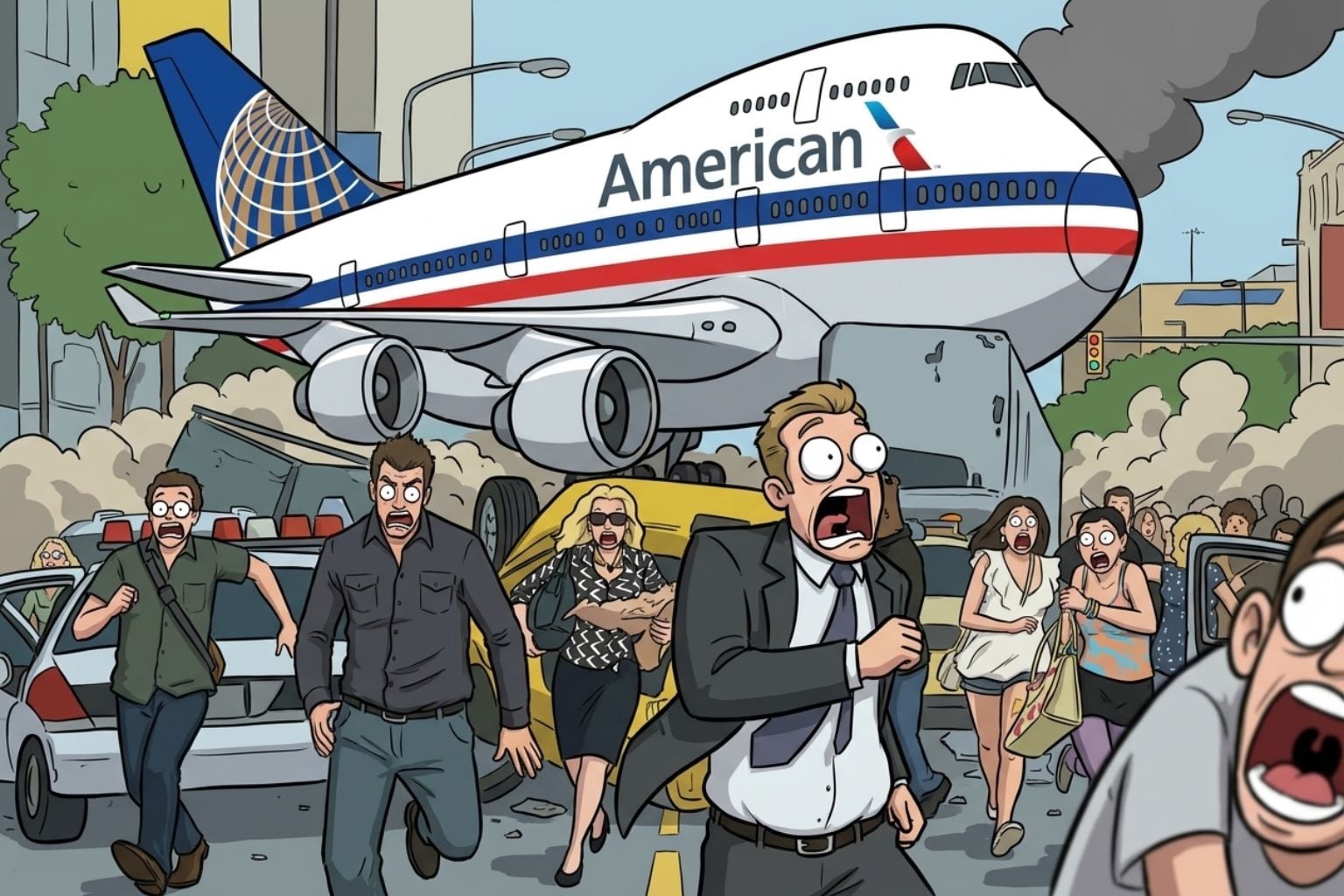
Editorial cartoon illustration of shocked and panicked travelers running away from an enormous airplane featuring both American Airlines red-white-blue livery and United Airlines globe logo, symbolizing consumer anxiety about the proposed United-American Airlines merger that would control 40% of the U.S. market

Should we allow United and American to merge?

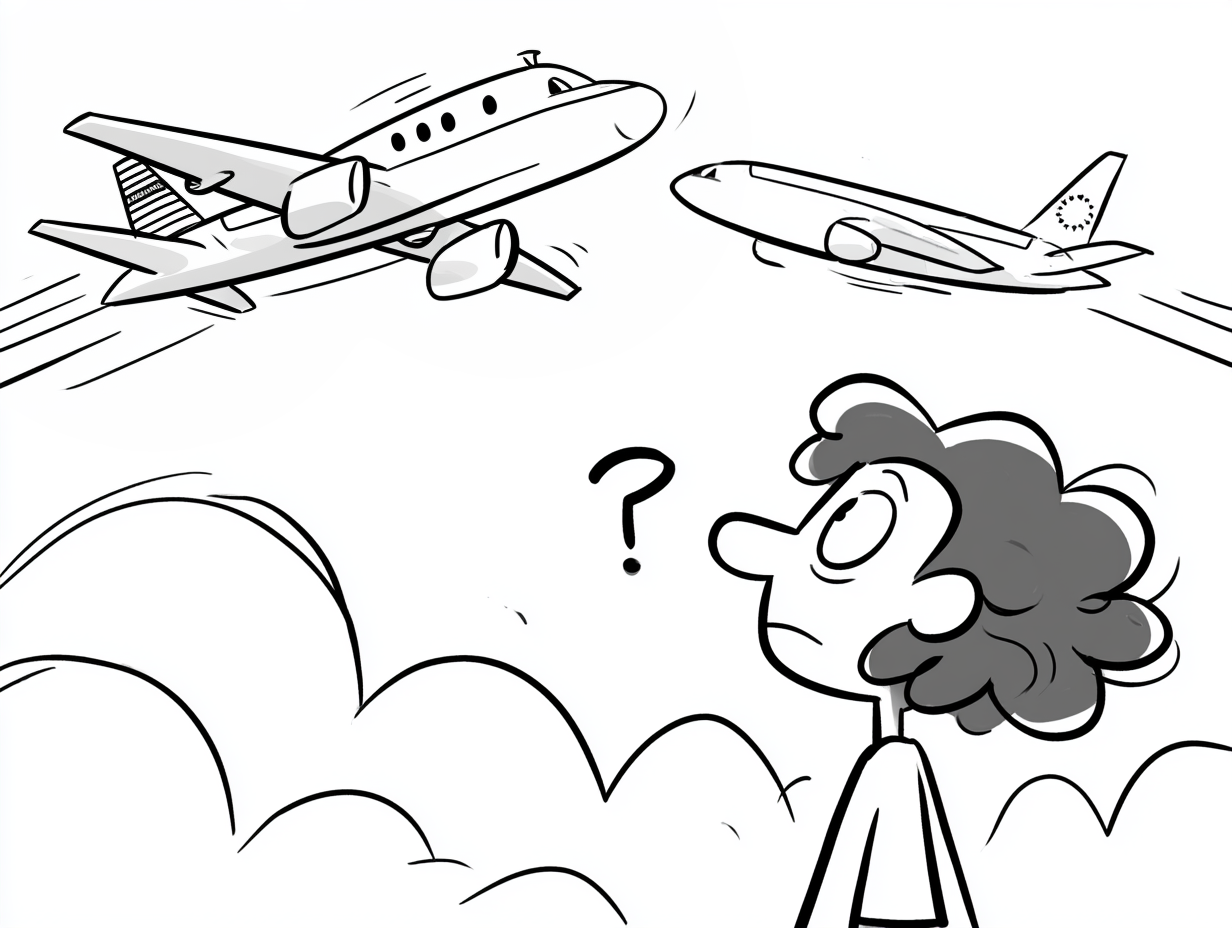
The United Airlines–American Airlines merger everyone feared may actually be happening.

United Airlines CEO Scott Kirby reportedly met with administration officials at the White House in February to float an audacious proposal: a combination with American Airlines.