in this commentary
- A look at how travel companies are using AI to automatically bill you for rental car damage, in-room infractions, and higher airfares.
- An analysis of how these automated systems can make mistakes and why the burden of proof is shifting to the consumer.
- Actionable strategies you can use to protect yourself from AI-powered price hikes and false damage claims.
Worried about every little ding on your rental car? Do you always go into “anonymous” mode on your web browser before booking airline tickets?
If you do, then you probably have AI anxiety.
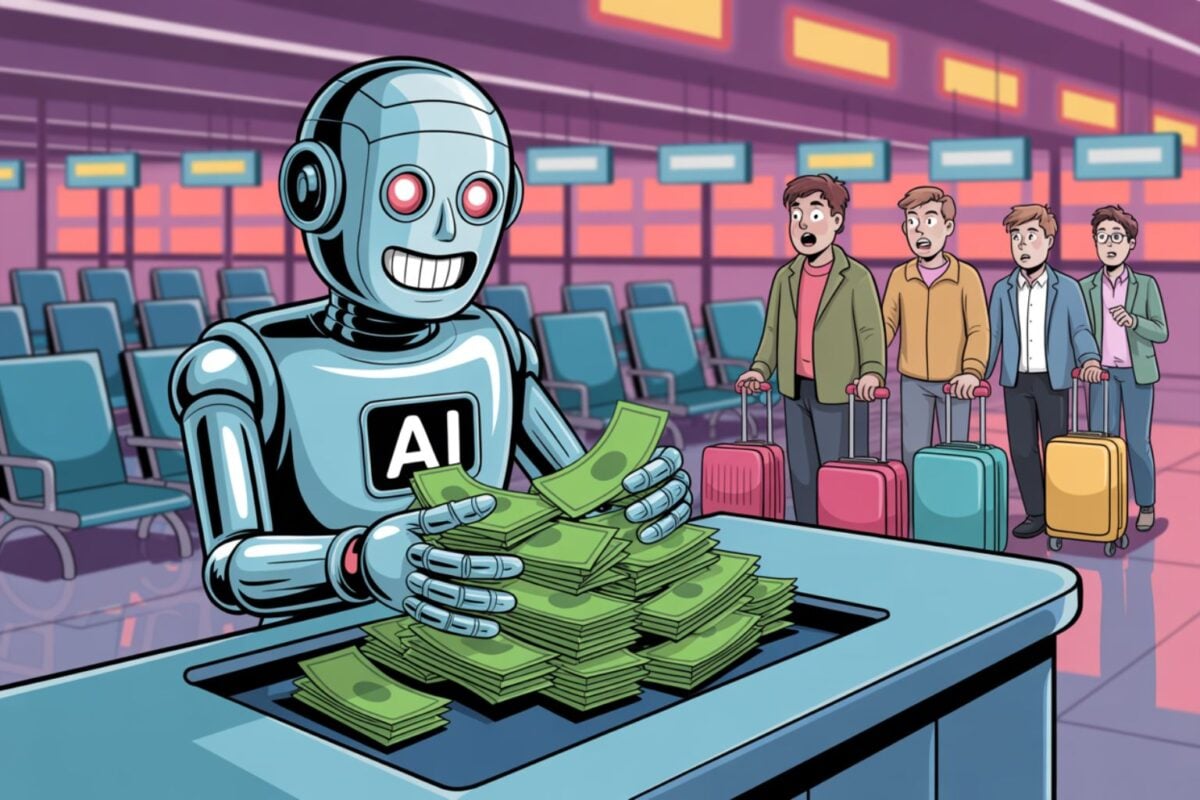
Travel companies are quietly deploying artificial intelligence systems, creating an invisible web of automated billing that can cost you hundreds or thousands of dollars—often without your knowledge or consent. From Hertz’s controversial AI vehicle scanners to hotel vapor detectors that fine guests when their hairdryers overheat, to airline pricing algorithms that jack up fares based on your browsing history, these systems operate in the shadows while your wallet takes a hit.
“Technology can make travelers feel powerless,” says Raymond Yorke, a spokesman for Redpoint Travel Protection. “It’s happening now. We’ve seen everything from automated rental car damage claims to a suspicious surge in airfare driven by dynamic pricing algorithms.”
But it doesn’t have to stay that way.
The technology promises efficiency and fairness, but travelers are discovering that AI often acts more like a digital pickpocket than an impartial assistant. The systems flag false positives, make decisions without human oversight, and shift the burden of proof onto customers who have to defend themselves against algorithmic accusations.
Where are the AI traps?
Rentals have become ground zero for AI overreach. Companies like Hertz are using technology from a company called UVeye that can reportedly detect paint inconsistencies and minor damages down to a millimeter level.
But critics say these systems can’t always distinguish between existing scratches, dirt or lighting changes, and genuine new damage. And car rental companies bill customers automatically, with limited avenues for appeal.
Legal consultant and AI specialist Nicola Cain notes that human intervention only happens when a customer raises a complaint, meaning the AI’s judgment stands unless you fight back. It should be the other way around, she says. (Related: Smart hotel room syndrome: Is technology making your accommodations unusable?)
“Human oversight needs to be built into the process,” she adds.
Hotel chains are installing sophisticated sensor networks that go far beyond traditional smoke detectors. These systems monitor vapor particles, noise levels, occupancy counts, and even Wi-Fi usage patterns.
The systems are far from perfect. Ruth Cruz recently got hit with a $250 fee for smoking in her hotel room. She says the AI registered a false positive.
Have you been hit with a surprise charge you suspect was generated by an automated system? Do you think this technology makes travel more efficient, or is it just a new way for companies to make money?
And what are your best tips for protecting yourself from these AI traps?
Share your thoughts in the comments.
“I successfully disputed the charge by explaining the technical limitations of their detection system,” says Cruz, who edits a technology website in San Jose. (These types of errors are easy to find with a little sleuthing. Hers involved a quick online search.)
Airlines are perfecting the art of AI-powered price manipulation. For years, their systems have tracked your search history, location, device type, loyalty status, and dozens of other signals to predict your willingness to pay premium prices. AI is supercharging that practice.
Thomas O’Shaughnessy, a marketing executive from St. Louis, has noticed prices jumping dramatically when he researches flights.
“The price increases weren’t random,” he says. “I believe they were caused by an AI model that changes prices based on demand, the time of booking, and even the user’s search history.”
No wonder travelers have AI anxiety. The question is, what can they do about it?
How to fight the AI
“The key to fighting back is understanding that these systems prioritize speed and automation over accuracy,” explains Frank Harrison, regional security director for the Americas at World Travel Protection. “They’re designed to extract maximum revenue while hoping customers won’t challenge algorithmic decisions. But armed with the right documentation and strategies, travelers can level the playing field.”
Here are some strategies that will help you fight AI:
- Renting a car? Channel your inner Sherlock. Do a comprehensive walk-around and take photos of your car from all angles. Focus on areas AI commonly flags, like bumpers, wheel wells, and roof surfaces. Email these videos to yourself immediately for proof of when they were taken. Document everything—every scratch, every dent, every imperfection—before accepting any rental. And remember, you can always request a different vehicle if the one you’re renting has too many dings or dents.
- Don’t let ’em track you. Use private browsing or incognito mode when you book flights or hotels. Clear your cookies between searches. Use a VPN (Virtual Private Network) to shift your location. “I’ve seen price differences of $200 or more for the same flight just by appearing to browse from different cities,” says Joey Martin, an AI expert. Also, search for fares on multiple devices and compare prices across platforms. AI pricing algorithms often show different rates to smartphone users versus desktop browsers, or to logged-in loyalty members versus anonymous searchers.
- Open your hotel window, if possible. Don’t touch anything with a price tag. It’s true, AI is monitoring the air you breathe and the location of every Coke in your minibar. You already know what to do: Don’t touch the items in your minibar and keep your hotel room ventilated. If a surprise bill arrives, respond immediately and assertively. Ask for the original AI scan data, sensor logs, or algorithmic decision records that supposedly justify the charge. Most companies will struggle to provide concrete evidence that withstands scrutiny.
Bear in mind that these strategies will evolve. AI adjusts to consumer behavior, and you’ll have to make some course corrections along the way, too.
This is the start of an AI arms race
In travel, AI is an imperfect technology, registering false positives and erroneously billing consumers. It raises prices by hundreds of dollars per ticket, believing you’ll happily pay extra for your airfare because of your location. What’s more, these systems are a black box, so when you ask for proof that you damaged a car or removed something from a room, they can’t always provide it.
In short, this is nothing more than a digital money grab, and your AI anxiety is completely justified.
We’re at the beginning of an AI arms race. Travel companies are using machine learning to maximize their revenue. It’s time to fight back.
What happens next? The travel industry is busy deploying AI everywhere. Soon, systems could monitor carry-on luggage to ensure you’re paying for every bag. Hotels could find ways of automatically billing you for every missing towel or bathrobe. Car rental companies could turn their AI resources to car interiors, earning more money from stains or messy upholstery. And don’t even get me started on cruise lines!
Assume AI is tracking your every move — because it probably is.
The AI survival guide
How to fight back against travel’s hidden fees and automated charges.
Rental cars: Document everything
- Take a detailed video walk-around of the car before you leave the lot.
- Photograph every existing scratch, dent, and scuff, inside and out.
- Email the files to yourself immediately to create a timestamped record.
Airfare & hotels: Go undercover
- Use a VPN to mask your location and avoid geographic price targeting.
- Always search in your browser’s private or incognito mode.
- Clear your cookies between searches to prevent tracking.
Hotel rooms: Challenge the charges
- If you get a surprise fee, immediately demand the evidence.
- Ask for the specific sensor logs or AI scan data that triggered the charge.
- Most companies will waive the fee when you challenge them for proof.




Have a question about this story? Tell us what happened — we read every comment.
Join the conversation