
in this commentary
- Travelers have been fleeing north to Scandinavia, Alaska and Iceland to escape the summer heat.
- Some found doubled prices, booked-out ferries, angry locals and hotels with no air conditioning during a heat wave.
- Meanwhile the hot destinations everyone avoids sit empty and heavily discounted, with the air conditioning running.
Is the rush to the Arctic Circle really the smartest way to beat the summer heat, or is it just the fastest way to burn through your savings?
The travel industry is obsessed with “coolcations”—flocking to Scandinavia, Alaska and Iceland as global temperatures rise. But many of the cool destinations have become overcrowded tourist traps.
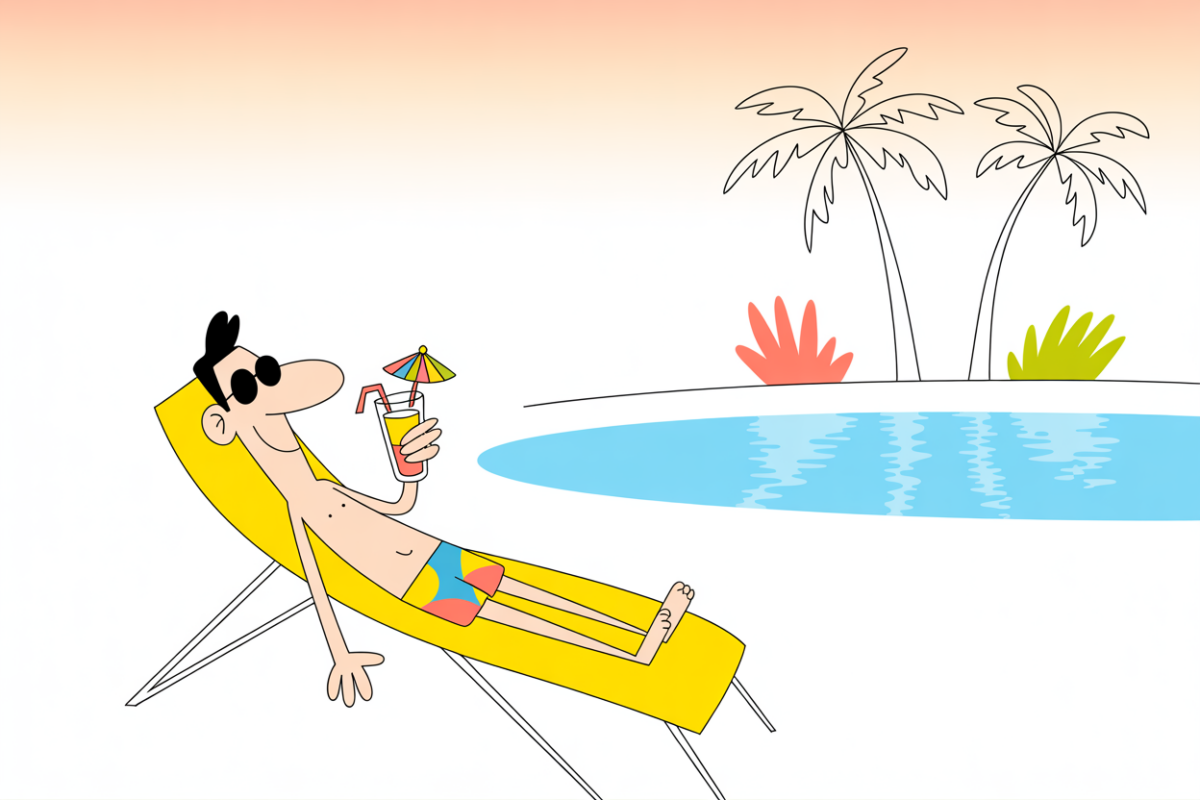
Maybe the smart move this summer is a “hotcation”: Head straight for the heat, where luxury is cheap and the air conditioning is cold.
The cold hard truth about coolcations
The marketing pitch for a coolcation is simple: Escape the sweltering summer by heading north. But the reality can be a sweaty, expensive mess.
Terence Leung, a marketing manager from Calgary, followed the herd to Scandinavia last July. He expected a quiet getaway but found rooms had doubled in price and ferry routes were fully booked. Worse, he ran into a heat wave in Oslo.
“I was in hotels without air conditioning,” he recalls. “People started pacing the hallways at midnight, unable to sleep.”
Adam Tank, a tech executive from Kansas City, had an even worse experience in Iceland. Trying to beat the late summer heat, he rented a car to drive the island’s famous ring road. After a mudslide delayed his arrival in a northern village, he got lost and asked a police officer for directions.
“They said yes to my request and asked me to follow them,” says Tank. But instead of leading him to his vacation rental, the police drove him 30 minutes out of town into the middle of nowhere.
“The cops clearly weren’t thrilled with the amount of tourism and didn’t want us in their town,” he says.
It’s not a nice vacation if I have to spend the whole time indoors in the air conditioning. I like to be active and be outside on vacation. For “hot” destinations, I would make it a point to go during their more pleasant weather season and pay more if I have to.
Read more insightful reader feedback. See all comments.
Is the “coolcation” just a marketing gimmick?
According to industry insiders, the coolcation trend isn’t an organic response to climate change, but a calculated move to sell inventory.
“It is a classic inventory problem solved with premium branding,” says Delbert Lee, a former vice president of sales for a tour company. He explains that companies identified destinations with low summer demand and repackaged them as exclusive escapes, charging 30 to 40 percent more for infrastructure that was never built to handle peak crowds during the summer.
Samuel Huang, CEO of an ad agency in Singapore, agrees. His firm has been tracking worldwide advertising content for years, and it’s seen a 30 to 40 percent increase in ad spend targeting warmer regions with arctic imagery.
“This marketing push creates an artificial scarcity that inflates prices for subpar infrastructure,” Huang says. He notes that negative online reviews for these destinations are climbing by 30 percent quarter-over-quarter.
Lorena Basualdo, a luxury travel adviser who specializes in Italian vacations, points out that northern gateways have brief summers and limited transport slots.
“You’ll still find limited AC, small elevators, scarce shade structures, undersized water stations, and transit timetables that can’t stretch during surges,” she warns.
The case for the “hotcation”
While everyone else is fighting for a view of a glacier, the “hotcation”—embracing the heat in places like Phoenix, Dubai, or Madrid—is emerging as a value play.
“A luxury hotel in Dubai or Phoenix operates at a loss during its summer off-season,” explains Lee. He says these properties offer 50 to 70 percent discounts not as a special deal, but as a baseline necessity.
Amanda Persi, CEO of The Getaway Co., agrees that hot destinations can offer better value, but warns that travelers must be honest with themselves about the heat.
“Sightseeing all day in the sun isn’t always realistic,” Persi says. She notes that if you treat the trip less like a checklist and more like a lifestyle—slowing down and resting by the pool during the day—the experience can be magical.
Leung, who felt burned by his Scandinavian adventure, eventually tried this approach.
“During peak heat, Phoenix and Madrid were empty and cheap,” he says. The resorts had shaded areas, ice-cold air, and open pools. “Heat can be managed,” he adds. “Scarcity and crowds can’t.”
I’ve spent a few summers in hot-weather destinations like Phoenix and the Florida Keys, and I’m with Leung on this one. The tourists leave, and the rates drop faster than the temperature in your air-conditioned hotel room.
But is it a fair comparison?
Of course, not everyone agrees that swapping a glacier for a desert pool is a valid comparison. Jared Sternberg, founder of Gondwana Ecotours, argues that comparing Alaska to Phoenix is meaningless.
“One is about immersion in wild landscapes, long daylight, wildlife, and remoteness; the other is about urban comfort,” Sternberg says.
Experts also defend the high prices of remote destinations. Sternberg notes that Alaska faces significantly higher infrastructure costs and shorter operating seasons.
Andrew Harrison, a travel advisor with OvationNetwork, points out that the high price tags in Scandinavia reflect the reality of the local economy.
“Scandinavia has the highest fuel and labor costs in the world, and the prices for the trip reflect that,” Harrison says.
Travelers are voting with their wallets
Despite the warnings, it looks like travelers are trending toward hotcation this summer. Lauren McCormick, a spokeswoman for the travel insurance company Squaremouth, says interest in hot-weather destinations for this summer has outpaced demand for cool-weather getaways.
Squaremouth’s data shows interest in Costa Rica has jumped nearly 41 percent and Italy is up 24 percent, while searches for Norway have dropped by nearly 18 percent.
Still, she warns that a hotcation comes with risks.
“Hot destinations, especially during summer months, bring added health and safety considerations, such as heat-related illnesses,” she says. McCormick recommends either travel insurance or medical insurance with at least $50,000 in medical coverage and $100,000 for medical evacuation.
How to travel smarter this summer
If you want to avoid the “coolcation” trap but aren’t ready to bake in the desert, there are middle-ground solutions.
- Wait for the shoulder. Mitch Krayton, a Denver travel agent, warns against the Arctic or Alaska in high summer. “Go in the shoulder season or off season to avoid the crowds and get the best rates,” he says. For Alaska, that means September and October.
- Look for alternative cool spots. Sam Bruce, co-founder of Much Better Adventures, suggests looking at cooler places outside the obvious circuit, like Estonia, where you can enjoy milder summers without the overcrowding.
- Check the AC. Don’t assume a northern hotel is equipped for a heatwave. Basualdo says you must ensure your room has an air conditioner. “Filter out the ones that don’t,” she says.
So this summer, you might not want to hang out with the cool kids heading north with the herd. They’re putting a strain on the infrastructure, and ironically, they may suffer through a heatwave without air conditioning.
Ultimately, the hottest summer destination might literally be the hottest summer destination.
Your voice matters
Cheap and sweltering, or cool and crowded. We would like to know which trade you would make.
- Would you book a hot destination in peak summer if the resort were half price?
- Have you taken a coolcation that turned out crowded, expensive or short on air conditioning?
- Is a desert pool a fair substitute for a glacier, or a completely different holiday?
Hotcations and coolcations: what to weigh
Heading north or south this summer both carry trade-offs. Here is what travelers ask most. This is general information, not medical advice.
What is a coolcation, and what is a hotcation?
A coolcation means traveling somewhere cold to escape summer heat, typically Scandinavia, Iceland or Alaska. A hotcation is the opposite play: booking a hot-weather destination such as Phoenix, Dubai or Madrid during its low season, when hotels are quiet and rates fall sharply.
What goes wrong on a coolcation?
Demand. Travelers in this article describe rooms that doubled in price, fully booked ferries, and locals visibly tired of the crowds. The most common surprise is air conditioning. Many hotels in cool climates were never built with it, so a northern heat wave can leave you hotter than you would have been at home.
Is the coolcation trend genuine or marketing?
Industry sources quoted here argue it is largely a way to sell low-demand summer inventory at a premium, pointing to increased advertising spend on arctic imagery. Others push back, noting that remote destinations genuinely carry higher infrastructure costs, shorter operating seasons and, in Scandinavia, some of the highest fuel and labor costs anywhere.
Is comparing Alaska to Phoenix even fair?
Not really, according to one tour operator in the piece. A trip built around wild landscapes, wildlife, long daylight and remoteness is not the same product as urban comfort and a resort pool. The comparison works as a value argument. It does not work as a like-for-like swap.
How dangerous is extreme heat for a visitor?
It deserves respect. Heat kills more Americans each year than any other weather hazard, and Maricopa County, which includes Phoenix, has recorded hundreds of heat-related deaths annually in recent years. Those deaths fall heavily on people without shelter, working outdoors or with existing health conditions, so a visitor moving between air conditioning and a pool faces a different level of risk. Even so, familiarity offers no protection once the body cannot cool itself, and many deaths occur on days rated only moderate risk.
How do I stay safe on a hot-weather trip?
Drink water before you feel thirsty, keep outdoor activity to early morning and evening, and stay in air conditioning during peak hours, since fans alone stop working well above roughly 95 degrees. Learn the warning signs of heat exhaustion and heat stroke, and take them seriously. Anyone older, pregnant, or managing a heart condition should ask a doctor before booking.
What insurance should I consider?
An insurance specialist quoted in the article suggests travel or medical coverage with meaningful emergency medical limits and separate medical evacuation coverage, since heat-related illness can require urgent care far from home. Check what your existing policy already covers before buying more. For further travel coverage, see Elliott Advocacy.

Have a question about this story? Tell us what happened — we read every comment.
Join the conversation