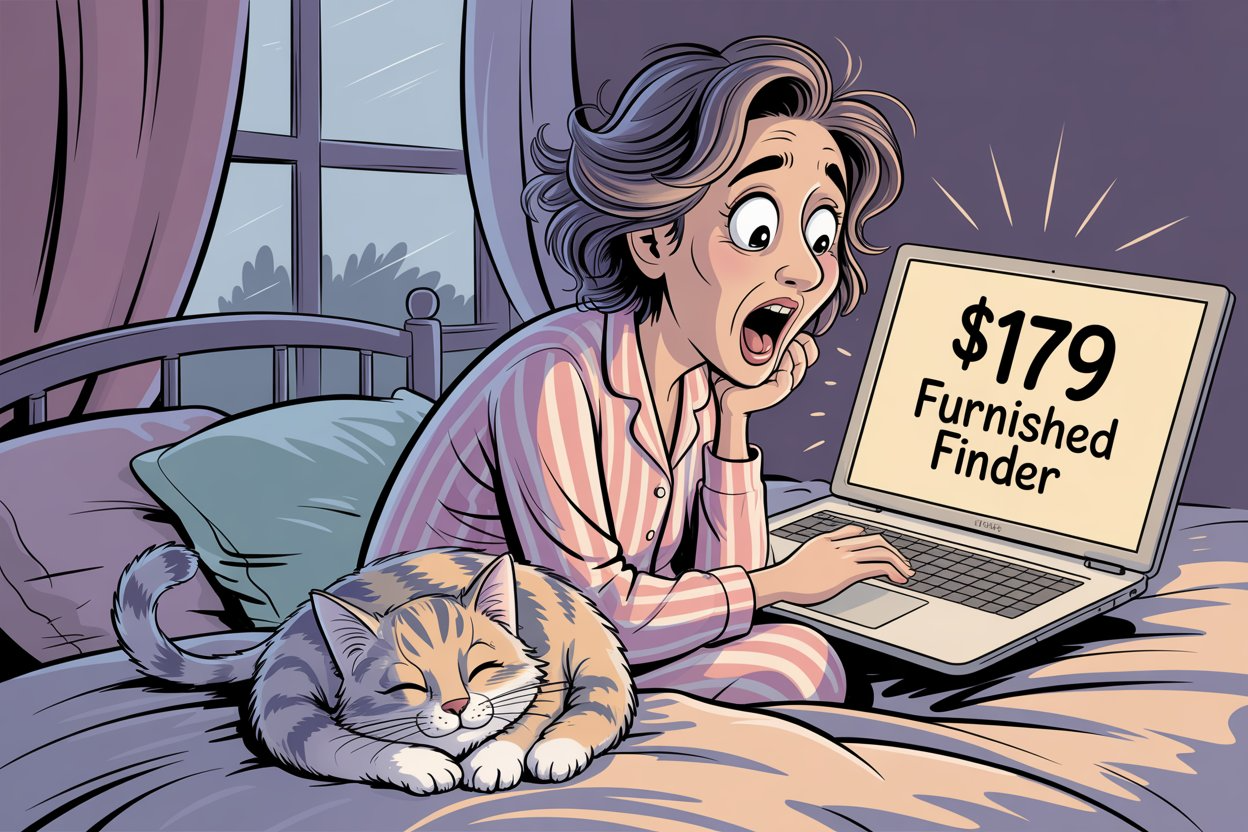
Cartoon of a woman in pajamas staring in shock at a laptop showing a $179 Furnished Finder charge, her cat asleep beside her on the bed.

My Furnished Finder subscription auto-renewed. Why can’t I get a refund?

Debbie McNulty had listed her vacation home on Furnished Finder for three years and never once received a booking through it. She paid the annual fee anyway. Now that she was renting short term again, the platform was no use to her at all. Her membership was set to auto-renew, and the company sent a reminder email the month before. She missed it, back from a two-week trip and buried under the same avalanche of email everyone else is buried under. Then she woke up to a $179 charge. She contacted the company that same day, asked to cancel, and requested her money back. What came back was a form response: fees are nonrefundable, it is in the terms you agreed to. She did not dispute that she had missed the deadline. Her question was different, and it is one worth sitting with. When a customer cancels on the very day the charge goes through, and has just told you plainly that she will not use a single day of the year she has been billed for, is keeping the money really the right call?


Cartoon of a woman photographing the front of a rental car with her phone in a parking lot, a Turo sign behind her.

Turo charged me $2,338 for damage I didn’t cause. Can I get a refund?

Georgina Montalvan rented a car through Turo in Los Angeles and dropped it off a day early so she could catch an earlier flight home. The next day a text arrived: the owner said she had damaged it. Turo sent photos showing a scratch on the fender and a small hole in the bumper. But Montalvan had done the one thing that should end an argument like this. She had photographed the car when she picked it up, and her pictures showed the scratch was already there. She sent them in, Turo reviewed the evidence, and the claim was dropped as normal wear and tear. That should have been the end of it. A week later Turo reopened the claim and charged her credit card $660, with no itemized bill. Then came a second invoice, this one for $1,678, for what the company described as hidden damage, illustrated with a photo of a larger hole she says she had never laid eyes on.

Cartoon of a dismayed traveler with a suitcase pleading at a reception desk while an unsmiling clerk stands with his arms folded.

Is this the worst check-in policy in the history of travel?

Alison Palkhivala was ready for pretzels, polka, and a pint. She had booked a Munich apartment through Booking.com for Oktoberfest, and three days before her arrival she noticed the line she had skimmed past. Check-in was strictly between 7 a.m. and 9 a.m. Read that again. Not 7 p.m. Not “after 3 p.m.” A two-hour window first thing in the morning, when most travelers are either asleep or looking for coffee. Her flight did not land until 10. She messaged the host and offered everything she could think of, a lockbox, a later handover, even collecting the key the next morning and writing off the first night entirely. The answer was no. The host canceled the booking outright and kept roughly $1,000 under the cancellation penalty. Booking.com declined to intervene, saying the policy was valid. So she stood in a foreign city during its busiest week of the year with no room and no money, holding a reservation she had agreed to in every respect except the one nobody could have met.

Cartoon of a shocked woman standing between two twin beds with visibly stained sheets in a hotel room, a city skyline through the window behind her.

They advertised two queen beds and a clean room. I got neither—and a $922 charge.

Rebekah Singleton booked a room with two queen beds at a Brooklyn hotel through Booking.com because she specifically needed the queen beds. What she got was something else entirely. The beds measured out to roughly 50 inches wide, a full size, not a queen, and the room itself was filthy: sheets marked with grease stains, hair, and what looked like suspicious red stains. The second room she was offered was worse, with red splatter across the floor. She did not feel safe, so she left that night and found another hotel. Then the real ordeal began. The hotel denied her photo evidence. Booking.com dragged the matter out for weeks and offered only a small goodwill credit. She disputed the $922 charge with her credit card, which briefly credited her before rebilling the entire amount once the merchant pushed back. She was left out nearly a thousand dollars for a room she never used, caught between a property, a platform, and a card issuer, each pointing elsewhere, and left asking what a booking site actually owes you when the room it sold bears no resemblance to the one you paid for.

Cartoon of a disappointed concertgoer holding a ticket stub while standing in a packed crowd far from a brightly lit stage where performers appear as tiny distant figures.

SeatGeek promised first-row seats. I got section G instead!

Sean Thomas paid SeatGeek $2,744 to see The Weeknd, and the listing made the value clear: premium floor seating in the first five rows, plus a special VIP merchandise bundle. Then the tickets arrived. They were for Section G, a long way back from the stage, and the VIP package did not match the terms SeatGeek’s own rules require. When he complained, the answers kept shifting. First a representative told him “first five rows” actually meant a general zone, not literal rows. When he disproved that, the company redefined the stage itself, suggesting runways now count as part of it, and then uploaded a brand-new seat map after he filed his complaint. His Buyer Guarantee was supposed to protect him against exactly this. What happened when he invoked it, and what SeatGeek finally said about his $2,744, is where the case turns.

Line cartoon of a worried woman holding a boarding pass and pulling a suitcase as her family of three sits anxiously in airport gate seats behind her.

“A travel nightmare”: United changed my flight but never told me — now I’m out $2,000

Krupa Singampalli had booked a United trip home from Australia for her family of four, with business class upgrades bought using miles and a copay for each passenger. The outbound leg went smoothly. The return became a nightmare. At 1 a.m. in Cairns, she opened the United app and saw her 74-year-old mother’s seat had quietly slipped to waitlisted. A schedule change had rerouted the whole family through Sydney, except the message announcing it had never reached her inbox. When they got to the airport, the partner airlines could not find their reservations, the agents pointed at one another, and a flight departed without them while she was still on hold. Desperate and unwell, she bought four new one-way tickets out of her own pocket just to keep moving. Only later did she learn what United had done with the seats she thought she still had, and what the airline would say when she asked it to make the whole thing right.

Cartoon of a shocked couple standing beside their blue rental Jeep, staring wide-eyed at a small pile of sand on the ground next to the vehicle's tire.

Budget’s $125 sand trap: When does a “dirty” floor mat become a rental car rip-off?

When Barb and Steve Pfeffer returned their rental Jeep after an eight-day hiking trip in the Pacific Northwest, the drop-off seemed routine. A friendly Budget agent verified the fuel, thanked them, and sent them on their way. It was anything but routine. Two weeks later, they found a $125 cleaning fee on their credit card. The reason? Excessive sand on the floor mats. Budget claimed the debris forced the Jeep out of service for detailing. The Pfeffers, who have rented cars for more than 40 years and never once been charged a cleaning fee, were stunned. They admit there was sand, they had been hiking in national parks for over a week, but they argue a couple of dirty mats hardly justify sending a car to a detailer. The deeper problem is buried in Budget’s contract, in a single phrase that lets the company decide, entirely on its own, what counts as too dirty and what that judgment will cost you.

Line-art cartoon of an annoyed woman standing on her front steps with a hand to her head, watching a delivery van drive away down her suburban street.

Shein sent my package to my old address after I requested a return. Can I get a refund?

Alyssa Klenotich placed a $153 Shein order, then realized the site had autofilled her old address. She tried to fix it on the Shein website, but it was too late for the company to change anything. So she went to the carrier, SpeedX, and asked it to return the package to the sender so she could get a refund, and SpeedX accepted the request in writing. Then it delivered the package to the old address anyway, and her items were gone. SpeedX kept sending her form responses telling her to talk to the merchant, and she could not see why a loss the carrier caused was suddenly her problem to chase. Here is the principle worth knowing when a shipment goes sideways: you almost always go back to the merchant first, because that is the company you have a contract with and the one that hired the shipper, and the seller, not the carrier, is the party with the authority to issue your refund.

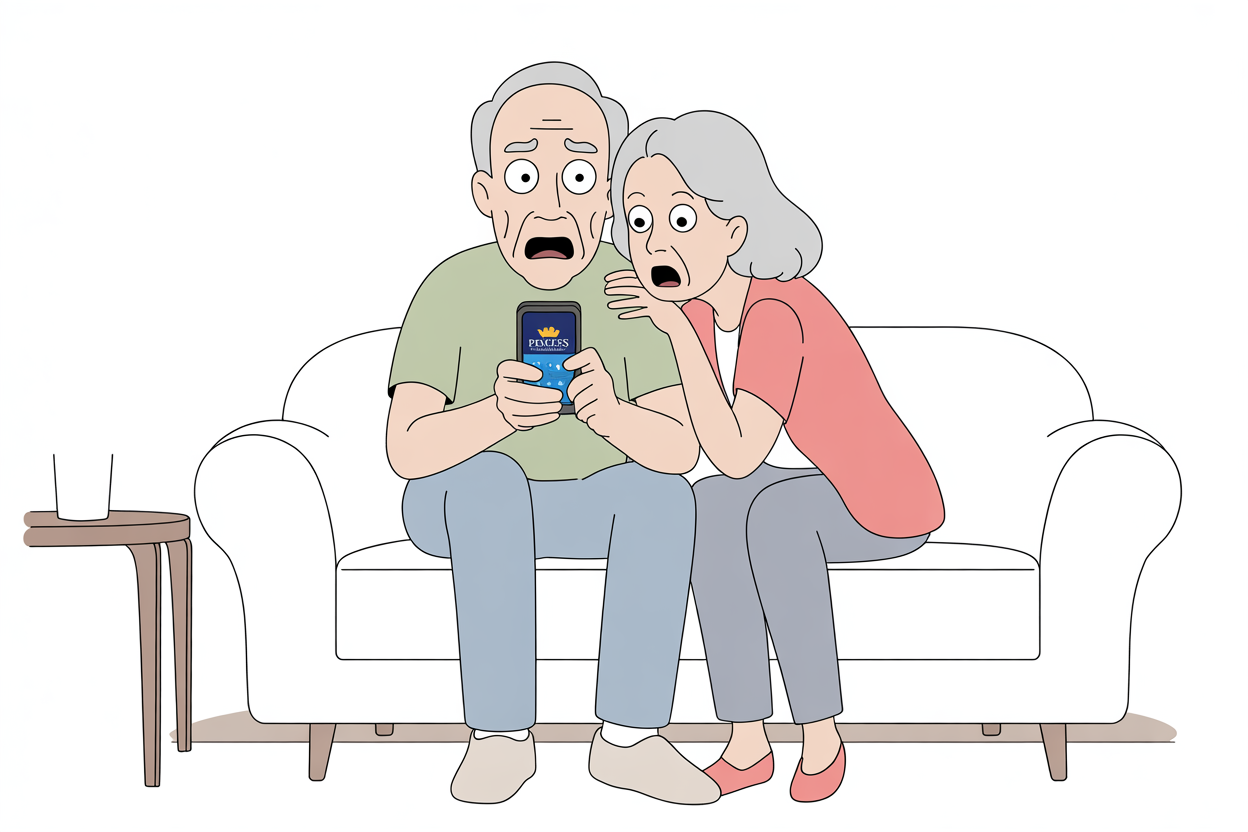
Cartoon of a shocked older couple sitting on a couch staring at a phone showing the Princess Cruises app, reacting to news that their booking has gone wrong.

He paid $2,369 for his cruise, but Princess canceled the reservation anyway

Robert Battaglia paid $2,369 for a Panama Canal cruise with Princess, booked through a travel agent, and he and his wife Norma paid the final balance a day before it was due. Two days later, he opened the Princess app and the reservation was gone. When his travel agent called, a representative said the couple were in default for nonpayment and owed roughly $2,000 more, though no one could say where the charge came from. It eventually traced back to a Princess Plus upgrade his wife had tried to add online, only for the website to report that the purchase failed and tell her to handle it later. Princess canceled the booking anyway and kept $1,298 as a cancellation fee, even though the account showed no balance due and the agent could see no pending charge. Here is the principle worth holding onto before you accept a cancellation like this: when a customer pays on time and the company’s own statement shows nothing owed, the burden is on the company to explain any later charge before it takes punitive action, not after.

Cartoon of a glum man standing alone outside a packed UFC arena as crowds stream past him to the entrance, illustrating a fan shut out of an event he paid for but could not attend.

StubHub’s FanProtect guarantee fails: The $4,606 ticket he never got

Roland Nazariyan paid $4,606 to see a UFC fight, and he missed the main event. He had ordered three tickets through StubHub on the day of the fight, and when none of them arrived in time, he called the platform. It refunded the first two orders after he sent screenshots showing the tickets were never delivered. The third and most expensive order sat in limbo, marked as in final escalation, and then came back denied: a seller had claimed the ticket was transferred, and StubHub told him he had never even contacted the company about it, despite its own emails in the thread asking him for proof. Here is the standard worth holding any reseller to before you accept a denial like this. StubHub’s FanProtect guarantee promises that you will get your tickets in time for the event, and if not, comparable or better tickets or your money back. A guarantee, in other words, is only as good as a company’s willingness to honor the words it is built on.