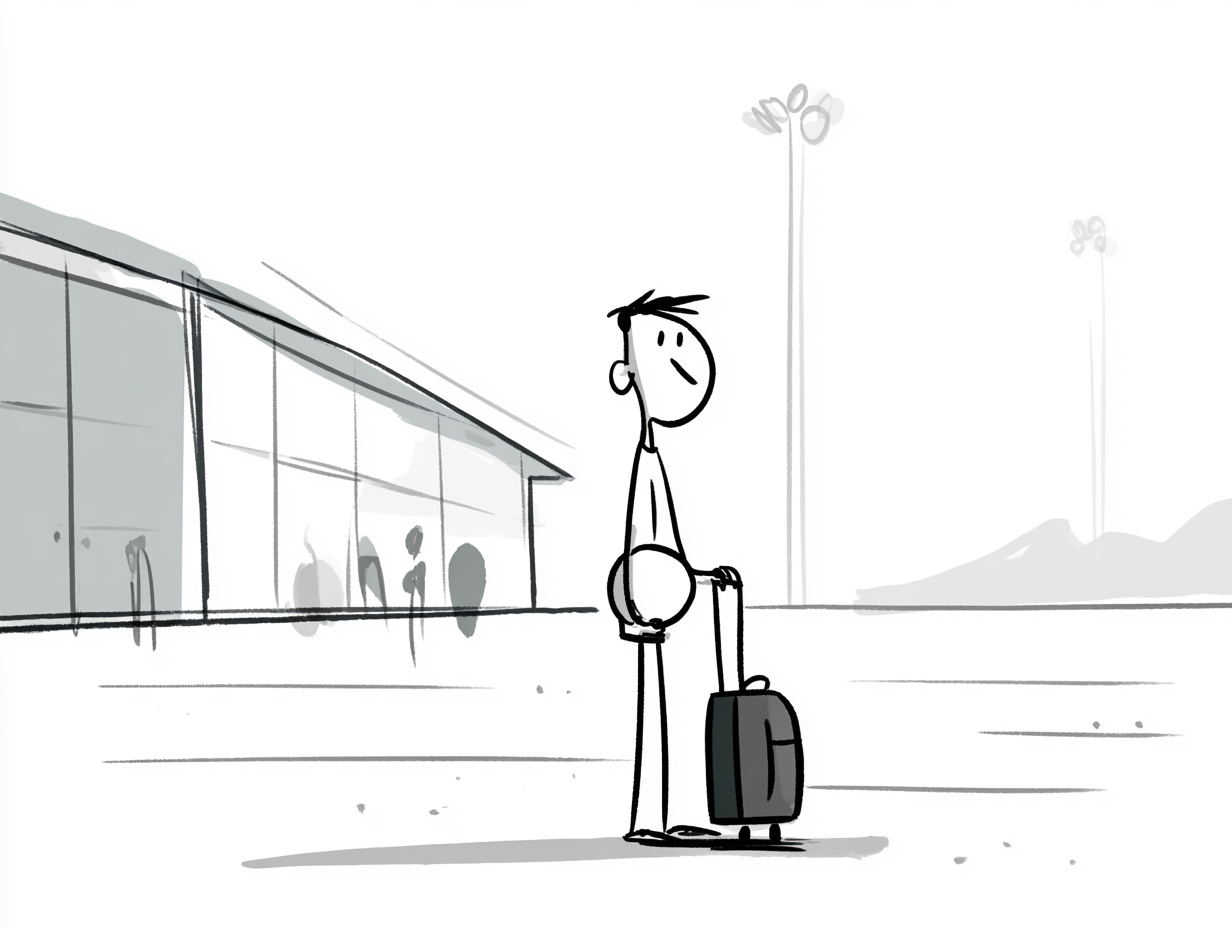
Minimalist black and white cartoon of a lone traveler with a rolling suitcase standing outside a nearly empty airport terminal, looking uncertain, evoking a trip thrown into limbo.

Let’s keep politics out of your summer vacation

Steve Brody is flying out of Newark this week, and he is worried. There are plans afoot to pull the Customs and Border Protection officers out of airports in certain cities, with Newark Liberty International first in line. Brody, a retired government worker, is flying nonstop to Vancouver, but he has to pass back through US Customs on his return. “Gimme strength,” he says. He is not being dramatic. Customs officers are the people who let you back into the country, and pull them out and international flights cannot unload their passengers. That is the part that should bother everyone, left, right, and undecided. A passport does not have a party affiliation. When a flight gets canceled, the system does not check your voter registration before it strands you. You are stuck. Which is the real question worth sitting with before your next trip: whether the airport you are counting on this summer should ever be something an administration is allowed to switch off to win an argument that has nothing to do with you.


Illustration of an unhappy woman holding up two pale blue dresses on hangers over an open cardboard shipping box, preparing to return the gowns she ordered online.

I returned $3,990 in designer dresses — then my refund vanished

Debbie Rivet ordered the same evening gown from the London designer Safiyaa in two sizes, the Serendipity Pale Blue Long Dress at $1,995 each, planning to keep whichever fit and send back the other. When the dresses arrived, the fitted style was wrong for her occasion, so she requested a return authorization, shipped both back by FedEx, and kept the receipts proving delivery. Then she waited for her refund. And waited. Her follow-up emails went unanswered, the phone line dropped to voicemail and disconnected, and when she filed a dispute with Capital One the bank reversed its initial credit, saying too much time had passed. There is a rule worth committing to memory before you give a silent company the benefit of the doubt: under the Fair Credit Billing Act, you generally have only 60 days from the statement date to dispute a charge in writing, and the longer you wait for a reply that may never come, the closer that protection slips toward expiring.

Illustration of a worried couple beside a yellow rental car with its hood up on a snowy Alpine road, the man on his phone for roadside help as a man in lederhosen inspects the dead engine.

Help! Alamo charged me $1,000 after my car battery died in the Swiss Alps

Kjell-Erik Berggren rented a car from Alamo at Geneva Airport for a six-day trip through Switzerland, and it worked perfectly until the last morning. Staying in a mountain village at 1,500 meters, he and his group woke to a cold, frosty morning and a car that was completely dead: no lights, no starter, nothing. Roadside assistance told them to leave the vehicle and find another way to the airport, which they did at considerable expense. Then, two months later, Alamo charged more than $1,000 to his credit card with no prior agreement or warning, on two invoices showing different totals that did not even match what was charged. The company pointed to a roadside protection product he had declined and an insurance deductible he had chosen. But there is a principle worth knowing before you accept a charge like this: rental companies are typically responsible for mechanical and electrical breakdowns that are not caused by customer negligence or misuse, and a battery that dies on a cold morning after five days of normal use points to a defect in the vehicle, not a mistake by the driver.

Stylized illustration of a distressed traveler clutching his chest in front of a palm-lined hospital as medical staff wheel a patient on a gurney toward the entrance, evoking a vacation cut short by a family emergency.

The hotel refunded his money, but the booking site kept it anyway

When John Moss’s stepfather was rushed to the hospital, he knew his Florida vacation was over before it started. He contacted Traveluro, the site where he had booked a nonrefundable $615 stay at the Hilton Melbourne Beach, and sent hospital records proving the family emergency. The hotel understood and agreed to cancel without penalty, releasing the money back to the booking site. All Traveluro had to do was pass it along. Instead, weeks of silence followed, until Moss filed a dispute with his credit card company and Traveluro suddenly made him an offer: drop the dispute, and we will send your refund. Here is what every cardholder should understand before saying yes. A credit card dispute freezes the transaction while your issuer investigates, which means the merchant cannot touch the money until the matter is resolved. That is real, tangible leverage, and a company asking you to give it up in exchange for a promise is asking you to trade the one protection the law puts on your side.

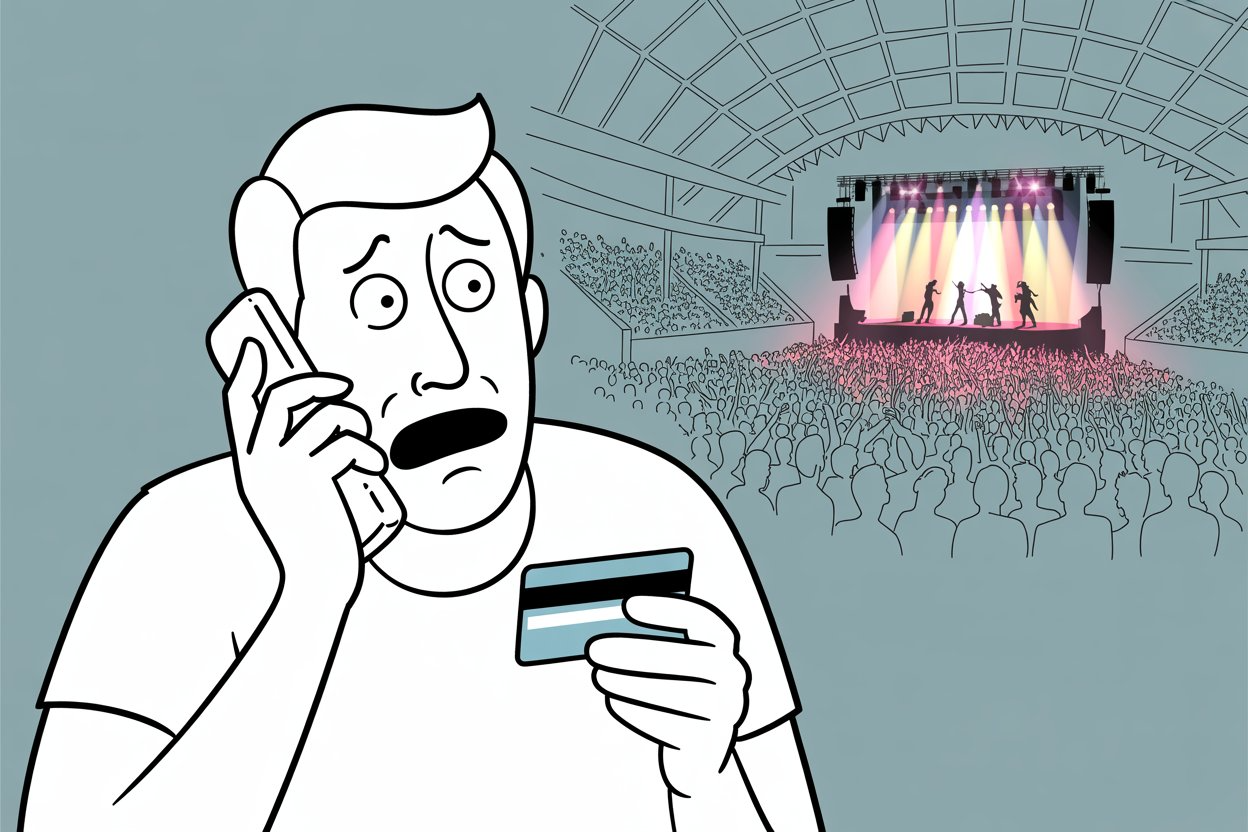
Illustration of a worried man on the phone holding a credit card while a concert crowd watches performers on stage, representing a StubHub ticket refund dispute.

This StubHub rep’s “help” with Coldplay tickets cost me $3,000!

Paul Avron’s daughter bought three Coldplay tickets at Hard Rock Stadium in Miami for $1,027, nine months before the show, as a birthday gift for her best friend and the friend’s dad. On the day of the concert, the StubHub app said the tickets were being released, but they never appeared. With the show already starting, the family called StubHub in a panic and asked for the tickets or replacements so the group could get in. The last representative refused to provide replacement tickets and said they had to buy new ones, promising StubHub would refund the original $1,027. The rep said he saw three tickets for just $1 more than the original purchase and sent a link. The tickets were actually $1,000 each, and StubHub charged the credit card $3,000. The family disputed the charge with their credit card company and contacted StubHub directly, but both representatives said they would not credit the account. The family never accepted or used the expensive tickets and never attended the concert. StubHub’s FanProtect Guarantee promises valid tickets or your money back, and says StubHub will find comparable replacement tickets when possible.

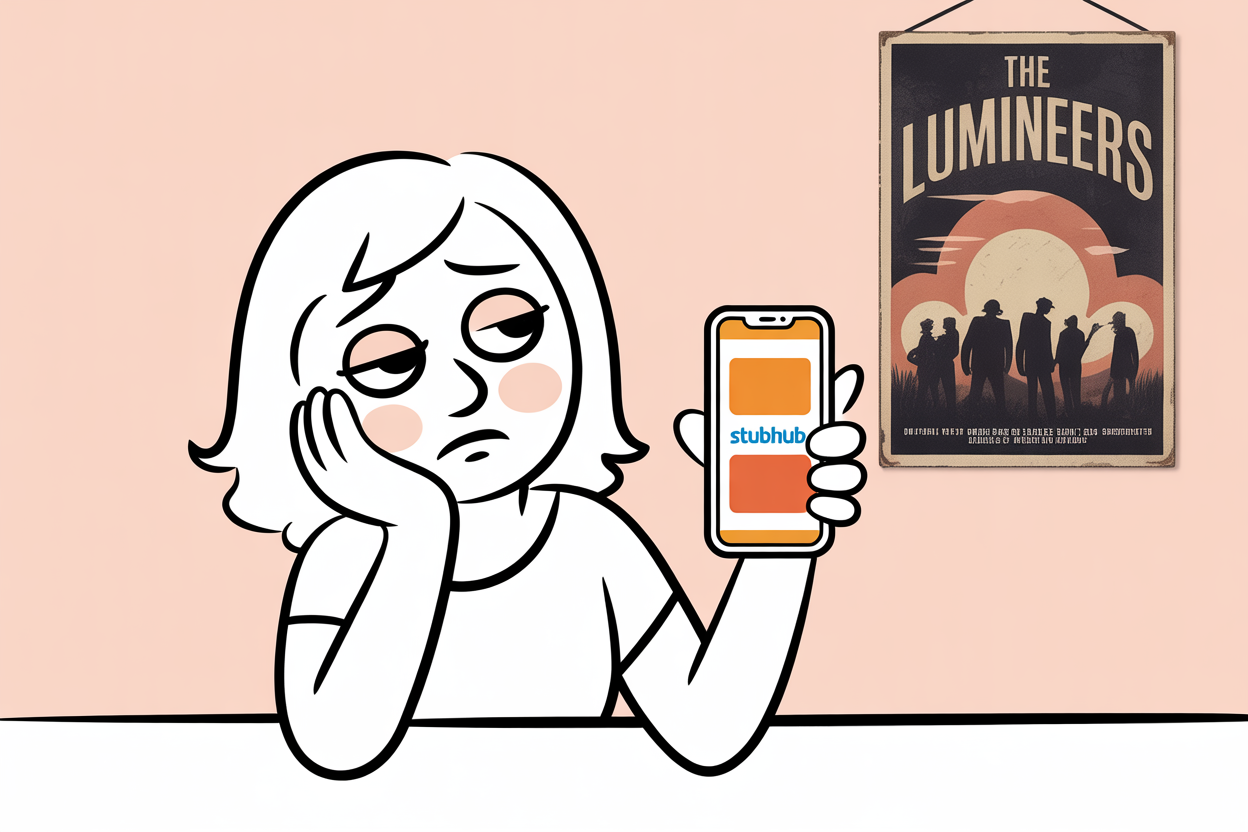
Editorial cartoon of a disappointed woman with shoulder-length hair resting her chin on her hand while holding up a smartphone showing the orange StubHub app, seated at a table against a pink wall with a vintage-style concert poster for The Lumineers hanging on the wall behind her, illustrating a frustrated concertgoer who received the wrong tickets and struggled to get a refund through StubHub's confusing return policy

Help! StubHub’s confusing ticket return policy cost me $1,176

Sharon McMonagle paid $1,176 for four club section tickets to a Lumineers concert through StubHub. The confirmation email included no seat numbers, and the day before the show StubHub sent tickets for a completely different section with no club access. StubHub asked her to accept the wrong tickets and transfer them back, which she feared would lock her into ownership. An agent told her to send a screenshot proving she had not accepted the tickets. After 45 days, StubHub said she would receive nothing because she had not returned the tickets through Ticketmaster, tickets she never accepted in the first place. StubHub advertises a FanProtect Guarantee promising that buyers who do not receive the tickets they ordered will get comparable replacements or a full refund.

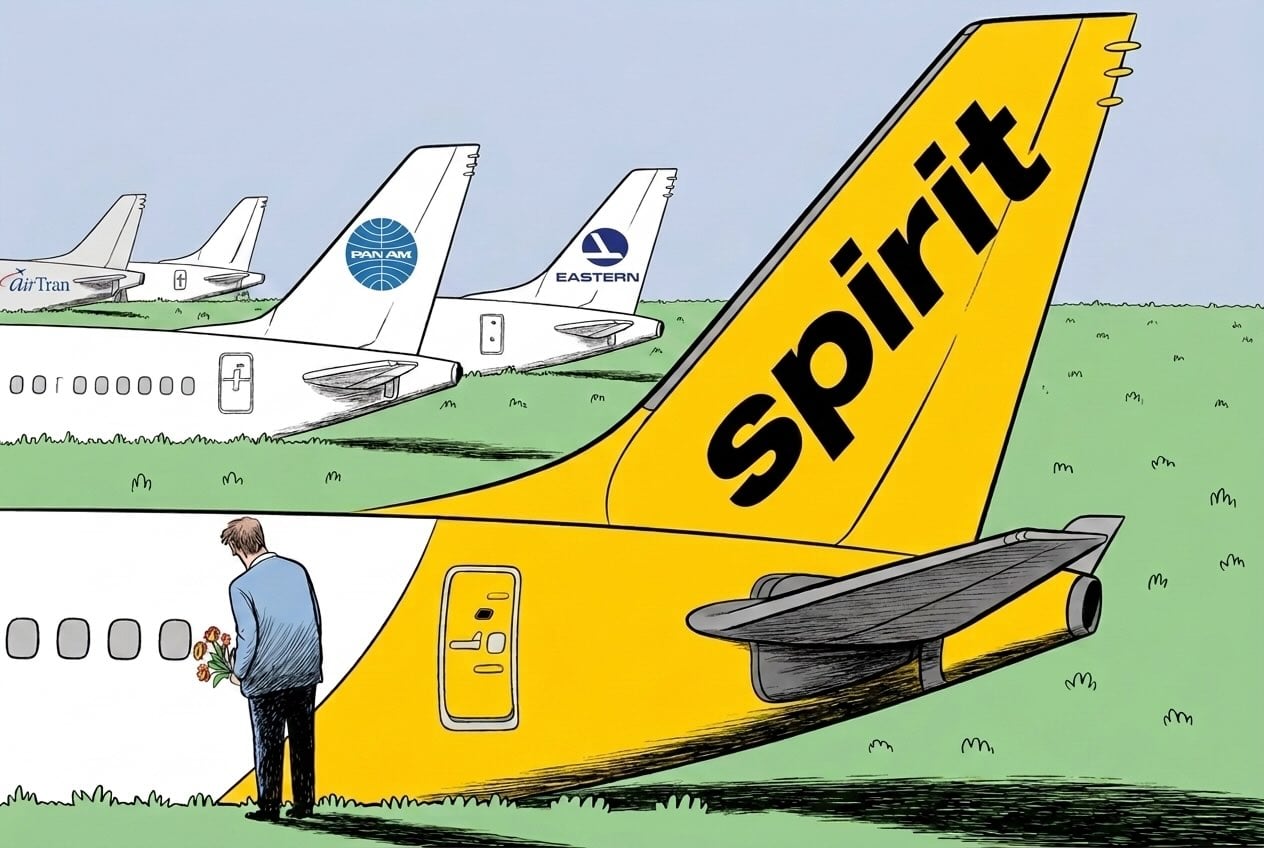
So long, Spirit Airlines. Should the government have saved you?

Spirit Airlines has begun an orderly wind-down of operations, effective immediately. Every flight has been canceled and customer service is closed. The shutdown comes after the Trump administration’s $500 million rescue plan, which would have given the federal government an unprecedented 90 percent stake in the carrier, fell apart over the weekend. After blocking Spirit’s merger with JetBlue on antitrust grounds in 2024, the federal government spent the past several days weighing whether to essentially own the airline instead. In the end, it did neither, leaving summer ticket holders to fight their credit card companies for refunds.

Editorial illustration of an elderly man standing alone at the bright orange wooden door of a blue-toned classic French apartment building with wrought iron balconies, depicting Alan Nathan waiting for his missing luggage in Neuilly-sur-Seine after Luggage Forward and FedEx claimed phantom delivery

Luggage Forward promised to deliver my luggage. Instead, it delivered disappointment!

Alan Nathan paid Luggage Forward $1,400 to ship four bags from Sonoma, California to Neuilly-sur-Seine, France, including his wife’s critical medical equipment. The premium service offered an on-time guarantee promising double the shipping fee for late deliveries. The shipping company asked for documents showing arrival into Ireland despite the clearly stated French address. FedEx then marked the bags as delivered and signed for by someone named Lou Ann, but Nathan’s building has no front desk and the concierge confirmed no contact from any delivery driver.