
in this case
- Lindley Kinerk paid $2,552 for roundtrip tickets booked through Booking.com, and even got a check-in reminder the night before her flight home from Dresden.
- At the airport she learned her flight did not exist, and had not been on the airline’s schedule for months. Booking.com had apparently rebooked her on an earlier flight without telling her.
- With Lufthansa, Booking.com, and a third ticketing agency all pointing at one another, she bought replacement tickets on the spot, which raises a hard question about who is responsible when a flight booked through a third party quietly vanishes.
Lindley Kinerk’s last morning in Dresden, Germany, seemed fairly routine. She and her traveling companions packed their bags, checked out of their hotel, and headed to the airport for their scheduled 8:25 a.m. Lufthansa flight back to Boston.
They’d received a standard notification email from Booking.com the night before, reminding them to check in for their flight.
The rest of the story — well, that wasn’t so routine.
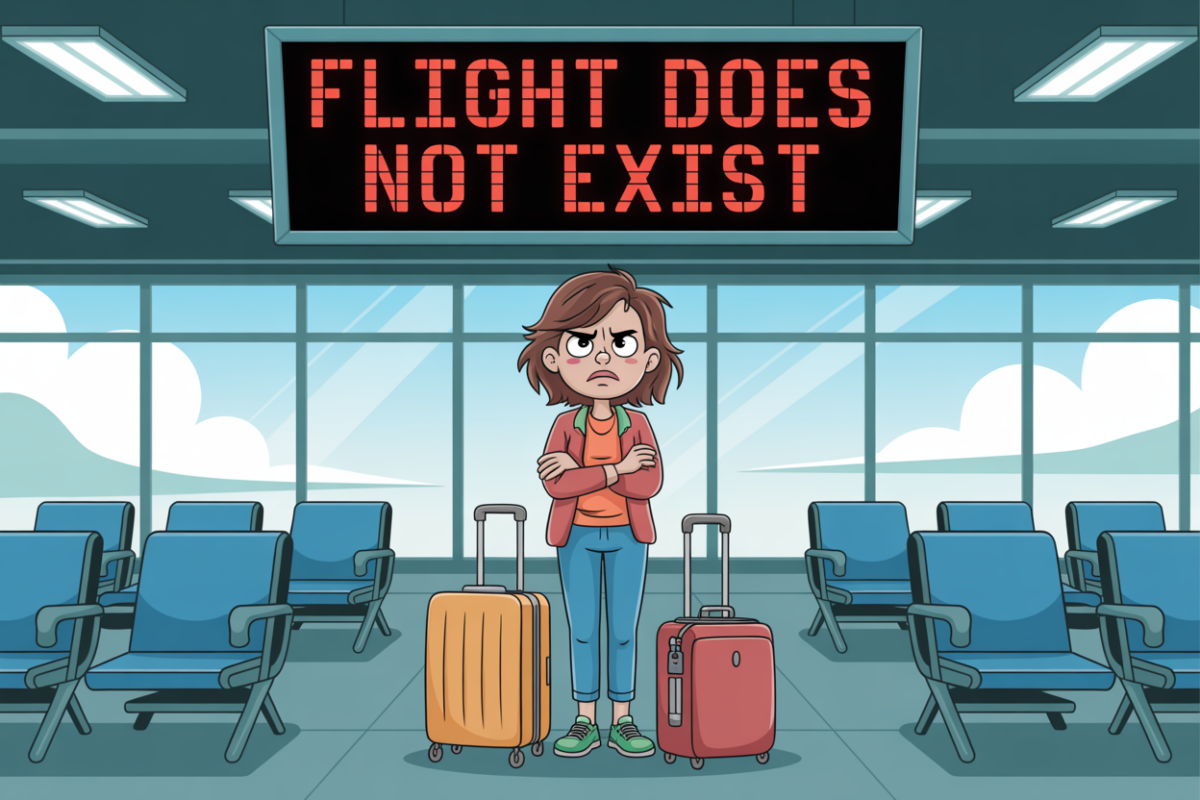
When Kinerk arrived at the airport, she learned something that would cost her nearly $6,000: Flight LH209 didn’t exist. Not that morning. Not any morning.
In fact, it hadn’t been on Lufthansa’s schedule for months.
“We were not able to quickly reschedule our flight to make our connection,” Kinerk recalls.
Her troubling case raises several important questions about booking flights through third-party websites:
- When an airline eliminates a flight from its schedule, who’s responsible for notifying passengers?
- What are your rights when a third-party booking site fails to communicate schedule changes?
- Can you get reimbursed for a replacement flight you had to purchase at the airport?
When a good deal goes bad
Kinerk had done what millions of travelers do every year. She’d used Booking.com to find affordable flights for a summer trip to Germany.
She’d paid $2,552 for roundtrip tickets from Boston to Dresden months ago. Everything had been confirmed. She had a booking reference and the flight details. It was all there in black and white.
She had no reason to believe there would be a flight problem on her return. After all, her outbound flight had gone off without a hitch.
Even the email from Booking.com seemed reassuring.
“It’s almost time to fly!” it said. “”Have you checked in for your flight to Boston?”
Kinerk and her companions showed up at Dresden Airport the next morning, ready to head home. That’s when they got the devastating news: LH209 wasn’t just delayed or canceled. It didn’t exist.
Lufthansa later confirmed what had happened in writing: LH209 was already “out of the flightplan.”
It turns out the flight had been eliminated before Kinerk’s travel date. And apparently, Booking.com had rebooked them on an earlier flight — without telling them.
Lufthansa says it wasn’t at fault. Booking.com had changed the reservation, and the passengers were no-shows. Further complicating matters: Booking.com was working through another ticketing agency, Gotogate.
“The responsibility in this case is not on behalf of Lufthansa,” a representative told her.
With no other option, Kinerk bought three new tickets on the spot. The cost: $5,894, more than twice what she’d originally paid.
That’s a lot of money. And it happened because someone in the booking chain — either Booking.com or its partner Gotogate — failed to do one simple thing: notify its customers about a critical change.
OK people, repeat after me: I will book directly with the airline, I will not try to save $5 by booking with an OTA.
If I insist to ignore rule 1 and to use an OTA, then I will subsequently check my reservation directly on the airline website or app, and will continue to monitor it directly on the airline website or app before and during my journey.
Read more insightful reader feedback. See all comments.
When an airline eliminates a flight from its schedule, who’s responsible for notifying passengers?
When you book a flight directly with an airline and it changes your schedule, the responsibility is clear: The airline must notify you.
Under U.S. Department of Transportation rules, airlines must tell you about “significant” changes to your flight. (The 2024 DOT regulations define “significant” as three hours or more for domestic flights and six hours or more for international flights.)
But Kinerk’s flight wasn’t just changed. It was eliminated entirely and replaced with an earlier flight. That’s not a schedule adjustment. That’s a cancellation and rebooking.
When you book through a third-party site like Booking.com, you’re entering into two contracts: one with the booking platform and one with the airline. When an airline notifies an agency about schedule changes or cancellations for tickets they “own,” it’s the travel agency’s responsibility to notify you.
That’s how it’s supposed to work, anyway.
In practice, the notification system is not exactly the most reliable. Many travelers discover that their flight schedules have been altered or canceled without any warning.
The problem isn’t new. A significant proportion of flights are subject to schedule modifications. And while airlines may adjust their timetables for operational reasons, the essential information about these changes frequently doesn’t always flow efficiently from airlines to third-party platforms and then to passengers.
In Kinerk’s case, the breakdown was complete. The airline changed the flight, the booking platform supposedly rebooked her, but nobody told her.
Lufthansa pointed the finger at Booking.com. But when Kinerk tried to reach someone at Booking.com who could help, she got the runaround. First, customer service told her to contact Lufthansa. Then they sent her forms for disputing charges for a hotel stay. Oops.
So who is responsible?
Booking.com should have told her, of course. But Kinerk should have also checked her flight directly with Lufthansa. In fact, Booking.com asked her to do that in an email before her flight. (“Make sure to check in through the airline’s website to avoid extra charges at the airport,” it noted.)
But in this case, no one wanted to own the problem.
What are your rights when a third-party booking site fails to communicate schedule changes?
Your rights depend on where you are, who you booked with, and which airline you’re flying.
Let’s start with the good news. Under European Union Regulation 261/2004, if you’re notified about flight changes less than 14 days before departure, you have rights to compensation depending on the circumstances.
The regulation applies to flights operated by European airlines or flights departing from European airports. Here’s more information about EC 261.
Kinerk’s flight originated in Dresden and was operated by Lufthansa, a European carrier. Under EC 261, airlines must either rebook you on a comparable flight or give you a full refund if they cancel your flight. So EC 261 should apply, right?
Not really. Lufthansa didn’t cancel Kinerk’s flight. It eliminated it from the schedule months in advance for operational reasons. (You can recognize a flight cancellation versus a schedule change by checking if the flight number has remained the same. If it changed, it’s a cancellation.)
Booking.com reticketed Kinerk from LH209 to LH207 — two different flight numbers.
But when you book through an online travel agency, EU regulations are less clear-cut, at least when it comes to notifications. And that’s the legal limbo in which Kinerk found herself.
Lufthansa said it wasn’t responsible because she booked through Booking.com. But Booking.com kept deflecting her queries to the airline.
What about U.S. consumer protections? The Department of Transportation requires airlines to notify passengers about cancellations and significant changes, and passengers have the right to a refund when flights are significantly changed or canceled.
But again, that applies to airlines, not necessarily to booking platforms.
The harsh reality is this: When you book through a third-party site, your rights become murky. You’re at the mercy of the booking platform’s terms and conditions, which often state they’re just facilitating the booking and aren’t responsible for airline operations.
Kinerk paid a high price for that lesson.
Can you get reimbursed for a replacement flight you had to purchase at the airport?
That’s the $5,894 question.
When an airline cancels your flight and can’t get you home in a reasonable time, you have options. If the airline can’t rebook you on their flights, you can ask if they’ll endorse your ticket to another carrier. Some airlines will pay for you to fly on a competitor if their next available flight is too far away.
But Kinerk wasn’t dealing with the airline. She was working with Booking.com, which in turn was working with another party, Gotogate, which was supposedly dealing with Lufthansa. That’s a lot of fingers in the proverbial decision-making pie.
Here’s how I see it: Whoever took your money should fix this problem.
Fortunately, Kinerk had plenty of written documentation of this failure. She had emails confirming her original booking. She had the check-in reminder from Booking.com for a flight that didn’t exist. And most importantly, she had written confirmation from Lufthansa, explaining exactly what went wrong.
Armed with this evidence, Kinerk wrote Booking.com a polite but firm email. (Here are Booking.com’s executive contacts.)
“I booked with Booking.com,” she noted. “I paid Booking.com. Booking.com confirmed my reservations. Booking.com sent me the ‘Now it’s time to check in for your flight LH209 tomorrow’ notice. But now Booking.com is saying that it is not Booking.com’s responsibility that there was no flight LH209.”
Booking.com’s robo-responses were textbook infuriating. It sent her dispute forms for hotels. It told her to contact the airline. Booking.com essentially did everything except the one thing it should have done: apologize and refund her money.
And that’s when Kinerk contacted us.
The lesson: Book direct, or be prepared to fight
This case reveals everything wrong with booking flights through third-party platforms. The promise of savings comes with a hidden cost: When things go wrong — and in air travel, things go wrong often — you’re on your own.
You’re almost always better off booking directly. Sure, third-party sites might save you a few bucks, but you stand to lose more.
Like, $5894 more.
If you do use a booking platform, here’s how to protect yourself:
- A few days before departure, check your flight status directly with the airline, not just with the booking site. Airlines often update their websites before they notify third parties.
- Save all your receipts. Every email, every confirmation, every piece of correspondence. When you need to prove your case, documentation is everything.
- Know who you’re dealing with. Booking.com partners with other platforms like Gotogate. You might think you’re booking with one company but actually dealing with another. Online agents must disclose these partnerships when you book, but people often ignore them.
- Escalate quickly if you hit a wall with customer service. I publish executive contact information for major travel companies on this site. A well-written email to an executive can work wonders.
- Consider travel insurance. Most policies include robust trip cancellation and interruption coverage. (Although this case had a lot of gray areas, it might have qualified as a cancellation.)
But where does that leave Kinerk?
Here’s how this case ended
My advocacy team sent Kinerk’s case to Booking.com. We included the paper trail — all of it. The original booking confirmation, the check-in reminder for the nonexistent flight, the letter from Lufthansa, and the receipts for the replacement tickets.
Sometimes, just the fact that a consumer advocate is watching is enough to shake loose a resolution. Companies don’t like bad publicity. They especially don’t like bad publicity when they’re clearly in the wrong.
Two weeks later, we got the answer, but not the one she hoped for.
“Our customer service team has been in touch with the customer on this matter and the refund of the return flight has been processed,” a representative told our advocate Dwayne Coward.
After months of runaround, after Kinerk had done everything right — documented everything, appealed to executives, explained her case clearly — that’s all it took to get Booking.com to do what it should have done from day one.
But wait, was it really the right thing?
Well, Booking.com refunded the $2,552 she’d paid for her original tickets, but still left her $5,894 out-of-pocket for the replacement flight.
Come on, Booking.com.
A flight vanished from the schedule and nobody in the booking chain told the passenger. The case raises broader questions about accountability when you book travel through a third party.
Your voice matters
What you need to know about third-party flight booking problems
Booking flights through an online travel agency can save money, but it complicates your rights when a flight changes. Here is what travelers should understand.
When you book through a site like Booking.com, you have a contract with the platform and one with the airline. When the airline notifies the agency about a change or cancellation for tickets the agency holds, it is generally the agency’s responsibility to pass that notice on to you. In practice, that handoff often fails. One way to tell is the flight number. If the flight number stays the same, it is usually a schedule change. If you are moved to a different flight number, it is effectively a cancellation and rebooking. A flight removed from the schedule entirely and replaced with another is a cancellation, not a minor adjustment. EC 261 applies to flights operated by EU airlines or departing EU airports, and it can require rebooking or a refund for a cancellation. But when you book through an online travel agency, the rules around who must notify you are far less clear, which can leave travelers in a gray area between the airline and the platform. U.S. Department of Transportation rules require airlines to notify passengers of cancellations and significant changes and to refund significantly changed or canceled flights. The 2024 rules define significant as three hours or more domestically and six hours or more internationally. Those obligations fall on airlines, though, not necessarily on booking platforms. It depends on who failed you and what you can document. The general principle is that whoever took your money should fix the problem. Strong written evidence, your booking confirmation, any check-in reminder, and a statement from the airline, gives you the best chance of recovering the cost. A few days before departure, confirm your flight directly with the airline rather than just the booking site. Save every receipt and email, know whether a separate ticketing agency holds your booking, and escalate quickly to an executive if customer service stalls. Often, yes. Booking directly usually means one company is responsible when something goes wrong, while a third-party booking can spread responsibility across several parties. If you do use a platform, take extra steps to verify your flight and keep records. For help with a specific dispute, see how the Problem Solved column helps consumers.Who notifies you when a flight is canceled if you booked through a third party?
What is the difference between a schedule change and a cancellation?
Does EC 261 cover a flight booked through an online travel agency?
Do U.S. DOT rules protect me if I booked through a platform?
Can I get reimbursed for a replacement flight I had to buy?
How can I protect myself when booking through a third party?
Is it safer to book directly with the airline?

Have a question about this story? Tell us what happened — we read every comment.
Join the conversation