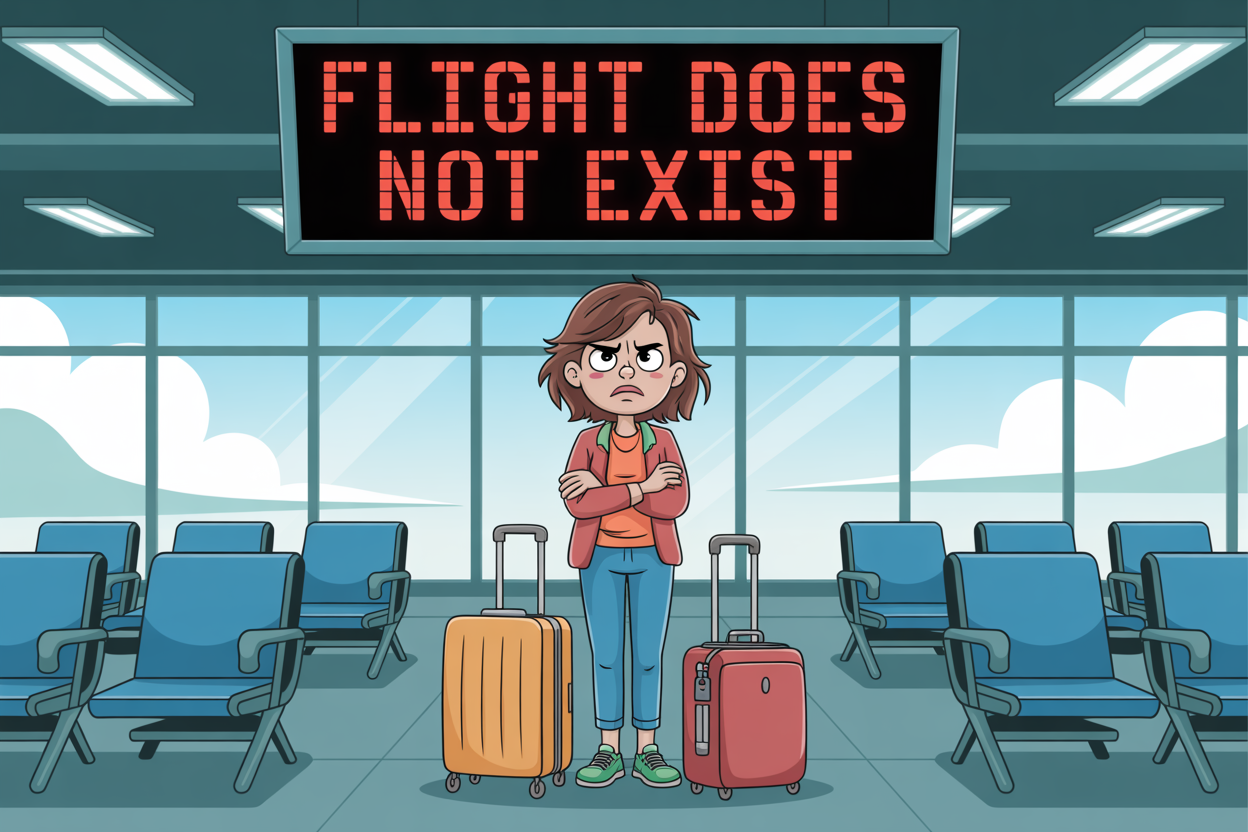
Cartoon of a frustrated traveler with arms crossed standing between two suitcases in an empty airport gate area, beneath a large red departures sign reading "FLIGHT DOES NOT EXIST."

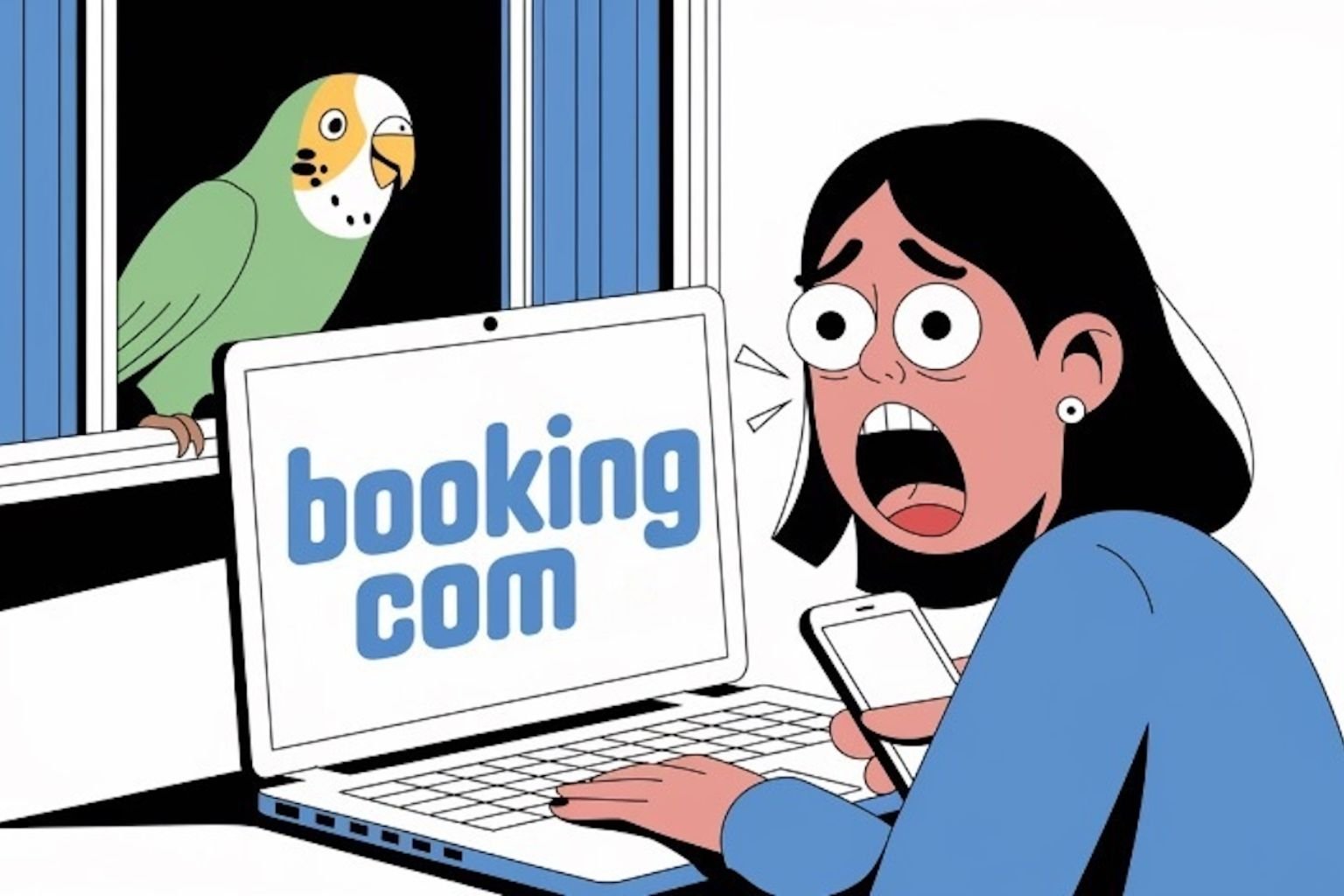
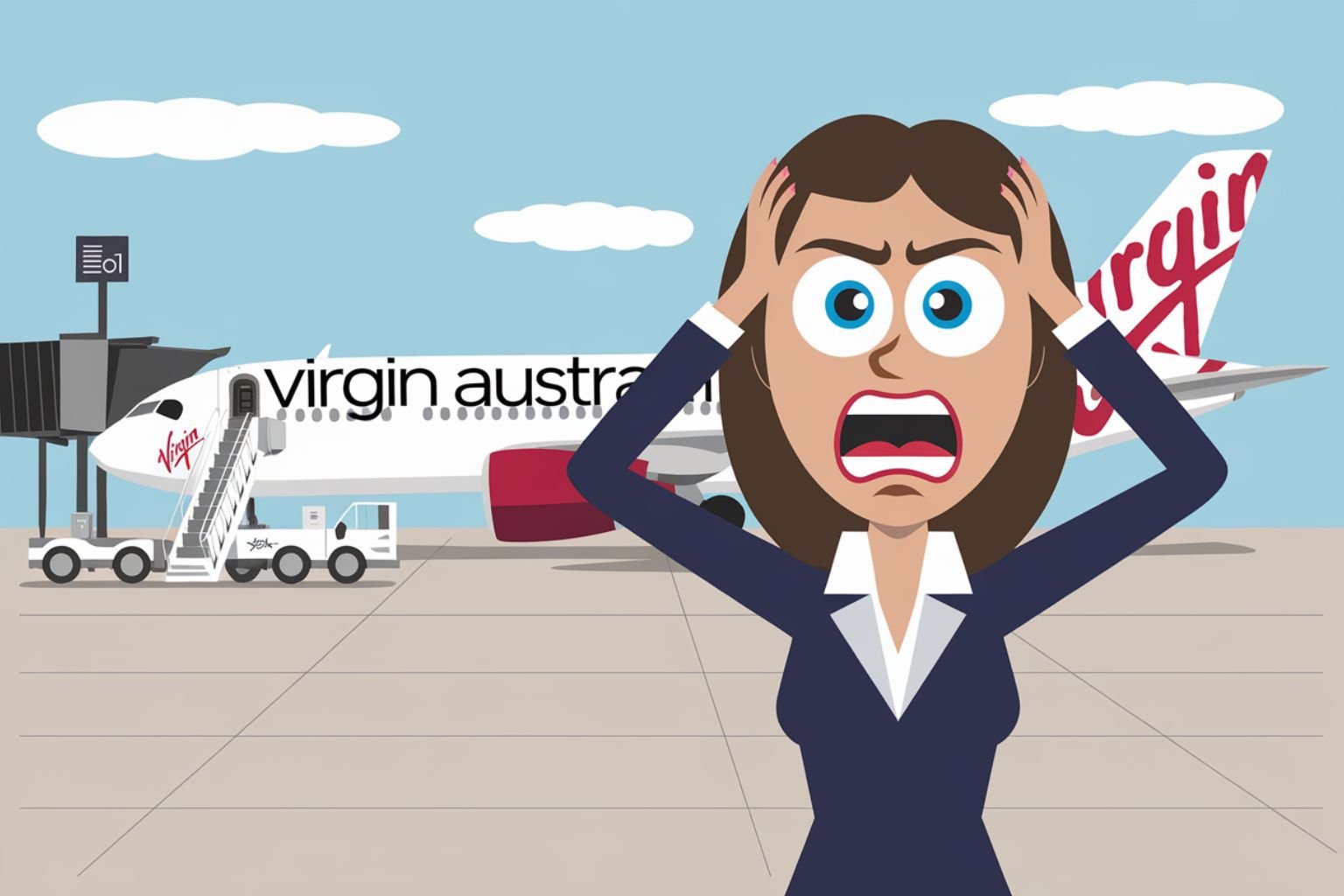
Booking.com said my flight was confirmed, but the airline says it never existed

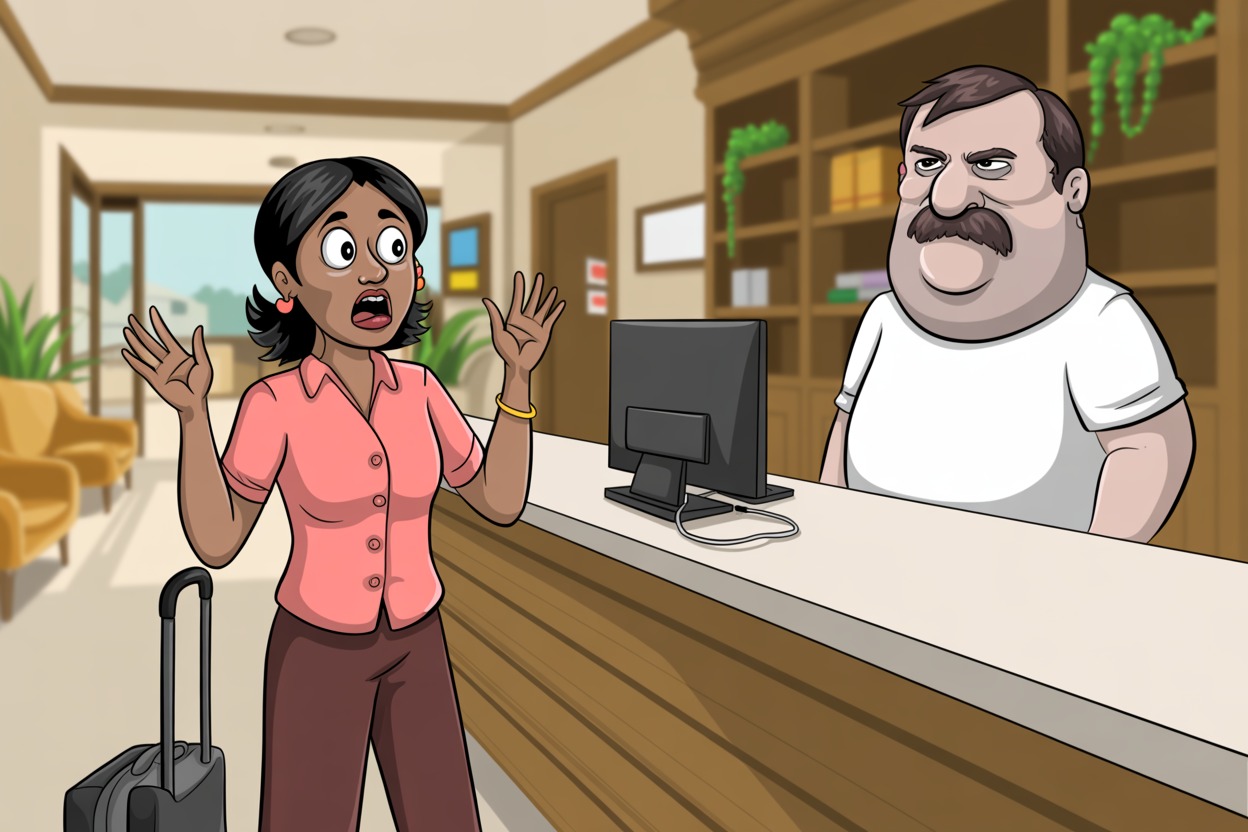
Lindley Kinerk’s last morning in Dresden seemed routine. She and her companions packed up, checked out, and headed to the airport for their 8:25 a.m. flight home to Boston. They had even gotten a friendly check-in reminder from Booking.com the night before. Then they reached the counter and learned something that would cost them nearly $6,000: their flight did not exist. Not that morning, not any morning. It had been off the airline’s schedule for months. Booking.com, it seems, had quietly rebooked them on an earlier flight and never said a word, and the airline insisted the whole thing was not its problem. With a third ticketing agency tangled into the booking and every company pointing at the others, Kinerk had to buy new tickets on the spot just to get home. What she did next, and what Booking.com eventually said about her money, is where this case turns.

Black and white editorial cartoon of an alarmed man at a desktop computer as a hand reaches out of the monitor screen and snatches cash from in front of him, illustrating online booking scams that drain travelers' money.

Are travel companies doing enough to protect your booking data?

The message arrives by WhatsApp and feels completely real, because it is built from real information: your hotel, your dates, your confirmation number. Someone claiming to manage the property warns that your room is at risk unless you verify your card right away. Security researchers call this reservation hijacking, a targeted phishing scheme that leans on details only you and your hotel should know. The data has to come from somewhere, and the travel industry keeps springing leaks, with booking platforms, cruise lines, and airlines all disclosing breaches that mostly trace back to a third party rather than the company’s own front door. Which raises the question travelers can no longer avoid: when a company collects your whole itinerary and a leak in its network turns that data into a weapon aimed at you, who is responsible for what happens next?

Editorial illustration of a couple standing on a dark airport tarmac with two orange roller suitcases, watching from a distance as a fiery orange and yellow explosion cloud rises into the blue sky beyond, with a small white airplane visible on the horizon, illustrating the uncertainty of booking summer vacation travel during an active geopolitical conflict in the Middle East

Is it safe to book a summer vacation yet?

The U.S. and Iran are reportedly close to a deal that would end the war, lift sanctions, release frozen Iranian funds, and reopen the Strait of Hormuz. Travel companies say the worst is priced in. Airbnb expects second-quarter bookings to drop one percentage point across Europe, the Middle East, Africa, and Asia Pacific. Booking Holdings cut its full-year revenue forecast through June. Iranian lawmakers called the U.S. proposal a wish list. Before booking, check State Department advisories at Level 3 or Level 4, examine flight routes for airspace closures, buy cancel-for-any-reason insurance, and pay only with a credit card.