in this case
- A passenger who paid for business class is downgraded to economy on a nine-hour flight from Australia to Japan.
- Her online travel agency, Booking.com, and the airline, Virgin Australia, give her the runaround for four months.
- This case untangles the complicated question of who is responsible for a refund when you book through a third party—the agent or the airline?
If you paid for a business class seat but got an economy class seat instead, you would expect an apology and a prompt refund from the airline, right? And if you used an online travel agent, you’d assume it would do everything it could to help.
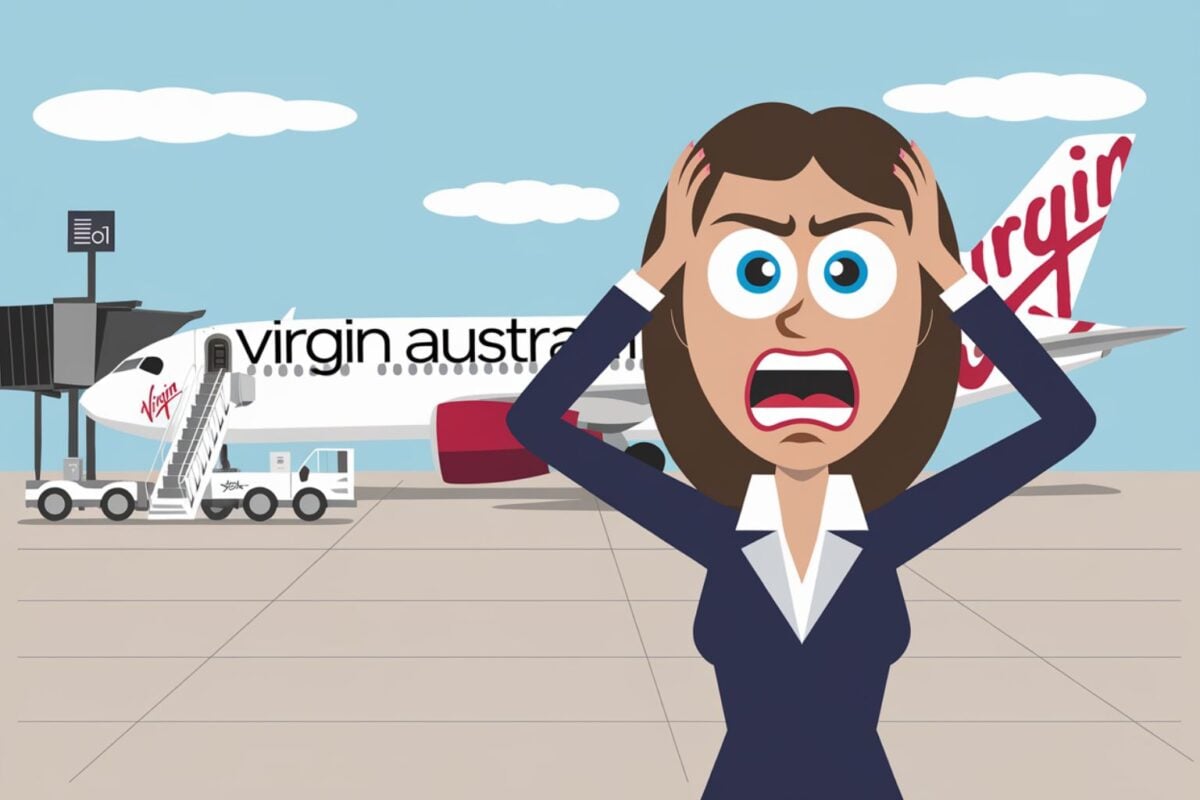
So when Ellen Pincus found herself exiled to steerage on a flight from Cairns, Australia, to Tokyo, she thought she was in good hands with her online travel agent, Booking.com.
But if you read this site regularly, you already know: That’s not a safe assumption.
“It was a nine-hour flight,” Pincus recalls, thinking back on her grueling flight from Australia to Japan. “We paid for business class, and we ended up crammed in economy. It was unacceptable.”
Pincus figured that Booking.com owed her $1,500, and she was starting to think she would never see the money.
Her airline, Virgin Australia, stalled its refund to Booking.com for months. And Booking.com kept deferring to Virgin Australia, saying it couldn’t do anything.
Her case raises several important questions:
- Who’s responsible for refunding a downgraded flight — the travel agency or the airline?
- How long should a refund take, and what can you do if it’s delayed?
- What’s the best way to escalate a complaint when customer service fails?
Let’s take a closer look at this case and answer these questions.
“I would like a refund”
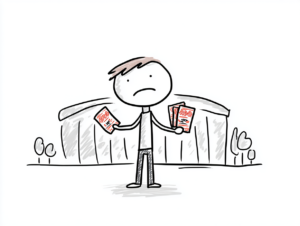
Pincus and her husband boarded their Virgin Australia flight in Sydney, expecting a comfortable business-class experience. They’d paid $3,300 for their airfare. But when they reached Cairns for their connecting flight to Tokyo, a Virgin Australia representative told them their seats had been downgraded to economy class. It appears this happened because of an equipment change — moving to a smaller aircraft that had fewer business class seats.
The couple arrived in Tokyo uncomfortable and disappointed. But they thought there was a silver lining: They expected a big refund from Virgin Australia and Booking.com, their online travel agency.
Pincus immediately contacted Booking.com, but the customer service representative gave her incorrect information, telling her to file a claim directly with Virgin Australia. She did — only to learn weeks later that Booking.com was supposed to handle the refund process. (Related: Help! Someone stole 200,000 Chase points, and I can’t get them back.)
Over the next four months, Pincus contacted Booking.com five times. Each time, a representative told her the same thing: “We’re waiting for Virgin Australia to confirm the refund amount.”
She had been more than patient with the process. It appeared that Booking.com would not issue a refund until Virgin Australia issued the refund to the online travel agency. Thing is, Pincus had paid Booking.com and was holding the agency responsible for her refund. Was that fair?
“I would like a refund,” Pincus told me.
Let’s see if that’s possible.
Read more insightful reader feedback. See all comments.
Who’s responsible for refunding a downgraded flight — the travel agency or the airline?
When your flight experience doesn’t match what you paid for — like Pincus’s business-class seats being downgraded to economy — the question of responsibility becomes important.
Is it the airline’s fault, or does the travel agency bear the blame?
The answer isn’t always straightforward, but it often comes down to who took your money and who holds the contract with the airline.
In Pincus’ case, she booked her flights through Booking.com. While Virgin Australia operated the flights, Booking.com acted as the intermediary. This means Booking.com was responsible for ensuring Pincus received the services she paid for. So even if Virgin Australia downgraded Pincus on the second leg of her flight, Booking.com is technically responsible for the service — after all, they took her money.
So it’s up to Booking.com to make this right.
That’s not to say Virgin Australia is entirely off the hook. If the downgrade was because of an airline’s overbooking or operational issue, the airline must by law compensate passengers directly.
Virgin Australia’s own contract of carriage also addresses what should happen if you’re banished to the back of the plane.
“In the rare event we downgrade you from the cabin class you originally purchased to a lower cabin class, the difference between the fare class you paid for and the fare class you travelled in will be automatically refunded,” it says in its guest compensation policy. “The fare difference will be calculated based on the price of the equivalent fare at the time you made your booking.”
But when a third party is involved, the travel agency becomes the primary point of contact for resolving the issue. Again, Booking.com — this one’s on you!
How long should a refund take, and what can you do if it’s delayed?
Virgin Australia says the refund should be automatic. The airline’s website says refunds could take between 7 and 12 business days.
It should not take months.
So what should Pincus do if Virgin Australia is dragging its feet? Well, she could submit a complaint to the Australian Competition & Consumer Commission, the consumer protection organization. That could light a small fire under Virgin Australia, but I don’t see any precedents under Australian law that would force it to refund the money quickly. (Europe recently enacted a rule under EC 261 to require airlines to reimburse consumers promptly, but enforcement seems to be uneven.)
The best way to nudge a company into a refund is to apply steady pressure, as Pincus did.
Pincus started the process by reaching out to the executive contacts at Virgin Australia, which I publish on my consumer advocacy website elliott.org
But there’s no guarantee that will work. Pincus is based in the Bronx, half a planet away. And as they say, out of sight, out of mind. Let’s just say the airline had minimal motivation to do anything. It doesn’t even operate in the United States.
Who do you think is ultimately responsible for a refund in a case like this—the online travel agency that took your money or the airline that failed to provide the service?
Have you ever been downgraded on a flight? And what’s a reasonable amount of time to wait for a travel refund?
Share your experiences in the comments below.
What’s the best way to escalate a complaint when customer service fails?
Pincus’ experience highlights the importance of understanding who you’re dealing with. If you book through a travel agency, then it is responsible for advocating on your behalf. If you book directly with the airline, the responsibility falls squarely on them.
Pincus also tried to call Booking.com and Virgin Australia to inquire about her refund. That’s understandable, but phone calls are unproductive. There’s no paper trail — no evidence that she tried to get a refund. Ultimately, this complicated her refund request.
Personally, I find it irritating when an intermediary refuses to take responsibility for a product it sells. Booking.com should have been all over this case, fighting for her refund. Instead, it kept deferring to Virgin Australia, which had no incentive to refund the money quickly.
The lesson? Always start with the company that received payment. If they can’t resolve the issue, escalate to the airline — and don’t hesitate to seek outside help if necessary.
Finally, a refund
My advocacy team reached out to Booking.com, which finally lit a fire under the company.
“My refund finally hit my credit card more than four months after the flight,” she told me. “I’m so grateful for the help. I couldn’t have done it alone.”
This case is a reminder that when travel plans go awry, you don’t have to accept a runaround. Know your rights, document everything, and don’t be afraid to ask for help.
Your flight downgrade action plan
What to do when the airline moves your seat
At the airport
Get it in writing
Ask the gate agent for a printed statement confirming the downgrade. This is your most important piece of evidence.
Keep all boarding passes
Save both your original premium pass and your new economy pass. They prove the class you paid for versus the one you flew.
After the flight
Contact the right company
If you booked through a travel agent, they are your first point of contact. If you booked directly, contact the airline.
Follow up in writing
Send a polite, concise email with all your documentation. This creates a paper trail that phone calls do not.
Need help with Booking.com?
If you’re having a problem, sometimes the best way to get a resolution is to contact an executive. Here are the contacts you need.



Have a question about this story? Tell us what happened — we read every comment.
Join the conversation