in this case
- WestJet cancels Brittany Muffet’s flight to London citing “weather,” even though other airlines continue to fly the same route without issue.
- Stranded and desperate to return to her PhD program, she buys a new ticket on another airline, assuming she will get a refund for the canceled trip.
- Instead, she falls into a customer service black hole where WestJet blames Booking.com, Booking.com blames WestJet, and no one agrees to pay her back.
When WestJet canceled Brittany Muffet’s recent flight, she found herself caught in a blame game between the airline and Booking.com. But that wasn’t the weird part.
She planned to fly from San Francisco to London via Calgary so she could get back to school after winter break. She’d booked her $350 ticket through Booking.com, figuring she’d saved a few bucks.
It’s a cost-cutting move she regrets.
WestJet threw her a curveball.
“Your itinerary may have been impacted,” the airline warned in an email that arrived just a few hours before her departure.
And it was “impacted.” WestJet canceled the first leg of her flight because of “weather along the aircraft’s route.”
Muffet was trapped in a bureaucratic nightmare that would cost her time, money, and nearly two weeks out of a pricey PhD program in London.
Her case raises several important questions that frequent travelers need to understand:
- When you book through a third-party site and your flight gets canceled, who’s responsible for the refund — the airline or the booking site?
- What are your rights when an airline claims a “weather” problem but other carriers are operating normally?
- How do you get a real refund instead of travel credit when your airline cancels your flight?
“They told us to just wait for a new itinerary from WestJet”
Muffet’s flight started with a simple delay but turned into something far worse. It turns out she wasn’t just dealing with a single cancellation — WestJet kept axing flights from San Francisco to Calgary and Calgary to London for an entire week.
The airline blamed weather, but here’s the kicker: other airlines continued operating normally.
“Passengers were not accommodated in hotels or offered any food vouchers, and WestJet’s phone lines shut down,” Muffet told me. (Related: Marriott closed my hotel but kept my money — and offered gift cards instead.)
She waited at San Francisco International Airport, watching other passengers in similar predicaments. Some had been stranded for days. Among them were elderly passengers, including one in a wheelchair, who she says had been abandoned by the airline.
The counter agents kept making promises they couldn’t keep, she says.
“They told us to just wait for a new itinerary from WestJet,” Muffet recalls. That itinerary never came.
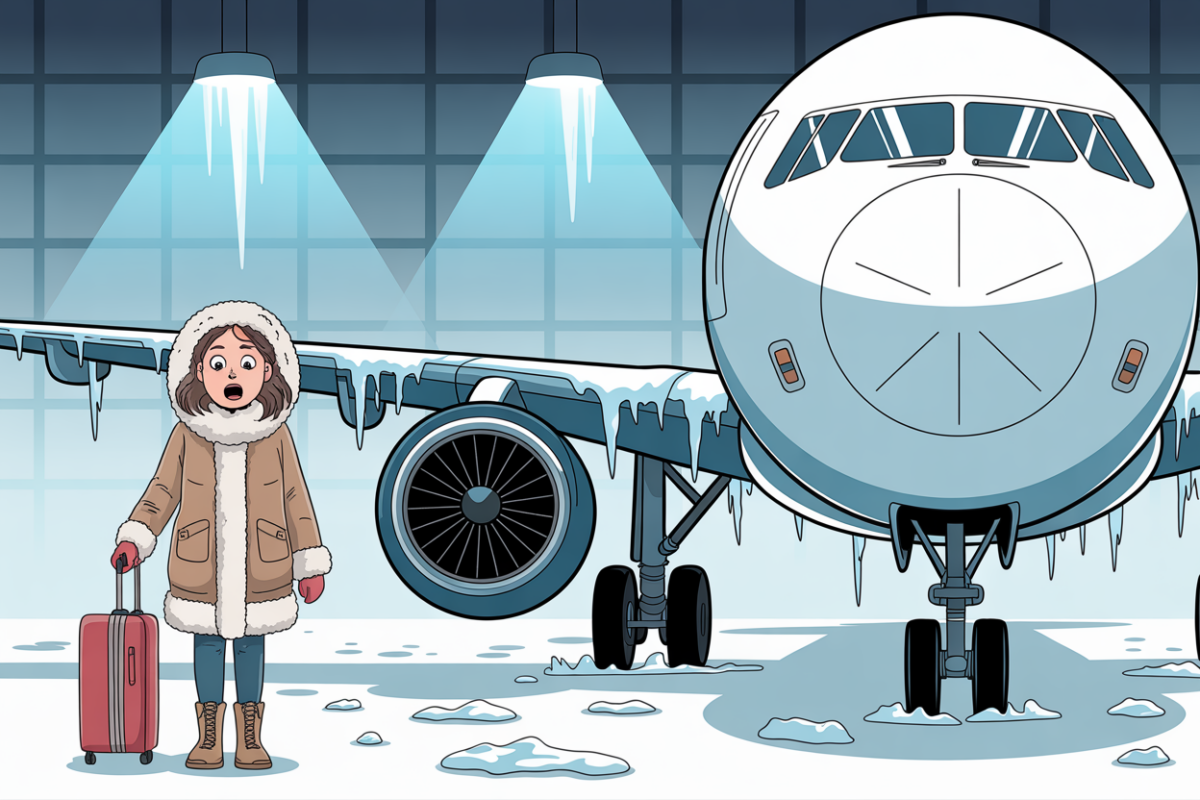
WestJet says it was affected by extreme cold.
“We sincerely apologize to guests who have been impacted by cancellations and delays, resulting from ongoing extreme cold temperatures affecting Canada’s prairie region,” the airline said in a statement.
After nearly a week of being jerked around, Muffet gave up waiting. She bought a $756 ticket on another airline just to get back to London and resume her studies. The damage was done — she’d already missed more than a week of classes.
But her ordeal was just beginning.
Had this happen to me with Delta… I was just getting ready when I got a text from Delta that my flight was cancelled. It was stated it was a mechanical issue… Of course when I got home they changed their story that it was weather. Despite appeals and having them review the conversations with my wife they held fast to the weather story. I know what happened, the Delta flight which I took down was only 1/3 full and probably the same for my return flight. The tropical storm gave them the excuse to cancel a lightly loaded flight.
Read more insightful reader feedback. See all comments.
The blame game begins
When Muffet tried to get her money back, she walked into a classic case of finger-pointing. WestJet said Booking.com was responsible for the refund. Booking.com said WestJet owed the money.
WestJet’s position was clear in its email responses.
“When a booking is made through a 3rd Party Agency, WestJet is not able to email guests as no email address is noted on the reservation,” a customer service representative named Laura wrote. “Please reach out to the 3rd Party Agency for further assistance.”
But Booking.com wasn’t having it either. Its subsidiary, GoToGate, which had processed the actual booking, sent policy information back to Muffet explaining that the airline was responsible for cancellation compensation.
Muffet found herself ping-ponging between the two companies for over a year. She wrote to WestJet’s CEO, submitted complaints to the Canadian Transportation Agency, and even consulted legal experts. Nothing worked.
“I continued to follow up with WestJet, even writing to corporate, and they simply ignored my emails,” she said.
The companies had effectively created a customer service black hole, and Muffet was trapped in it.
The stress was taking its toll on someone trying to complete a demanding graduate program. Every email exchange was time stolen from her studies and research.
When you book through third parties, who really owes you money?
Here’s what most travelers don’t understand: when you book through a third-party site like Booking.com, you’re actually the booking site’s customer — not the airline’s. The booking site purchases the ticket from the airline on your behalf, then resells it to you. It also takes a commission.
This creates a triangle of responsibility that can work against consumers. The airline says it doesn’t owe you anything because you’re not their customer. The booking site says it’s just the middleman and the airline should handle any refund.
But legally, it’s pretty straightforward. Since you paid the booking site, it owes you a refund when flights get canceled. It can then work with the airline to get the money back. But that’s between them, and it’s not your problem.
The Canadian Air Passenger Protection Regulations that Muffet cited are clear about airline obligations to passengers, but they don’t override the fundamental customer relationship. If Booking.com took her money, Booking.com needed to return it.
Third-party booking sites often resist this responsibility because it’s more profitable to push customers toward airlines. Airlines resist because they would rather not deal with customers when there is no direct relationship. Meanwhile, passengers get stuck in the middle, often for months. Or years.
The solution? Always book directly with airlines when possible. If you use a third-party site, remember that it’s your primary point of contact for refunds and changes, regardless of what it might claim.
In Muffet’s case, she’d learned this lesson the hard way.
“My understanding had been that WestJet was responsible for the reimbursement and compensation,” she later wrote. “But I learned something new — that Booking.com is actually responsible.”
What are your rights when an airline claims a “weather” problem but other carriers are operating normally?
Airlines love to blame the weather because it lets them off the hook for compensation. Under most regulations, including the Canadian Air Passenger Protection Regulations, airlines aren’t required to pay cash compensation for weather-related delays and cancellations.
But here’s what airlines don’t want you to know: They still owe you rebooking or refunds, even for cancellations caused by the weather.
Oh, and if the weather claim seems suspicious, you have every right to question it.
Muffet did exactly that. She peppered WestJet with pointed questions: What was the nature of the alleged weather conditions? When did WestJet learn about them? Were they unusual for the season? What regulatory requirements couldn’t be met?
These aren’t just academic questions. Airlines sometimes use weather as a blanket excuse for operational problems, crew shortages, or mechanical issues. If weather was really the problem, why were other airlines operating normally?
Why was the excuse so important? Because if this were an operational issue — say, a mechanical failure — then WestJet would have owed her more compensation.
The fact that WestJet kept canceling flights for an entire week while competitors flew suggests this wasn’t just weather. Real weather delays typically affect all airlines at an airport, not just one carrier.
WestJet’s customer service representatives couldn’t or wouldn’t answer Muffet’s questions. That silence speaks volumes. A legitimate weather delay should be easy to explain.
When airlines claim weather but can’t provide specifics, passengers should push back. File complaints with transportation authorities. Demand documentation. Don’t just accept “weather” as an explanation when the facts don’t add up.
The regulatory agencies exist to investigate these claims, even if they can’t always provide immediate relief. The Canadian Transportation Agency, despite not responding to Muffet’s complaint, keeps records of patterns that can lead to enforcement actions.
Weather delays are real, but weather excuses are often just corporate convenience. Knowing the difference can help you fight for what you’re owed.
Will she get her refund?
After months of emails, complaints, and advocacy involvement, Booking.com finally responded.
The company maintained that since WestJet had canceled the flight and the rebooking wasn’t accepted, “any formal refund remains the airline’s responsibility.”
But it also quietly processed a $350 voucher, which Muffet accepted.
Was this justice? Kind of.
Muffet deserved a full cash refund, not corporate scrip. She’d been put through an ordeal that cost her academically and personally, dealing with a problem that should have been resolved within days, not months.
After more than a year of fighting, Muffet had reached her limit. The credit was something, even if it wasn’t everything she wanted.
The real tragedy here isn’t just one student’s travel nightmare. It’s a system designed to wear down consumers until they give up or accept less than they’re owed. Airlines and booking sites know that most people can’t afford to fight indefinitely.
Muffet’s case shows why booking directly with airlines matters, why questioning suspicious weather claims is important, and why travel credits aren’t real refunds. But it also shows the human cost of corporate indifference.
Companies like WestJet and Booking.com have teams of lawyers and customer service representatives whose job is to minimize payouts. Passengers have day jobs, families, and lives that don’t revolve around fighting for refunds. The deck is stacked against them.
At least Muffet got something back. Too many travelers get nothing at all.
WestJet blamed the weather while other airlines kept flying. Booking.com blamed the airline while holding the customer’s money. Brittany Muffet was left with neither a flight nor a refund.
Readers empathized with the “weather excuse” trap, sharing similar stories of airlines using storms to cancel lightly loaded flights. The consensus was clear: third-party sites add a layer of chaos that makes refunds nearly impossible.
Frank Loncar shared a story about Delta canceling a flight for “mechanical issues” that later morphed into a “weather” excuse. He suspects airlines use weather as a cover to cancel unprofitable, lightly loaded flights without owing compensation.
M.C. Storm argued that if weather was truly the issue, WestJet should have been able to explain it clearly. The airline’s silence and refusal to answer questions suggest the excuse was flimsy at best.
AJPeabody offered a simple rule: “If I pay you for something but you don’t give it to me, you give my money back, no questions asked.” JenniferFinger added that third-party sites fail to see passengers as “customers,” prioritizing their relationships with airlines instead.
Your voice matters
What you’re saying
The ‘convenient’ storm
The silence is deafening
The golden rule of refunds

Have a question about this story? Tell us what happened — we read every comment.
Join the conversation