
in this case
- Krupa Singampalli booked a United trip home from Australia for her family of four, with business class upgrades bought using miles and a copay per passenger.
- A last-minute schedule change never reached her inbox. At the airport, the partner airlines could not find the reservations, and the family was rerouted onto flights they were never confirmed on.
- After missing the rebooked flight and buying new tickets out of pocket, she found her upgrades gone and the airline pointing to a notification she says she never received, which raises a question about what an airline owes you when it changes your flight and the message never arrives.
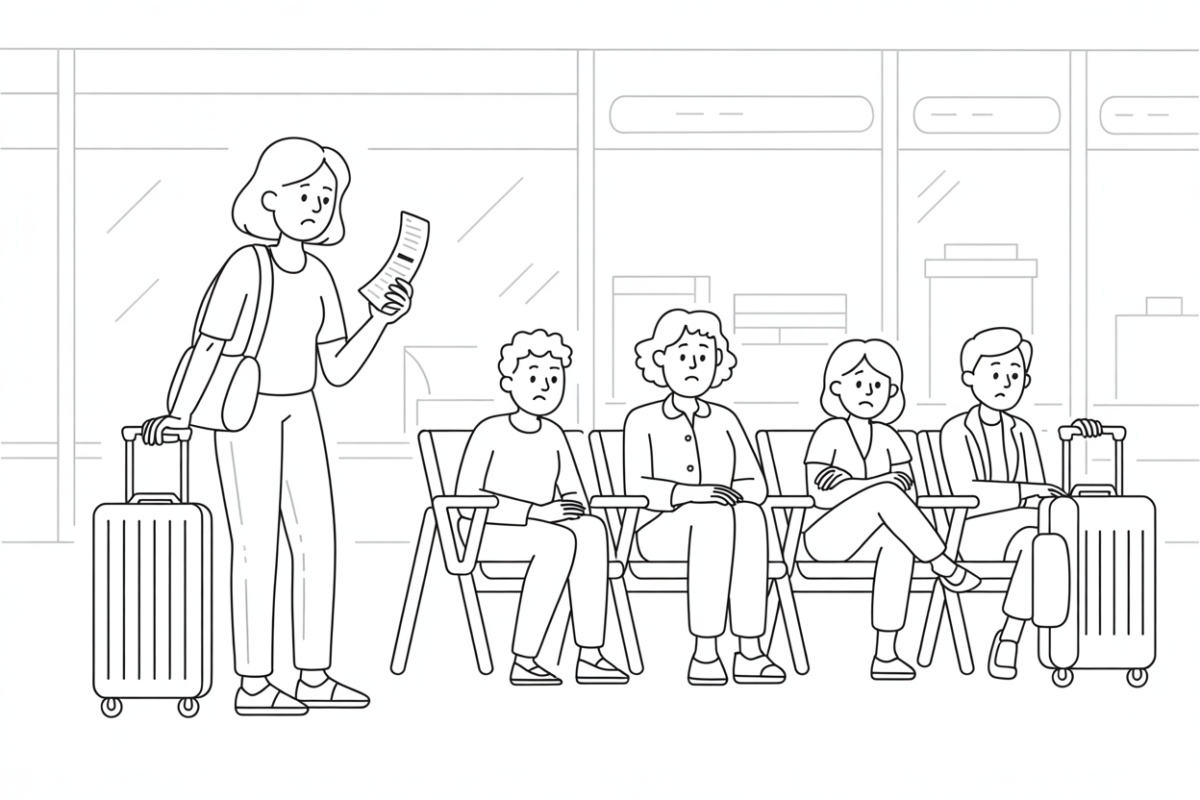
Krupa Singampalli books a United flight home from Australia, but a last-minute schedule change never reaches her inbox. When she arrives at the airport, her airlines can’t find her reservation. After missing her original flight and buying new tickets out of pocket, Singampalli discovers the business class upgrades she paid for have vanished. Will United make this right?
Question
I recently experienced what can only be described as a travel nightmare with United Airlines. I had booked flights from San Francisco to Auckland, New Zealand, and back through Cairns, Australia, for my family of four. We purchased business class upgrades using 30,000 miles and a $600 copay per passenger. The outbound trip went smoothly, but our return became a disaster.
At 1 a.m. in Cairns, I checked the United app and discovered my 74-year-old mother’s status on the Cairns-Brisbane flight had changed to “waitlisted.” I immediately called United customer service. A representative told me the flight was “not operating” and rerouted all four of us through Sydney instead.
When we arrived at Cairns Airport, Virgin Australia, which operated the first leg of our return flight, told us only my mother had a confirmed ticket. The rest of us had nothing. I called United again. An agent said Qantas had my ticket but couldn’t explain what that meant. Qantas couldn’t find any reservation without a confirmation number, which I didn’t have. United then offered a three-way call with Qantas but disconnected, leaving me stranded.
While I was on the phone trying to sort this out, the flight departed without us. The next United agent claimed we had seats on a flight from Sydney, but couldn’t explain how we were supposed to get there from Cairns. Qantas staff at the airport were dismissive and refused to help.
Feeling unwell and desperate to get home, I purchased four one-way tickets on Virgin Australia from Cairns to Sydney for nearly $890, plus $60 in baggage fees. When we reached Sydney, I learned United had canceled our tickets because we didn’t board the assigned Qantas flight — which never appeared in my app, email, or texts. The Sydney United staff were helpful and rebooked us, but our business class upgrades were gone.
United claims they sent a schedule change notification weeks before to the email addresses on file. I never received it. When I contacted United’s customer service, a representative offered $100 travel certificates and said the matter was closed. United refuses to refund the $1,800 in upgrade fees or reimburse the tickets I had to buy.
I’ve been a loyal United customer for years. How can they change my itinerary, fail to properly communicate it, force me to buy new tickets, and then refuse to make things right? — Krupa Singampalli, Union City, Calif.
We travel internationally often. We get multiple email and text notifications about our flights, from notifications that a flight time has changed to notifications that it is time to check in. Not only that but we collect the booking codes of the partner airlines, because United’s code means nothing to Virgin Australia. While I can imagine one notification going astray, it’s not possible that all will.
If United thinks it sent them an email, it ought to be able to produce the email.
Read more insightful reader feedback. See all comments.
Answer
You paid United for a service it didn’t deliver. That’s the bottom line here.
When an airline makes a schedule change, it has a legal obligation to notify passengers. United claims it sent an email before your flight. But a single email sent six weeks before departure — especially for a complex international itinerary involving partner airlines — isn’t enough. Airlines should send multiple notifications as the departure date approaches, and they should require you to acknowledge them.
According to the Department of Transportation, when a flight is significantly changed and a passenger doesn’t accept the new itinerary, the airline must provide a refund. United rerouted you through Sydney on partner airlines without ensuring you actually had confirmed seats. That’s a massive breakdown in coordination between United and its partners.
The situation at Cairns Airport was absurd. You bought a United ticket. United should have been responsible for getting you home — not Qantas, not Virgin Australia. Instead, you got caught in a blame game between three airlines, with United pointing to Qantas, Qantas asking for information you didn’t have, and Virgin Australia washing its hands of the situation.
Could you have been more proactive in monitoring your reservation? Maybe. On a complicated itinerary like this, you’ll want to check your itinerary frequently in the weeks before departure. Sign up for text message alerts in addition to email notifications. Save screenshots of your original booking and any changes.
You could have escalated this to a United supervisor when the first agent couldn’t help. I publish executive contact information for United on my consumer advocacy site, Elliott.org. These contacts often have more authority to resolve complex issues than frontline agents.
You did an excellent job documenting your case with confirmation numbers, time stamps, and the names of agents you spoke with. That paper trail is so important when you’re fighting for a refund.
After my advocacy team got involved, United refunded the $600 copays — a start, but far from what you deserve. The airline still refuses to reimburse your Virgin Australia tickets. United maintains that because it had rebooked you on a Qantas flight you knew nothing about, the case is closed.
This is exactly the kind of runaround that drives travelers crazy. Airlines hide behind their contracts of carriage and partner agreements while passengers get stuck with the bill. You paid United for a complete journey. United didn’t deliver. I recommend you contact your credit card company to see if you can recover the rest of your expenses.
A schedule change the passenger never saw cascaded into missed flights, lost upgrades, and tickets bought out of pocket. The case raises bigger questions about how airlines handle changes on partner-airline itineraries.
Your voice matters
What you need to know about airline schedule changes and your rights
When an airline changes your flight, the rules about notification, rebooking, and refunds are not always clear. Here is what travelers should know.
Yes. When an airline makes a schedule change, it has an obligation to notify passengers. A single email sent weeks before departure, especially on a complex international itinerary with partner airlines, is widely considered inadequate. Airlines should send multiple notifications as the date approaches and ask you to acknowledge them. According to the U.S. Department of Transportation, when a flight is significantly changed and the passenger does not accept the new itinerary, the airline must provide a refund. This applies regardless of the fare type when the change is significant and you decline it. The airline that sold you the ticket is responsible for getting you to your destination, even when partner carriers operate some legs. If you are rerouted onto a partner flight, the selling airline should ensure you actually have confirmed seats rather than leaving you to sort it out at the airport. If a flight change removes the upgraded cabin you paid for with miles or cash, you can ask for those upgrade fees back. Many travelers argue that an upgrade fee should be refunded in full when the airline, not the passenger, causes the loss of the upgraded seat. Document that you did not receive it, gather your original booking confirmation, and point to the absence of any alert in your app, email, or texts. Then escalate beyond the first agent, because frontline staff often cannot resolve a coordination failure between multiple airlines. Check your itinerary frequently in the weeks before departure, sign up for text alerts in addition to email, and save screenshots of your booking and any changes. On multi-airline itineraries, confirm each leg directly so a missed message does not strand you. Possibly. If an airline refuses to reimburse expenses it caused, such as replacement tickets, you can ask your credit card company whether you can dispute the charges. For help with a specific airline dispute, see how the Travel Troubleshooter helps consumers.Does an airline have to tell me when it changes my flight?
Am I entitled to a refund if my flight is significantly changed?
Who is responsible when partner airlines are involved?
What happens to my upgrade if the airline changes my flight?
What should I do if I never received the change notification?
How can I avoid this on a complex international trip?
Can my credit card help me recover costs?

Have a question about this story? Tell us what happened — we read every comment.
Join the conversation