

in this case
- Barb and Steve Pfeffer returned their rental Jeep after an eight-day hiking trip. The drop-off seemed routine, and the agent said nothing about the car.
- Two weeks later, a $125 cleaning fee landed on their card. Budget said sand on the floor mats forced the vehicle out of service for detailing.
- Budget’s contract lets it charge for cleaning at its “sole discretion,” and that single phrase is the heart of a fight over what counts as excessive dirt versus a five-minute vacuum.
When Barb and Steve Pfeffer returned their Jeep Compass after an eight-day hiking trip in the Pacific Northwest, the drop-off seemed routine. A friendly Budget agent verified the fuel, offered a brief thanks, and sent them on their way.
It was anything but routine. Two weeks later, they found a $125 cleaning fee on their credit card.
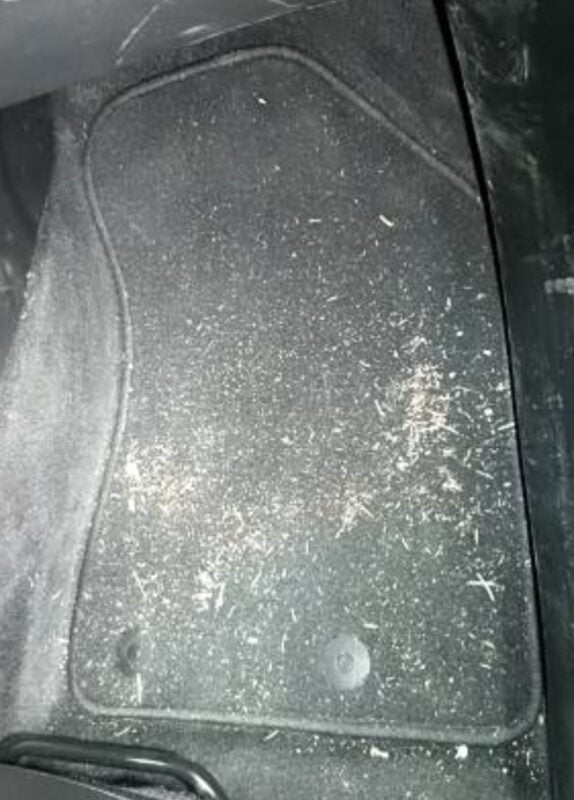
The reason? “Excessive” sand on the floor mats. Budget claimed the debris forced the Jeep out of service for detailing.
Barb Pfeffer was stunned.
“We’ve rented cars for over 40 years for business and leisure and never have we been charged a cleaning fee,” she complained.
This case raises several important questions about rental car policies:
- What constitutes “excessive” dirt that warrants a cleaning fee?
- Should rental car companies warn customers at drop-off about potential charges?
- Are rental car cleaning fees a legitimate cost recovery or a revenue grab?
The perfect road trip that wasn’t quite perfect
The Pfeffers booked their rental through Costco Travel, a membership perk they’d used successfully for years. They picked up the Jeep in Portland and spent eight days hiking in national parks across Washington and Oregon. When they dropped the car off in Seattle, they knew there was some sand on the floor mats.
“We had been hiking in the National Parks over the eight days we had the rental car,” Pfeffer explained. “Our view is that floor mats often take the brunt of use and Budget shouldn’t be surprised that they get dirtier than the rest of the car.”
The return process seemed routine. A Budget employee checked the vehicle, noted the full gas tank, and completed the transaction without mentioning any cleanliness concerns. The Pfeffers even planned to write a positive review, but by the time they tried, the link had expired.
Then came the surprise email from Budget’s client relations team: A $125 cleaning charge for what Budget called “excessive dirt and sand” that required the vehicle to be sent out for detailing.
The Pfeffers contacted Budget’s customer service line, spent 15 minutes on hold waiting for a manager, and got disconnected. They reached out to Costco Travel, which promised to look into it. They wrote to Budget executives, making their case that two sandy floor mats didn’t justify sending a car to a detailer.
Budget’s response was a masterpiece of corporate evasion. It cited its rental agreement, which allows charges for vehicles returned in a condition that requires detailing, including “excessive odor, dirt, sand, trash and cigarette burns.”
And that’s when the Pfeffers contacted my team.
I would be more sympathetic to the rental car companies if they actually provided clean cars. I have, on multiple occasions, rented cars that had trash under the seats. And dirty floor mats don’t require the entire car to be detailed. It requires the floor mats to be vacuumed, which they ought to be doing between each rental anyway.
Read more insightful reader feedback. See all comments.
What makes dirt “excessive” in a rental car?
The rental car cleaning fee has become one of the industry’s most contentious charges. Companies defend these fees as necessary to maintain fleet standards. Customers see them as “gotcha” charges that appear weeks after they’ve returned home.
Budget’s rental agreement gives the company wide latitude. Section 2.6(c) states that customers will pay “a reasonable fee for cleaning the vehicle’s interior or exterior for what [they] determine in [their] sole discretion are excessive stains, trash, dirt, soilage, odors or pet hair.”
That phrase, “sole discretion,” is the crux of the problem. It means Budget is the judge, jury, and financial executioner.
The photos Budget sent showed sand and some grass or small stones on black rubber floor mats. The Pfeffers admit the debris was there, but they argue it could have been handled with routine vacuuming.
“I even thought about shaking off the mats myself but figured they would get vacuumed when they got the car washed,” Barbara Pfeffer told me.
She makes a fair point. It’s a rental car, not an operating room.
Rental car companies vacuum every returned vehicle as part of their standard turnaround process. Cars get wiped down, floors get vacuumed, and exteriors get washed. It’s built into the business model. So when does regular cleaning become excessive cleaning that requires a detailer?
The car rental industry offers little guidance. I’ve reviewed dozens of similar cases where companies charged anywhere from $50 to $450 for cleaning. Some involved dog hair. Others involved beach trips. A few cases involved customers who swear the photos weren’t even of their vehicle.
Ride-sharing companies like Lyft have clearer standards. They charge $20 for minor dirt on seats, $40 for moderate messes on the exterior or floorboard, and $150 for major damage. Those fees seem calibrated to actual cleaning costs rather than maximum revenue extraction.
But rental car companies aren’t required to follow Lyft. They can charge what they want, when they want, and dare you to dispute it.
Should car rental companies warn customers at checkout?
Let’s rewind to the Pfeffers’ return. The Budget agent looked inside the car. He had to, in order to log the mileage and fuel. Yet, he remained silent about the supposedly “excessive” sand.
“There was no mention of a need for cleaning,” says Steve Pfeffer.
A simple heads-up would have solved the issue immediately. Instead, Budget waited two weeks until the Pfeffers were safely home in Minnesota.
When I pressed Pfeffer on this point, he was clear: “No, there was no mention of a need for cleaning. The person was very nice, thanked us for our business, verified a full tank and then finished checking us out.”
If the mats truly required detailing and would take the vehicle out of service, shouldn’t the agent have mentioned it?
A simple “Hey, there’s quite a bit of sand here. You might want to shake out the mats before you leave, or we’ll have to charge you a cleaning fee” would have given the Pfeffers a chance to fix the problem.
That’s not customer service. It’s an ambush.
Rental car companies will claim their employees are too busy to inspect every vehicle in detail at drop-off. Fine. But if you’re going to charge someone $125 for dirty floor mats, you should at least mention it while they’re standing in front of you.
The photos Budget provided to the Pfeffers raised another question: Were these even photos of their rental?
The Pfeffers couldn’t be certain. They say the floor mats looked dirtier in the photos than they remembered, possibly because Budget used a flash or black light that made the sand stand out against the black background.
“Perhaps some of the debris came from past users?” Pfeffer wondered.
Without a vehicle identification number visible in the photos, there’s no way to verify which car was photographed. I’ve handled cases where rental companies mixed up vehicles and charged the wrong customer. It’s rare, but it happens.
Are cleaning fees legitimate — or just revenue padding?
Let’s be clear about what’s really going on with rental car cleaning fees. Companies call them cost recovery, but customers see them as profit centers.
Detailing is waxing, buffing, and interior shampooing — a lengthy process to restore a vehicle to showroom condition. Vacuuming sand off two mats is simply not detailing. It’s a five-minute job with an industrial shop vac.
I’ve seen this kind of thing before. In one case I recently reviewed, a rental company charged a customer $450 for floor mat sand and justified it by claiming loss-of-use fees while the car sat in the detail shop. When pressed for documentation of the actual cleaning work performed, the company dropped the charge entirely.
When Budget told Pfeffer that the vehicle had to be sent out for detailing, placing the vehicle out of service, they were padding the bill.
Budget’s claim suggests either the company doesn’t understand what detailing means, or it’s using inflated language to justify inflated charges. I suspect the latter.
How to protect yourself from bogus car rental cleaning fees
If you’re renting a car, here’s what this case teaches us:
Photograph everything. Take video of the interior and exterior at pickup and dropoff. Get a shot of the vehicle identification number on the dashboard. If the company later claims your car was filthy, you’ll have proof of its actual condition.
Clean before you return. I hate saying this because routine vacuuming should be included in the rental price. But rental companies have shown they’ll nickel-and-dime customers for floor mat sand. Spend five minutes at a car wash with a vacuum, or shake out the mats yourself. It beats a $125 surprise charge.
If you have any doubts, request an inspection at drop-off. Don’t let the agent wave you off with a “we’ll check it later” brush-off. Insist on a walk-around inspection while you’re there. If they find something, you can address it immediately.
Put everything in writing. The Pfeffers tried calling Budget and got disconnected while waiting for a manager. Their emails created a paper trail that proved they’d attempted to resolve the dispute. Without that documentation, I wouldn’t have been able to help them.
Escalate if necessary. Budget’s initial response was a form-letter rejection. The Pfeffers didn’t accept it. They contacted Costco Travel, reached out to Budget executives, and eventually contacted my team. Persistence matters.
Know your credit card rights. You have 60 days to dispute charges with your credit card company. If a rental car company refuses to provide documentation of cleaning work or hits you with obviously inflated fees, your card company may side with you.
The bigger picture here is that rental car companies have created an environment where customers can’t trust the checkout process. You return a vehicle, get a friendly thanks-for-your-business send-off, and two weeks later discover you owe money for issues nobody mentioned. That’s not how honest businesses operate.
An unexpected resolution, thanks to more bad math
After I contacted Budget, the company suddenly changed its tune. A representative confirmed the cleaning fee would be dropped.
Then came the real surprise: Budget would refund the Pfeffers $162.
Wait, what? Budget had only charged them $125.
The excessive cleaning fee was somehow topped with an unexpected $37 bonus. It seems Budget’s accounting department operates with the same “sole discretion” as its cleaning crew. Steve Pfeffer called it a happy ending.
Of course it is — sometimes bad math works in your favor.
Your voice matters
A sandy floor mat turned into a $125 charge nobody mentioned at drop-off. The Pfeffers’ case raises broader questions about how rental companies decide what cleaning costs.
- Should rental car companies be legally required to publish a fixed schedule of cleaning fees, rather than charging at their own sole discretion?
- Should rental agents be legally required to flag any cleaning problem at drop-off, while the customer is still present, before a fee can be charged later?
- Should rental companies be legally required to provide dated, vehicle-identified photo proof before billing a customer for excessive dirt?
What you need to know about rental car cleaning fees
Rental car cleaning fees are among the industry’s most disputed charges. Here is how they work, when they are allowed, and how to push back.
Yes. Most rental agreements allow a cleaning fee when a vehicle is returned with conditions like excessive dirt, sand, stains, odors, or pet hair. The contract language often gives the company wide latitude to decide what qualifies, which is where most disputes begin. It means the company alone decides whether your car needs cleaning and what to charge. Budget’s agreement, for example, lets it bill a reasonable fee for what it determines in its sole discretion are excessive stains, trash, dirt, soilage, odors, or pet hair. That puts the company in the position of judge and biller at once. There is no industry standard, which is the core problem. Rental companies vacuum and wash every returned car as part of normal turnaround, so the question is when routine cleaning becomes detailing. Reviewed cases show charges ranging from about $50 to $450 for cleaning, with little consistency. There is usually no rule requiring it, but a heads-up at return would let you shake out the mats or vacuum on the spot. Many travelers argue that charging weeks later, without mentioning it at drop-off when the customer is standing there, is unfair. Rideshare companies tend to publish tiered amounts. Lyft, for example, lists roughly $20 for minor dirt, $40 for moderate messes, and $150 for major damage. Rental companies are not required to follow those schedules and can set their own fees. Gather your pickup and drop-off photos, email the company to create a paper trail, and ask for documentation of the actual cleaning work. If you booked through a travel service, loop them in, and escalate to executives if you get a form rejection. You can also dispute the charge with your credit card company. You generally have 60 days from the statement date to dispute a charge with your card issuer. If a rental company hits you with an inflated fee and will not provide proof of the cleaning, your card company may side with you. For help with a specific dispute, see how Elliott Advocacy helps solve consumer problems.Can a rental car company charge a cleaning fee for sand or dirt?
What does “sole discretion” mean in a rental contract?
What counts as “excessive” dirt versus normal use?
Should the agent tell me about a cleaning issue at drop-off?
How do rental cleaning fees compare to rideshare cleaning fees?
How can I dispute a rental car cleaning fee?
How long do I have to dispute the charge with my credit card?

Have a question about this story? Tell us what happened — we read every comment.
Join the conversation