
in this commentary
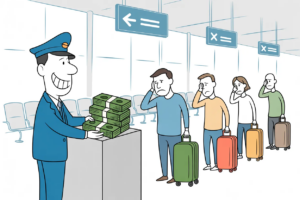
- When you miss one leg of a flight, airlines automatically cancel the rest of your reservation. Usually that is the traveler’s doing. But lately more people are being tagged as no-shows for flights they did not actually miss, sometimes after a weather delay and a rebooking, sometimes with a boarding pass in hand proving they flew.
- A no-show can be expensive. Travelers caught in the mix-up may have to buy a new ticket or rebook a room, and credit card disputes do not always go their way. Industry insiders acknowledge the stakes: a seat, a cabin, or a tour slot is a perishable product a company cannot resell once the date passes.
- All of which raises the question: when a company wrongly labels a paying customer a no-show and keeps the money, is that just a clerical error, or has the no-show quietly become a revenue stream? This piece weighs the case for each.
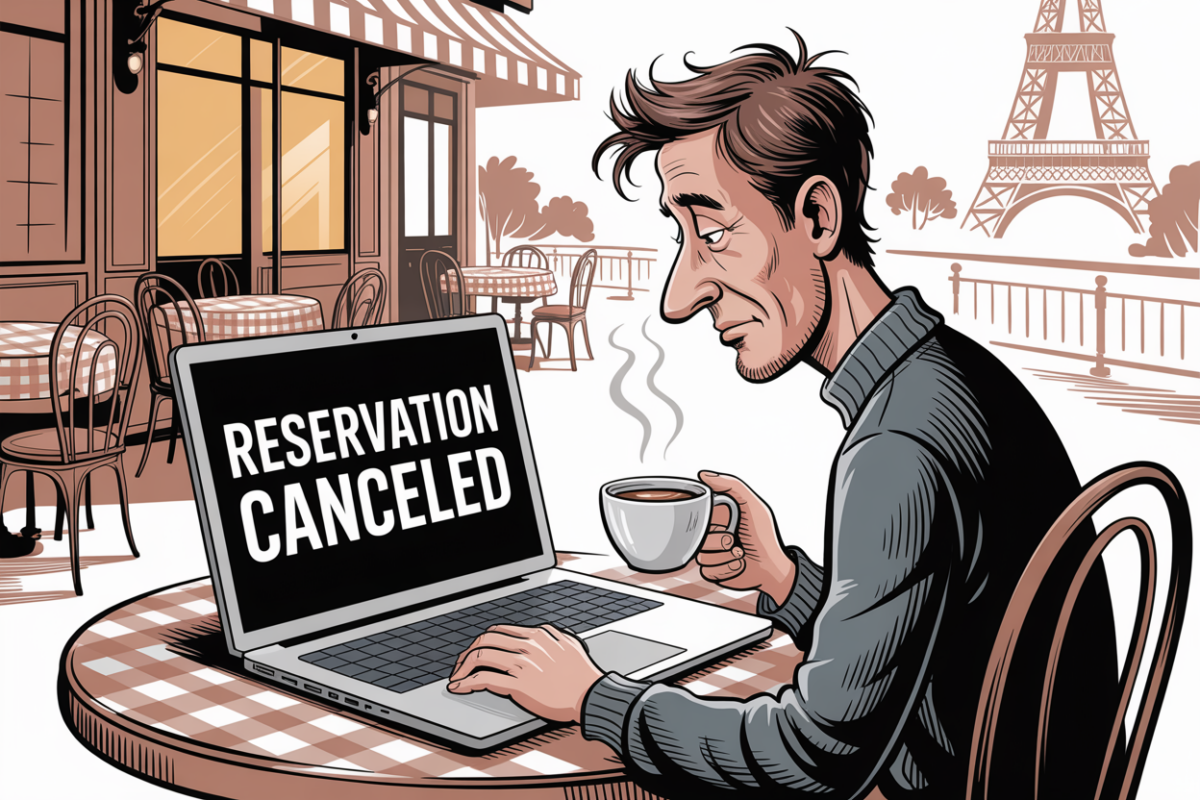
On a recent flight from San Francisco to Paris, Dan Skilken was a no-show.
It wasn’t his fault. The first leg of his flight to Denver was delayed by weather. His airline rebooked him on another flight to Paris, but someone pushed the wrong button, and the airline believed he had missed his connecting flight.
“We figured it out when I went online to check our return reservation while in France and discovered we had no tickets,” he recalls.
Airlines automatically cancel your reservation when you miss a leg of your flight.
Fortunately, Skilken is no newbie. He runs a travel insurance website and understands the ins and outs of the travel industry. He talked to an airline representative in Paris, who quickly restored his tickets. The European Union last week agreed to bar airlines from canceling your return ticket or charging extra when you miss an outbound leg, though the change isn’t expected to take effect until next year.
It would be easy to dismiss his problem as a one-off, but I can’t. I’ve been seeing more “no-show” cases lately — and many cost travelers dearly because they have to pay for new tickets or hotel rooms. It’s made some skeptical travelers wonder if travel companies aren’t using “no shows” as a way to generate a little extra cash.
“No-shows are a bigger issue than people think,” says Brian Raffio, a senior travel coordinator for a tour operator that specializes in Africa. “Not only is it a logistical nightmare, but it holds significant revenue implications.”
Raffio says travelers don’t understand that companies such as airlines, cruise lines and tour operators are not selling a physical product, but a specific date and time to use that product. They can’t resell it once the time passes.
But are no-shows also an opportunity for the travel industry to make more money?
I guess now we should turn on phone video to capture our walk down the jetway and onto the plane?
Read more insightful reader feedback. See all comments.
Are some no-shows nonsense?
Sometimes, travel companies get no-shows wrong, and it’s an error that I’ve seen a lot lately.
Consider what happened to Teresa McGee recently when she flew from Detroit to Charlotte on American Airlines. McGee, a caregiver from Matthews, N.C., flew her outbound trip without incident. But when she tried to fly home, an agent told her she didn’t have a ticket.
“They couldn’t give me a reason,” McGee recalls.
Eventually, she found out that American had incorrectly labeled her a “no-show” — even though she had a boarding pass that proved she’d flown the first leg of her flight.
“I tried to explain this to American Airlines numerous times,” she says.
The airline told her she had to buy a new ticket for $572, which she did. But then it refused to refund her original ticket, and her credit card company sided with the airline when she tried to dispute the charges.
I asked American Airlines about the mix-up, and it offered her a full refund of the new ticket without explanation. But this kind of thing has repeated itself so many times that I’ve begun to wonder if no-shows haven’t become a new revenue stream for travel companies.
“It’s not about maximizing profits”
Are no-shows a way to earn more money? Travel companies vehemently deny it.
“It’s not about maximizing profit,” says Alex Foti, president of Bretton Woods Vacations, a vacation rental company in New Hampshire. “It’s about fairness.”
He says no-shows are rare in his business, but when they happen, his company refunds any fees that are directly tied to services not rendered, such as the cleaning fee or optional charges like pet fees. But the rental amount itself is nonrefundable.
But it can get complicated. For example, some rental companies will offer a partial refund if they can re-rent the property. Others won’t, so if they rent the property twice, they keep all the money.
Airlines take a more sophisticated approach. They overbook flights, betting that some of the passengers won’t show up. When they don’t, the airlines keep their airfares.
But falsely claiming that their customers didn’t show up for an outbound leg is definitely a red line.
How do you avoid losing your money in a no-show mixup?
You don’t have to be the next no-show statistic. Here are a few pro tips for keeping your money.
Stay connected. Flight schedules can change quickly. “Avoiding no-shows today requires agility and preparedness,” says Louise Truman, founder of the sustainable travel company Plotpackers. She recommends downloading your airline’s app for seamless travel updates. “It’s a lifesaver when things change unexpectedly,” she says.
Keep your boarding pass. A boarding pass is a confirmation that you took a flight. And I have to be honest, these flight no-shows are troubling. At the very least, take a photo of your boarding pass to prove that you were on an outbound flight — you may need it later as proof you were on the flight.
Get insurance. Travel insurance can cover you in some circumstances. “If you miss your flight, cruise, or hotel stay because of a travel delay or missed connection, travel insurance can usually provide coverage,” says Terry Boynton, co-founder and president of Yonder Travel Insurance.
Ask about extenuating circumstances. That’s the advice of Shehryar Khan, who owns a vacation rental in Seattle. He says that when someone has to cancel at the last minute because of bad weather or health issues, he can offer a refund. “We do this because the relationship with the guest is more important than the specific booking,” he says.
Are no-shows a travel industry conspiracy?
So are the travel industry’s evil bean counters trying to make money by incorrectly labeling you as a no-show? As I review the cases, I’m inclined to chalk them up to innocent errors made by travel companies.
In other words, there’s probably not a no-show conspiracy.
That being said, you should take every step you can to protect yourself from being a no-show. Keep your boarding passes, call ahead if you think you might be late checking in — and never, ever, assume everything will be fine. Otherwise, you could end up losing your room, your place on your tour — or having to buy a new airline ticket.
Your voice matters
No-show mix-ups are turning up more often, and they can be costly. We want to hear how you read the situation and how you protect yourself.
- When a company wrongly marks you a no-show and you can prove otherwise, should it be required to refund you automatically, without a fight?
- Do you think most no-show errors are honest mistakes, or do you suspect some companies benefit from getting them wrong?
- What do you do to protect yourself, save boarding passes, screenshot confirmations, call ahead? What has actually worked?
Travel no-shows: what they are and how to protect yourself
A no-show can quietly cost you a ticket, a room, or a tour slot. Here is what travelers ask most.
What is a no-show, and what happens when you are marked one?
A no-show is when a travel company records that you did not use a booking you did not cancel. With airlines, missing one leg of a trip typically triggers automatic cancellation of the remaining legs, including your return. That can leave you without a ticket, and reinstating it, or buying a new one, is often on you.
Why do airlines cancel the rest of my trip if I miss one flight?
Airline reservations are built as a sequence. When you miss a segment, the system assumes you are off the itinerary and cancels what remains. It is designed to reflect a genuine no-show, but the same automation can misfire after a delay, a rebooking, or a simple keystroke error, cancelling flights for someone who never actually missed anything.
Can I be wrongly labeled a no-show even if I flew?
Yes, and it happens more than you would expect. A weather delay followed by a rebooking can confuse the record, or an agent can push the wrong button. Travelers have been told they had no ticket for the return even while holding a boarding pass proving they flew the outbound. If this happens, your boarding pass is your best evidence.
Are travel companies using no-shows to make extra money?
Companies firmly deny it, framing no-show policies as fairness rather than profit, since a seat or room is a perishable product they cannot resell once the date passes. Consumer advocates note the pattern is worth watching, because a wrongly recorded no-show can leave the company holding money for a service the customer did in fact use or was wrongly denied. The commentary weighs both readings.
What happens to my money on a no-show rental or tour?
It varies. Some vacation-rental hosts refund fees tied to services not rendered, like cleaning or pet fees, but keep the rental amount. Some will offer a partial refund if they can re-rent the property; others will not, and could collect twice for the same dates. Tour operators face similar constraints, since the slot cannot be resold after the departure.
How can I keep from losing money in a no-show mix-up?
Stay on top of schedule changes through your airline’s app, and save, or photograph, every boarding pass as proof you flew. Consider travel insurance, which can cover some delay and missed-connection scenarios. And if you might be late checking in, call ahead rather than assuming it will sort itself out.
Are the rules changing on missed-leg cancellations?
In Europe, yes. Lawmakers approved a broad overhaul of air passenger rights that includes letting you take the return leg of a round trip even if you did not fly the outbound, so a missed first flight would no longer wipe out the rest. The change is expected to take effect after a transition period rather than right away. For more travel coverage, see Elliott Advocacy.

Have a question about this story? Tell us what happened — we read every comment.
Join the conversation