
in this commentary
- A viral report warned that the TSA’s newer 3D scanners have smaller entry tunnels than the old X-ray machines, and that an oversized carry-on might not fit, potentially sending travelers back to the counter to check a bag. The anger was immediate: the government as the airlines’ baggage enforcer.
- This commentary calls that a textbook case of decoy outrage, a fake scandal that soaks up the anger a real one deserves. There is no algorithm flagging a bag that is an inch too wide, and no documented wave of travelers being marched back to pay a checked-bag fee. If your bag fits and passes screening, it flies.
- The scanner panic may be a non-story, but the question it accidentally raises is not. The piece argues the government is already in the fee business, just in the back office rather than at the checkpoint, and that the real scandal is a pricing system built to hide the true cost of flying.
Does the Transportation Security Administration want to measure your luggage? You might be forgiven for thinking so after an aviation blog breathlessly reported that the agency’s new 3D scanners have smaller entry tunnels than the old X-ray machines.
An oversized carry-on might not fit through, the report warned. Screeners could send you back to the airline counter to check it.
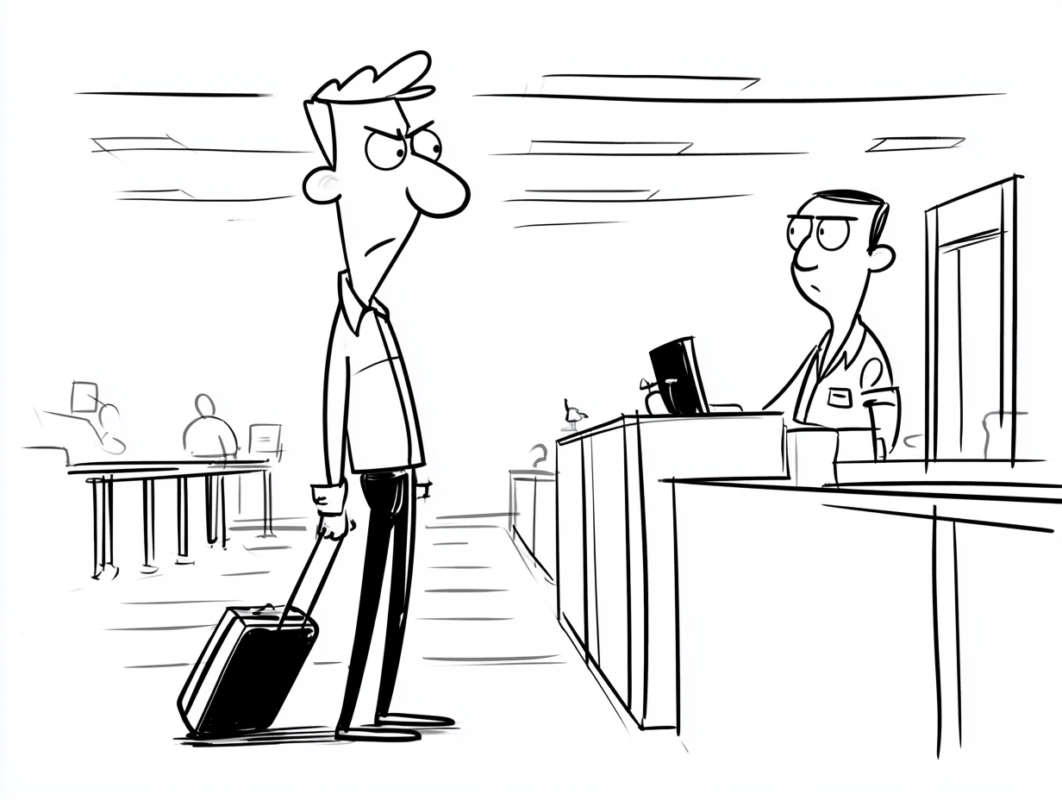
That’s all it took for travelers to connect the dots. The TSA would become the airlines’ enforcer, catching every overpacked carry-on and converting it into a $45 checked-bag fee. The government is working the squeeze for corporate America.
But it’s a textbook case of decoy outrage—that’s when a fake scandal soaks up all the anger a real one deserves. The real scandal here isn’t about a scanner. It’s that the government already helps airlines pick your pocket, legally, every single day.
A few facts about the scanners
The technology isn’t new. TSA began testing computed tomography scanners at Phoenix Sky Harbor and Boston Logan in 2017. The rollout has been slow and steady ever since. In March 2022, TSA awarded Analogic a $781 million contract for as many as 938 CT systems, and in 2023 it ordered another $1.3 billion worth of scanners. Roughly 634 units were installed by that spring, and TSA adds more every year.
Yes, the tunnels are smaller. TSA says so itself, and advises travelers to ask a screener for help rather than force a bag through. But there’s no algorithm flagging a suitcase that’s an inch too wide. If your bag fits through the machine and passes screening, it flies.
Here’s what you won’t find: any documented wave of passengers being turned away at checkpoints and marched back to the ticket counter to pay up. It isn’t happening.
So the scanner panic is a non-story. The question it accidentally raises is not.
Yes, one checked bag and one carryon, FOR FREE, go back to free!! Also, how did this “fake” story about some bags possibly not fitting through the scanner get out in the first place? Call out the idiots that start lies.
Read more insightful reader feedback. See all comments.
Here’s the real fee machine
Should the government help airlines collect more fees from passengers? Of course not. A security checkpoint exists to stop dangerous items from boarding a plane, not to help an airline hit its quarterly ancillary revenue targets. Turning a federal employee into the baggage police would be a misallocation of public resources.
But in a meaningful sense, the government is already in the fee business. It just works the back office instead of the checkpoint.
Airlines are allowed to advertise a fare that bears little resemblance to what you’ll pay. A bag costs extra. A seat assignment costs extra. Even sitting next to your own child can cost extra. Washington blesses this shell game by letting carriers keep those fees out of the advertised price.
The numbers are staggering. U.S. airlines collected a record $7.4 billion in baggage fees in 2025, according to the Bureau of Transportation Statistics. Southwest ended its 50-year “bags fly free” policy last year, closing the last escape hatch. By early 2026, a first checked bag runs about $45 at the major carriers.
And when regulators tried something modest—requiring airlines to disclose fees upfront—the industry’s trade group sued, arguing the Transportation Department had exceeded its authority.
That’s the scandal. Not a scanner with a snug tunnel. A pricing system engineered to hide the true cost of flying, operating with the government’s tacit approval.
What Washington should do
If we’re going to be angry at the government about luggage, let’s be angry at the right thing.
Congress should require that every airfare include at least one carry-on and one checked bag. A suitcase is not an ancillary product—it’s part of the travel experience. Almost nobody flies without at least a carry-on item. Bundle the bag back into the ticket, and the incentive to overstuff a carry-on disappears. And I’m willing to bet the TSA screening line will move faster as a result.
Regulators should also mandate all-in price advertising. The fare you see should be the fare you pay. It should also include the ability to reserve a seat rather than wait until you check in to get a leftover middle seat.
None of this requires new scanners. All you need is a spine.
Decoy outrage is comfortable. It gives you a convenient villain: a machine that can’t argue back. But the real thing takes more work.
A scanner can find a water bottle buried under two weeks of laundry. Finding the $45 buried in your airfare is up to you, because Washington certainly isn’t looking.
The scanner scare pulled attention away from a bigger question about how flying is priced. We want to know where you land on it.
Your voice matters
TSA scanners and baggage fees: what is true and what is not
A viral claim about new TSA scanners set off a wave of fee fears. Here is what travelers actually need to know.
No. The newer computed tomography scanners do have smaller entry tunnels, and the TSA suggests asking a screener for help rather than forcing a bag through. But there is no system flagging a carry-on that is slightly oversized, and no documented wave of travelers being sent back to the counter to pay. If your bag fits through the machine and clears screening, it flies. They are a security upgrade. Computed tomography scanners give screeners a detailed 3D image of a bag’s contents, which improves threat detection. The technology is not new: the TSA began testing it years ago and has been rolling it out gradually across airports ever since. There is no evidence of that. A security checkpoint exists to keep dangerous items off planes, not to police the size of carry-ons for an airline’s benefit. The commentary describes the scanner fee fear as decoy outrage, a false alarm that distracts from a real issue with how flying is priced. A lot. U.S. airlines collected a record $7.4 billion in baggage fees in 2025, according to the Bureau of Transportation Statistics. By early 2026, a first checked bag runs about $45 at the major carriers, and Southwest ended its long-running free-checked-bags policy for most passengers, removing one of the last ways to avoid the charge. Because current rules let carriers keep many fees out of the advertised price. A checked bag, a seat assignment, and other extras are added later, so the headline fare can look cheaper than the real cost of your trip. When regulators tried to require upfront fee disclosure, the airline industry’s trade group challenged it in court. The commentary argues Congress should require every airfare to include at least one carry-on and one checked bag, and that regulators should mandate all-in price advertising so the fare you see is the fare you pay, including the ability to reserve a seat. These are the author’s policy views, offered as opinion. Check each airline’s baggage rules and prices before you book, since fees vary by carrier and fare type and are often cheaper prepaid than at the airport. Traveling with a carry-on that meets the size limits, or using a co-branded airline credit card that includes a free checked bag, can also help. For more travel guidance, see Elliott Advocacy’s coverage.Will the TSA’s new 3D scanners make me pay a checked-bag fee?
What are these new scanners for?
Is the TSA working with airlines to enforce bag fees?
How much are airlines really making on bag fees?
Why can airlines advertise a fare that is lower than what I pay?
What does the author think should change?
How can I avoid surprise bag fees right now?

Have a question about this story? Tell us what happened — we read every comment.
Join the conversation